

Essential Waste Collection Booking Tips for Businesses
Sorting out business waste feels like a never-ending chore and yet the cost of ignoring it can quickly spiral out of control. Many companies are surprised when they discover that accurate waste audits can cut overall disposal costs by up to 30 percent. Most think that booking waste collection is all about paperwork and bins but the real secret is in the preparation – get it right and waste management becomes far simpler and cheaper than you might expect.
Table of Contents
- Step 1: Evaluate Your Waste Management Needs
- Step 2: Research Waste Collection Services In Your Area
- Step 3: Compare Quotes And Service Levels
- Step 4: Schedule Your Waste Collection Appointment
- Step 5: Prepare Your Waste For Collection
- Step 6: Confirm Collection And Review Service Quality
Quick Summary
| Key Point | Explanation |
|---|---|
| 1. Conduct a thorough waste assessment | Evaluate all waste types and volumes generated to inform collection strategies and cost-effectiveness. |
| 2. Research local waste collection providers | Identify service providers with experience in your specific area and waste streams to ensure compliance and effective management. |
| 3. Compare quotes and service details comprehensively | Assess not just costs but also service quality, environmental commitments, and additional support services offered. |
| 4. Prepare documentation before scheduling | Gather necessary waste data and operational details to facilitate an efficient scheduling process with your provider. |
| 5. Review service quality regularly | Continuously assess the performance of your waste management provider to ensure efficiency and compliance with standards. |
Step 1: Evaluate Your Waste Management Needs
Successful waste collection begins with a thorough and strategic evaluation of your business’s waste management requirements. This critical first step involves understanding the volume, types, and frequencies of waste your organisation generates, which directly impacts the efficiency and cost-effectiveness of your waste disposal strategy.
Starting your waste management assessment requires a comprehensive audit of your current waste production. Walk through your facility and catalogue the different waste streams you generate. Manufacturing businesses in Newcastle might find industrial waste volumes differ significantly from retail establishments in Durham. Consider documenting the types of waste such as general waste, recyclables, hazardous materials, electronic equipment, or confidential documentation. Quantifying your waste accurately helps determine the most appropriate collection frequency and container sizes.
To conduct an effective waste evaluation, businesses should gather specific data points about their waste generation. Track the approximate weight or volume of waste produced weekly or monthly. Consider seasonal variations that might impact waste production. For instance, a restaurant in Sunderland might generate more food waste during peak tourist seasons, while an office in Newcastle might have consistent paper waste throughout the year. This data becomes crucial when selecting the right waste collection scheduling approach.
Your waste assessment should also include a detailed review of current disposal practices. Examine how different waste types are currently managed, stored, and separated. Are recyclable materials being correctly segregated? Are hazardous waste streams handled according to regulatory requirements? A meticulous review ensures not just compliance, but also potential cost savings through more efficient waste management strategies.
Verification of your waste management evaluation involves confirming you have:
- Documented all waste streams produced
- Measured approximate waste volumes
- Identified potential areas for waste reduction
- Assessed current waste handling and storage practices
By completing this comprehensive assessment, you establish a solid foundation for the subsequent steps in optimising your waste collection booking process.

Step 2: Research Waste Collection Services in Your Area
Researching waste collection services requires a systematic approach to identify providers that align with your specific business waste management requirements. This crucial step involves investigating local waste management companies, understanding their service offerings, and evaluating their capabilities to handle your unique waste streams.
Begin by compiling a comprehensive list of waste collection providers operating in your region. Focus on companies serving specific areas like Newcastle, Durham, Sunderland, and surrounding North East locations. Local waste management companies often understand regional regulations and environmental requirements better than national providers. Prioritize providers with proven experience in handling waste types similar to your business’s waste streams.
Utilize multiple research channels to gather information about potential waste collection services. Online directories, local business associations, and industry recommendations can provide valuable insights. Contact local environmental agencies for registered waste management providers. Telephone consultations and email inquiries allow you to ask detailed questions about their service capabilities, collection frequencies, pricing structures, and compliance certifications. Learn more about navigating the waste collection network to make an informed decision.
When evaluating waste collection services, consider several critical factors beyond basic collection. Assess their environmental credentials, recycling capabilities, and commitment to sustainable waste management practices. Some providers offer additional services like waste auditing, recycling consultancy, and comprehensive waste reduction strategies. Request detailed service quotes and compare them carefully, looking beyond price to understand the full range of support each provider offers.
Verification of your research involves confirming you have:
- Identified multiple waste collection service providers
- Gathered comprehensive service information
- Compared pricing and service capabilities
- Checked environmental credentials and compliance certifications
By conducting thorough research, you position your business to select a waste collection service that meets your operational needs and environmental responsibilities.
Step 3: Compare Quotes and Service Levels
Comparing waste collection service quotes represents a critical decision-making phase where businesses transform their initial research into a strategic partnership. This step requires meticulous attention to detail, balancing cost considerations with service quality and comprehensive waste management capabilities.
Begin by organizing the quotes you have collected into a systematic comparison framework. Create a comprehensive spreadsheet that captures key pricing details, service frequencies, container provisions, and additional support offerings. While price is important, it should not be the sole determining factor. A slightly more expensive service might provide superior environmental reporting, more flexible collection schedules, or advanced waste segregation support that could generate long-term operational efficiencies.
Carefully examine the quote details beyond the headline pricing. Look for nuanced service elements such as environmental compliance certifications, recycling rates, and additional support services. A waste management provider serving businesses in Newcastle or Durham might offer unique regional advantages, such as specialised handling for industrial or commercial waste streams. Learn about optimising your waste collection scheduling to ensure you select a provider aligned with your operational rhythms.
Engaging directly with potential service providers can reveal valuable insights not immediately apparent from written quotes. Schedule consultative discussions to understand the full scope of their capabilities. Ask probing questions about their approach to waste reduction, recycling strategies, and how they can support your specific business needs. Some providers might offer complementary waste audits or sustainability consultations that add significant value beyond basic collection services.
Verification of your quote comparison involves confirming you have:
- Documented and compared all quote details
- Assessed service levels beyond pricing
- Conducted direct discussions with providers
- Evaluated long-term value and support capabilities
By conducting a thorough, methodical comparison, you position your business to select a waste collection service that delivers optimal value, compliance, and operational support.
Step 4: Schedule Your Waste Collection Appointment
Scheduling your waste collection appointment marks the transition from planning to execution, transforming your waste management strategy into a tangible service arrangement. This critical step requires careful coordination and clear communication with your selected waste management provider to ensure seamless waste disposal operations.
Prepare all necessary documentation and waste information before initiating the booking process. Gather the detailed waste assessment from your earlier evaluation, including precise volumes, types of waste streams, and any specific handling requirements. Having this information readily available streamlines the scheduling conversation and demonstrates your business’s preparedness. Contact your chosen waste management provider during their standard business hours, preferably via both telephone and email to establish a comprehensive communication trail.
During the booking conversation, be prepared to discuss specific logistical details that will impact your collection schedule. Explain your business’s operational rhythms, preferred collection times, and any site-specific access considerations. Businesses in urban areas like Newcastle or Durham might have unique parking or loading restrictions that could affect waste collection logistics. Explore efficient waste collection scheduling strategies to optimize your arrangement. Request a confirmation of the agreed collection schedule in writing, ensuring you have a formal record of the arrangement.
Pay close attention to the provider’s guidelines regarding waste preparation. Different waste streams might require specific segregation, containment, or labeling protocols. Confirm the exact specifications for container placement, accessibility, and any preparatory steps your team must complete before collection. Some providers offer additional guidance or training to help businesses maintain compliance with waste management regulations.
Verification of your waste collection appointment involves confirming you have:
- Scheduled a definitive collection date and time
- Received written confirmation of service details
- Understood waste preparation requirements
- Clarified any site-specific collection logistics
By meticulously scheduling your waste collection, you establish a reliable, efficient waste management process that supports your business’s operational needs and environmental responsibilities.
Step 5: Prepare Your Waste for Collection
Preparing waste for collection represents a critical compliance and logistical process that directly impacts the efficiency of your waste management strategy. This step transforms your theoretical waste management plan into practical, actionable preparation that ensures smooth collection and adherence to regulatory requirements.
Waste segregation is fundamental to effective collection preparation. Carefully separate different waste streams according to your waste management provider’s specifications and current environmental regulations. Different materials require distinct handling protocols. Recyclable materials like paper, cardboard, plastics, and metals should be cleanly sorted and free from contamination. For businesses in urban areas like Newcastle or Durham, understanding precise segregation requirements can significantly streamline the collection process. Learn more about improving your waste segregation techniques to enhance your waste management approach.
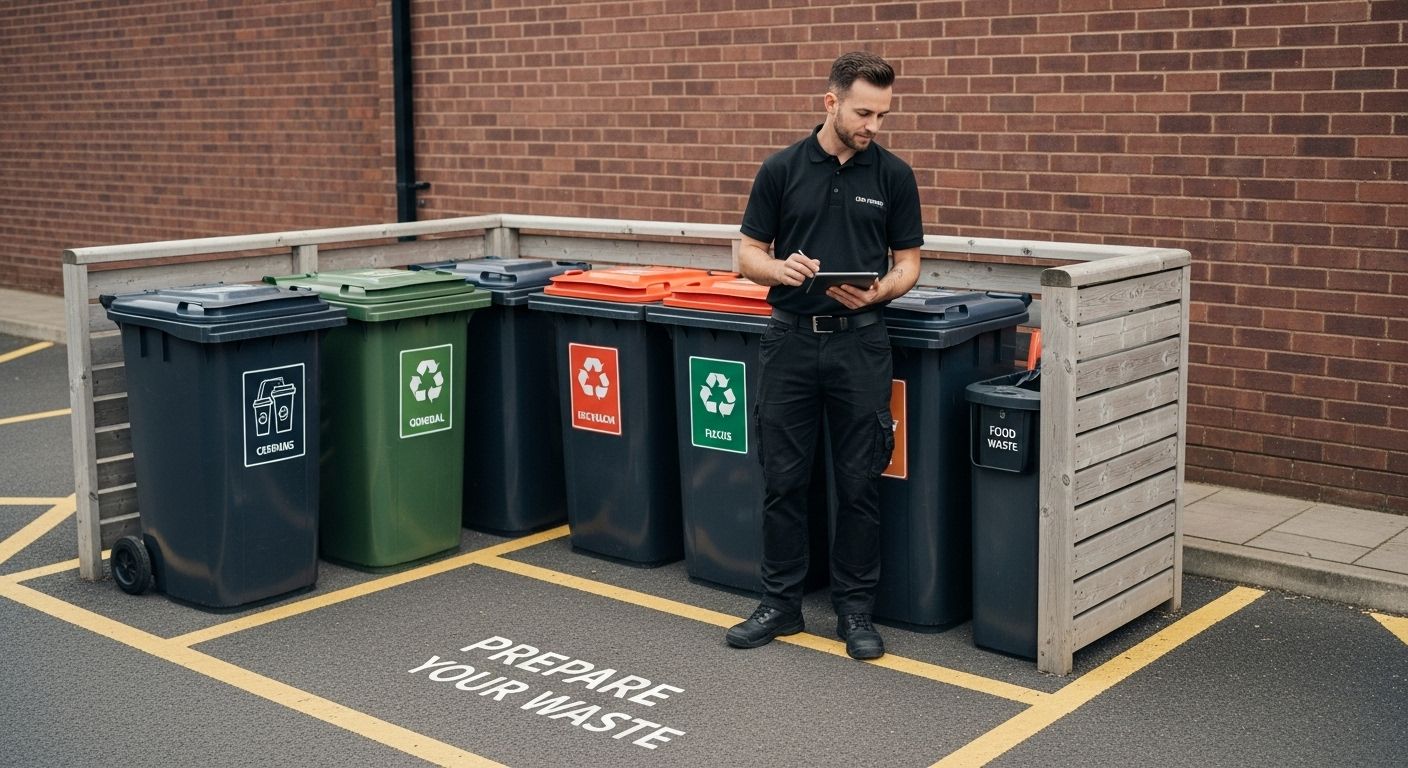
Container selection and preparation play a crucial role in successful waste collection. Choose appropriate containers that match the volume and type of waste your business generates. Ensure containers are clean, undamaged, and clearly labeled with the specific waste type they contain. For businesses handling multiple waste streams, consider color-coded or distinctly marked containers to prevent cross-contamination. Position containers in an easily accessible location that allows waste collection vehicles convenient and safe access. Consider potential obstacles like narrow entrances, parking restrictions, or site-specific logistical challenges that might impact collection.
Pay special attention to any hazardous or special waste materials that require unique handling procedures. Electronic waste, batteries, chemical residues, and confidential documents often need specific containment and disposal protocols. Consult your waste management provider about their requirements for these sensitive waste streams. Some providers offer specialized guidance or additional support for managing complex waste types.
Verification of your waste preparation involves confirming you have:
- Correctly segregated all waste streams
- Selected appropriate containers
- Labeled containers clearly and accurately
- Positioned containers for easy collection access
- Addressed any special waste handling requirements
By meticulously preparing your waste for collection, you demonstrate professional responsibility and contribute to more efficient, environmentally conscious waste management.
Below is a checklist table to help verify that all necessary steps and criteria for preparing business waste collection have been met.
| Verification Step | Description | Completion Status |
|---|---|---|
| Waste streams documented | All types of waste produced are identified and recorded | |
| Waste volumes measured | Approximate weekly or monthly waste volumes are determined | |
| Areas for waste reduction identified | Potential ways to minimise waste are considered | |
| Waste handling and storage assessed | Current practices for storing and managing waste are reviewed | |
| Waste segregated correctly | Waste is sorted into appropriate streams according to regulations | |
| Appropriate containers selected | Suitable, undamaged and labelled containers are used for each waste type | |
| Collection date and time scheduled | A definitive appointment is arranged with a written confirmation from the provider | |
| Site-specific logistics clarified | Details such as access, parking, and collection points are addressed | |
| Documentation prepared and accessible | All required documents, including waste transfer notes and service agreements, are ready |
Step 6: Confirm Collection and Review Service Quality
Confirming waste collection and critically reviewing service quality represents the final pivotal stage in your waste management process. This step transforms your initial booking into a continuous improvement opportunity, ensuring that your chosen waste management provider consistently meets your business’s operational and environmental requirements.
Documentation serves as the cornerstone of effective waste collection verification. Immediately after each collection, meticulously review the waste transfer documentation provided by your service provider. These critical documents should detail the precise types and quantities of waste collected, ensuring transparency and legal compliance. For businesses operating in regions like Newcastle or Durham, maintaining comprehensive records becomes essential for potential environmental audits or regulatory inspections. Explore strategies for efficient waste collection documentation to streamline your record-keeping processes.
Establish a systematic approach to evaluating your waste collection service’s performance. Develop a comprehensive assessment framework that considers multiple dimensions of service quality. Examine factors such as collection punctuality, waste handling practices, communication effectiveness, and alignment with your initial service agreement. Pay particular attention to how well the provider manages different waste streams, adheres to agreed collection schedules, and responds to any unique operational requirements your business might have. Regular performance reviews allow you to proactively address potential issues and maintain high-quality waste management standards.
Maintain open communication channels with your waste management provider. Schedule periodic review meetings to discuss service performance, explore potential improvements, and address any emerging challenges. These conversations provide an opportunity to refine your waste management strategy, discuss evolving regulatory requirements, and potentially negotiate more tailored service arrangements. Consider requesting detailed environmental impact reports that demonstrate the provider’s commitment to sustainable waste management practices.
Verification of your collection and service quality review involves confirming you have:
- Collected and filed all waste transfer documentation
- Conducted a comprehensive service performance assessment
- Maintained ongoing communication with the service provider
- Identified potential areas for service improvement
- Ensured continued legal and environmental compliance
By diligently confirming collection details and continuously reviewing service quality, you establish a robust, responsive waste management process that supports your business’s operational efficiency and environmental responsibilities.
Ready to Simplify Your Waste Collection Booking Process?
Struggling to organise efficient waste collection for your business can leave you worrying about compliance, missed pickups, and hidden costs. This article has highlighted key steps such as assessing your waste streams, comparing service levels, and maintaining regulatory records. At Venture Waste, we understand that seamless booking and dependable service are crucial for business owners facing tight schedules and strict legal requirements. Our expertise in managing general waste, hazardous items, confidential documents, and tailored recycling means we can support your needs from the first audit all the way through to compliant collection. Discover how the Waste Collection Process in the UK for Businesses 2025 is being transformed for simplicity and peace of mind when you partner with a trusted provider.

Take control of your waste management today. Visit Venture Waste to experience our smooth three-step booking process and to access practical resources, customer testimonials, and updates on regulatory changes. Do not let uncertainty around waste collection hold your business back. Secure a compliant and efficient solution now—because your waste management should just work.
Frequently Asked Questions
How can I evaluate my business’s waste management needs?
To evaluate your waste management needs, conduct a comprehensive audit of your waste production, documenting the types and volumes of waste generated, as well as current disposal practices and potential areas for waste reduction.
What factors should I consider when researching waste collection services?
When researching waste collection services, consider their experience in handling your specific waste types, service offerings, pricing, environmental credentials, and compliance certifications to ensure they align with your business needs.
How do I compare quotes from different waste collection providers?
To compare quotes, create a spreadsheet capturing pricing details, service frequencies, and additional support offerings. Focus not only on price but also on the overall value, including service quality and compliance with environmental regulations.
What steps should I take to prepare my waste for collection?
To prepare your waste for collection, segregate different waste streams according to regulations, select appropriate containers, ensure they are clearly labelled, and position them in accessible locations for collection.


Leave a Reply
Want to join the discussion?Feel free to contribute!