

Waste Collection Best Practices: Step-by-Step UK Guide
Businesses across England will face new waste management rules by 31 March 2025 that require careful planning and action. With updated regulations on the horizon, preparing your workplace for these changes is vital to avoid penalties and show environmental responsibility. Understanding and meeting these requirements can save money, improve efficiency, and safeguard your reputation while making compliance much less stressful.
Table of Contents
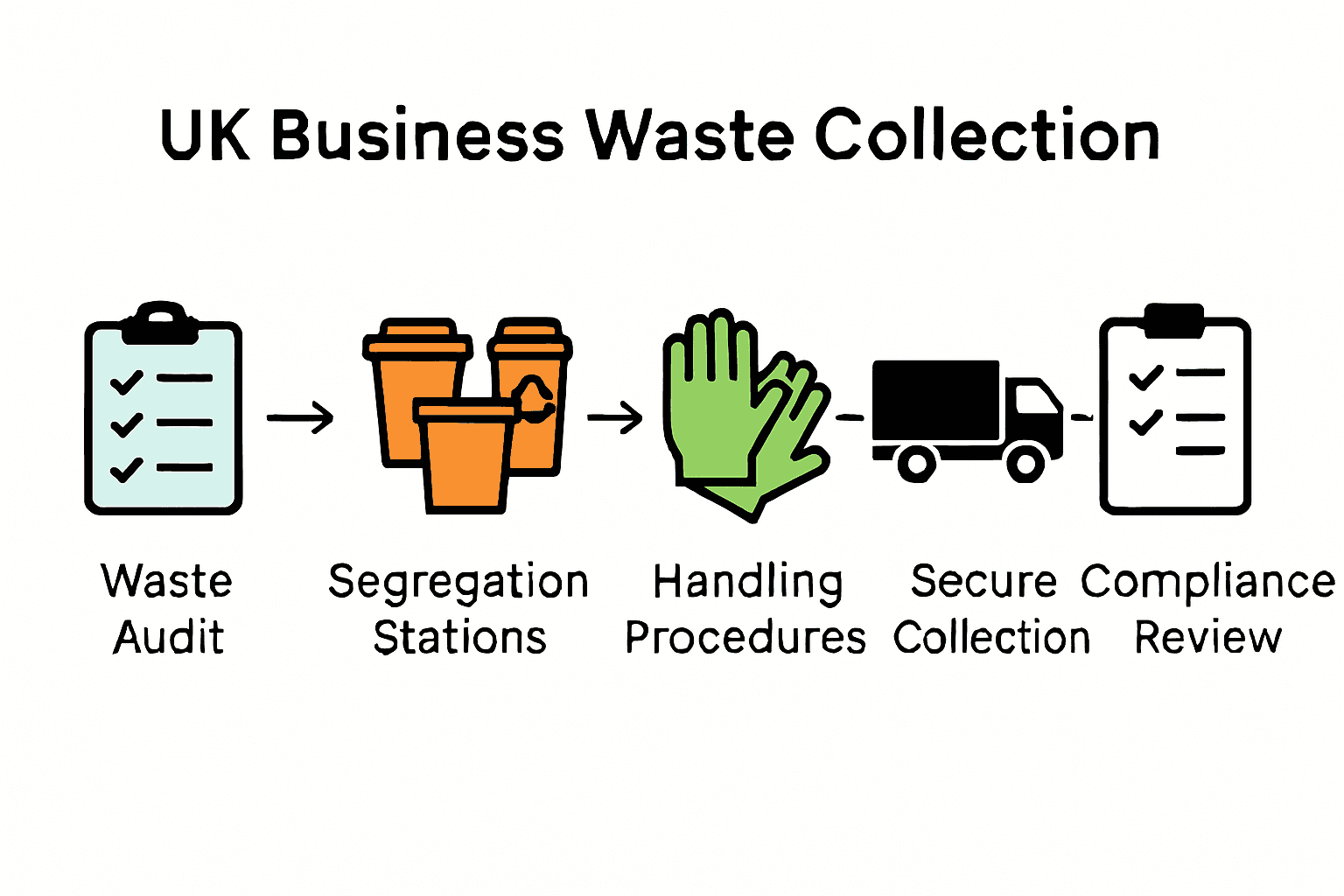
- Step 1: Assess Site-Specific Waste Requirements
- Step 2: Set Up Correct Waste Segregation Stations
- Step 3: Implement Compliant Handling Procedures
- Step 4: Arrange Secure Collection And Transport
- Step 5: Verify Legal Compliance And Documentation
Quick Summary
| Key Point | Explanation |
|---|---|
| 1. Conduct a comprehensive waste audit | Assess all waste streams at your site to understand your waste generation patterns and categorize waste types effectively. |
| 2. Establish effective waste segregation stations | Set up clearly labeled bins for three main waste categories, making them easily accessible to employees and visitors. |
| 3. Implement compliant waste handling procedures | Understand waste classification protocols and ensure all employees are trained on safe waste handling techniques. |
| 4. Arrange secure waste collection and transport | Choose a licensed waste management provider and maintain detailed documentation during collection and transport for compliance. |
| 5. Regularly verify legal compliance and documentation | Conduct audits to ensure ongoing adherence to regulations, keeping all waste management documentation organized and up to date. |
Step 1: Assess site-specific waste requirements
Assessing your site-specific waste requirements is a critical first step in developing an effective waste management strategy. As directed by gov.uk, workplaces across England will need to have a clear understanding of their waste generation by 31 March 2025.
To effectively assess your site-specific waste requirements, start by conducting a comprehensive waste audit. This involves carefully documenting and categorizing all waste streams generated at your location. Break down your waste into key categories such as recyclable materials (plastic, metal, glass, paper, and card), food waste, and non-recyclable waste. Pay close attention to the volume and frequency of waste production in different areas of your site. Some businesses might generate more food waste in catering areas, while others might produce more paper waste in office spaces.
Consider the physical constraints and logistics of waste management at your specific site. This means evaluating available space for waste containers, determining the most appropriate container sizes, and planning collection frequencies that align with your waste generation patterns. According to gov.uk, proper waste classification is crucial for effective management. If your site produces specialized waste like garden waste, you will need to arrange specific recycling or composting solutions that deliver the best environmental outcome.
A practical tip is to involve employees from different departments in your waste assessment. They can provide valuable insights into waste generation patterns and help identify potential reduction or better segregation opportunities. This collaborative approach ensures a more comprehensive and accurate waste assessment.
Once you have completed your site-specific waste assessment, you will be well-prepared to move on to the next step: developing a tailored waste management plan that meets both legal requirements and your business’s unique needs.
Step 2: Set up correct waste segregation stations
Setting up correct waste segregation stations is essential for businesses to meet legal requirements and improve environmental sustainability. As mandated by gov.uk, workplaces must now separate waste into distinct categories before collection.
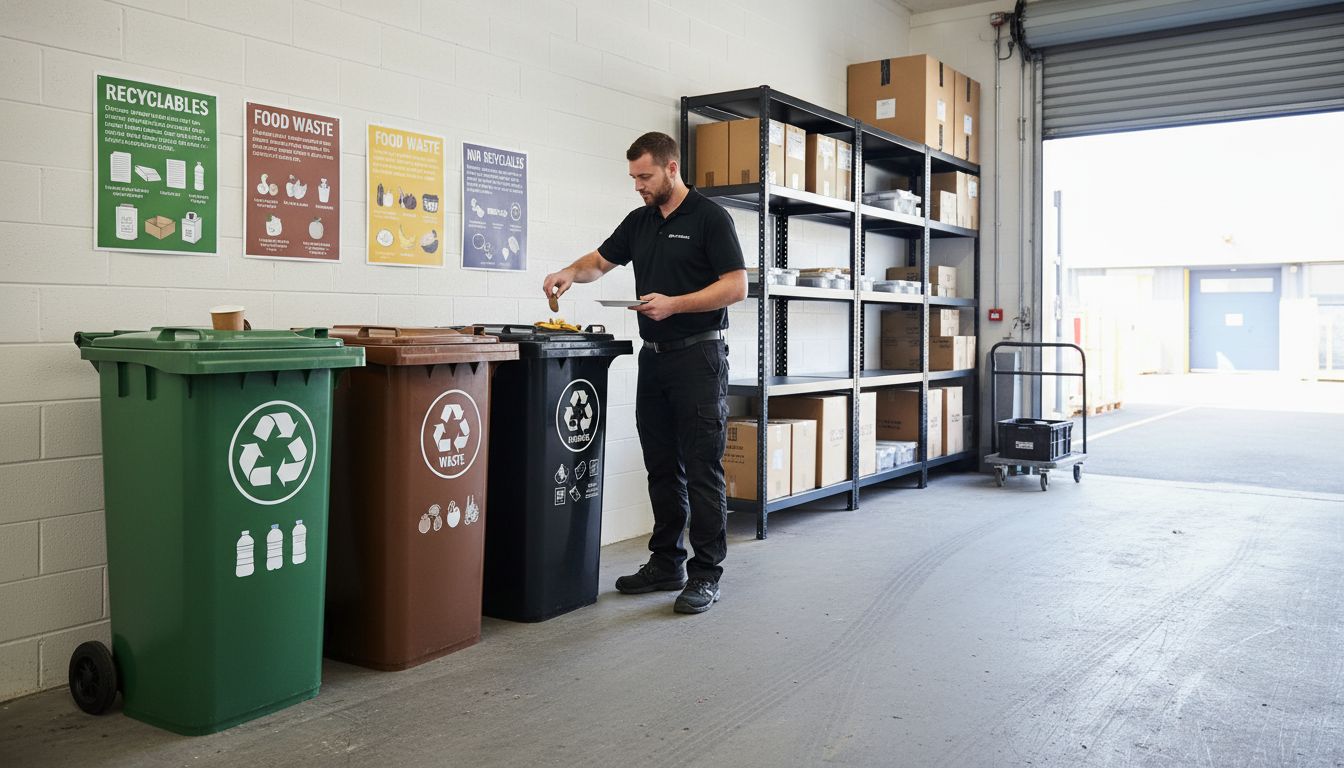
To establish effective waste segregation stations, start by identifying the primary waste streams in your workplace. gov.uk specifies three key waste categories: dry recyclable materials (including plastic, metal, glass, paper, and card), food waste, and non-recyclable waste. Position clearly labeled bins for each category in strategic locations throughout your workplace. Ensure these stations are easily accessible to employees, customers, and visitors. Color coding can help improve segregation accuracy use green for recyclables, brown for food waste, and black or grey for non recyclable waste.
Pay careful attention to the physical setup of your waste stations. According to gov.uk, waste storage areas must be located on impermeable surfaces with contained drainage to prevent environmental contamination. Consider factors like container size, placement, and ease of use. Place smaller bins in office areas and larger collection points in central locations like kitchens, loading areas, and near main entrances.
A practical tip is to train your employees on proper waste segregation. Create clear visual guides near waste stations showing exactly what can be disposed of in each bin. Consider conducting short training sessions to explain the importance of correct waste separation and its environmental impact.
With your waste segregation stations now correctly established, you are ready to move forward in creating a comprehensive and compliant waste management system for your business.
Step 3: Implement compliant handling procedures
Implementing compliant waste handling procedures is crucial for ensuring environmental safety and legal adherence. Your waste management strategy must meet stringent regulatory requirements that protect both your business and the environment.
Begin by thoroughly understanding waste classification protocols. According to gov.uk, the Technical Guidance WM3: Waste Classification provides comprehensive instructions for proper waste assessment and management. This means carefully categorizing different waste types and understanding their specific handling requirements. Pay special attention to potentially hazardous materials that demand unique disposal methods. Create detailed documentation for each waste stream, including origin, composition, and appropriate handling techniques.
Careful attention to storage and transfer procedures is essential. gov.uk mandates that storage areas must have comprehensive drainage systems to contain potential contaminated runoff. Ensure your waste storage locations prevent incompatible waste types from interacting and allow easy access for inspection and cleaning. Implement strict protocols for waste transfer that minimize environmental risks and comply with current regulations.
A critical tip is to develop a comprehensive staff training programme. Ensure all employees understand waste handling procedures, recognize different waste categories, and know exactly how to manage each type safely. Regular training sessions and clear visual guides can dramatically improve compliance and reduce potential environmental incidents.
With robust handling procedures now in place, you are well positioned to move forward in creating a comprehensive and legally compliant waste management system for your business.
Step 4: Arrange secure collection and transport
Arranging secure waste collection and transport is a critical step in maintaining an effective and compliant waste management strategy. Your approach must balance operational efficiency with strict regulatory requirements.
Start by carefully considering your waste collection needs. As gov.uk indicates, businesses have flexibility in determining container sizes and collection frequencies based on their specific waste volume. Research and select a waste management provider that specializes in handling your particular waste streams. Ensure they are licensed and can provide comprehensive documentation for waste transfer. Develop a detailed collection schedule that minimizes disruption to your business operations while ensuring consistent and timely waste removal.
Pay close attention to waste classification and transportation protocols. gov.uk highlights the importance of proper waste assessment through the Technical Guidance WM3: Waste Classification. This means working with your waste collection partner to ensure each waste type is correctly categorized, packaged, and transported according to legal requirements. Different waste streams may require specific handling procedures particularly for potentially hazardous or sensitive materials.
A critical tip is to maintain comprehensive documentation throughout the collection and transport process. Keep detailed records of waste types, volumes, collection dates, and transportation routes. This not only ensures regulatory compliance but also provides a clear audit trail for your business. Consider implementing a digital tracking system that allows real time monitoring of your waste collection and transport activities.
With secure collection and transport arrangements in place, you are now ready to progress to the final stages of your comprehensive waste management strategy.
Step 5: Verify legal compliance and documentation
Verifying legal compliance and documentation is the final critical step in ensuring your waste management strategy meets all regulatory requirements. This process protects your business from potential legal risks and demonstrates your commitment to responsible waste management.
Begin by thoroughly reviewing your waste management documentation. gov.uk mandates that all workplaces in England must carefully separate waste before collection, including waste produced by employees, customers, and visitors. Conduct a comprehensive audit of your waste streams to ensure they align with the required categories dry recyclable materials, food waste, and non recyclable waste. Gather and organize all relevant documentation, including waste transfer notes, collection records, disposal certificates, and internal waste tracking logs.
Deep dive into the technical classification of your waste streams. gov.uk recommends using the Technical Guidance WM3: Waste Classification as a definitive reference for proper waste assessment. This means meticulously reviewing how each waste type is categorized, documented, and managed. Check that your waste management provider has provided detailed documentation demonstrating compliance with current regulations. Verify that all waste handling procedures meet the specific legal requirements for each waste category.
A critical tip is to establish a regular compliance review process. Set up quarterly or biannual internal audits to ensure ongoing adherence to waste management regulations. Create a comprehensive checklist that covers all aspects of legal compliance, including waste segregation, collection, transportation, and final disposal. This proactive approach will help you stay ahead of potential regulatory changes and minimize compliance risks.
With legal compliance and documentation thoroughly verified, you have successfully completed a comprehensive waste management strategy that protects both your business and the environment.
Take Control of Your Waste Collection with Confidence
Managing waste according to the best practices outlined in this guide can feel overwhelming, especially when facing strict legal requirements and the need for precise segregation and handling. The challenge lies in implementing a seamless, compliant system that matches your site-specific waste streams and operational needs without disrupting your daily workflow. Key pain points such as correct waste classification, safe storage, and reliable collection are critical to avoid costly mistakes and environmental harm.
Venture Waste Management makes this journey straightforward and stress-free. Our expertise aligns perfectly with your goals for effective waste segregation and secure waste transport, ensuring compliance with UK regulations and environmental safety. Discover how our robust waste collection process for businesses in the UK supports your operational demands. You can also learn about the waste collection network serving UK businesses in 2025 for broader insight. Protect your business and the environment while simplifying waste management by starting with Venture Waste at https://venturewaste.co.uk.

Ready to master your waste management and secure legal compliance now? Visit Venture Waste to explore tailored solutions, book your service with ease, and join other responsible businesses taking control today.
Frequently Asked Questions
What steps should I follow to assess my site’s waste requirements?
Begin by conducting a comprehensive waste audit to document and categorize all waste streams. Identify key categories such as recyclables, food waste, and non-recyclable materials, and analyze the volume and frequency of waste generation in different areas. Use this information to inform your waste management strategy.
How do I set up effective waste segregation stations in my workplace?
To set up effective waste segregation stations, identify your primary waste streams and position clearly labeled bins for each category in strategic locations. Ensure that these stations are easily accessible, using color coding to enhance accuracy in waste disposal. Conduct a training session to educate employees on proper segregation practices.
What are the key components of compliant waste handling procedures?
Compliant waste handling procedures should include thorough understanding of waste classification protocols and proper documentation for each waste stream. Ensure that storage areas prevent contamination and incompatible waste interaction. Develop a staff training program to ensure employees are well-informed about handling procedures.
How can I arrange secure waste collection and transport effectively?
Begin by determining the specific waste collection needs of your business and selecting a licensed waste management provider. Develop a detailed collection schedule that aligns with your waste volume while ensuring timely removal. Maintain documentation of waste types, volumes, and transport processes to ensure compliance.
What should I include in my waste management compliance audit?
A waste management compliance audit should include a review of the waste segregation methods, collection and transportation records, and disposal certificates. Organize all relevant documentation and ensure that your waste streams align with regulatory categories. Establish a schedule for regular audits, such as quarterly, to stay compliant.
How can I verify the effectiveness of my waste management strategy?
To verify your waste management strategy, conduct regular audits of your processes and documentation to ensure compliance with regulations and best practices. Create a checklist that covers all aspects of waste management, from segregation to disposal, and review it periodically to identify any areas for improvement. Aim for continuous enhancement by assessing performance every six months.


Leave a Reply
Want to join the discussion?Feel free to contribute!