

Waste Acceptance Criteria – Ensuring UK Compliance
Most british facilities managers face strict oversight when it comes to hazardous waste disposal, yet over 6,000 organisations each year face regulatory action for non-compliance. For healthcare and educational sites, understanding the rules around waste acceptance criteria is vital not just for public safety but also for tight budgets. This guide gives you a clear path through complex requirements, so you can avoid costly mistakes and protect both your institution and the wider environment.
Table of Contents
- Waste Acceptance Criteria Defined For The UK
- Types Of Waste And Acceptance Standards
- Legal Framework For Hazardous Waste Disposal
- Processes For Testing And Documentation
- Responsibilities And Compliance Risk Management
Key Takeaways
| Point | Details |
|---|---|
| Waste Acceptance Criteria | UK regulations classify waste based on composition and hazards, guiding safe handling and disposal. |
| Key Categories of Waste | Waste is divided into categories such as Hazardous, Non-Hazardous, and Municipal, each having specific handling standards. |
| Legal Framework | Strict laws govern hazardous waste management, requiring businesses to document and track waste thoroughly. |
| Compliance Risk Management | Organisations must implement comprehensive strategies to ensure regulatory adherence and mitigate legal risks. |
Waste acceptance criteria defined for the UK
Waste acceptance criteria in the United Kingdom represent a comprehensive regulatory framework that determines how different waste materials can be legally processed, transported, and disposed of across various industries. These criteria are designed to protect environmental standards, ensure public safety, and maintain strict guidelines for waste management professionals operating throughout England, Scotland, Wales, and Northern Ireland.
The fundamental purpose of waste acceptance criteria is to classify and categorise waste streams based on their chemical composition, potential environmental impact, and potential hazard levels. UK waste management regulations provide detailed thresholds that organisations must meet when handling different types of waste materials. These criteria help determine whether a specific waste type can be accepted at treatment facilities, landfills, or recycling centres, ensuring that potentially dangerous materials do not contaminate broader waste streams.
At the core of waste acceptance criteria are several key classification parameters, including:
- Chemical composition and potential reactivity
- Toxicity levels
- Physical state (solid, liquid, gaseous)
- Potential environmental contamination risk
- Specific industry sector requirements
Government agencies like the Environment Agency play a critical role in monitoring and enforcing these criteria. Packaging producer responsibility monitoring plans demonstrate how obligated parties must provide accurate data and ensure complete traceability of waste streams to maintain compliance with national standards.
Pro tip: Always maintain comprehensive documentation of waste stream origins, compositions, and disposal pathways to streamline regulatory compliance and reduce potential audit complications.
Types of waste and acceptance standards
Waste management in the United Kingdom involves a complex classification system that divides waste materials into distinct categories, each with specific acceptance standards and disposal requirements. Comprehensive waste stream classifications provide essential guidance for businesses and waste management professionals in understanding how different waste types must be handled and processed.
The primary waste categories in the UK include:
- Hazardous Waste: Materials that pose significant risks to human health or the environment, including chemical, medical, and industrial byproducts
- Non-Hazardous Waste: General waste that does not present immediate environmental or health threats
- Municipal Waste: Everyday rubbish generated by households and commercial establishments
- Industrial Waste: Specific waste streams produced by manufacturing and industrial processes
- Special Waste: Materials requiring unique handling and disposal protocols
Each waste category has specific acceptance criteria that determine its potential for recycling, treatment, or final disposal. These criteria evaluate multiple factors including chemical composition, potential environmental impact, toxicity levels, and the waste’s physical state. Organisations must carefully document and analyse their waste streams to ensure compliance with national environmental regulations and prevent potential contamination risks.
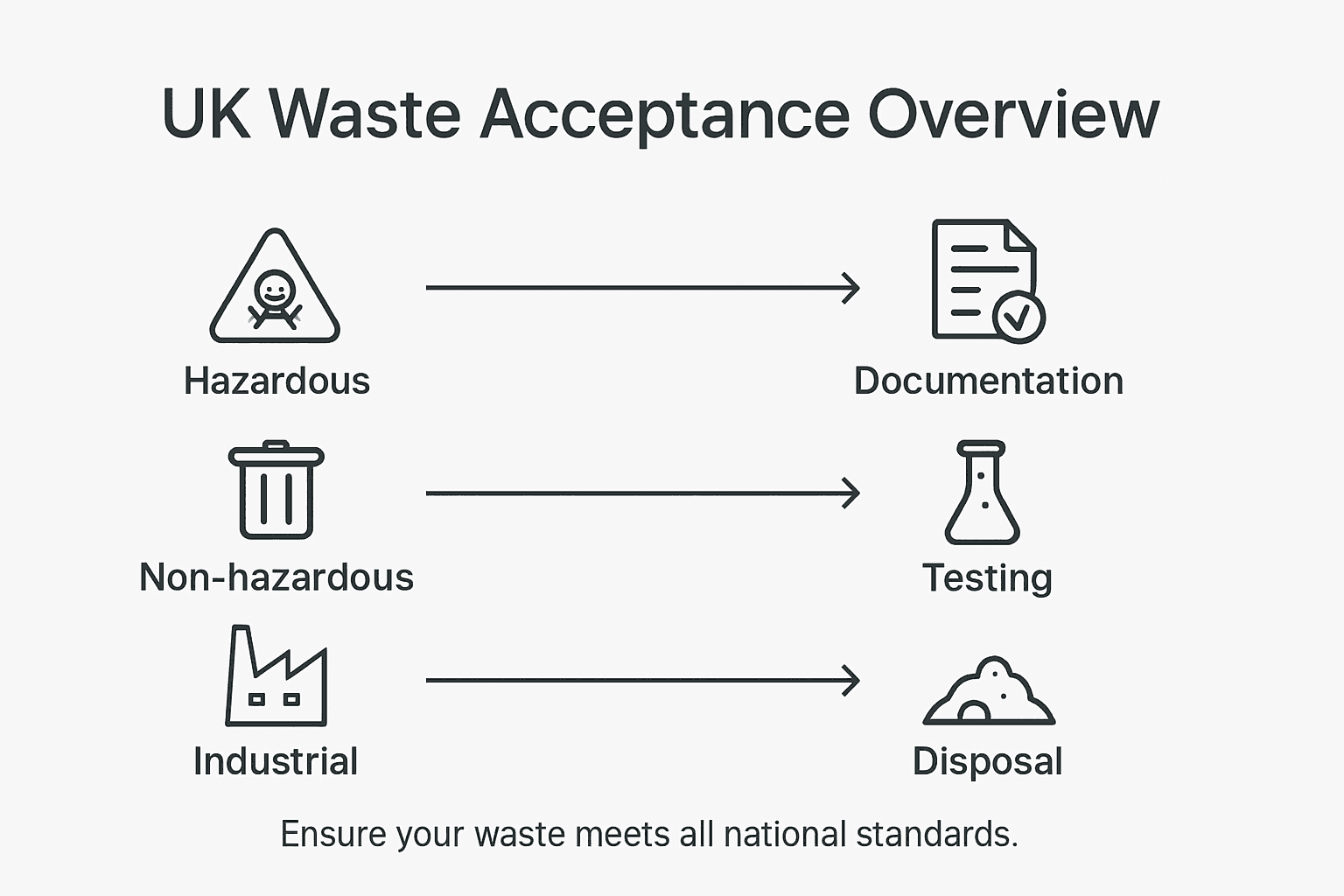
Here is a summary of the main UK waste categories and their typical handling focus:
| Waste Category | Handling Focus | Key Challenge |
|---|---|---|
| Hazardous Waste | Strict tracking and safe disposal | High contamination risk |
| Non-Hazardous Waste | Standard sanitation procedures | Volume management |
| Municipal Waste | Collection and regular recycling | Citizen engagement |
| Industrial Waste | Special processing and traceability | Complex composition |
| Special Waste | Bespoke treatment solutions | Regulatory compliance |
The acceptance standards are particularly stringent for hazardous waste types, which require meticulous tracking, specialised transportation, and carefully controlled disposal methods. Waste management facilities must maintain rigorous documentation and follow strict protocols to manage these materials effectively, ensuring they do not pose risks to public health or environmental systems.
Pro tip: Conduct regular waste stream audits to ensure your organisation’s waste classification and disposal methods remain fully compliant with current UK environmental regulations.
Legal framework for hazardous waste disposal
Hazardous waste disposal in the United Kingdom is governed by a rigorous legal framework designed to protect public health and the environment. Comprehensive legal requirements establish clear obligations for businesses and organisations handling potentially dangerous waste materials, ensuring systematic and responsible management from production through to final disposal.
The primary legal instruments governing hazardous waste management include:
- Environmental Protection Act 1990: Establishes fundamental waste management principles
- Hazardous Waste Regulations 2005: Provides specific guidelines for classification and disposal
- Waste (England and Wales) Regulations 2011: Details waste management hierarchy and responsibilities
- Control of Pollution Act 1974: Addresses environmental contamination risks
Key legal obligations for organisations handling hazardous waste involve multiple critical requirements. Businesses must register as hazardous waste producers, maintain detailed consignment notes for every waste transfer, and ensure that all waste is transported by licensed carriers to approved disposal facilities. Post-implementation reviews of hazardous waste regulations have consistently highlighted the importance of digital tracking and comprehensive documentation to maintain regulatory compliance.

The legal framework imposes significant penalties for non-compliance, including substantial financial fines and potential criminal prosecution for serious breaches. Organisations must implement robust internal systems to classify, track, and dispose of hazardous waste, ensuring they meet the stringent requirements set out by national environmental regulators.
Pro tip: Develop a comprehensive internal audit system that tracks every stage of hazardous waste management to proactively identify and address potential compliance gaps.
Processes for testing and documentation
Waste management requires meticulous testing and documentation processes to ensure regulatory compliance and environmental safety. Environment Agency monitoring protocols establish comprehensive guidelines for organisations to systematically validate and record their waste streams.
The core documentation and testing processes typically involve:
- Waste Characterisation Testing: Comprehensive chemical and physical analysis
- Sampling Procedures: Scientifically validated sampling methodologies
- Digital Record Keeping: Electronic documentation of waste streams
- Traceability Tracking: Detailed logs of waste origin, transportation, and disposal
- Periodic Compliance Audits: Regular internal and external verification checks
Local authority waste management guidelines mandate that organisations maintain rigorous documentation demonstrating the entire lifecycle of waste materials. This includes detailed records of waste generation, classification, transportation routes, treatment processes, and final disposal methods. Digital submission systems have become increasingly important, allowing real-time tracking and immediate regulatory reporting.
The testing processes require organisations to conduct comprehensive waste analysis, including chemical composition tests, toxicity assessments, and environmental impact evaluations. These assessments must be performed by accredited laboratories using standardised methodologies, with results thoroughly documented and retained for potential regulatory inspection. Organisations must maintain these records for a minimum of three years, ensuring transparent and verifiable waste management practices.
The following table outlines core documentation and testing practices, and their benefit to compliance:
| Practice | Compliance Benefit | Example Outcome |
|---|---|---|
| Waste Characterisation | Ensures correct classification of materials | Prevents miscategorisation |
| Digital Record Keeping | Improves data traceability and reporting | Smoother audits, fewer errors |
| Periodic Compliance Audits | Identifies and closes regulatory gaps | Avoids penalties |
Pro tip: Invest in specialised waste management software that automates documentation, ensures regulatory compliance, and provides instant audit trail capabilities.
Responsibilities and compliance risk management
Compliance risk management in waste disposal requires a comprehensive understanding of statutory obligations and potential legal ramifications. Legal frameworks for waste management establish clear responsibilities for organisations handling waste materials, emphasising the critical need for proactive risk mitigation strategies.
Key responsibilities for organisations include:
- Duty of Care: Ensuring safe and legally compliant waste disposal
- Risk Assessment: Conducting thorough evaluations of potential environmental and legal risks
- Documentation: Maintaining comprehensive records of waste streams
- Staff Training: Implementing robust compliance education programmes
- Regular Auditing: Conducting periodic internal and external compliance checks
DEFRA’s post-implementation regulatory review highlights the increasing complexity of compliance risk management. Organisations must develop sophisticated tracking mechanisms that enable real-time monitoring of waste streams, digital reporting capabilities, and comprehensive risk identification protocols. Failure to meet these requirements can result in significant financial penalties, potential legal prosecution, and reputational damage.
The most effective compliance risk management strategies involve creating a culture of environmental responsibility, where every organisational level understands and actively participates in maintaining regulatory standards. This requires ongoing education, transparent reporting mechanisms, and a proactive approach to identifying and mitigating potential compliance risks before they escalate.
Pro tip: Develop a dedicated compliance team with specialised training in waste management regulations to ensure comprehensive risk monitoring and mitigation.
Stay Ahead in UK Waste Compliance with Venture Waste Solutions
Navigating the complex waste acceptance criteria in the United Kingdom demands meticulous attention to hazardous waste classification, detailed documentation, and strict adherence to legal frameworks. If managing waste streams and maintaining compliance feels overwhelming, you are not alone. Many businesses face challenges like thorough waste tracking, secure disposal, and meeting the highest environmental standards while avoiding costly penalties.
Venture Waste understands these critical demands and offers tailored services designed to simplify your compliance journey. From expert hazardous waste handling to seamless general waste collection, our solutions are built to support your commitment to responsible waste management. Explore how our specialist hazardous waste services and detailed insights on waste collection processes for UK businesses align with regulatory requirements, providing peace of mind every step of the way.

Ensure your business stays fully compliant and environmentally responsible with Venture Waste Management. Visit our website https://venturewaste.co.uk today to discover straightforward booking options, expert advice, and comprehensive waste solutions that help you meet UK regulations efficiently and confidently.
Frequently Asked Questions
What are waste acceptance criteria?
Waste acceptance criteria are regulations that determine how different types of waste can be legally processed, transported, and disposed of. They ensure environmental protection and public safety by classifying waste based on its chemical composition and potential hazards.
Why is waste characterisation testing important?
Waste characterisation testing is essential to determine the chemical and physical properties of waste materials. It ensures that waste is correctly classified, which helps prevent mismanagement and potential environmental contamination.
What are the main categories of waste in the UK?
The primary categories include hazardous waste, non-hazardous waste, municipal waste, industrial waste, and special waste. Each category has specific acceptance standards that dictate how the waste must be managed and disposed of.
What legal obligations do organisations have when handling hazardous waste?
Organisations must register as hazardous waste producers, maintain detailed records for every transfer of waste, and ensure all waste is transported by licensed carriers to approved disposal facilities. Compliance with relevant regulations is critical to avoid penalties.


Leave a Reply
Want to join the discussion?Feel free to contribute!