

Understanding Waste Reporting Requirements in the UK
Waste reporting might sound like endless stacks of paperwork and routine bureaucracy, especially when every business in the UK is required by law to keep detailed records of their waste transfers. Yet, compliance is about much more than ticking boxes. More than 70 percent of businesses that implemented robust waste reporting uncovered hidden cost savings and efficiency improvements. The real surprise is that those who master these reports are not just avoiding fines but actually gaining a strategic edge that can completely reshape their operations.
Table of Contents
- What Are Waste Reporting Requirements?
- Why Waste Reporting Matters For Businesses
- How Waste Reporting Works In Different Sectors
- Key Concepts In Waste Reporting Compliance
- Real-World Applications Of Waste Reporting
Quick Summary
| Takeaway | Explanation |
|---|---|
| Document all waste activities | Maintain detailed records of all waste generation, transportation, treatment, and disposal to comply with regulations. |
| Implement waste transfer notes | Create and keep waste transfer notes documenting waste type, quantity, and disposal methods for legal accountability. |
| Identify cost-saving opportunities | Analyse waste reports to pinpoint inefficiencies and reduce unnecessary waste, leading to lower disposal costs. |
| Demonstrate environmental responsibility | Accurate documentation showcases a commitment to sustainability and can enhance corporate reputation. |
| Leverage technology in reporting | Utilize digital tools for real-time tracking and analysis to improve waste management and compliance efficiency. |
What Are Waste Reporting Requirements?
Waste reporting requirements are comprehensive legal obligations that businesses in the United Kingdom must follow when managing and documenting their waste disposal practices. These regulations ensure transparency, accountability, and environmental responsibility across various industries.
Understanding the Core Principles
At their fundamental level, waste reporting requirements involve creating and maintaining detailed documentation about waste generation, transportation, treatment, and final disposal. Companies are legally mandated to track the complete lifecycle of their waste, providing authorities with clear insights into waste management processes.
The primary objectives of these requirements include:
- Monitoring and reducing environmental impact
- Ensuring proper waste handling and disposal
- Creating accountability for businesses
- Supporting national waste management strategies
Legal Framework and Documentation
Under the Waste (England and Wales) Regulations, businesses must maintain precise records known as waste transfer notes. These documents capture critical information such as:
- Type and quantity of waste generated
- Description of waste materials
- Source of waste
- Destination and method of disposal
- Date of transfer
- Details of waste carrier
Businesses operating in Newcastle, Durham, Sunderland, and across the North East must consistently produce these documents for every waste transfer, ensuring a traceable and transparent waste management process. Our guide on waste disposal legal requirements provides further insights into these complex regulations.
Failure to comply with these reporting requirements can result in significant financial penalties and potential legal consequences, underscoring the importance of meticulous waste documentation and management.
Why Waste Reporting Matters for Businesses
Waste reporting goes far beyond mere bureaucratic compliance. It represents a strategic approach to environmental management, cost control, and corporate responsibility that can significantly impact a business’s operational efficiency and reputation.
Environmental and Legal Accountability
For businesses across the North East and United Kingdom, waste reporting serves as a critical mechanism for demonstrating environmental stewardship. By meticulously documenting waste streams, companies can track their environmental footprint, identify opportunities for reduction, and prove their commitment to sustainable practices.
According to Let’s Recycle, accurate waste reporting helps businesses:
- Demonstrate environmental compliance
- Avoid potential legal penalties
- Improve corporate reputation
- Develop more efficient waste management strategies
Financial and Operational Benefits
Beyond environmental considerations, waste reporting offers substantial financial advantages. Companies that implement robust reporting mechanisms can uncover significant cost-saving opportunities. By analyzing detailed waste documentation, businesses can identify inefficiencies, reduce unnecessary waste generation, and potentially lower disposal costs.
For instance, a manufacturing firm in Newcastle might discover through comprehensive reporting that certain production processes generate excessive waste, enabling targeted improvements. Learn how UK businesses can optimize waste management costs to understand these potential savings.
Moreover, transparent waste reporting can enhance a company’s credibility with regulators, investors, and environmentally conscious customers. It signals a proactive approach to resource management and corporate social responsibility, potentially opening doors to new business opportunities and partnerships.
How Waste Reporting Works in Different Sectors
Waste reporting requirements vary significantly across different industries, reflecting the unique waste generation patterns and environmental challenges specific to each sector. Understanding these nuanced approaches helps businesses implement targeted waste management strategies.
Manufacturing and Industrial Sectors
In manufacturing and industrial environments, waste reporting encompasses comprehensive tracking of production-related waste streams. Companies must document detailed waste categorisations, including:
- Hazardous industrial waste
- Recyclable materials
- Chemical byproducts
- Packaging and production residues
Businesses in regions like Newcastle and Durham, with substantial manufacturing presence, must maintain meticulous records demonstrating responsible disposal practices. Our guide on general waste management strategies provides further insights into sector-specific requirements.
Healthcare and Pharmaceutical Sectors
Healthcare organisations face particularly stringent waste reporting regulations due to the sensitive nature of medical waste. Reporting in this sector involves:
- Tracking medical consumables
- Documenting pharmaceutical disposal
- Recording contaminated materials
- Ensuring compliance with health and safety regulations
According to Environment Agency Guidelines, healthcare providers must implement robust waste tracking systems that guarantee complete traceability and minimise environmental contamination risks.
Retail and Service Industries
Retail and service sectors generate diverse waste streams, requiring adaptable reporting mechanisms. These businesses must track and report on:
- Packaging materials
- Food waste
- Electronic equipment
- Promotional and marketing waste
The complexity of waste reporting in these sectors highlights the importance of systematic documentation and continuous improvement in waste management practices across different business environments.
This table compares waste reporting requirements and focus areas across different business sectors, making it easy to see sector-specific priorities.
| Sector | Key Waste Types and Focus Areas |
|---|---|
| Manufacturing & Industrial | Hazardous waste, recyclables, chemicals, packaging residues |
| Healthcare & Pharmaceutical | Medical consumables, pharmaceuticals, contaminated materials |
| Retail & Service | Packaging, food waste, electronics, promotional materials |
Key Concepts in Waste Reporting Compliance
Waste reporting compliance involves a sophisticated framework of regulatory requirements, documentation standards, and environmental management principles that businesses must navigate carefully to ensure legal and ethical waste disposal practices.
Fundamental Regulatory Principles
At the core of waste reporting compliance are fundamental regulatory principles that establish clear guidelines for businesses. These principles emphasise transparency, accountability, and environmental responsibility across all waste management activities.
Key regulatory foundations include:
- Legal obligation to track waste streams
- Mandatory documentation of waste generation and disposal
- Requirement for accurate and timely reporting
- Commitment to minimising environmental impact
Waste Classification and Categorisation
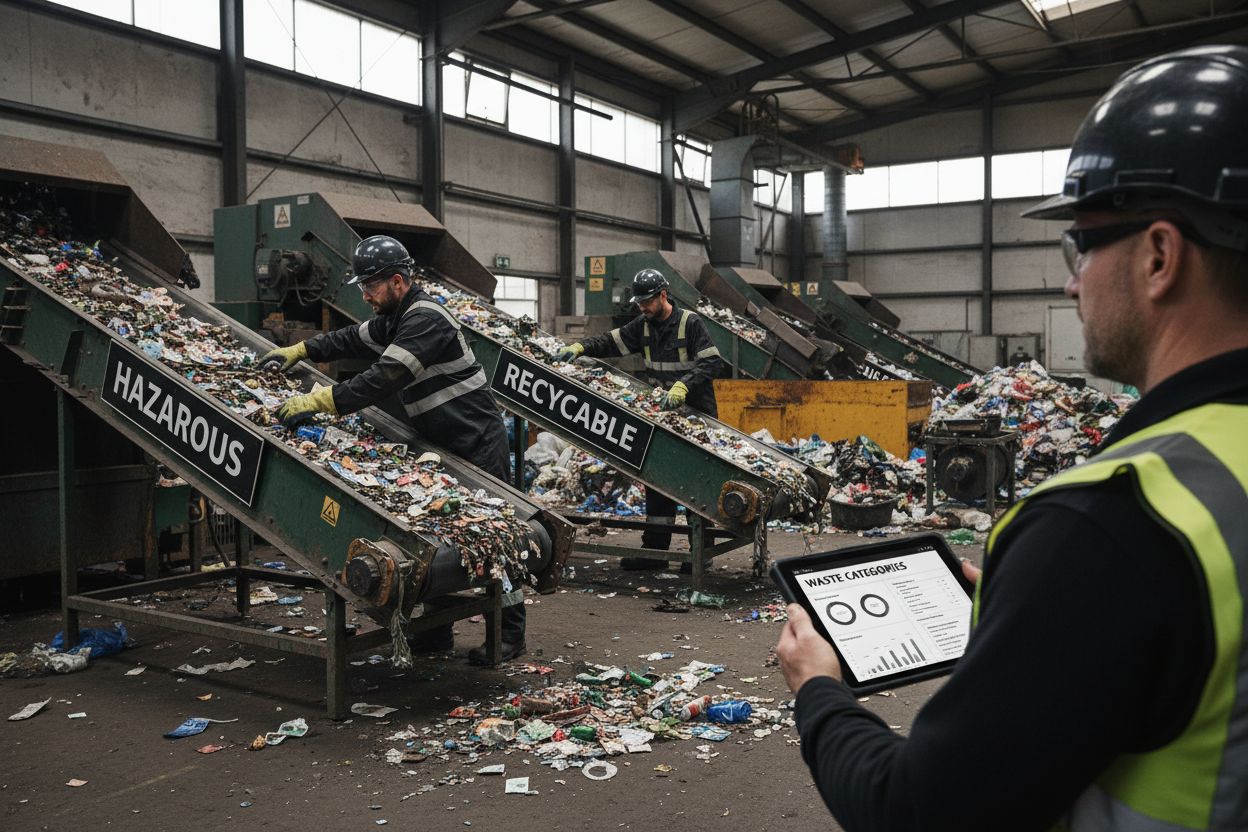
Precise waste classification represents a critical aspect of reporting compliance. Businesses must accurately categorise waste types, understanding their specific handling and disposal requirements. Different waste streams demand unique management approaches, ranging from general waste to hazardous materials.

The Environment Agency provides comprehensive guidelines for waste categorisation, which typically include:
Below is a table highlighting the different waste classification categories and their explanations, as discussed under compliance requirements.
| Waste Type | Description |
|---|---|
| Non-hazardous waste | General waste that does not pose significant risks to health or the environment. |
| Hazardous waste | Contains substances harmful to people or the environment and requires special handling. |
| Recyclable materials | Waste that can be processed and re-used, such as paper, plastic, glass, and metals. |
| Special waste | Requires specific management due to unique risks, such as certain chemicals or electronics. |
- Non-hazardous waste
- Hazardous waste
- Recyclable materials
- Special waste requiring specific handling
Documentation and Record Keeping
Maintaining comprehensive documentation is essential for demonstrating compliance. Businesses must create and preserve detailed waste transfer notes, consignment records, and disposal certificates. Learn more about our comprehensive steps to waste compliance to understand the intricacies of proper record keeping.
According to UK Government Environmental Regulations, effective documentation should include:
- Precise waste descriptions
- Quantities generated
- Transportation details
- Final disposal method
- Date of transfer
- Responsible parties involved
These meticulous record-keeping practices not only ensure regulatory compliance but also provide businesses with valuable insights into their waste management efficiency and potential areas for improvement.
Real-World Applications of Waste Reporting
Waste reporting transcends theoretical compliance, offering practical insights and strategic advantages for businesses across various industries in the United Kingdom. By implementing comprehensive waste reporting mechanisms, organisations can transform environmental obligations into opportunities for operational improvement.
Strategic Business Intelligence
Effective waste reporting provides businesses with sophisticated analytical tools for understanding their resource consumption and environmental impact. Companies can leverage detailed waste documentation to:
- Identify inefficient production processes
- Calculate precise waste generation rates
- Benchmark performance against industry standards
- Develop targeted waste reduction strategies
In regions like Newcastle and Durham, manufacturing firms are increasingly using waste reporting data to drive continuous improvement and operational efficiency.
Financial and Sustainability Benefits
Waste reporting is not merely a regulatory requirement but a strategic tool for financial management. Organisations can utilise comprehensive waste tracking to:
- Reduce disposal costs
- Identify potential revenue streams from recyclable materials
- Demonstrate corporate social responsibility
- Attract environmentally conscious investors and customers
Explore effective waste minimisation strategies to understand how precise reporting can translate into tangible business benefits.
Technological Integration and Innovation
Advanced waste reporting is increasingly leveraging digital technologies to enhance accuracy and insights. According to Waste Management World, modern organisations are implementing:
- Real-time waste tracking systems
- Artificial intelligence for waste stream analysis
- Blockchain for transparent waste documentation
- Predictive analytics for waste generation forecasting
These technological innovations are transforming waste reporting from a compliance exercise into a sophisticated business intelligence tool, enabling organisations to make data-driven decisions about resource management and environmental sustainability.
Simplify Waste Reporting Compliance with Venture Waste
Struggling to keep up with complex waste reporting requirements or worried about meeting documentation standards? Navigating the UK’s regulatory maze can feel overwhelming, especially when accurate paperwork and compliance are non-negotiable. Many businesses like yours face challenges around waste tracking, hazardous categorisation and legal record keeping every day. If you want peace of mind when it comes to environmental responsibility and staying on the right side of the law, you need a process you can trust. See how the Waste Collection Process in the UK for Businesses 2025 meets these goals with clarity.

Let Venture Waste Management take care of your compliance needs while you focus on growing your business. We use a straightforward three-step booking system, tailored waste collection services and offer expert support at every stage from confidential document destruction to hazardous waste handling. Visit https://venturewaste.co.uk today or explore our hazardous waste solutions for extra peace of mind. Start your journey towards effortless compliance and responsible waste management now.
Frequently Asked Questions
What are waste reporting requirements in the UK?
Waste reporting requirements are legal obligations that businesses must comply with regarding the management and documentation of their waste disposal practices. These regulations ensure accountability and environmental responsibility.
Why is waste reporting important for businesses?
Waste reporting is crucial as it helps businesses monitor their environmental impact, demonstrate compliance with regulations, avoid legal penalties, and identify cost-saving opportunities through improved waste management strategies.
What documentation is required for waste reporting?
Businesses must maintain waste transfer notes that detail the type, quantity, source, and disposal method of waste. Accurate and timely documentation is essential for compliance and effective waste management.
How do waste reporting requirements vary across different industries?
Waste reporting requirements differ by industry due to specific waste generation patterns. For example, manufacturing sectors focus on hazardous materials and recyclable byproducts, while healthcare institutions must document medical waste with strict regulations.
Recommended
- Waste Collection Process in the UK for Businesses 2025 – Venture Waste
- Waste Disposal Legal Requirements UK 2025: What Businesses Must Know – Venture Waste
- Waste Management Definition for UK Businesses 2025 – Venture Waste
- Waste Management Step by Step: A Guide for UK Businesses 2025 – Venture Waste


Leave a Reply
Want to join the discussion?Feel free to contribute!