

Understanding Waste Management Legislation Update 2025
Waste management legislation shapes every step from bin to landfill and yet many businesses underestimate its reach. Over 300,000 waste-related prosecutions have taken place in the past decade across the UK. Most firms expect a few forms or inspections, but miss the real story. The biggest change is how these regulations force companies to see waste as a resource rather than just a problem to get rid of.
Table of Contents
- What Is Waste Management Legislation?
- Why Waste Management Legislation Matters
- How Waste Management Regulations Work
- Key Concepts In Waste Management Legislation
- The Impact Of Legislation On Businesses And Practices
Quick Summary
| Takeaway | Explanation |
|---|---|
| Waste management legislation is essential for businesses. | Regulations ensure proper handling of waste, protecting public health and the environment. |
| Compliance creates operational transformation opportunities. | Businesses must adapt strategies to meet legislative standards, promoting sustainability and efficiency. |
| Waste hierarchy prioritises waste management practices. | Emphasises reducing, reusing, and recycling over disposal, aiding environmental conservation. |
| Non-compliance can lead to significant penalties. | Businesses face financial repercussions and potential legal actions for failing to adhere to regulations. |
| Waste classification enhances accountability and tracking. | Proper documentation of waste types ensures appropriate handling, reducing environmental risks. |
What is Waste Management Legislation?
Waste management legislation represents a complex framework of legal regulations designed to control, monitor, and standardise how waste is handled across various industries in the United Kingdom. Comprehensive guidelines from the UK government establish critical standards for waste production, transportation, treatment, and disposal, ensuring environmental protection and public health safety.
The Purpose and Scope of Waste Management Laws
These legislative frameworks serve multiple crucial objectives. They aim to:
- Minimise environmental contamination
- Protect human health and ecological systems
- Create standardised waste management protocols
- Establish clear accountability for waste producers
- Promote sustainable waste handling practices
Waste management legislation applies across diverse sectors including manufacturing, healthcare, construction, retail, and service industries. These regulations mandate specific responsibilities for businesses regarding waste generation, segregation, transportation, and ultimate disposal.
Legal Framework and Regulatory Components
The UK’s waste management legislative landscape is primarily structured around several key regulations, including the Environmental Protection Act 1990 and Waste (England and Wales) Regulations 2011. These laws outline comprehensive requirements for waste producers, carriers, and processors.
Businesses must adhere to strict guidelines that cover waste classification, tracking, reporting, and environmentally responsible disposal methods.
Below is an overview of the main components and mechanisms of waste management legislation in the UK, providing a clear breakdown for better understanding.
| Component / Mechanism | Description |
|---|---|
| Mandatory Waste Registration | Businesses must register as waste producers and obtain relevant licences for waste handling. |
| Documentation of Waste Movements | Detailed records of all waste movements are required to ensure traceability and compliance. |
| Waste Classification | All waste must be categorised to determine appropriate handling, treatment, and disposal methods. |
| Waste Hierarchy Adherence | Regulations prioritise prevention, reuse, recycling, energy recovery, with disposal as the last resort. |
| Environmental Impact Assessments | Regular assessments must be undertaken to evaluate the potential effects of waste on the environment. |
| Compliance Audits and Inspections | Periodic audits and inspections are conducted by authorities to ensure legal compliance. |
| Enforcement and Penalties | Non-compliance may lead to financial penalties, legal action, or suspension of waste management permits. |
Key legal components include mandatory waste registration, proper documentation of waste movements, adherence to disposal hierarchy principles (prevention, preparation for reuse, recycling, energy recovery, and disposal), and implementing robust waste management systems that minimise environmental impact.
Why Waste Management Legislation Matters
Waste management legislation plays a pivotal role in protecting the environment, public health, and economic sustainability. Comprehensive government research highlights the critical importance of structured waste regulation in creating a responsible and efficient waste management ecosystem.
Environmental Protection and Sustainability
These legislative frameworks are fundamental in addressing significant environmental challenges. By implementing strict waste management regulations, the UK aims to:
- Reduce pollution and contamination of natural ecosystems
- Minimise greenhouse gas emissions from improper waste disposal
- Promote circular economy principles
- Protect biodiversity and natural habitats
- Conserve finite natural resources
Waste management legislation ensures that businesses and organisations adopt sustainable practices, moving beyond traditional disposal methods towards more environmentally conscious waste handling strategies.
Economic and Social Implications
Beyond environmental benefits, waste management legislation drives significant economic and social advantages. Explore our comprehensive waste management business guide to understand the broader implications.
Regulatory frameworks create economic opportunities by:
- Encouraging innovation in waste processing technologies
- Creating new job markets in recycling and waste management sectors
- Reducing long-term environmental cleanup costs
- Promoting resource efficiency and cost-effective waste strategies
Moreover, these regulations protect public health by ensuring proper handling of potentially hazardous materials, preventing contamination of water sources, soil, and air, and reducing risks associated with improper waste disposal.
How Waste Management Regulations Work
Waste management regulations function as a comprehensive governance system designed to control and monitor waste generation, handling, and disposal across various sectors. The Environmental Permitting Regulations establish a structured framework that ensures businesses comply with stringent environmental protection standards.
Regulatory Compliance Mechanisms
The operational structure of waste management regulations involves multiple interconnected components that work together to create a robust waste control system:
- Mandatory registration and licensing for waste producers
- Regular environmental impact assessments
- Strict documentation and tracking requirements
- Comprehensive waste classification systems
- Periodic compliance audits and inspections
Businesses must navigate these requirements carefully, demonstrating their commitment to responsible waste management through detailed record-keeping and adherence to prescribed waste handling protocols.
Enforcement and Accountability
Regulatory bodies employ various mechanisms to ensure compliance and penalise violations. Learn more about waste management compliance steps to understand the intricate process.
Key enforcement strategies include:
- Substantial financial penalties for non-compliance
- Potential legal actions against repeat offenders
- Suspension or revocation of waste management permits
- Mandatory corrective action plans
- Public reporting of environmental violations
These regulations create a comprehensive system that encourages businesses to adopt environmentally responsible waste management practices, balancing economic considerations with ecological preservation. By establishing clear guidelines and potential consequences, waste management regulations drive continuous improvement in how organisations handle and dispose of their waste.
Key Concepts in Waste Management Legislation
Waste management legislation encompasses several fundamental principles that guide environmental protection and sustainable waste handling practices. Research from the Department for Environment, Food and Rural Affairs highlights the critical interconnected concepts that form the backbone of modern waste management regulations.
Waste Hierarchy and Prioritisation
The waste hierarchy represents a pivotal concept in waste management legislation, establishing a clear priority system for waste handling:
- Prevention of waste generation
- Preparation for reuse
- Recycling
- Energy recovery
- Disposal as the final option
This hierarchical approach encourages businesses to minimise waste production and prioritise more sustainable management strategies.
The table below summarises the key priorities of the waste hierarchy as outlined by UK legislation, highlighting their order and main objectives.
| Priority Level | Description | Primary Objective |
|---|---|---|
| 1. Prevention | Avoiding the creation of waste at source | Minimise waste generation |
| 2. Preparation for Reuse | Cleaning or repairing to allow products to be reused | Extend product lifespan |
| 3. Recycling | Processing waste into new materials or products | Recover resources from waste |
| 4. Energy Recovery | Converting waste into usable energy (e.g., electricity) | Utilise waste for energy production |
| 5. Disposal | Reserved for waste that cannot be reused or recycled | Safe final disposal with minimal impact |
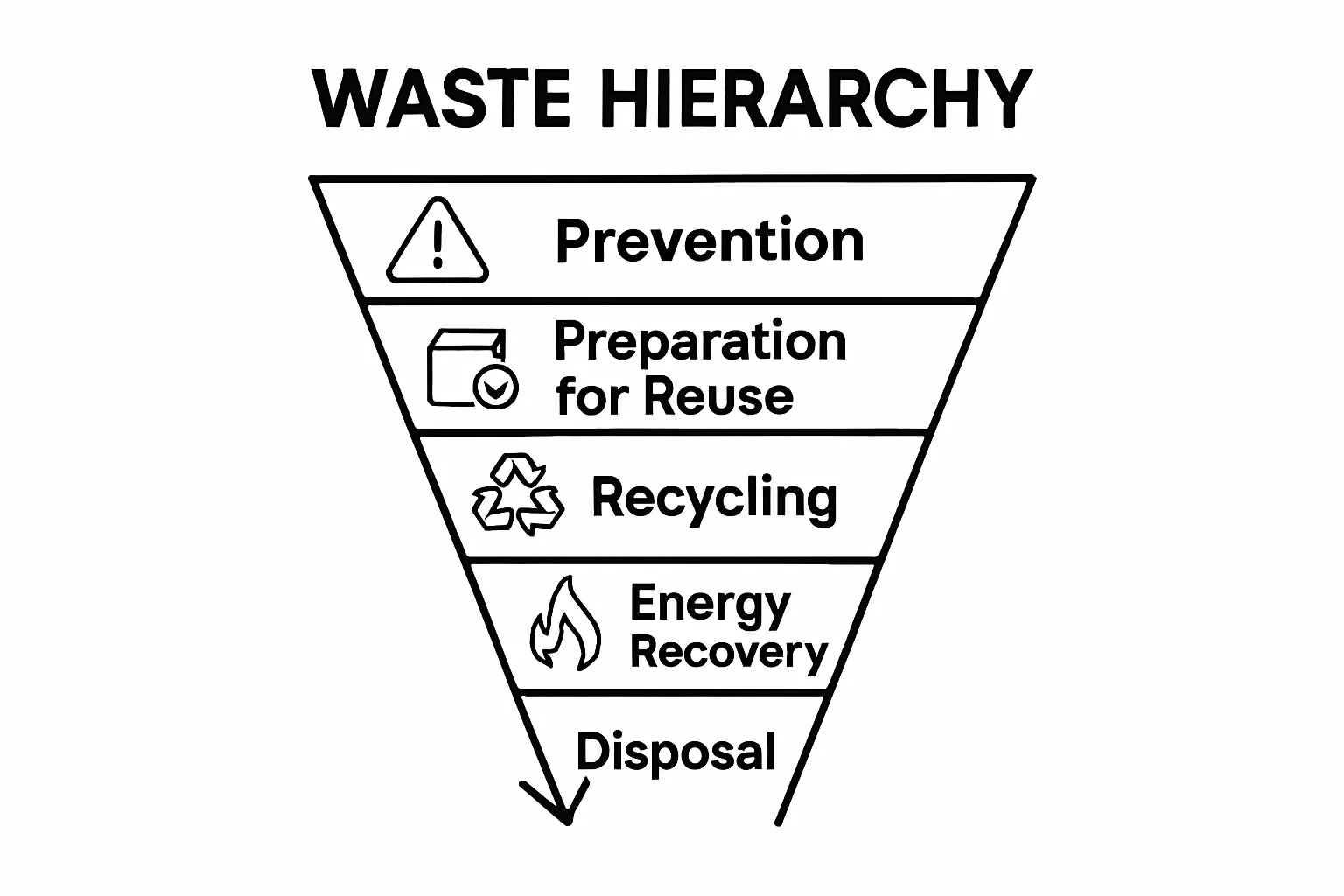 By implementing these principles, organisations can significantly reduce their environmental impact and move towards more circular economic models.
Waste Classification and Tracking
Precise waste classification is another critical concept in waste management legislation. Find out more about waste disposal regulations to understand the nuanced approach to waste management.
Key classification principles include:
- Identifying waste types and potential environmental risks
- Establishing clear documentation requirements
- Implementing robust tracking mechanisms
- Determining appropriate handling and disposal methods
- Ensuring transparency in waste management processes
These classification systems enable regulatory bodies to monitor waste streams effectively, ensuring that different types of waste receive appropriate treatment and minimising potential environmental contamination. By mandating comprehensive documentation and tracking, legislation creates accountability and promotes responsible waste management across various industrial sectors.
The Impact of Legislation on Businesses and Practices
Waste management legislation fundamentally transforms how businesses approach resource utilisation and environmental responsibility. Resources and Waste Strategy for England demonstrates the comprehensive approach to reshaping business practices through regulatory frameworks.
Operational and Strategic Transformation
Businesses across various sectors must fundamentally redesign their operational strategies to comply with evolving waste management regulations:
- Implementing comprehensive waste reduction programmes
- Redesigning product lifecycle and packaging
- Investing in sustainable technology and infrastructure
- Developing internal waste management training
- Creating circular economy business models
These changes require significant investment and strategic planning, compelling organisations to view waste not as a disposal challenge but as a potential resource for innovation and efficiency.
Financial and Competitive Implications
Understand how to avoid potential business waste penalties to mitigate regulatory risks and financial impacts.
The legislative landscape creates both challenges and opportunities for businesses:
- Potential financial penalties for non-compliance
- Tax incentives for sustainable waste management
- Competitive advantages through environmental leadership
- Enhanced corporate reputation and stakeholder trust
- Access to green investment and funding opportunities
Companies that proactively adapt to these regulatory changes can transform compliance from a cost centre into a strategic advantage, positioning themselves as environmentally responsible market leaders.

Stay Ahead with Compliant Waste Solutions for 2025
Feeling uncertain about the latest updates in waste management legislation for 2025? Navigating new legal requirements can be overwhelming for any business, especially when compliance is crucial and penalties are at stake. Many organisations now face the challenge of adjusting to revised waste classification, tracking, and disposal protocols. The updated regulations demand not only awareness but also immediate implementation to avoid fines and safeguard your reputation. Our Waste Collection Process in the UK for Businesses 2025 page breaks down every step, helping you align your practices seamlessly with the new rules.

Act before non-compliance puts your business at risk. Take the smart route towards full legal alignment and responsible waste handling today. Visit Venture Waste Management now to discover easy booking, ongoing compliance support, and comprehensive waste solutions designed for UK businesses. Confident progress is just a click away—plan the next step and secure your compliance for 2025.
Frequently Asked Questions
What is the purpose of waste management legislation?
Waste management legislation aims to minimise environmental contamination, protect human health and ecosystems, standardise waste management protocols, ensure accountability for waste producers, and promote sustainable waste handling practices.
What are the key components of waste management regulations in the UK?
Key components include mandatory waste registration, documentation of waste movements, strict guidelines for waste classification, periodic compliance audits, and adherence to a waste disposal hierarchy that prioritises prevention, reuse, recycling, energy recovery, and disposal.
How do businesses ensure compliance with waste management legislation?
Businesses ensure compliance by registering as waste producers, conducting regular environmental assessments, maintaining detailed records of waste management practices, and adhering to the classification and tracking requirements set out in the regulations.
What are the economic implications of waste management legislation for businesses?
Waste management legislation can create economic opportunities by encouraging innovation in waste processing technologies, creating new job markets in recycling and waste management, and promoting resource efficiency, which can lead to cost-effective waste strategies.


Leave a Reply
Want to join the discussion?Feel free to contribute!