

Understanding Waste Management in Schools: A Thorough Explanation
Schools across the UK produce mountains of waste each year and in some institutions, this can reach hundreds of kilograms per week from just paper and food alone. Most people think this is just a problem for the janitor and a few bins. But these heaps of rubbish are actually being turned into powerful teaching tools that shape the next generation’s attitudes on sustainability.
Table of Contents
- What Is Waste Management In Schools?
- Why Is Waste Management Significant In Educational Institutions?
- How Waste Management Systems Function In Schools
- Key Concepts And Strategies For Effective Waste Management In Schools
Quick Summary
| Takeaway | Explanation |
|---|---|
| Implement waste segregation systems | Clear segregation points for recycling and disposal enhance efficiency in waste management. |
| Integrate waste education in curriculum | Teaching students about waste management fosters responsibility and ecological awareness among young learners. |
| Adopt technological solutions | Using smart waste tracking and sorting technologies improves data management and reduces overall waste generation. |
| Encourage preventive waste measures | Promote practices like paperless communication and bulk purchases to significantly cut down on waste produced by schools. |
| Collaborate with the school community | Engaging administrators, teachers, and students in waste management creates a unified approach to sustainable practices. |
What is Waste Management in Schools?
Waste management in schools represents a comprehensive approach to systematically handling, reducing, and responsibly disposing of waste generated within educational environments. This process involves strategic planning, implementation of recycling programmes, and educational initiatives designed to minimise environmental impact and promote sustainable practices.
Understanding the Scope of School Waste
Educational institutions generate significant quantities of waste across multiple categories. These typically include:
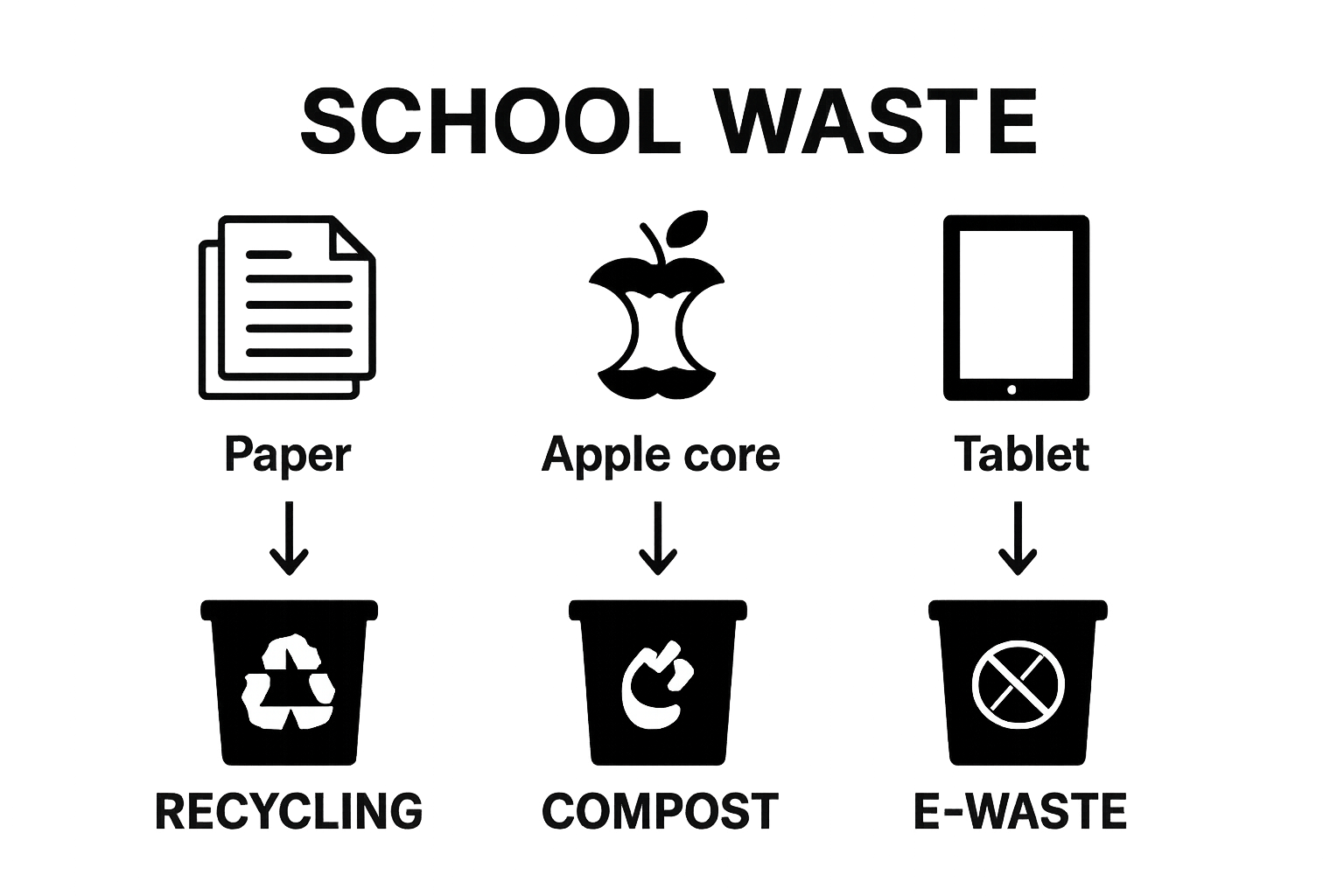
- Paper and cardboard from classroom materials
- Food waste from cafeterias and lunch areas
- Electronic waste from computer laboratories and administrative offices
- Packaging materials from school supplies
- Plastic waste from various institutional activities
The complexity of waste management in schools extends beyond mere disposal, requiring nuanced strategies that balance practical waste reduction with environmental responsibility.
Below is a table summarising the main categories of waste produced within schools and their typical sources, providing a clear overview of waste streams to manage.
| Waste Category | Typical Sources in Schools |
|---|---|
| Paper and Cardboard | Classroom materials, administrative offices |
| Food Waste | Cafeterias, lunchboxes, staff rooms |
| Electronic Waste | Computer labs, offices, IT equipment |
| Packaging Materials | School supplies, deliveries, procurement |
| Plastic Waste | Bottles, packaging, various activities |
| Hazardous Materials | Laboratories, art rooms, cleaning supplies |
| General Waste | Mixed residual waste from daily activities |
Environmental and Educational Significance
Waste management in schools serves dual purposes: practical waste reduction and environmental education. By implementing robust waste management systems, schools can simultaneously reduce their ecological footprint and teach students critical sustainability skills. According to research published by ERIC, effective waste management programmes can transform educational spaces into living laboratories of environmental learning.
Schools in regions like Newcastle, Durham, and other North East educational institutions are increasingly recognising the importance of comprehensive waste management strategies. These approaches not only minimise landfill contributions but also cultivate a culture of environmental consciousness among students and staff.
Successful waste management in schools requires collaborative efforts involving administrators, teachers, students, and waste management professionals, creating a holistic approach to sustainable institutional practices.
Why is Waste Management Significant in Educational Institutions?
Waste management holds profound importance in educational institutions, extending far beyond simple rubbish disposal. It represents a critical intersection of environmental responsibility, financial management, and student education that shapes institutional sustainability and future societal attitudes.
This table compares the environmental, educational, and financial benefits of implementing waste management systems in schools, supporting understanding of why these programmes are significant.
| Benefit Type | Explanation | Example Outcome |
|---|---|---|
| Environmental | Reduces landfill use, conserves resources, lowers carbon footprint | Less waste sent to landfill, greater recycling rates |
| Educational | Integrates sustainability into curriculum and daily routines | Students gain practical skills and environmental awareness |
| Financial | Reduces disposal costs, enables more efficient resource utilisation, potential revenue | Lower waste management bills, possible earnings from recycling |
| Social | Builds a culture of environmental responsibility among staff and students | School-wide environmental initiatives, peer-led programmes |
Environmental Impact and Resource Conservation
Educational institutions generate substantial waste volumes that can significantly impact local environmental ecosystems. By implementing strategic waste management practices, schools can:
- Reduce landfill contributions
- Minimise carbon footprint
- Conserve natural resources
- Demonstrate ecological leadership
In regions like Newcastle and Durham, schools are increasingly recognising their potential to drive meaningful environmental change through responsible waste strategies. Explore our comprehensive waste management solutions tailored for educational settings.
Educational and Social Learning Opportunities
Waste management transcends technical processes, serving as a powerful educational platform. According to research from the U.S. Environmental Protection Agency, schools can transform waste management into an interactive learning experience that cultivates environmental consciousness among students.
By integrating waste reduction, recycling, and sustainability principles into curriculum and daily operations, educational institutions can nurture a generation of environmentally responsible citizens. Students learn practical skills such as waste segregation, understanding recycling processes, and recognising the broader ecological implications of their individual actions.
Financial and Operational Benefits
Beyond environmental considerations, effective waste management offers substantial financial advantages for educational institutions. Systematic waste reduction strategies can lead to significant cost savings through reduced disposal expenses, more efficient resource utilisation, and potential revenue generation from recyclable materials.
Schools that adopt comprehensive waste management approaches not only contribute to environmental preservation but also demonstrate fiscal responsibility and forward-thinking institutional management.
How Waste Management Systems Function in Schools
Waste management systems in educational institutions represent sophisticated, multifaceted approaches designed to systematically handle, reduce, and repurpose institutional waste. These systems integrate technological infrastructure, policy frameworks, and educational strategies to create comprehensive waste management solutions.
Infrastructure and Waste Segregation
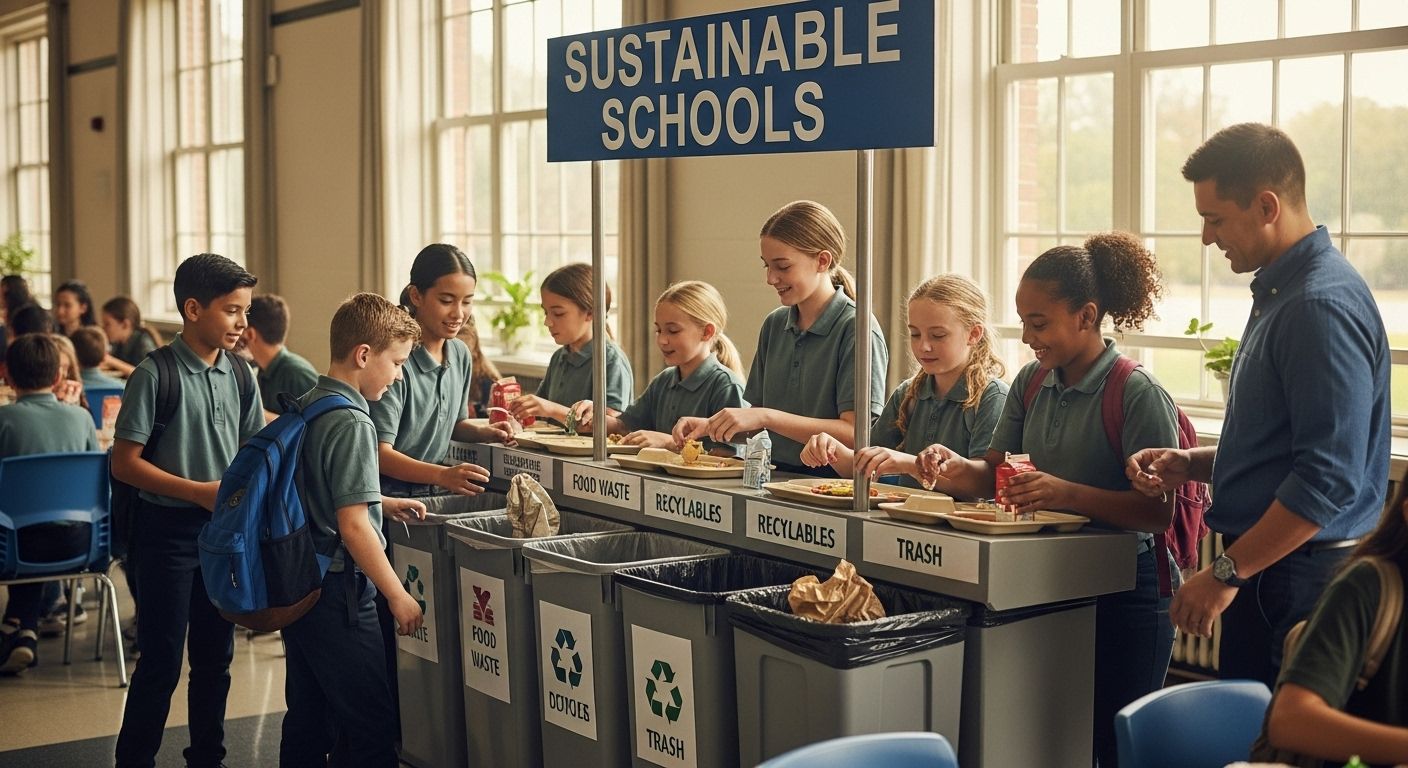
Effective waste management begins with robust infrastructure and strategic segregation. Schools typically implement dedicated waste collection points with clearly labelled receptacles for different waste categories:
- Recyclable materials (paper, cardboard, plastics)
- Organic waste for composting
- Electronic waste
- General non-recyclable waste
- Hazardous materials requiring specialised disposal
Learn about our step-by-step waste management guidance tailored for institutional environments.
Operational Monitoring and Reporting
Successful waste management systems rely on continuous monitoring and data-driven insights. According to research from the U.S. Environmental Protection Agency, schools implement tracking mechanisms to:
- Measure total waste generation
- Calculate recycling rates
- Identify waste reduction opportunities
- Assess environmental impact
In regions like Newcastle and Durham, educational institutions are increasingly adopting digital tracking tools that provide real-time waste management analytics, enabling more precise and responsive environmental strategies.
Educational Integration and Cultural Transformation
Beyond technical infrastructure, waste management systems function as dynamic educational platforms. They transform waste handling from a purely operational task into an interactive learning experience that cultivates environmental consciousness.
Schools integrate waste management principles directly into curriculum, teaching students about resource conservation, recycling processes, and individual environmental responsibility. This approach ensures that waste management becomes more than a procedural activity—it becomes a fundamental aspect of institutional culture and student development.
Key Concepts and Strategies for Effective Waste Management in Schools
Effective waste management in schools demands a holistic approach that integrates strategic planning, technological solutions, and educational initiatives. These strategies go beyond traditional waste disposal methods, focusing on comprehensive environmental stewardship and sustainable institutional practices.
Waste Reduction and Prevention Strategies
Preventative waste management represents the most efficient approach for educational institutions. Proactive waste reduction involves implementing systematic strategies that minimise waste generation from the outset:
- Encouraging digital documentation and paperless communication
- Promoting reusable water bottles and lunch containers
- Implementing bulk purchasing to reduce packaging waste
- Designing procurement policies that prioritise sustainable products
- Establishing school-wide recycling and composting programmes
Discover advanced waste minimisation techniques tailored for institutional environments.
Technological and Infrastructural Interventions
Modern waste management in schools leverages technological solutions to enhance efficiency and tracking. According to research from waste management experts, institutions are increasingly adopting innovative approaches:
- Smart waste sorting technologies
- Digital waste tracking systems
- Automated recycling stations
- Data analytics for waste pattern identification
- IoT-enabled waste management infrastructure
In regions like Newcastle and Durham, schools are pioneering technological interventions that transform waste management from a logistical challenge into a data-driven, sustainable practice.
Educational and Cultural Transformation
Ultimately, successful waste management transcends technical solutions. It requires fundamental cultural shifts that embed sustainability principles into institutional DNA. Schools must create comprehensive educational programmes that:
- Integrate waste management into curriculum
- Develop student leadership in sustainability
- Create peer-led environmental initiatives
- Provide practical skills in waste segregation
- Foster a culture of environmental responsibility
By transforming waste management from an administrative task to an educational opportunity, schools can nurture environmentally conscious future generations.
Bring Sustainable Waste Solutions to Your School Today
Managing waste in schools is not just about getting rid of rubbish. It means protecting the environment, teaching students valuable habits and saving money. If your school is struggling with too much paper, leftover food or confusing recycling rules, you are not alone. Many institutions face challenges balancing practical waste reduction with building a strong culture of environmental responsibility. The right guidance makes all the difference in transforming waste management into a positive learning opportunity for students and staff.
Learn more about the waste collection process for schools

Do not let school waste control your day. Act now and move towards a cleaner, greener future for your campus. Venture Waste Management offers easy-to-use solutions, from general waste and recycling to confidential document destruction and specialist support for educational settings. With coverage across the UK and a commitment to compliance, we handle your waste responsibly so you can focus on what matters most – education. Book your tailored waste collection through our quick online process at Venture Waste Management and show your staff and students how small changes can make a big difference. If you want to discover more about how the national waste network can benefit your school, visit our waste collection network guide now.
Frequently Asked Questions
What is waste management in schools?
Waste management in schools is a systematic approach to handling, reducing, and disposing of waste generated in educational environments. It includes recycling programmes and educational initiatives aimed at minimising environmental impact and promoting sustainable practices.
Why is waste management significant in educational institutions?
Waste management is crucial in educational institutions as it addresses environmental responsibility, financial management, and provides educational opportunities for students to learn about sustainability, thus shaping future societal attitudes.
How can schools implement effective waste management systems?
Schools can implement effective waste management systems by setting up robust infrastructure for waste segregation, monitoring waste generation, using digital tracking tools, and integrating waste management principles into the curriculum to foster an environmentally conscious culture.
What are some strategies for waste reduction in schools?
Some effective strategies for waste reduction in schools include encouraging digital documentation, promoting reusable lunch containers, bulk purchasing to reduce packaging waste, and implementing comprehensive recycling and composting programmes.


Leave a Reply
Want to join the discussion?Feel free to contribute!