

Understanding Waste Management Challenges for Businesses
Business waste is not just about bins and rubbish removal, especially in the UK where commercial waste makes up nearly 19 percent of the total waste generated every year. You might expect waste management to be a straightforward tick-box exercise. The reality is far more complicated, with rules changing fast and costs quickly adding up, turning simple rubbish disposal into a major operational headache for firms trying to stay both legal and sustainable.
Table of Contents
- What Are Waste Management Challenges And Their Types?
- Why Effective Waste Management Is Crucial For Businesses?
- How Waste Management Technologies Address Challenges
- Key Concepts In Waste Legislation And Compliance
- Real-World Examples Of Businesses Overcoming Waste Challenges
Quick Summary
| Takeaway | Explanation |
|---|---|
| Businesses face complex waste management challenges | Waste management involves compliance, environmental concerns, and economic pressures that require strategic planning. |
| Technology enhances waste management efficiency | Advanced sorting, tracking systems, and analytics improve waste segregation and compliance for businesses. |
| Effective waste management boosts financial performance | Implementing sustainable practices can lead to cost savings and potential revenue from recyclables. |
| Legal compliance is critical for operational success | Understanding waste regulations is essential for avoiding penalties and ensuring responsible practices. |
| Real-world success stories demonstrate best practices | Case studies show that innovative waste strategies lead to cost reduction and sustainable operations in various sectors. |
What are Waste Management Challenges and Their Types?
Waste management challenges represent complex obstacles businesses encounter when attempting to responsibly dispose of and process their generated waste materials. These challenges extend far beyond simple rubbish collection, encompassing environmental, regulatory, economic, and operational dimensions that require strategic planning and comprehensive understanding.
Environmental and Regulatory Challenges
Businesses across the United Kingdom face increasingly stringent waste management regulations. According to the Environment Agency’s 2022 review, waste management challenges are multifaceted and require meticulous attention. Key environmental and regulatory challenges include:
- Compliance with evolving waste segregation requirements
- Reducing carbon footprint through sustainable waste practices
- Meeting legal standards for waste disposal and recycling
- Preventing potential environmental contamination
For businesses in Newcastle, Durham, and other North East industrial regions, these challenges demand proactive waste management strategies that align with national environmental guidelines.
Economic and Operational Waste Management Obstacles
Economic constraints present significant waste management challenges for businesses. The Local Government Association highlights that commercial waste constitutes approximately 19% of total waste in the UK, representing substantial economic implications. These challenges manifest through:
- High waste disposal and recycling costs
- Investment requirements for advanced waste management technologies
- Training personnel in proper waste handling procedures
- Managing waste streams across diverse business operations
Businesses must develop robust waste management systems that balance economic efficiency with environmental responsibility. Our comprehensive guide on waste management solutions can help organisations navigate these complex challenges effectively.
Ultimately, understanding and addressing these waste management challenges requires a holistic approach that integrates legal compliance, environmental stewardship, and strategic operational planning.
The following table outlines the key categories of waste management challenges that UK businesses face, summarising environmental/regulatory and economic/operational obstacles for easier comparison.
| Challenge Category | Description | Example Impacts |
|---|---|---|
| Environmental & Regulatory | Compliance with changing laws, reducing carbon footprint, ensuring legal disposal | Increased legal scrutiny, potential contamination, penalties |
| Economic & Operational | Managing costs, technology investment, staff training, handling diverse waste streams | Rising waste collection costs, need for specialist equipment |
Why Effective Waste Management is Crucial for Businesses?
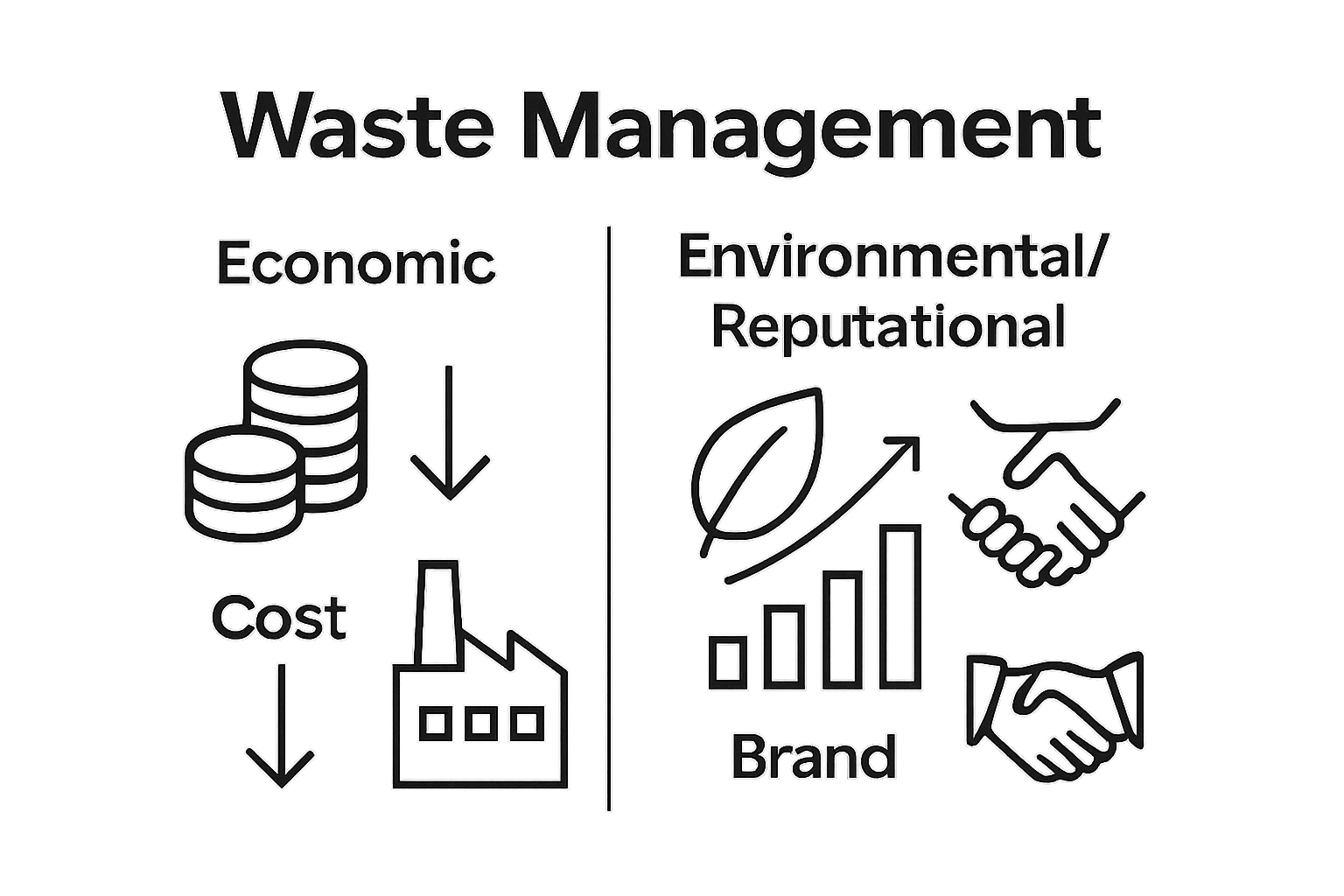
Effective waste management transcends mere regulatory compliance. It represents a strategic approach that directly impacts a company’s operational efficiency, financial performance, environmental responsibility, and corporate reputation. Businesses that prioritise comprehensive waste management strategies gain significant competitive advantages in an increasingly sustainability-focused marketplace.
Financial and Operational Benefits
Implementing robust waste management practices offers substantial economic advantages for organisations. According to research from WRAP UK, businesses can potentially reduce operational costs by up to 20% through systematic waste reduction and recycling strategies. These financial benefits materialise through:
- Minimising waste disposal expenses
- Reducing raw material procurement costs
- Creating potential revenue streams from recyclable materials
- Improving overall operational efficiency
For companies in North East England, such as those in industrial zones around Newcastle and Sunderland, these economic incentives make waste management a critical business consideration.
Environmental and Reputational Impact
Beyond financial considerations, effective waste management plays a pivotal role in environmental stewardship and corporate reputation. Modern consumers and stakeholders increasingly evaluate businesses based on their environmental credentials. Sustainable waste management practices demonstrate corporate social responsibility and can significantly enhance brand perception.
Businesses that proactively manage their waste streams signal a commitment to environmental protection, which can attract environmentally conscious customers and investors. Learn more about cost-effective waste management strategies to align economic and environmental objectives.
Ultimately, effective waste management is not just an operational necessity but a strategic opportunity for businesses to differentiate themselves, reduce costs, and contribute positively to environmental sustainability.
This table highlights the principal benefits that effective waste management delivers for businesses, covering both financial/operational and environmental/reputational aspects.
| Benefit Type | Core Advantages |
|---|---|
| Financial & Operational | Reduced disposal costs, lower raw material expenses, revenue from recyclables, improved operational flow |
| Environmental & Reputational | Enhanced corporate image, demonstrates social responsibility, attracts eco-conscious stakeholders |
How Waste Management Technologies Address Challenges
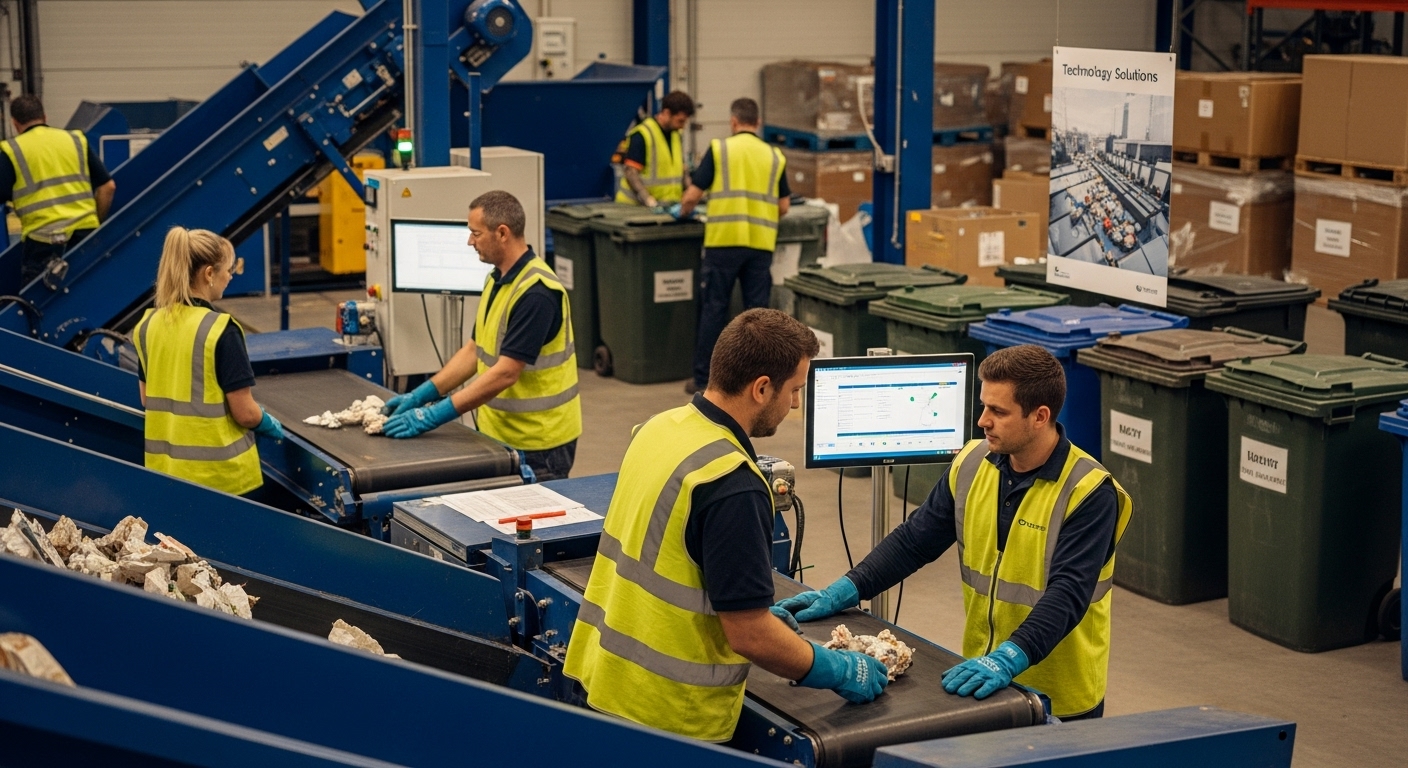
Modern waste management technologies represent sophisticated solutions designed to transform traditional waste handling approaches, offering businesses innovative methods to address complex environmental and operational challenges. These technological advancements provide comprehensive strategies for more efficient, sustainable, and cost-effective waste management processes.
Advanced Sorting and Recycling Technologies
Cutting-edge waste management technologies have revolutionised how businesses process and recycle materials. According to DEFRA’s technological innovation report, emerging technologies enable more precise waste segregation and recycling capabilities. These sophisticated systems include:
- Artificial intelligence-powered sorting mechanisms
- Optical scanning technologies for material identification
- Automated waste segregation equipment
- Advanced sensor-based waste stream analysis
Particularly in industrial regions like Newcastle and Durham, these technologies enable businesses to dramatically improve their waste management efficiency and environmental compliance.
Digital Waste Tracking and Management Systems
Digital platforms have transformed waste management tracking and reporting, providing businesses with unprecedented insights into their waste generation and disposal processes. Modern waste management technologies offer real-time monitoring, comprehensive data analytics, and precise tracking mechanisms that help organisations:
- Identify waste reduction opportunities
- Monitor compliance with environmental regulations
- Generate detailed sustainability reports
- Implement strategic waste minimisation initiatives
Our comprehensive waste management solutions demonstrate how technology can streamline complex waste management processes.
Technological innovations continue to push the boundaries of waste management, offering businesses increasingly sophisticated tools to address environmental challenges while maintaining operational efficiency and economic viability.
This table provides an overview of the main technological innovations discussed in the article that address business waste management challenges, detailing their functionality and impact.
| Technology Type | Functionality | Impact on Business |
|---|---|---|
| Advanced Sorting & Recycling Tech | AI-powered sorting, optical scanning, sensor-based analysis | Improved segregation & compliance |
| Digital Tracking & Management Systems | Real-time waste monitoring, data analytics, sustainability reporting | Enhanced transparency & efficiency |
Key Concepts in Waste Legislation and Compliance
Waste legislation represents a complex framework of regulations designed to ensure responsible waste management, environmental protection, and sustainable business practices. Understanding these legal requirements is crucial for organisations seeking to maintain compliance and minimise potential environmental and financial risks.
Fundamental Waste Management Legal Responsibilities
Businesses operate within a rigorous legal landscape governing waste disposal and management. According to the UK Environment Act 2021, organisations have specific statutory obligations that extend beyond simple waste disposal. Key legal responsibilities include:
- Proper waste segregation and classification
- Maintaining accurate waste transfer documentation
- Ensuring waste is handled by licensed carriers
- Implementing robust waste tracking mechanisms
For businesses in industrial regions like Newcastle and Durham, understanding these legal nuances is essential to avoiding potential regulatory penalties and environmental infractions.
The table below summarises key legal responsibilities for waste management that UK businesses must observe to ensure compliance and avoid penalties.
| Legal Responsibility | Requirement |
|---|---|
| Waste Segregation & Classification | Correctly sort and classify waste before disposal |
| Documentation | Maintain accurate waste transfer records |
| Licensed Handling | Use accredited waste carriers |
| Tracking Systems | Implement robust mechanisms to trace waste journeys |
Waste Duty of Care and Compliance Requirements
The Waste Duty of Care represents a critical legal concept that places direct responsibility on businesses for their waste management practices. This principle mandates that organisations must:
- Prevent waste generation where possible
- Ensure safe and responsible waste transportation
Explore our comprehensive guide to waste compliance to understand the intricate details of meeting these regulatory standards.
Companies must adopt a proactive approach to waste legislation, recognising that compliance is not merely a legal obligation but a fundamental aspect of responsible business practice and environmental stewardship.
Real-world Examples of Businesses Overcoming Waste Challenges
Successful waste management strategies demonstrate how businesses can transform environmental challenges into opportunities for innovation, cost reduction, and sustainable practice. These real-world examples illustrate the practical approaches organisations are adopting to address complex waste management issues.
Industrial Sector Waste Transformation
Industrial businesses have pioneered remarkable waste management solutions that significantly reduce environmental impact. According to the National Industrial Symbiosis Programme, innovative waste exchange programmes have enabled companies to turn waste materials into valuable resources. Key transformative strategies include:
- Implementing cross-industry waste material exchanges
- Developing circular economy approaches
- Creating secondary material markets
- Reducing virgin resource consumption
In North East industrial regions like Newcastle and Durham, manufacturing companies have successfully implemented these strategies to minimise waste and generate additional revenue streams.
Hospitality Sector Waste Management Innovations
The hospitality industry has demonstrated remarkable progress in waste management. Businesses like Claridge’s Hotel have developed comprehensive waste reduction strategies that not only minimise environmental impact but also generate significant energy savings. These approaches typically involve:
- Implementing advanced waste segregation systems
Discover practical waste reduction strategies for SMEs to understand how businesses can effectively tackle waste management challenges.
These real-world examples highlight that effective waste management is not just an environmental necessity but a strategic opportunity for businesses to innovate, reduce costs, and demonstrate corporate responsibility.
This table presents examples of successful strategies from both the industrial and hospitality sectors, showing how innovation in waste management leads to business and environmental benefits.
| Sector | Innovation/Strategy | Impact |
|---|---|---|
| Industrial | Waste material exchanges, circular economy | Revenue generation, reduced resource use, lower landfill |
| Hospitality | Advanced segregation, energy-saving initiatives | Minimised waste, reduced costs, improved sustainability |
Take Control of Your Waste Management Challenges Today
Are rising compliance pressures, unpredictable waste costs, and the need for streamlined operations holding your business back? If navigating waste management regulations, efficient collection, and adopting the right technologies feel like constant hurdles, you are not alone. Many companies across the UK face similar obstacles, from ensuring legal compliance to improving recycling and cost-effectiveness. Discover how our Waste Collection Process in the UK for Businesses 2025 can make these challenges manageable while keeping your operations compliant and sustainable.

Now is the best time to future-proof your business with tailored waste solutions from Venture Waste Management. Our platform offers a simple booking process, comprehensive services, and expert support to solve your specific issues. Visit Venture Waste Management today or explore how the Waste Collection Network in the UK Serves Businesses in 2025 to see the difference a professional approach can make. Do not let waste management challenges slow your growth—act now to secure peace of mind and maximum efficiency.
Frequently Asked Questions
What are the main waste management challenges businesses face?
Businesses face environmental, regulatory, economic, and operational challenges, including compliance with regulations, high disposal costs, and the need for efficient waste segregation.
How can businesses improve their waste management practices?
Businesses can enhance waste management by adopting advanced sorting technologies, implementing digital tracking systems, and developing comprehensive waste reduction strategies that align with sustainability goals.
Why is effective waste management important for a company’s reputation?
Effective waste management demonstrates corporate social responsibility, which can enhance brand perception and attract environmentally conscious consumers and investors.
What technologies are used in modern waste management?
Modern waste management employs artificial intelligence for sorting, digital platforms for tracking waste, and automated segregation systems, which improve efficiency and compliance with environmental regulations.


Leave a Reply
Want to join the discussion?Feel free to contribute!