

Understanding Waste Industry Updates 2025: Key Changes
Waste management sits at the heart of every community, keeping our cities cleaner and safer while shaping entire industries. You might expect the biggest impact comes from landfill reduction or recycling statistics, but the real surprise is how the waste sector generates thousands of jobs and drives significant economic growth in the UK. Rather than a hidden system working in the background, waste management is now leading the way in environmental innovation and transforming how businesses think about their future.
Table of Contents
- What Is The Waste Industry And Its Importance?
- Key Changes In Waste Management Regulations For 2025
- Emerging Technologies In Waste Processing And Disposal
- Understanding Sustainable Practices In Waste Management
- The Impact Of Consumer Behaviour On Waste Trends
Quick Summary
| Takeaway | Explanation |
|---|---|
| Enhanced waste segregation is mandatory in 2025 | Businesses must implement stricter waste categorisation to meet new regulatory requirements and minimise landfill usage. |
| Adopt Extended Producer Responsibility principles | Companies will be held accountable for their product packaging and end-of-life waste management, driving sustainable practices. |
| Technological advancements improve waste processing | Innovations like AI and waste-to-energy systems increase recycling efficiency and reduce environmental impact. |
| Consumer demand shapes sustainable practices | Growing environmental consciousness among consumers compels businesses to adopt more responsible waste management strategies. |
| Focus on circular economy is vital | Embracing circular economy principles allows businesses to transform waste into valuable resources, improving sustainability and profitability. |
What is the Waste Industry and Its Importance?
The waste industry represents a critical infrastructure sector responsible for managing and processing discarded materials across multiple economic and environmental domains. According to UK government regulations, this complex system encompasses comprehensive waste management strategies that protect public health, preserve environmental sustainability, and support circular economic principles.
Understanding Waste Management Fundamentals
Waste management involves a sophisticated network of processes designed to collect, transport, process, recycle, and safely dispose of materials generated by businesses, households, and industrial sectors. The industry operates through multiple interconnected stages, ensuring that waste materials are handled responsibly and efficiently.
Key components of the waste industry include:
- Collection and transportation of diverse waste streams
- Sorting and processing of recyclable and non-recyclable materials
- Advanced recycling technologies and infrastructure
- Waste-to-energy conversion systems
- Environmental compliance and regulatory management
Environmental and Economic Significance
The waste industry plays a pivotal role in addressing significant environmental challenges. By implementing strategic waste management practices, businesses and municipalities can dramatically reduce landfill volumes, minimise greenhouse gas emissions, and conserve critical natural resources. Moreover, the sector contributes substantially to the UK economy, generating substantial employment opportunities and supporting innovative circular economy initiatives.
Businesses seeking comprehensive waste management solutions can read our guide on optimising waste strategies to understand how responsible waste handling can simultaneously reduce environmental impact and operational costs.
The waste industry continues to evolve, driven by technological advancements, regulatory changes, and increasing environmental consciousness. From Newcastle to Manchester, waste management companies are developing sophisticated solutions that transform how organisations approach waste disposal, recycling, and resource recovery.
Key Changes in Waste Management Regulations for 2025
The waste management landscape in the United Kingdom is undergoing significant regulatory transformations in 2025, driven by environmental sustainability goals and evolving legislative frameworks. According to Environment Agency guidelines, these changes will fundamentally reshape how businesses approach waste disposal and resource management.
Enhanced Waste Segregation Requirements
Starting in 2025, businesses will face more stringent waste segregation protocols. The new regulations mandate a more granular approach to waste categorisation, requiring organisations to implement more sophisticated sorting mechanisms. Key changes include:
- Mandatory separation of different waste streams at source
- Enhanced tracking and reporting of waste composition
- Stricter penalties for improper waste disposal practices
- Increased emphasis on recyclable material recovery
These requirements aim to reduce landfill volumes and promote a more circular economic model, compelling businesses to invest in advanced waste management infrastructure.

Expanded Producer Responsibility Framework
The updated regulatory environment introduces a comprehensive Extended Producer Responsibility (EPR) model.
This framework shifts significant responsibility onto manufacturers and importers for the entire lifecycle of their products, including post-consumer waste management. Companies will now be financially and operationally accountable for the environmental impact of their product packaging and materials.
Learn more about navigating these complex waste management challenges, businesses must proactively adapt their waste strategies to remain compliant and environmentally responsible.
From Newcastle’s industrial parks to Manchester’s commercial districts, organisations across the UK will need to reassess their waste management approaches. The 2025 regulations represent a pivotal moment in sustainable waste management, demanding innovative solutions and a commitment to environmental stewardship.
Below is a comparison table outlining the regulatory changes in waste management for 2025 and how they impact UK businesses.
| Regulatory Change | Key Requirement | Impact on Businesses |
|---|---|---|
| Enhanced Waste Segregation | Mandatory separation of waste streams at source | Investment in advanced sorting and stricter internal protocols |
| Stricter Tracking and Reporting | Precise logging of waste composition | Implementation of tracking systems and increased admin workload |
| Tougher Penalties for Non-compliance | Higher fines for improper disposal | Greater operational risk and need for compliance training |
| Increased Emphasis on Recyclables | Focus on recovering recyclable materials | Expansion of recycling programmes and infrastructure |
| Extended Producer Responsibility (EPR) | Financial and operational responsibility for product end-of-life | Packaging redesign and broader lifecycle planning |
Emerging Technologies in Waste Processing and Disposal
The waste management sector is experiencing a technological revolution, with innovative solutions transforming traditional disposal methods. According to recent environmental research, cutting-edge technologies are enabling more sustainable, efficient, and environmentally friendly waste processing strategies.
Advanced Waste-to-Energy Conversion
Waste-to-energy technologies have emerged as a critical breakthrough in sustainable waste management. These sophisticated systems convert non-recyclable waste materials into electricity, heat, and alternative fuels, dramatically reducing landfill dependency and generating renewable energy. Key innovations include:
- Plasma gasification technologies
- Advanced incineration with enhanced emissions control
- Biochemical conversion systems
- Modular waste-to-energy processing units
These technologies represent a significant leap forward in circular economy principles, transforming waste from an environmental liability into a potential energy resource.
Artificial Intelligence and Robotics in Waste Sorting
Artificial intelligence and robotic technologies are revolutionising waste sorting processes. Machine learning algorithms and advanced robotics can now identify and segregate waste materials with unprecedented accuracy, reducing human error and increasing recycling efficiency. Intelligent sorting systems can process multiple waste streams simultaneously, identifying complex material compositions and contamination levels in real-time.
Explore our comprehensive guide on secure waste disposal solutions to understand how technological innovations are reshaping waste management practices.
From Newcastle’s industrial complexes to Manchester’s commercial centres, these emerging technologies are setting new standards in waste processing. The integration of artificial intelligence, advanced materials science, and sustainable engineering is creating a more responsive, efficient waste management ecosystem that promises significant environmental and economic benefits.
The following table presents key emerging technologies in waste processing and their benefits, summarising how innovation is reshaping traditional waste management approaches.
| Technology Type | Description | Key Benefits |
|---|---|---|
| Plasma Gasification | Converts waste into synthetic gas using high temperatures | Reduces landfill use, generates renewable energy |
| Advanced Incineration | Uses advanced emissions control for waste combustion | Safe energy recovery, lower pollution levels |
| Biochemical Conversion Systems | Utilises biological processes to generate energy from waste | Reduces organic waste, produces biofuels |
| AI and Robotic Sorting | Automated systems that sort waste using artificial intelligence | Increases sorting accuracy, reduces human error |
| Modular Waste-to-Energy Units | Compact plants for on-site waste energy conversion | Flexible deployment, localised energy supply |
Understanding Sustainable Practices in Waste Management
According to environmental sustainability research, sustainable waste management represents a comprehensive approach that goes beyond traditional disposal methods, focusing on reducing environmental impact and maximising resource efficiency. This holistic strategy encompasses multiple interconnected practices designed to minimise waste generation and promote circular economic principles.
Circular Economy and Waste Reduction Strategies
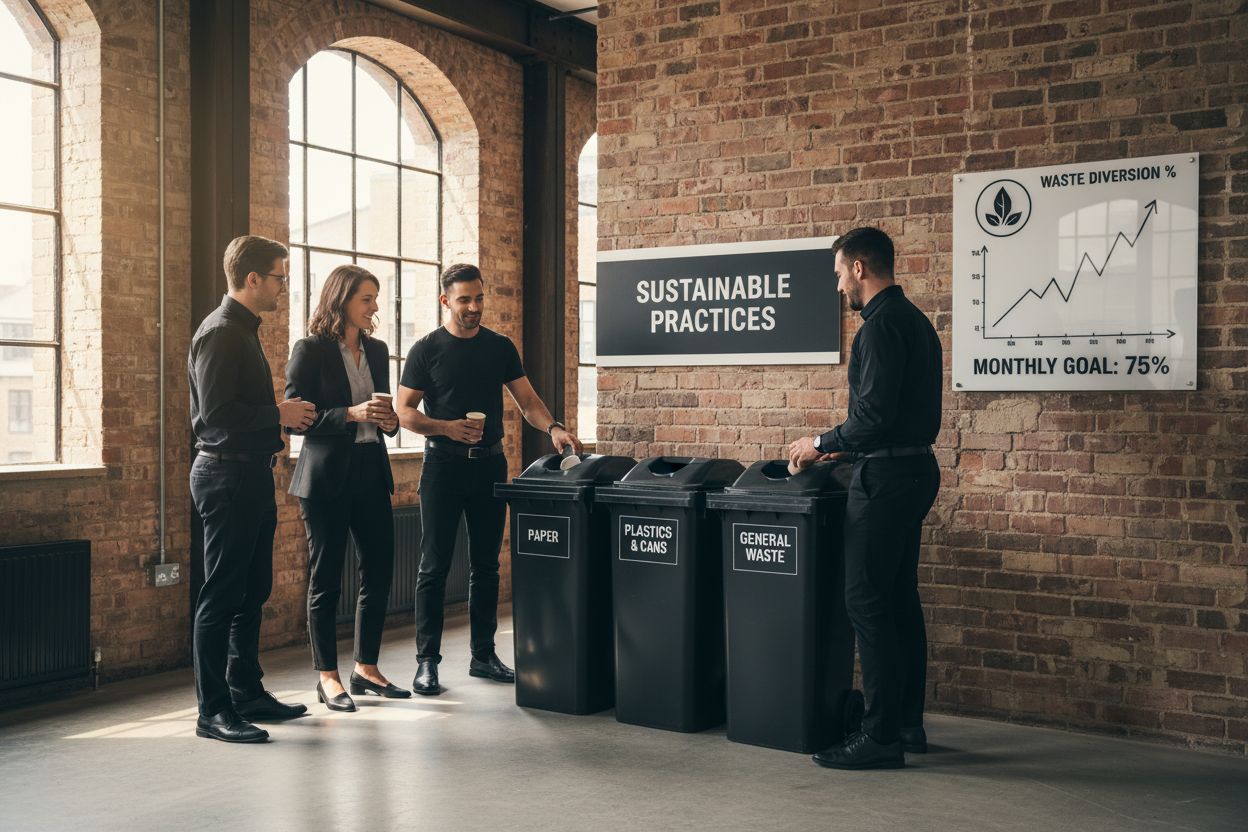
Sustainable waste management prioritises waste prevention and resource conservation. Organisations are increasingly adopting strategies that transform waste from an environmental burden into a valuable resource. Key sustainable practices include:
- Implementing comprehensive waste auditing processes
- Designing products with end-of-life recyclability in mind
- Developing closed-loop manufacturing systems
- Promoting repair, reuse, and refurbishment initiatives
- Investing in innovative recycling technologies
These approaches fundamentally reimagine waste as a potential resource rather than a disposal challenge, encouraging businesses to rethink traditional linear consumption models.
Resource Recovery and Waste Valorisation
Advanced sustainable practices focus on extracting maximum value from waste streams. Resource recovery techniques transform previously discarded materials into new products, energy sources, or raw materials. This approach not only reduces environmental impact but also creates economic opportunities across various industrial sectors.
Explore practical waste reduction strategies for UK businesses to understand how organisations can implement sustainable waste management practices effectively.
From Newcastle’s manufacturing facilities to Manchester’s commercial enterprises, businesses are recognising that sustainable waste management is no longer optional but a critical component of responsible corporate environmental stewardship. The integration of innovative technologies, circular economy principles, and strategic waste reduction approaches is reshaping how organisations perceive and manage their waste streams.
The Impact of Consumer Behaviour on Waste Trends
According to consumer behaviour research, consumer choices are increasingly driving transformative changes in waste management practices. The evolving environmental consciousness among UK consumers is fundamentally reshaping how businesses approach waste generation, recycling, and sustainable product design.
Consumer-Driven Waste Reduction Dynamics
Modern consumers are no longer passive participants in waste generation but active agents of environmental change. They are demanding more sustainable products, transparent supply chains, and responsible waste management practices from businesses. Key consumer behaviour trends include:
- Preference for products with minimal packaging
- Growing interest in circular economy principles
- Increased demand for recyclable and biodegradable materials
- Active participation in community recycling programmes
- Willingness to pay premium for environmentally responsible products
Consumer expectations are driving businesses to redesign their product lifecycles, moving away from traditional linear consumption models towards more sustainable, circular approaches.
Environmental Consciousness and Purchase Decisions
Consumers are increasingly making purchasing decisions based on a company’s environmental credentials. This shift is compelling businesses to integrate sustainability into their core strategic planning, recognising that environmental responsibility is now a critical competitive differentiator.
Explore our comprehensive guide on waste management strategies to understand how consumer behaviour is reshaping waste management approaches.
From Newcastle’s urban neighbourhoods to Manchester’s suburban communities, consumers are signalling a clear message: sustainable waste management is no longer optional but an essential expectation. Businesses that fail to adapt to these changing consumer preferences risk losing market share and brand reputation in an increasingly environmentally conscious marketplace.
Seamlessly Keep Up with 2025 Waste Changes for Your Business
Navigating the shifting landscape of waste regulations in 2025 can feel overwhelming. Many businesses are worried about stricter segregation laws, more robust compliance needs and the pressure to update internal waste processes. In particular, the new requirements for waste segregation and extended producer responsibility highlight just how important it is to have a reliable, compliant waste partner. For UK companies feeling the strain, working with a service that already understands the detailed waste collection network in 2025 offers valuable peace of mind.

Ready to simplify your transition and avoid costly mistakes? Explore our expert waste collection process for UK businesses in 2025 and benefit from a three-step booking system designed for full legal compliance and environmental excellence. Act now by visiting Venture Waste Management and ensure your business is prepared, protected and ahead of the latest waste industry updates.
Frequently Asked Questions
What are the key changes in waste management regulations for 2025?
The key changes include enhanced waste segregation requirements and an expanded Producer Responsibility framework. Businesses will need to separate waste streams at the source and be accountable for the entire lifecycle of their products. Assess your current waste practices and plan to implement these changes by 2025.
How can businesses prepare for enhanced waste segregation requirements?
Businesses can prepare by investing in advanced sorting technologies and comprehensive training for staff on waste categorisation. Start by auditing your current waste management processes to identify areas that need improvement before the regulations take effect.
What measures will be implemented to ensure compliance with the new regulations?
To ensure compliance, businesses must establish stricter tracking and reporting systems for waste composition and follow mandatory sorting protocols. Develop a compliance checklist to monitor these requirements and train your team on proper procedures within the next six months.
How does the Extended Producer Responsibility (EPR) framework affect manufacturers?
The EPR framework requires manufacturers to take financial and operational responsibility for the waste generated from their products. This means implementing systems to manage waste and promote recyclability. Begin assessing your product designs and packaging to align with EPR guidelines early.
What role does technology play in the future of waste management?
Technology is transforming waste management through advanced waste-to-energy systems and AI-driven sorting mechanisms. Explore investing in these technologies to enhance efficiency and minimise landfill dependency, aiming for a 20% reduction in waste sent to landfills within the next year.
How can businesses foster a culture of sustainability in response to consumer behaviour?
Businesses can foster a culture of sustainability by designing products with recyclability in mind and engaging consumers in waste reduction initiatives. Launch awareness programmes that educate both employees and customers on sustainable practices to strengthen your market position and reputation.


Leave a Reply
Want to join the discussion?Feel free to contribute!