

Understanding Local Authority Waste Services in the UK
Local authority waste services might sound routine but their impact runs deep across the UK. Over 26 million tonnes of household waste are collected by councils every year, and that is only the tip of the iceberg. What most people miss is that these services do much more than empty the bins. They are quietly transforming public health, shaping neighbourhoods, and pushing Britain closer to its boldest environmental goals.
Table of Contents
- What Are Local Authority Waste Services?
- The Importance Of Local Authority Waste Services
- How Local Authority Waste Services Operate
- Key Types Of Waste Managed By Local Authorities
- Understanding Regulations And Compliance In Waste Services
Quick Summary
| Takeaway | Explanation |
|---|---|
| Local authorities manage waste services | These services collect and dispose of household and commercial waste to keep communities clean and safe. |
| Waste management enhances public health | Effective waste handling prevents pollution and reduces health risks, protecting citizens from environmental hazards. |
| Education on waste segregation is crucial | Local authorities educate communities on proper waste disposal, recycling practices, and environmental conservation strategies. |
| Integrated waste segregation systems improve recycling | Colour-coded bins and clear guidelines facilitate efficient recycling and reduce landfill contributions in local areas. |
| Regulatory compliance is necessary for waste services | Adherence to environmental regulations ensures responsible waste management and protects public health, necessitating continuous improvements and monitoring. |
What are Local Authority Waste Services?
Local authority waste services represent the critical municipal infrastructure responsible for managing, collecting, and disposing of household and commercial waste across cities and towns in the United Kingdom. These essential public services ensure communities remain clean, environmentally responsible, and effectively manage waste streams from residential and business sectors.
The Core Functions of Local Authority Waste Management
Local authorities in the UK are legally mandated to provide comprehensive waste management solutions that cover multiple aspects of waste handling. Research from the UK Government highlights these critical responsibilities, which typically include:
- Regular household waste collection schedules
- Management of recycling programmes
- Operation of household waste recycling centres (HWRCs)
- Street cleaning and public area waste management
- Bulk waste and hazardous waste disposal services
In regions like Newcastle upon Tyne, Durham, and Sunderland, local councils have developed robust waste management systems tailored to their specific urban and suburban environments. These systems not only address waste removal but also focus on sustainable waste reduction and recycling strategies.
Understanding the Waste Collection Process
The waste collection process involves a structured approach where local authorities coordinate multiple stages of waste management. Households and businesses are typically provided with designated waste bins categorised by type: general waste, recyclables, and sometimes organic waste. Collection vehicles follow predetermined routes, ensuring systematic and efficient waste removal.
For businesses seeking additional waste management support, our guide on UK wide general waste collection provides comprehensive insights into professional waste handling strategies that complement local authority services.
Local authorities also play a crucial role in educating communities about proper waste segregation, recycling practices, and environmental conservation. By implementing clear guidelines and providing accessible infrastructure, these services help reduce landfill waste, promote recycling, and support the UK’s broader environmental sustainability goals.
The Importance of Local Authority Waste Services
Local authority waste services are far more than routine municipal operations. They represent a critical infrastructure that protects public health, preserves environmental sustainability, and maintains the economic and social fabric of communities across the United Kingdom. Understanding their profound significance requires examining their multifaceted impact on society.
Environmental and Public Health Protection
Research from the Environment Agency demonstrates that effective waste management directly correlates with preventing environmental contamination and reducing health risks. Local authority waste services perform several crucial environmental functions:
- Preventing pollution of soil and groundwater
- Reducing greenhouse gas emissions from unmanaged waste
- Minimising potential disease transmission through proper waste disposal
- Protecting wildlife habitats from waste-related degradation
In regions like Newcastle and Durham, local councils have implemented sophisticated waste management strategies that go beyond basic collection, actively contributing to broader ecological preservation efforts.
Economic and Social Impact
Beyond environmental benefits, local authority waste services generate significant economic value. They create employment, support local infrastructure, and contribute to circular economy principles. Our guide on waste collection networks provides deeper insights into how these services drive economic efficiency.
These services also play a critical role in community cohesion. By maintaining clean public spaces, managing waste systematically, and educating residents about responsible disposal, local authorities foster a sense of collective environmental responsibility. This approach transforms waste management from a mundane utility into a collaborative civic engagement process.
Strategic Waste Reduction and Sustainability
Modern local authority waste services are not merely about disposal but about strategic waste reduction. Through comprehensive recycling programmes, public education initiatives, and innovative waste management technologies, these services are pivotal in the UK’s transition towards a more sustainable future. By implementing advanced sorting techniques, promoting recycling, and reducing landfill dependency, local authorities are instrumental in achieving national environmental targets and mitigating climate change impacts.
How Local Authority Waste Services Operate
Local authority waste services operate through a complex, highly coordinated system that involves strategic planning, infrastructure management, and community engagement. These services are designed to ensure efficient waste collection, processing, and disposal while meeting environmental regulations and community needs.
Waste Collection Infrastructure
Research from the Local Government Association reveals that local authorities typically manage waste collection through a combination of municipal resources and strategic partnerships. The operational framework includes:
- Dedicated waste collection vehicles
- Standardised waste bin systems for households and businesses
- Predetermined collection routes and schedules
- Specialised facilities for sorting and processing different waste types
In regions like Tyne and Wear, local councils have developed sophisticated waste management systems that integrate modern technology with traditional collection methods. These systems often involve GPS-tracked vehicles, real-time route optimization, and digital scheduling to maximize efficiency.
Operational Management and Service Delivery
Local authorities can manage waste services through two primary approaches: in-house municipal teams or contracted private sector providers. Each approach has distinct advantages in terms of cost-effectiveness, service quality, and operational flexibility. Explore our insights on corporate waste management strategies to understand the nuanced approaches used by different local authorities.
The waste collection process typically follows a structured workflow: waste is collected from designated areas, transported to processing facilities, sorted into recyclable and non-recyclable categories, and then either recycled, repurposed, or sent to appropriate disposal sites. Modern local authorities increasingly emphasize reducing landfill waste through innovative recycling and waste reduction strategies.
This table compares the two primary operational management approaches used by local authorities for managing waste services in the United Kingdom.
| Approach | Description | Advantages |
|---|---|---|
| In-house municipal teams | Waste management carried out directly by council staff | Greater control, local knowledge |
| Contracted private providers | Services outsourced to commercial waste companies | Potential cost savings, access to specialised expertise |
Technological and Regulatory Compliance
Local authority waste services must comply with stringent national and environmental regulations. This involves continuous investment in technological infrastructure, staff training, and adaptation to evolving waste management standards. Advanced tracking systems, digital reporting mechanisms, and continuous performance monitoring ensure that these services meet required environmental and operational benchmarks while maintaining transparency and accountability in waste management processes.
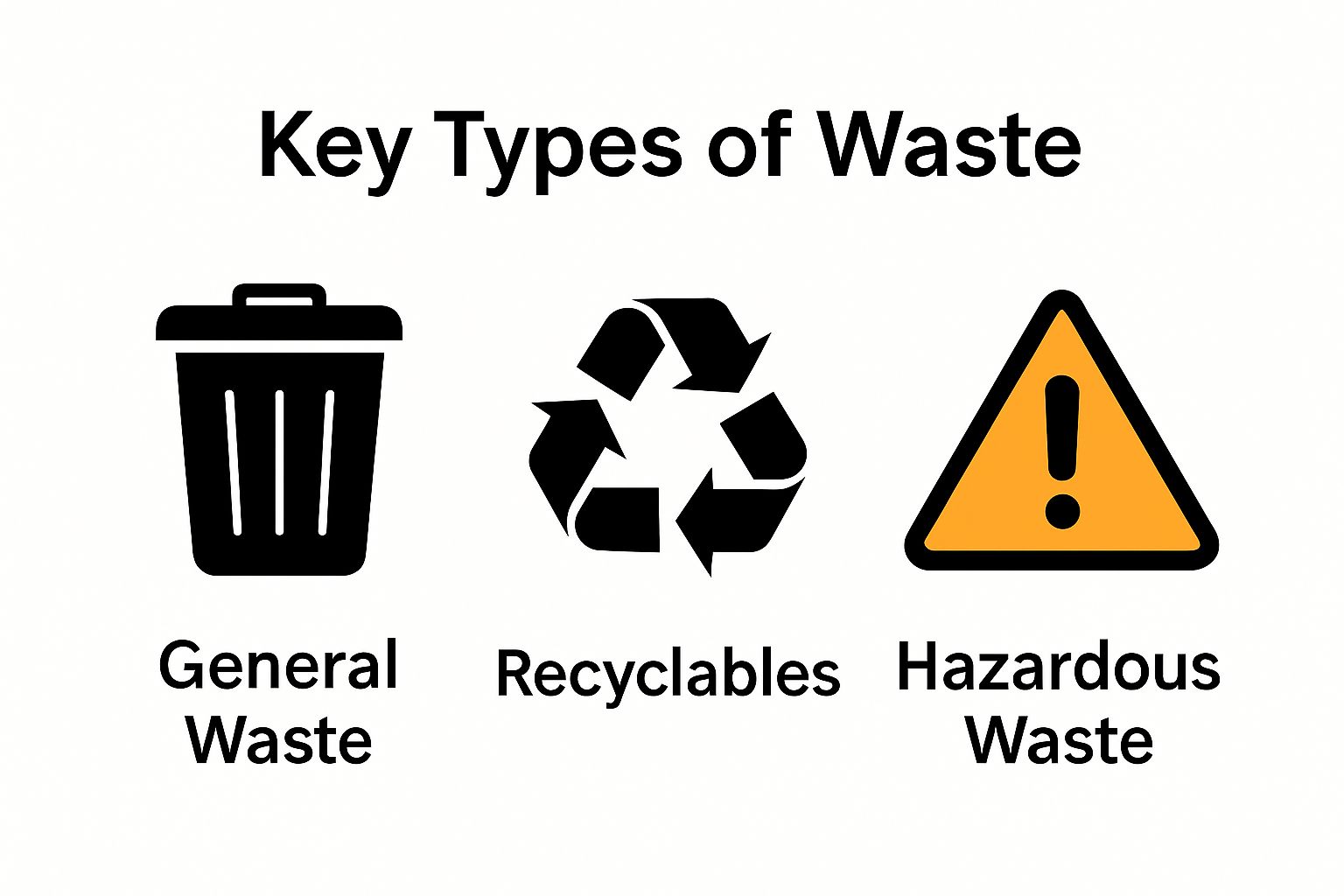
Key Types of Waste Managed by Local Authorities
Local authorities in the United Kingdom manage an extensive and complex range of waste types, each requiring specific handling, processing, and disposal strategies. Understanding these waste categories is crucial for effective environmental management and sustainable waste reduction strategies.
Household Waste Categories
Legislation governing waste management mandates that local authorities handle various household waste streams with precision and environmental consciousness. The primary household waste categories include:
- General mixed waste
- Recyclable materials (paper, plastic, glass, metal)
- Organic and food waste
- Garden and green waste
- Electronic and electrical equipment waste
- Bulky household items
In regions like Newcastle, Durham, and Sunderland, local councils have developed sophisticated waste segregation systems that enable more efficient recycling and reduce landfill dependency. These systems often involve colour-coded bins and clear guidelines for residents on proper waste disposal.
Below is a table summarising the core categories of household waste managed by local authorities, together with brief explanations for each type.
| Waste Category | Explanation |
|---|---|
| General mixed waste | Non-recyclable waste from daily household activities |
| Recyclable materials | Paper, cardboard, plastic, glass, and metal eligible for recycling collection |
| Organic and food waste | Biodegradable food scraps and leftover organic matter |
| Garden and green waste | Grass clippings, plants, leaves, and other biodegradable yard waste |
| Electronic and electrical equipment waste | Discarded appliances, gadgets, and electronic devices |
| Bulky household items | Large items such as furniture and mattresses |
Commercial and Industrial Waste Management
Beyond household waste, local authorities also play a significant role in managing commercial and industrial waste streams. While businesses are primarily responsible for their waste disposal, local councils often provide supplementary services and regulatory oversight. Our comprehensive guide to domestic waste types offers deeper insights into the complexities of waste management.
Commercial waste typically includes materials from offices, retail establishments, restaurants, and light industrial settings. These waste streams require specialized handling to ensure environmental compliance and minimize ecological impact.
Hazardous and Specialized Waste Handling
Local authorities must also manage hazardous and specialized waste types that demand exceptional care and expertise. These include medical waste, chemicals, batteries, fluorescent tubes, and other potentially dangerous materials. Specialized treatment facilities and strict protocols ensure these waste types are processed safely, preventing environmental contamination and potential health risks. By implementing rigorous waste management strategies, local authorities protect public health and contribute to broader environmental sustainability objectives.

Understanding Regulations and Compliance in Waste Services
Local authority waste services operate within a complex regulatory framework designed to protect public health, environmental sustainability, and ensure responsible waste management. These regulations provide comprehensive guidelines that govern every aspect of waste collection, processing, and disposal across the United Kingdom.
Legislative Foundations
Research from the Department for Environment, Food & Rural Affairs highlights the multifaceted legislative landscape governing waste management. The key regulatory pillars include:
- Environmental Protection Act 1990
- Waste (England and Wales) Regulations 2011
- Landfill Tax Regulations
- Hazardous Waste Regulations
- Controlled Waste Regulations
In regions like Newcastle upon Tyne and Durham, local councils must meticulously adhere to these national regulations while also implementing local environmental protection strategies. This ensures a standardized yet adaptable approach to waste management across different urban and rural contexts.
Compliance and Enforcement Mechanisms
Local authorities are responsible for ensuring strict compliance with waste management regulations through comprehensive monitoring and enforcement strategies. Explore our detailed guide on waste compliance steps to understand the intricate processes involved in maintaining regulatory standards.
Non-compliance can result in significant financial penalties, legal consequences, and potential environmental damage. Regulatory bodies conduct regular inspections, audits, and assessments to verify that waste services meet the required environmental and operational standards.
Environmental and Operational Standards
Modern waste service regulations emphasize sustainable waste management practices. This includes mandatory requirements for waste reduction, recycling targets, proper segregation of waste streams, and minimizing environmental impact. Local authorities must continuously invest in technological infrastructure, staff training, and innovative waste processing techniques to remain compliant with evolving environmental regulations. By maintaining rigorous standards, these services play a crucial role in protecting public health, conserving natural resources, and supporting the United Kingdom’s broader environmental sustainability goals.
Take Control of Waste Management with Trusted Compliance and Expertise
Does navigating complex local authority waste services feel overwhelming or unclear? If you are concerned about staying compliant or reducing environmental impact, check our regulation insights for practical guidance and regular updates on UK waste laws that affect homes and businesses.

Now is the perfect time to simplify your waste management. Our team at Venture Waste Management delivers a complete range of solutions that align with legal obligations while making your waste disposal smooth and stress-free. Whether you need support with recycling, hazardous materials, or new collection needs, start today to secure a cleaner and more compliant future.
Frequently Asked Questions
What types of waste do local authority waste services manage?
Local authority waste services manage various waste types, including household waste, recyclables, and hazardous materials. To ensure proper disposal and recycling, separate your waste into designated bins based on these categories.
How often do local authority waste services collect waste?
Collection schedules for local authority waste services typically involve weekly or fortnightly pickups. Check your local council’s website for specific details on collection days in your area.
What should I do if I miss a waste collection?
If you miss a waste collection, many local authorities allow residents to report missed pickups online or via phone. After reporting, expect the collection to be rescheduled, usually within a few days.
How can I participate in local recycling programmes?
To participate in local recycling programmes, you can start by using the appropriate recycling bins provided by the council. Familiarise yourself with what materials are accepted for recycling and follow the guidelines for proper segregation.
Where can I find information on hazardous waste disposal?
For information on hazardous waste disposal, visit your local council’s website for guidelines and available specialised services. Make sure to adhere to any instructions regarding handling and transferring hazardous materials safely.
What environmental regulations govern local authority waste services?
Local authority waste services must comply with various environmental regulations, including the Environmental Protection Act and the Waste Regulations. Stay informed about these regulations to understand how they impact waste management practices in your community.


Leave a Reply
Want to join the discussion?Feel free to contribute!