

Understanding Ethical Waste Disposal for Businesses
Ethical waste disposal shapes how businesses protect the environment and meet evolving legal expectations. Across the UK, over 200 million tonnes of waste are produced every year and most of it never sees a second life. That sounds bleak, but the real turning point comes when you realise ethical disposal is not just about cutting waste. It is a powerful way for companies to save money, spark innovation, and build trust in ways that ordinary rubbish removal never could.
Table of Contents
- What Is Ethical Waste Disposal And Its Principles?
- Why Is Ethical Waste Disposal Important For Businesses?
- Key Concepts And Regulations In Ethical Waste Disposal
- How Ethical Waste Disposal Works In Real-World Applications
- Challenges And Innovations In Ethical Waste Disposal
Quick Summary
| Takeaway | Explanation |
|---|---|
| Prevent waste generation first | Focus on reducing waste before it starts, which is crucial for sustainable management. |
| Follow legal requirements strictly | Businesses must comply with all regulations to avoid fines and penalties related to waste disposal. |
| Enhance corporate reputation through sustainability | Adopt ethical waste practices to improve public perception and attract eco-conscious consumers. |
| Utilise waste management hierarchy | Implement strategies like reduction, reuse, and recycling to minimise environmental impact. |
| Leverage technology for tracking waste | Use digital systems to monitor waste completion, ensuring compliance and enhancing efficiency. |
What is Ethical Waste Disposal and Its Principles?
Ethical waste disposal represents a comprehensive approach to managing discarded materials that prioritises environmental protection, legal compliance, and responsible business practices. At its core, this approach goes beyond merely removing waste and focuses on minimising environmental impact while adhering to sustainable principles.
Understanding the Core Principles
Ethical waste disposal is fundamentally grounded in a set of critical principles that guide responsible waste management. Our comprehensive guide on waste management outlines these key considerations:
- Prevention First: Reducing waste generation before it occurs
- Responsible Handling: Ensuring safe and environmentally conscious disposal methods
- Legal Compliance: Meeting all regulatory requirements for waste management
- Transparency: Maintaining clear documentation and accountability throughout the disposal process
According to the Environmental Protection Agency, waste management should follow a hierarchical approach that prioritises environmental sustainability. This means businesses should first attempt to reduce waste generation, then explore recycling and reuse options, and only consider disposal as a final alternative.
Environmental and Business Implications
Ethical waste disposal is not just an environmental responsibility but also a strategic business decision. Companies that implement robust waste management practices can:
- Reduce operational costs associated with waste removal
- Enhance corporate reputation and demonstrate environmental stewardship
- Mitigate potential legal risks and environmental penalties
- Contribute to broader sustainability goals
In the North East region, cities like Newcastle and Durham are increasingly recognising the importance of ethical waste disposal, with local businesses setting exemplary standards in responsible waste management. By adopting a holistic approach that considers environmental, legal, and economic factors, organisations can transform waste from a potential liability into an opportunity for sustainable innovation.
Why is Ethical Waste Disposal Important for Businesses?
Ethical waste disposal transcends regulatory compliance, representing a critical strategic approach that directly impacts a business’s operational efficiency, financial performance, and long-term sustainability. By implementing responsible waste management practices, organisations can transform potential environmental challenges into opportunities for innovation and competitive advantage.
Legal and Financial Implications
Business leaders must understand the substantial risks associated with improper waste disposal. Learn more about confidential disposal strategies that protect both environmental and corporate interests. According to the Environmental Protection Agency, businesses can face significant legal and financial penalties for non-compliance, including:
- Substantial monetary fines ranging from thousands to millions of pounds
- Potential legal proceedings and criminal prosecution
- Mandatory remediation costs
- Reputational damage and loss of business credibility
Environmental and Social Responsibility
Modern businesses are increasingly evaluated not just on financial performance, but on their environmental stewardship. Ethical waste disposal demonstrates a commitment to sustainable practices that resonates with environmentally conscious consumers, investors, and stakeholders. Companies that prioritise responsible waste management can:
- Reduce carbon footprint and environmental impact
- Enhance corporate social responsibility profile
- Attract environmentally aware customers and investors
- Contribute to broader sustainability goals
In cities like Newcastle and Durham, local businesses are setting exemplary standards by integrating ethical waste disposal into their core operational strategies. By viewing waste management as a strategic asset rather than a mere compliance requirement, organisations can unlock significant value, reduce operational costs, and position themselves as forward-thinking, responsible corporate entities.
Key Concepts and Regulations in Ethical Waste Disposal
Ethical waste disposal involves navigating a complex landscape of regulatory requirements, environmental standards, and strategic management principles. Understanding these key concepts is crucial for businesses seeking to implement responsible and compliant waste management practices.
Regulatory Framework and Classification
Check out our detailed waste management guidelines to comprehend the intricate regulatory environment. According to the Environmental Protection Agency, businesses must understand their waste generation classification, which determines specific legal obligations:
- Very Small Quantity Generators: Less than 100 kg hazardous waste monthly
- Small Quantity Generators: Between 100 and 1,000 kg hazardous waste monthly
- Large Quantity Generators: 1,000 kg or more hazardous waste monthly
Each category carries distinct reporting, storage, transportation, and disposal requirements that businesses must meticulously follow to ensure legal compliance and environmental responsibility.
Below is a table comparing the different categories of hazardous waste generators and their key legal obligations as described in the regulatory framework section.
| Category | Monthly Hazardous Waste Generated | Key Legal Obligations |
|---|---|---|
| Very Small Quantity Generators | Less than 100 kg | Minimal reporting, small-scale storage requirements |
| Small Quantity Generators | 100 – 1,000 kg | Standard reporting, designated storage and transport |
| Large Quantity Generators | 1,000 kg or more | Extensive reporting, strict disposal and storage rules |
Waste Management Hierarchy
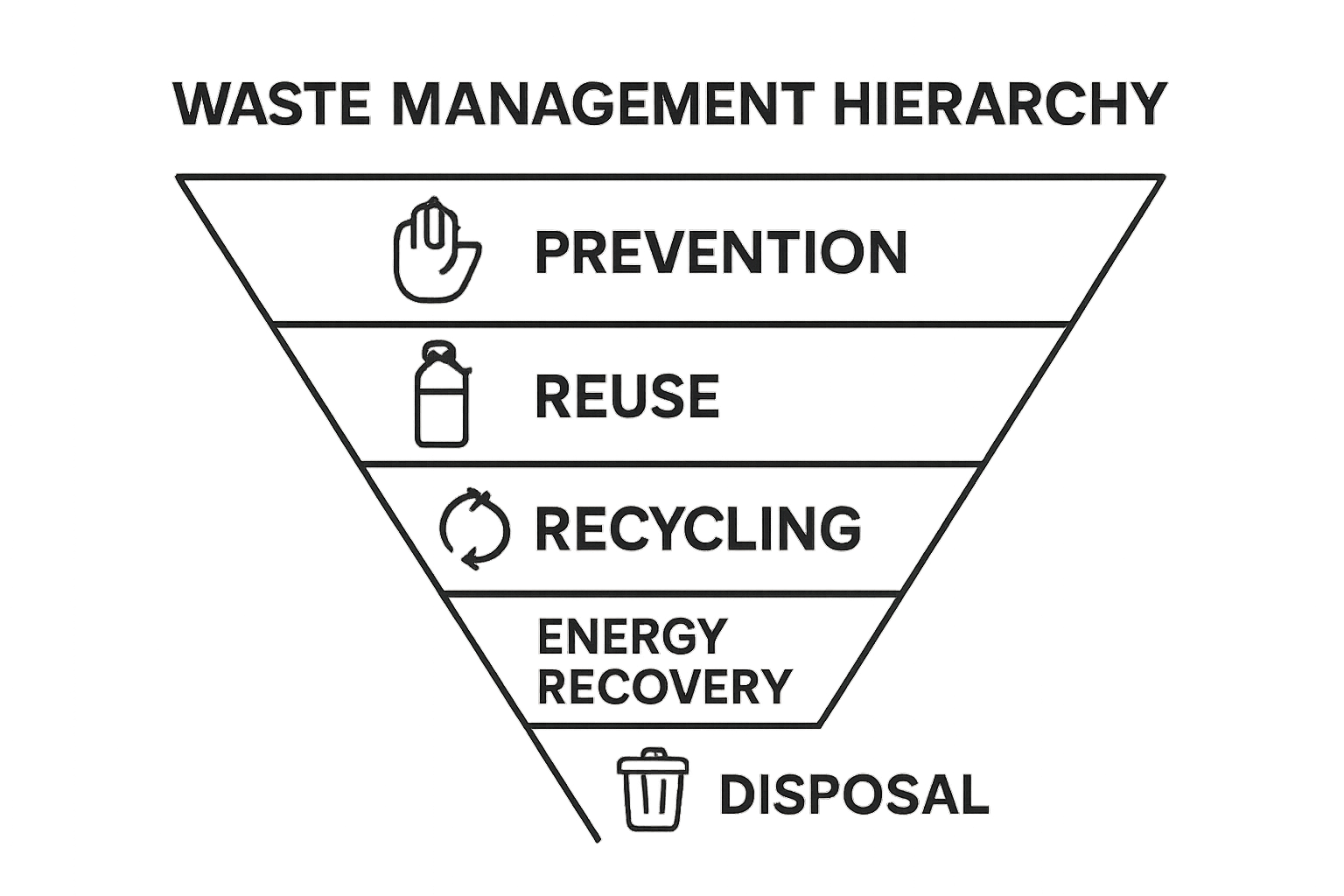
The waste management hierarchy provides a strategic framework for ethical waste disposal, prioritising methods from most to least environmentally preferred:
- Prevention: Reducing waste generation at source
- Reuse: Finding alternative uses for materials
- Recycling: Processing materials into new products
- Energy Recovery: Generating energy from waste
- Disposal: Final, least preferred option
Businesses in Newcastle, Durham, and across the North East are increasingly adopting this hierarchy as a core principle of sustainable operations. By understanding and implementing these strategies, organisations can significantly reduce their environmental footprint while potentially reducing operational costs.
The following table outlines the waste management hierarchy, providing a quick reference to the most and least preferred methods for managing business waste ethically.
| Hierarchy Level | Description | Environmental Preference |
|---|---|---|
| Prevention | Reducing waste generation at source | Most Preferred |
| Reuse | Finding alternative uses for materials | Highly Preferred |
| Recycling | Processing materials into new products | Preferred |
| Energy Recovery | Generating energy from waste | Less Preferred |
| Disposal | Final treatment or landfill | Least Preferred |
Implementing ethical waste disposal is not just about compliance, but about creating a responsible, forward-thinking approach to resource management that benefits both the business and the broader environment.
How Ethical Waste Disposal Works in Real-World Applications
Ethical waste disposal transitions from theoretical principles to practical implementation through systematic processes, technological solutions, and strategic organisational approaches. Understanding its real-world application requires examining how businesses integrate sustainable waste management into their daily operations.
Technological and Operational Strategies
Explore our comprehensive waste management strategies that demonstrate practical implementation. According to the Environmental Protection Agency, modern waste management relies on sophisticated electronic tracking systems that enable businesses to:
- Monitor waste generation volumes precisely
- Track waste from origin through final disposal
- Ensure compliance with regulatory requirements
- Generate accurate documentation for legal purposes
In practice, this means businesses can now create digital manifests that provide real-time insights into their waste streams, enabling more informed decision-making and transparent reporting.
Practical Implementation Frameworks
Businesses in the North East, particularly in industrial centres like Newcastle and Durham, are developing comprehensive waste management frameworks that include:
- Waste Auditing: Systematic assessment of waste generation patterns
- Segregation Protocols: Implementing robust sorting mechanisms
- Continuous Improvement: Regular review and refinement of waste management strategies
- Staff Training: Ensuring organisational understanding of ethical waste practices
These frameworks transform waste disposal from a passive administrative task into a proactive strategic initiative. By treating waste as a resource rather than a burden, organisations can identify opportunities for reduction, reuse, and potential revenue generation through innovative recycling and repurposing strategies.
Challenges and Innovations in Ethical Waste Disposal
The landscape of ethical waste disposal is continuously evolving, presenting businesses with complex challenges and unprecedented opportunities for technological and strategic innovation. Understanding these dynamics is crucial for organisations seeking to develop robust, sustainable waste management practices.
Technological and Infrastructure Challenges
Discover solutions to waste management obstacles that are transforming the industry. According to the Environmental Protection Agency, significant infrastructure investments are required to modernise waste management systems:
- Limited recycling infrastructure
- High contamination rates in waste streams
- Insufficient end-market development for recycled materials
- Inconsistent data collection and measurement techniques
These challenges demand innovative approaches that go beyond traditional waste disposal methods, requiring substantial technological and strategic investments from businesses.
Emerging Innovations and Strategic Approaches
Businesses in the North East, particularly in industrial hubs like Newcastle and Durham, are pioneering innovative waste management strategies that address these challenges:
- Digital Tracking Systems: Real-time waste stream monitoring
- Circular Economy Models: Redesigning product lifecycles for minimal waste
- Advanced Recycling Technologies: Developing more efficient material recovery processes
- AI-Driven Waste Sorting: Implementing machine learning for precise waste categorisation
By embracing these innovations, organisations can transform waste management from a compliance requirement into a strategic opportunity for resource efficiency, cost reduction, and environmental stewardship.

Discover a Smarter Way to Ethical Waste Disposal for Your Business
Struggling with the challenges of ethical waste disposal and the pressure to comply with growing environmental and legal expectations? If reducing risk, ensuring compliance, and enhancing your green credentials resonate with your business goals, you are not alone. Many companies face these same hurdles, especially when it comes to handling sensitive materials and meeting regulatory standards. Our tailored services, highlighted in the confidential waste and WEEE Waste solutions, are built for businesses that value ethical practices. We make responsible waste management straightforward and transparent.

Take control of your business’s waste responsibilities now. Visit Venture Waste Management to explore our easy three-step booking system and see how our reliable collection, secure destruction, and regulatory guidance can help your operations not just meet but exceed ethical standards. Make a change today and set your business apart as an industry leader in sustainable waste management.
Frequently Asked Questions
What is ethical waste disposal?
Ethical waste disposal is a comprehensive approach to managing discarded materials that prioritises environmental protection, legal compliance, and responsible business practices, aiming to minimise environmental impact and adhere to sustainable principles.
Why is ethical waste disposal important for businesses?
Ethical waste disposal is crucial for businesses as it not only ensures legal compliance and avoids penalties but also enhances corporate reputation, reduces operational costs, and demonstrates commitment to sustainability, which can attract environmentally conscious consumers and investors.
What are the key principles of ethical waste disposal?
The key principles of ethical waste disposal include waste prevention, responsible handling, legal compliance, and transparency throughout the waste management process, ensuring that businesses follow sustainable practices that minimise environmental impact.
How can businesses implement ethical waste disposal strategies?
Businesses can implement ethical waste disposal strategies by conducting waste audits, establishing segregation protocols, adopting continuous improvement practices, and providing staff training on responsible waste management, enabling them to treat waste as a resource rather than a burden.


Leave a Reply
Want to join the discussion?Feel free to contribute!