

Understanding Emerging Waste Streams: A Comprehensive Guide
Emerging waste streams are reshaping how businesses and communities manage rubbish across the UK. Many still think of waste management as a simple process of collection and disposal, but the reality is changing fast. Over 90 percent of new industrial materials are now classified as ‘complex waste streams’ that require entirely different handling methods. This shift means waste is no longer just a problem to solve, it is an opportunity for companies to innovate and even profit in unexpected ways.
Table of Contents
- Defining Emerging Waste Streams: What They Are And Why They Matter
- The Importance Of Recognising Emerging Waste Streams In Business
- How Emerging Waste Streams Affect Environmental And Health Standards
- Key Concepts In Managing Emerging Waste Streams Effectively
- Real-World Applications: Case Studies Of Emerging Waste Management
Quick Summary
| Takeaway | Explanation |
|---|---|
| Recognise emerging waste streams as resources | Viewing waste as a potential resource enables businesses to develop innovative recycling and repurposing strategies. |
| Invest in technology for effective waste management | Proactively adapting to emerging waste types necessitates investment in new technologies and infrastructure for efficient management. |
| Implement comprehensive waste management strategies | A structured approach helps businesses mitigate risks associated with emerging waste streams while complying with evolving regulations. |
| Transform waste into revenue opportunities | Businesses can turn emerging waste challenges into profit by adopting circular economy practices and advanced material recovery technologies. |
| Collaborate across industries for sustainable solutions | Interdisciplinary cooperation among waste managers, scientists, and regulators is crucial for effective management of complex emerging waste streams. |
Defining Emerging Waste Streams: What They Are and Why They Matter
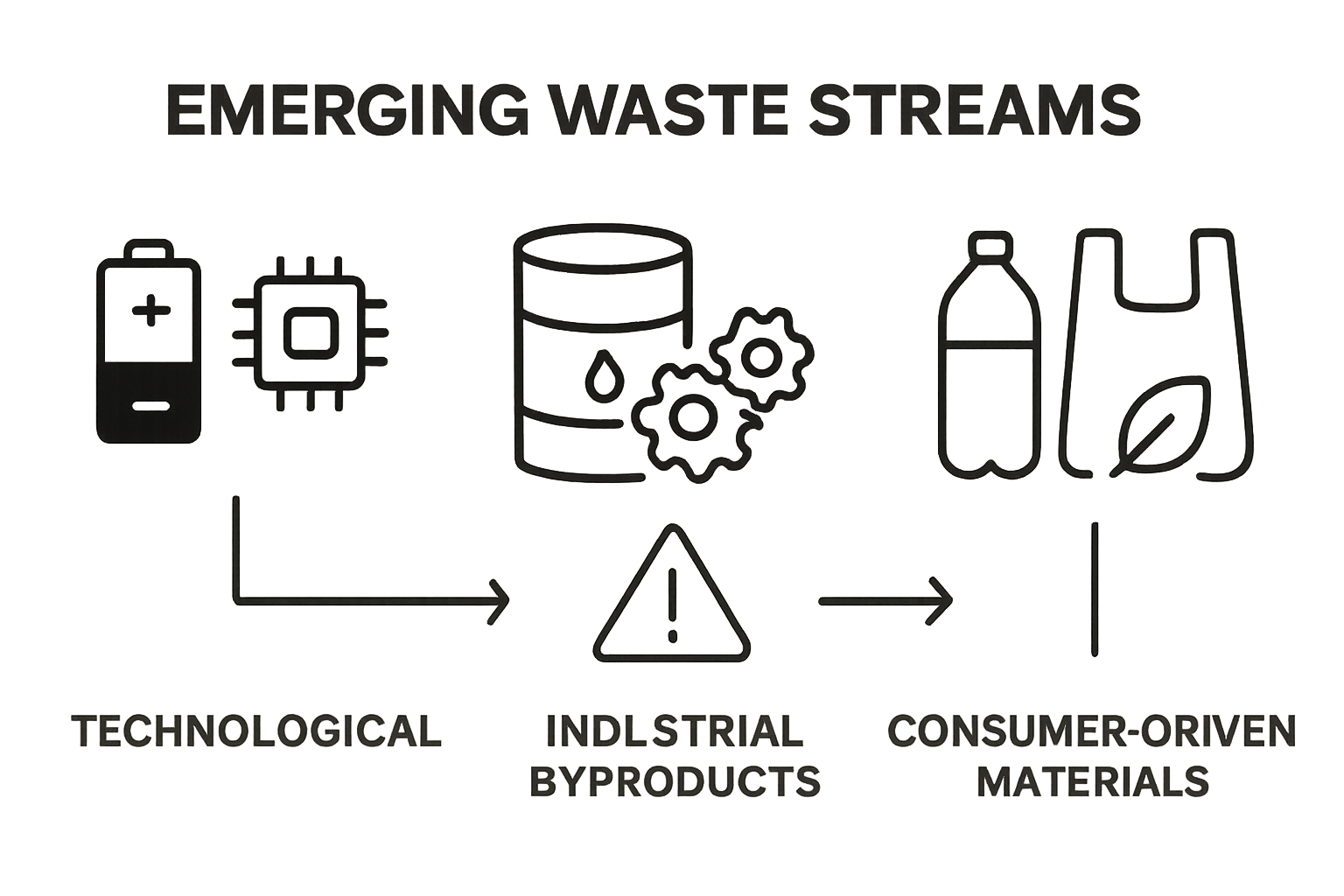
Emerging waste streams represent complex and evolving categories of discarded materials that challenge traditional waste management approaches. These novel waste types emerge from technological advancements, changing industrial processes, and shifts in consumer behaviour across the United Kingdom, particularly in regions like Newcastle, Durham, and Sunderland.
The Landscape of Modern Waste Generation
Traditional waste management strategies are becoming increasingly inadequate when confronting contemporary waste challenges. Emerging waste streams represent materials that do not fit neatly into conventional disposal or recycling categories. These include sophisticated technological waste, advanced industrial byproducts, and materials generated from innovative manufacturing processes.
Key characteristics of emerging waste streams include:
- Technological complexity
- Limited existing recycling infrastructure
- High potential environmental impact
- Rapid generation rate due to technological innovation
To clarify and highlight their unique challenges, the following table organises key characteristics of emerging waste streams as discussed in the article.
| Characteristic | Description |
|---|---|
| Technological complexity | Composed of advanced or novel materials requiring specialised handling and treatment |
| Limited recycling infrastructure | Existing waste management systems are often inadequate for emerging materials |
| High potential environmental impact | Possess greater risk of pollution or toxicity if mismanaged |
| Rapid generation rate | Created at a fast pace due to technological innovation and new manufacturing processes |
| Complex compositional structure | Made up of diverse substances, sometimes with hazardous or unknown properties |
| Regulatory uncertainty | Often fall outside or strain existing environmental regulatory frameworks |
Understanding the Environmental and Economic Implications
According to the US Environmental Protection Agency, emerging waste streams like lithium-ion batteries pose significant challenges. These materials require specialised handling due to their potential hazards and complex compositional structure.
Businesses and waste management professionals must recognize that these emerging waste streams represent more than disposal challenges—they signify opportunities for innovation. By exploring comprehensive waste management strategies, organis
ations can transform potential environmental risks into sustainable solutions.
The economic implications are substantial. Emerging waste streams demand investment in new technologies, research, and infrastructure. Companies that proactively develop strategies for managing these materials will gain competitive advantages, reduce environmental risks, and potentially create new revenue streams through innovative recycling and repurposing techniques.
The Importance of Recognising Emerging Waste Streams in Business
Businesses across the United Kingdom are increasingly confronting the complex challenge of managing rapidly evolving waste categories that defy traditional disposal methods. Understanding and proactively addressing emerging waste streams is no longer optional but a critical strategic imperative for sustainable operational management.
Strategic Business Implications
Recognising emerging waste streams provides organisations with significant competitive advantages. Modern businesses must view waste not as a disposal problem, but as a potential resource and strategic opportunity. This perspective shift enables companies to transform waste management from a cost centre into a potential revenue stream through innovative recycling and repurposing strategies.
Key strategic benefits include:
- Reduced environmental liability
- Potential for material recovery and secondary markets
- Enhanced corporate sustainability credentials
- Compliance with evolving regulatory frameworks
Financial and Regulatory Considerations
According to the US Environmental Protection Agency, emerging waste streams like lithium-ion batteries represent significant financial and operational risks if mismanaged. Proactive identification and strategic handling can mitigate potential economic losses and environmental penalties.
Businesses that develop comprehensive waste management strategies can unlock substantial cost savings by implementing efficient disposal and recycling protocols. This approach not only reduces waste management expenses but also positions organisations as environmentally responsible corporate citizens.
Moreover, regulatory landscapes are continuously evolving, with increasing emphasis on sustainable waste management practices. Companies that anticipate and adapt to these changes will be better positioned to navigate complex environmental compliance requirements, avoiding potential financial penalties and reputational damage.
How Emerging Waste Streams Affect Environmental and Health Standards
Emerging waste streams are transforming environmental and health standards across industries, presenting complex challenges that demand sophisticated regulatory responses and advanced management strategies. These novel waste categories require comprehensive evaluation to understand their potential long-term implications for public health and ecological systems.
Complex Environmental Risk Assessment
Emerging waste streams introduce unprecedented environmental risks that traditional regulatory frameworks struggle to address comprehensively. These materials often contain novel chemical compositions, technological components, and potential contaminants that challenge existing health and environmental protection protocols.
Key environmental risk factors include:
- Potential toxicity of uncharted chemical interactions
- Long-term ecological contamination potential
- Unpredictable breakdown and degradation characteristics
- Limited understanding of cumulative environmental impacts
Regulatory and Health Implications
According to the US Environmental Protection Agency, emerging waste streams like Per and Polyfluoroalkyl Substances (PFAS) are driving significant changes in national drinking water and environmental health standards. These regulatory shifts demonstrate how emerging waste streams directly influence public health protection mechanisms.
Businesses must now consider more than immediate disposal—they need comprehensive strategies that address potential hazardous waste risks and long-term environmental consequences. This requires interdisciplinary collaboration between waste management experts, environmental scientists, health professionals, and regulatory bodies.
The intersection of emerging waste streams with environmental and health standards represents a dynamic landscape of continuous adaptation. Organisations must remain agile, investing in research, monitoring technologies, and proactive management strategies to mitigate potential risks and contribute to sustainable waste ecosystem development.
Key Concepts in Managing Emerging Waste Streams Effectively
Managing emerging waste streams requires a sophisticated, multi-dimensional approach that transcends traditional waste disposal methodologies. Organisations must develop comprehensive strategies that integrate technological innovation, regulatory compliance, and sustainable environmental practices.
Strategic Waste Stream Characterisation
Effective management begins with precise waste stream identification and comprehensive characterisation. This process involves detailed analysis of waste composition, potential environmental interactions, and inherent chemical or technological complexities. Understanding the unique properties of emerging waste streams enables businesses to design targeted management protocols.
Critical characterisation elements include:
- Molecular and material composition analysis
- Potential environmental interaction pathways
- Degradation and transformation characteristics
- Potential toxicity and contamination risks
Technological and Regulatory Integration
According to the US Environmental Protection Agency, emerging waste management requires dynamic regulatory frameworks that can adapt to rapid technological changes. This necessitates continuous monitoring, research, and flexible policy development to address novel waste categories effectively.
Businesses can optimise waste management costs by implementing integrated technological solutions that combine advanced tracking, segregation, and processing technologies. These approaches transform waste management from a reactive cost centre into a proactive value generation strategy.
Successful management of emerging waste streams demands an ecosystem approach that balances technological innovation, regulatory compliance, environmental stewardship, and economic pragmatism. Organisations must cultivate interdisciplinary collaboration, invest in continuous research, and maintain adaptable management frameworks to navigate the complex landscape of emerging waste challenges.
Real-World Applications: Case Studies of Emerging Waste Management
Real-world case studies reveal the transformative potential of innovative waste management strategies across diverse industrial sectors. These practical examples demonstrate how organisations can convert emerging waste challenges into sustainable opportunities through strategic thinking and technological innovation.
Technological Transformation of Waste Streams
Advanced waste management represents more than disposal—it’s a pathway to resource regeneration. Organisations are increasingly viewing waste not as an endpoint, but as a potential input for new production cycles. This paradigm shift enables creative solutions that simultaneously address environmental concerns and economic efficiency.
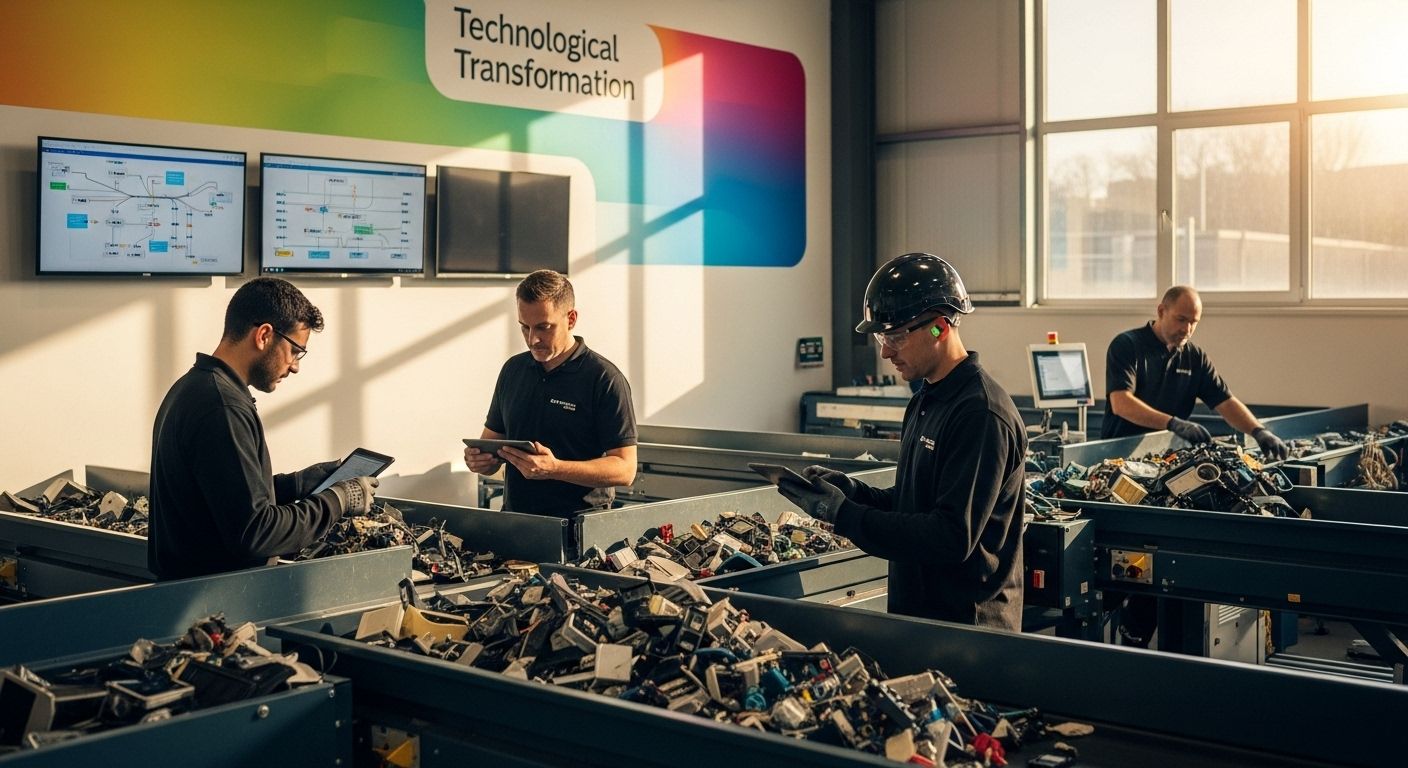
Notable technological transformation strategies include:
- Converting industrial byproducts into secondary raw materials
- Developing closed-loop manufacturing processes
- Implementing advanced material recovery technologies
- Creating circular economy business models
Practical Industry Implementation
According to the US Environmental Protection Agency, innovative waste management strategies are reshaping industrial practices. For instance, municipal wastewater treatment facilities are now converting food waste into renewable energy through anaerobic digestion, generating significant environmental and economic benefits.
Businesses can develop comprehensive waste management plans that integrate cutting-edge technologies and sustainable practices. These strategies not only reduce environmental impact but also unlock potential revenue streams from previously discarded materials.
Successful emerging waste management requires a holistic approach that combines technological innovation, regulatory compliance, and strategic thinking. By studying and adapting successful case studies, organisations can transform waste management from a traditional cost centre into a dynamic platform for sustainable value creation.
Turn Complex Waste Challenges into Simple Solutions Today
Modern waste streams are evolving faster than ever before, bringing complexity and uncertainty to businesses trying to keep up with new materials and regulations. Many organisations struggle to identify, categorise, and responsibly manage these emerging waste types, leading to increased risk, mounting costs, and the ever-present concern of complying with environmental standards. If you are feeling the pressure to transform your waste handling—especially around issues like hazardous materials, difficult-to-recycle items, and advanced disposal requirements—you are not alone. Our comprehensive Waste Collection Network in the UK is designed specifically for businesses that want clarity, reliability, and full compliance, no matter how complex their waste streams become.

Act now to secure peace of mind and protect your business reputation. Visit Venture Waste to learn more about how our expert team can help you master the Waste Collection Process for every type of material. Do not let emerging waste streams create confusion or compliance risks—reach out today and experience waste management that puts your business ahead.
Frequently Asked Questions
What are emerging waste streams?
Emerging waste streams are complex categories of discarded materials that arise from technological advancements, changes in industrial processes, and shifts in consumer behaviour, challenging traditional waste management approaches.
Why are emerging waste streams important for businesses?
Recognising and managing emerging waste streams is crucial for businesses as they can transform waste from a disposal burden into potential resources, offering competitive advantages, reducing environmental liabilities, and complying with evolving regulations.
What challenges do emerging waste streams pose to traditional waste management?
Emerging waste streams often have unique characteristics that make them difficult to categorise and manage, such as technological complexity and limited recycling infrastructure, leading to increased environmental impact if not handled properly.
How can businesses develop effective strategies for managing emerging waste streams?
Businesses can manage emerging waste streams effectively by identifying and characterising these materials, investing in new technologies, implementing comprehensive waste management strategies, and fostering collaboration across different sectors to address regulatory, environmental, and financial considerations.
Recommended
- Domestic Waste Types in the UK: 2025 Guide for Businesses – Venture Waste
- Waste Management Step by Step: A Guide for UK Businesses 2025 – Venture Waste
- Hazardous Waste Regulations 2025: A Guide for UK Businesses – Venture Waste
- Waste Management Definition for UK Businesses 2025 – Venture Waste
- What Happens to Junk After Removal in Connecticut 2025 – C&M Carting Solutions


Leave a Reply
Want to join the discussion?Feel free to contribute!