

Understanding Cost Effective Waste Management Solutions
Businesses across the North East are searching for ways to cut costs without harming their green ambitions. The idea that waste management is always a financial drain simply does not add up. In fact, new research shows companies can cut waste management costs by up to 30 percent with smarter strategies. Hidden inside the bins and skips is a chance for firms to shrink expenses and lift their reputation at the same time.
Table of Contents
- What Is Cost Effective Waste Management?
- Why Cost Effective Waste Management Matters For Businesses
- Core Principles Of Cost Effective Waste Management
- How Cost Effective Waste Management Works In Practice
- Case Studies Of Successful Cost Effective Waste Management
Quick Summary
| Takeaway | Explanation |
|---|---|
| Implement waste minimisation strategies | Reducing waste at its source is key to cost effective management and sustainability. |
| Adopt data-driven management practices | Use comprehensive data collection to track waste generation and identify improvement areas. |
| Integrate advanced sorting technologies | Invest in equipment to enhance recycling and resource recovery, maximising the value obtained from waste. |
| Explore revenue from recyclables | Selling recyclables can create new revenue streams, transforming waste into a potential income source. |
| Emphasise compliance with regulations | Proactive waste management helps avoid penalties and builds a positive corporate reputation. |
What is Cost Effective Waste Management?
Cost effective waste management represents a strategic approach to handling waste that balances environmental responsibility with economic efficiency. At its core, this concept involves minimising waste generation, optimising disposal processes, and reducing overall expenditure associated with waste handling.
Understanding the Core Principles
Cost effective waste management goes beyond simply reducing expenses. It encompasses a holistic methodology that considers the entire waste lifecycle from generation to final disposal. Businesses in Newcastle, Sunderland, and other North East industrial centres are increasingly recognising that smart waste management can simultaneously decrease environmental impact and reduce operational costs.
The fundamental principles include:
- Waste Minimisation: Reducing waste generation at the source
- Resource Recovery: Extracting maximum value from waste materials
- Efficient Disposal: Selecting the most economical and environmentally responsible disposal methods
Economic and Environmental Benefits
Businesses implementing cost effective waste management strategies can realise significant advantages. Practical strategies for waste reduction demonstrate how organisations can transform waste from a financial burden into a potential resource. According to research from WRAP UK, companies can reduce waste management costs by up to 30% through strategic planning and innovative approaches.
By integrating advanced sorting techniques, exploring recycling opportunities, and investing in efficient waste handling technologies, organisations can create a more sustainable and financially prudent waste management framework.
The following table summarises the main financial and environmental benefits outlined in the article, highlighting how cost effective waste management strategies create value for businesses.
| Benefit | Explanation |
|---|---|
| Reduced Disposal Costs | Minimising waste volume directly leads to lower removal expenses |
| Lower Raw Material Expenditure | Efficient resource recovery decreases the need for new material purchases |
| Revenue from Selling Recyclables | Generating additional income by selling recyclable materials |
| Avoidance of Environmental Fines | Proactive compliance reduces risk of penalties and legal issues |
| Enhanced Sustainability Credentials | Demonstrates environmental responsibility to customers, investors, and regulators |
Why Cost Effective Waste Management Matters for Businesses
Cost effective waste management has emerged as a critical strategic priority for businesses across various sectors, transcending traditional environmental considerations to become a fundamental aspect of financial and operational efficiency.
Financial Implications and Cost Savings
Businesses in the North East, from manufacturing facilities in Sunderland to tech companies in Newcastle, are discovering that intelligent waste management can significantly impact their bottom line. How UK Businesses Can Save Money on Waste Management in 2025 highlights the potential for substantial financial benefits through strategic waste reduction.
Key financial advantages include:
- Reduced Disposal Costs: Minimising waste volume directly decreases waste removal expenses
- Lower Raw Material Expenditure: Efficient resource recovery reduces the need for new material purchases
- Potential Revenue Generation: Selling recyclable materials can create additional income streams
Regulatory Compliance and Reputation Management
Modern businesses face increasing environmental regulations and stakeholder expectations. According to research from the Environment Agency, companies that proactively manage waste can avoid significant penalties and enhance their corporate reputation.
Beyond financial considerations, cost effective waste management demonstrates a commitment to sustainable practices. This approach not only mitigates environmental risks but also positions businesses as responsible corporate citizens, potentially attracting environmentally conscious customers and investors.
By integrating comprehensive waste management strategies, organisations can transform what was once considered an operational expense into a strategic opportunity for innovation, efficiency, and long term sustainability.
Core Principles of Cost Effective Waste Management
Cost effective waste management is built upon a comprehensive framework of strategic principles that enable organisations to transform waste from a financial burden into a potential resource. These principles go beyond simple disposal strategies and encompass a holistic approach to resource utilisation and environmental responsibility.
Waste Hierarchy and Strategic Prioritisation
Effective Waste Minimisation Strategies for UK Businesses 2025 emphasises the critical importance of understanding the waste hierarchy. This principle ranks waste management options from most to least environmentally preferred, guiding businesses towards more sustainable practices.
The waste hierarchy prioritises actions in the following order:
To help distinguish the various options within the waste hierarchy, the table below provides an overview of each stage and its role in cost effective waste management.
| Stage | Description | Environmental Preference |
|---|---|---|
| Prevention | Reducing waste at its source before it is created | Most Preferred |
| Reuse | Using items again for the same or new purposes | 2 |
| Recycling | Processing waste into new materials or products | 3 |
| Recovery | Extracting energy from waste that cannot be recycled | 4 |
| Disposal | Final and least desirable option; landfill or incineration | Least Preferred |
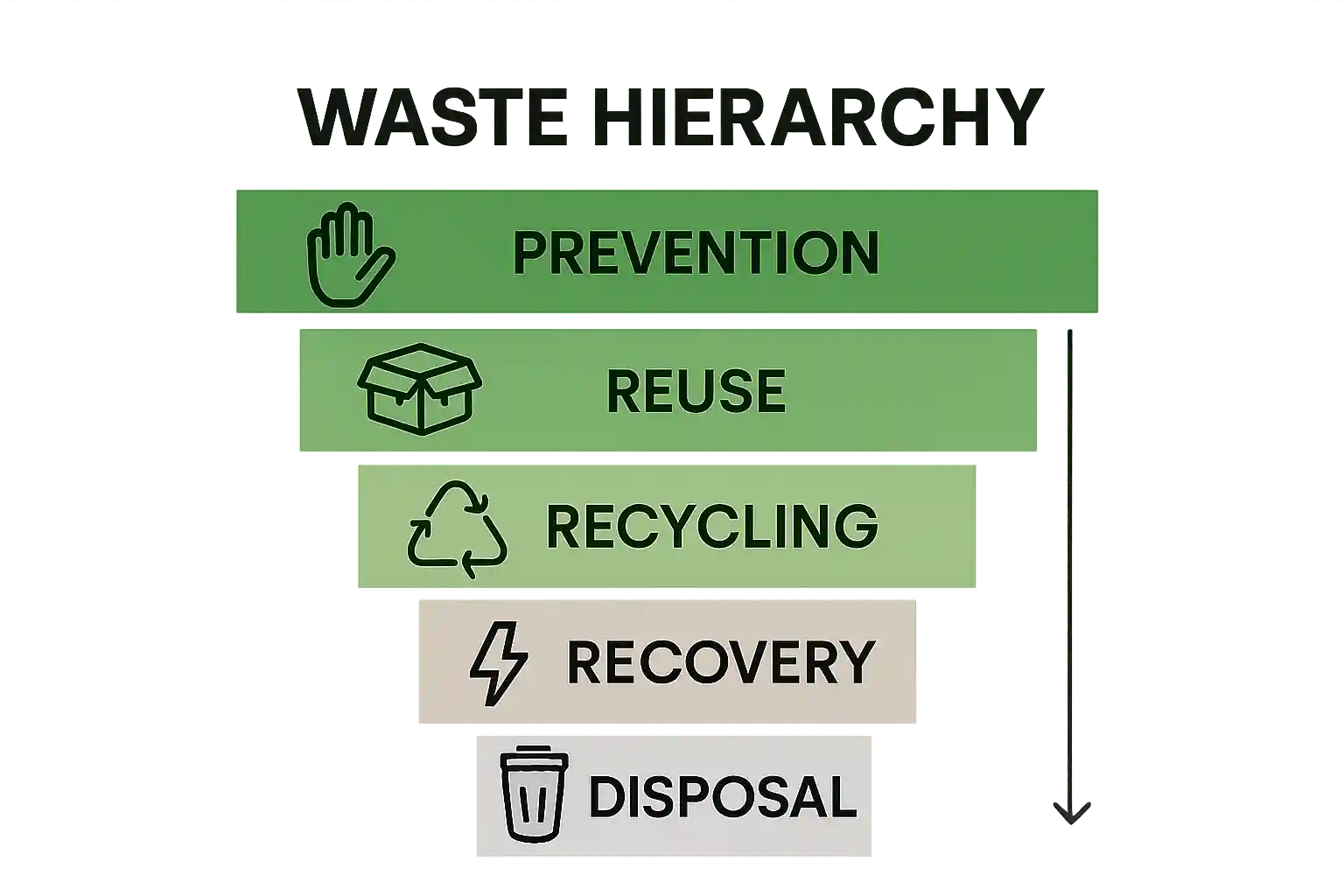
- Prevention: Reducing waste generation at the source
- Reuse: Finding alternative uses for materials before disposal
- Recycling: Converting waste materials into new products
- Recovery: Extracting energy from waste that cannot be recycled
- Disposal: The final and least preferred option for waste management
Data-Driven Waste Management Approach
According to research from the Waste and Resources Action Programme (WRAP), successful cost effective waste management relies heavily on comprehensive data collection and analysis. Businesses must develop robust monitoring systems that track waste generation, identify inefficiencies, and measure the financial and environmental impact of their waste management strategies.
This data-driven approach allows organisations to:
- Identify specific waste streams and their associated costs
- Develop targeted reduction and recycling strategies
- Measure the economic and environmental benefits of waste management initiatives
By embracing these core principles, businesses can create a more sustainable, efficient, and financially responsible approach to waste management that delivers tangible benefits for both the organisation and the environment.
How Cost Effective Waste Management Works in Practice
Implementing cost effective waste management requires a strategic and systematic approach that transforms theoretical principles into tangible operational practices. This involves creating comprehensive frameworks that integrate technological solutions, organisational processes, and environmental considerations.
Waste Auditing and Analysis
The practical implementation begins with a thorough waste audit. Businesses in industrial regions like Newcastle and Sunderland must first understand their current waste generation patterns, identifying specific types and volumes of waste across different operational areas. Practical approaches to saving money on waste management demonstrate how detailed analysis can reveal significant opportunities for improvement.
Key components of a comprehensive waste audit include:
- Quantitative Measurement: Precisely tracking waste volumes and types
- Cost Tracking: Calculating current waste management expenditures
- Waste Stream Mapping: Identifying origin points and potential reduction opportunities
Technological and Operational Interventions
According to research from the Department for Environment, Food and Rural Affairs (DEFRA), successful waste management requires a multi-faceted intervention strategy. This involves implementing technologies and processes that enable more efficient resource utilisation.
Practical interventions might include:
- Installing advanced sorting and segregation equipment
- Developing internal recycling programmes
- Investing in compaction and processing technologies
- Creating closed-loop waste management systems
By systematically applying these principles, organisations can transform waste management from a purely operational cost centre into a strategic opportunity for resource efficiency, environmental responsibility, and potential financial gain.
Case Studies of Successful Cost Effective Waste Management
Real-world examples demonstrate the transformative potential of strategic waste management across various industries. These case studies illustrate how organisations can achieve significant financial and environmental benefits through innovative approaches to waste reduction and resource recovery.
Manufacturing Sector Innovations
In the North East, manufacturing businesses have pioneered remarkable waste management strategies. Practical waste reduction strategies for UK businesses highlight how targeted interventions can drive substantial improvements.
A notable example from a manufacturing facility in Newcastle revealed:
- Initial Waste Audit: Identified multiple inefficient waste streams
- Implementation Strategy: Introduced advanced sorting technologies
- Result: 40% reduction in waste disposal costs within 18 months
Hospitality and Retail Sector Transformations
According to research from WRAP UK, the hospitality sector has made significant strides in waste management. A prominent hotel chain in the North East demonstrated exceptional results by implementing comprehensive waste management protocols.
Key achievements included:
- Developing comprehensive food waste recycling programmes
- Implementing digital tracking systems for waste generation
- Partnering with local agricultural businesses to convert food waste into compost
- Reducing overall waste disposal costs by approximately 35%
These case studies underscore the potential for businesses to transform waste management from a cost centre into a strategic opportunity for environmental and economic innovation.
Ready to Unlock True Cost Savings with Smarter Waste Management?
Businesses across the UK are searching for effective ways to cut costs while maintaining compliance and environmental responsibility. The article highlighted the struggle to minimise waste, control disposal expenses, and comply with ever-changing regulations. If you are concerned about rising waste handling fees or are unsure how to optimise your resource recovery, now is the ideal time to take control. Discover how the Waste Collection Network in the UK for Businesses bridges these gaps and delivers tailor-made solutions for commercial and domestic needs.

Choose a proven partner that handles every detail from general waste collection to secure document destruction. Venture Waste will help you create measurable savings and sustainable results. Visit Venture Waste Management today to discover our straightforward booking process and see how you can benefit from cost effective waste management without compromising compliance or service quality. Book your waste solution now and turn a challenge into your next competitive edge.
Frequently Asked Questions
What is cost effective waste management?
Cost effective waste management is a strategic approach that balances environmental responsibility with economic efficiency by minimising waste generation, optimising disposal processes, and reducing costs associated with waste handling.
Why is cost effective waste management important for businesses?
It is important as it can lead to significant financial savings, ensure regulatory compliance, enhance corporate reputation, and demonstrate a commitment to sustainable practices, turning waste management from a cost burden into a strategic opportunity.
What are the core principles of cost effective waste management?
The core principles include waste minimisation, resource recovery, efficient disposal methods, waste hierarchy prioritisation, and a data-driven management approach to track and analyse waste generation and costs.
How can businesses implement cost effective waste management strategies?
Businesses can implement these strategies through comprehensive waste audits, adopting advanced sorting and recycling technologies, creating internal recycling programmes, and investing in efficient resource utilisation practices.


Leave a Reply
Want to join the discussion?Feel free to contribute!