

Understanding Corporate Social Responsibility Waste Management
Corporate waste might seem like just mountains of rubbish needing removal, and many see it as an unavoidable cost of doing business. Yet, what actually happens to that waste is shaping reputations and bottom lines in ways most never expect. Companies that embrace corporate social responsibility in waste management are discovering that reducing waste can cut operational costs significantly and attract customers who care about sustainability.
Table of Contents
- Defining Corporate Social Responsibility Waste
- The Importance Of Waste Management In Business
- How Corporate Social Responsibility Shapes Waste Policies
- Key Concepts In Effective Waste Management
- Real-World Examples Of Corporate Social Responsibility Waste
Quick Summary
| Takeaway | Explanation |
|---|---|
| Adopt proactive waste reduction strategies | Companies should minimize waste at the source through innovative design and operational practices. |
| Implement robust recycling and reuse programs | Establish comprehensive plans to recycle materials and find alternative uses to enhance sustainability. |
| Develop transparent waste management reporting | Regularly report on waste practices to demonstrate accountability and commitment to CSR principles. |
| Invest in innovative waste reduction technologies | Leverage new technologies to reduce waste generation and improve resource efficiency in operations. |
| View waste as a resource for economic opportunity | Recognize that effective waste management can lower costs and create new revenue streams through recycling and resource recovery. |
Defining Corporate Social Responsibility Waste
Corporate Social Responsibility (CSR) waste management represents a strategic approach where businesses take comprehensive accountability for their environmental impact, focusing specifically on waste generation, reduction, and sustainable disposal. This approach goes beyond mere legal compliance, embedding environmental stewardship into the core operational philosophy of an organisation.
The Core Principles of CSR Waste Management
CSR waste management is fundamentally about recognising that businesses have a broader responsibility towards environmental sustainability. Companies adopting this approach understand that waste is not just a byproduct to be discarded, but a critical resource that requires thoughtful management. The key principles include:
- Minimising waste generation through proactive design and operational strategies
- Implementing comprehensive recycling and reuse programmes
- Ensuring transparent reporting of waste management practices
- Investing in innovative waste reduction technologies
Strategic Approaches to Responsible Waste Management
Businesses in the North East, from Newcastle to Durham, are increasingly adopting sophisticated CSR waste management strategies. According to the UK government’s waste management guidelines, these strategies involve a holistic approach that considers the entire lifecycle of materials and products.
Organisations now recognise that effective waste management is not just an environmental imperative but also a significant economic opportunity. By reducing waste, companies can lower operational costs, enhance their brand reputation, and contribute to a more sustainable economic model.
For those seeking a comprehensive understanding of waste management processes, our step-by-step business guide provides detailed insights into implementing robust CSR waste strategies that align with both environmental goals and business objectives.
The Importance of Waste Management in Business
Waste management has transformed from a simple operational necessity to a critical strategic function that directly impacts a business’s financial performance, environmental footprint, and corporate reputation. In the contemporary business landscape, effective waste management is no longer optional but a fundamental responsibility that influences long-term sustainability and economic viability.
Economic Implications of Waste Management
Business waste management represents a significant economic opportunity. Companies that implement robust waste reduction strategies can substantially decrease operational costs. By minimising waste generation, organisations reduce disposal expenses, raw material purchases, and potential environmental compliance penalties.
Key economic benefits include:
- Reduced waste disposal costs
- Lower raw material procurement expenses
- Enhanced operational efficiency
- Potential revenue from recycling and material recovery
Environmental and Regulatory Compliance
With increasingly stringent environmental regulations, businesses must proactively manage their waste streams. Research from the UK government’s waste management guidelines emphasises that organisations must develop comprehensive waste management strategies to meet legal requirements and contribute to national sustainability goals.
Companies in industrial regions like Newcastle, Sunderland, and Durham are recognising that waste management is not just about compliance, but about demonstrating environmental leadership. By adopting advanced waste management practices, businesses can differentiate themselves in competitive markets and appeal to environmentally conscious consumers and investors.
For businesses seeking practical strategies to optimise their waste management approach while saving money on waste disposal, understanding the comprehensive benefits of strategic waste management is crucial.
How Corporate Social Responsibility Shapes Waste Policies
Corporate Social Responsibility (CSR) has emerged as a powerful catalyst in transforming waste management policies, driving businesses beyond traditional regulatory compliance towards more proactive and sustainable environmental strategies. The evolution of waste policies is now intrinsically linked to corporate ethical commitments and environmental stewardship.
Policy Development and Strategic Frameworks
Corporate waste policies are no longer passive compliance documents but dynamic strategic frameworks that reflect an organisation’s commitment to environmental sustainability. These policies are increasingly shaped by CSR principles, which demand transparency, accountability, and continuous improvement in waste management practices.
Key elements influencing policy development include:
- Stakeholder expectations and environmental consciousness
- Long-term sustainability goals
- Economic incentives for waste reduction
- Reputational risks associated with poor waste management
Regulatory Influence and Corporate Adaptation
According to research exploring sustainable corporate waste management, businesses are developing innovative waste policies that extend beyond traditional legal requirements. Companies in industrial regions like Newcastle and Durham are recognising that effective waste management is a strategic differentiator in competitive markets.
Businesses are increasingly viewing waste not as a disposal challenge but as a potential resource, driving policy innovations that promote circular economy principles. This shift encourages comprehensive waste management solutions that balance environmental responsibility with economic pragmatism.
Key Concepts in Effective Waste Management
Effective waste management transcends simple disposal, representing a sophisticated approach to resource conservation, environmental protection, and sustainable business practices. Understanding the fundamental concepts enables organisations to transform waste from a problematic byproduct into a strategic opportunity for innovation and economic efficiency.
Hierarchy of Waste Management
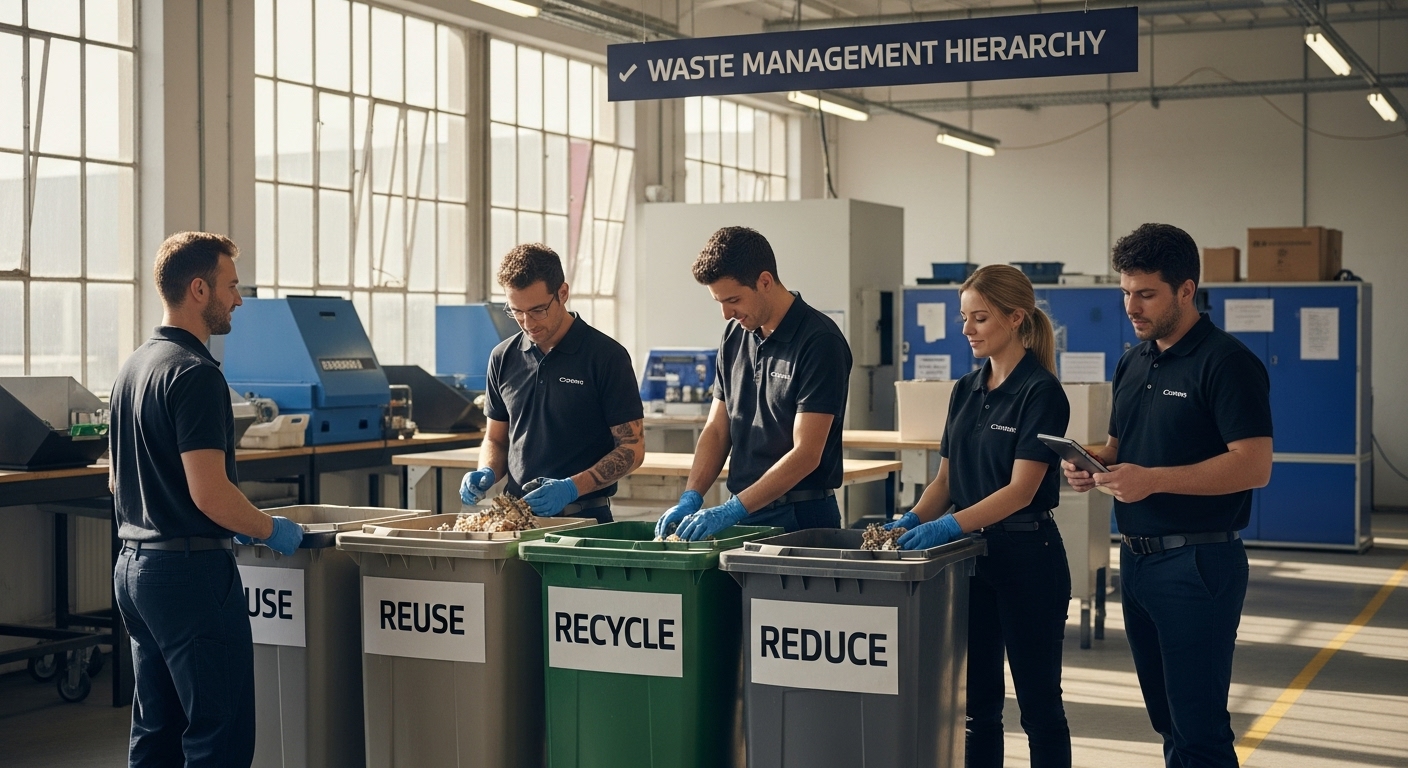
The waste management hierarchy provides a systematic framework for prioritising waste reduction strategies.
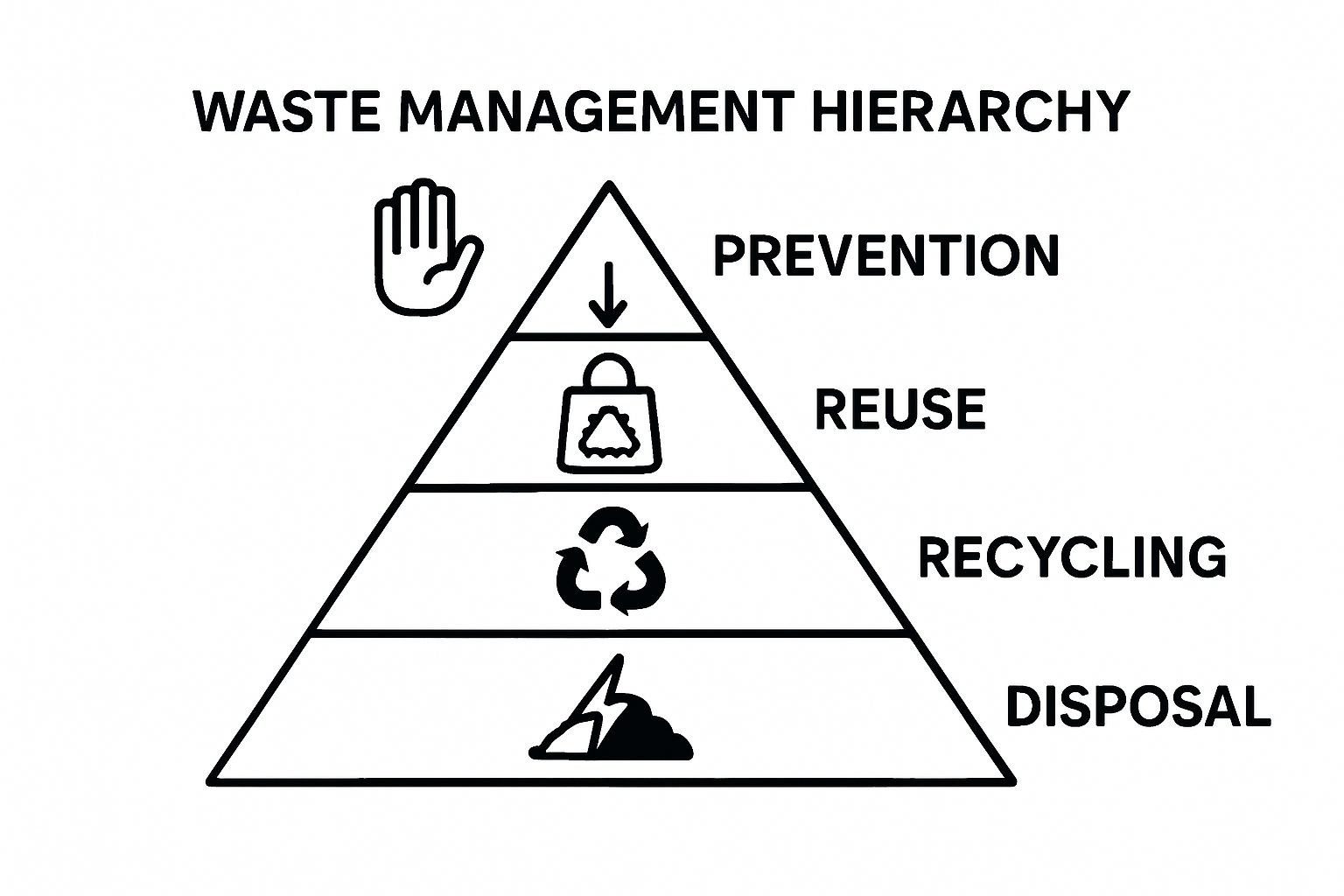 This hierarchical approach guides businesses in making environmentally responsible decisions about waste handling, emphasising prevention and minimisation before considering alternative disposal methods.
Below is a comparison table outlining each stage of the waste management hierarchy and its core aim, supporting clearer understanding of responsible waste handling priorities.
| Stage | Aim |
|---|---|
| Prevention | Reduce waste generation at the source |
| Reuse | Find alternative purposes for materials before disposal |
| Recycling | Convert waste materials into new products |
| Recovery | Extract energy or value from waste |
| Disposal | Final option when no other alternatives exist |
The core principles of the waste management hierarchy include:
- Prevention: Reducing waste generation at the source
- Reuse: Finding alternative purposes for materials before disposal
- Recycling: Converting waste materials into new products
- Recovery: Extracting energy or value from waste
- Disposal: Final option when no other alternatives exist
Resource Efficiency and Circular Economy
Modern waste management integrates the concept of a circular economy, where resources are kept in use for as long as possible. Research from waste management experts demonstrates that businesses can significantly reduce environmental impact by redesigning products and processes to minimise waste generation.
In industrial regions like Newcastle and Durham, companies are pioneering innovative approaches to how to reduce waste, transforming waste management from a cost centre into a potential revenue stream and competitive advantage.
Real-World Examples of Corporate Social Responsibility Waste
Corporate Social Responsibility (CSR) waste management is not merely a theoretical concept but a practical approach demonstrated by forward-thinking organisations across various sectors. These real-world examples showcase how businesses are transforming waste management from a compliance requirement into a strategic opportunity for environmental and economic innovation.
Manufacturing and Industrial Sector Innovations
Companies are developing groundbreaking strategies to reduce, reuse, and recycle waste materials, turning potential environmental challenges into opportunities for efficiency and sustainability. In the North East, manufacturers are pioneering circular economy approaches that minimise waste generation and maximise resource utilisation.
Notable strategies include:
- Implementing closed-loop manufacturing processes
- Developing alternative uses for industrial byproducts
- Creating new revenue streams from waste materials
- Redesigning product lifecycles to reduce waste generation
Technology and Electronic Waste Management
Technology companies are at the forefront of innovative waste management practices. The UK government’s Resources and Waste Strategy highlights the importance of electronic waste (WEEE) management as a critical component of corporate environmental responsibility.
Businesses are increasingly recognising the strategic importance of responsible electronic waste management. For organisations seeking detailed guidance on managing electronic waste, our comprehensive WEEE waste management guide provides invaluable insights into transforming waste challenges into sustainable solutions.
Transform Your CSR Waste Management into a Business Advantage
If your organisation is grappling with the challenges of responsible waste management, you are not alone. Many businesses struggle to minimise waste, maintain compliance, and adopt sustainable practices while balancing operational costs. As discussed in this article, effective corporate social responsibility waste management goes far beyond simple disposal. It is about proactive strategies, clear waste collection processes, and aligning your practices with the latest waste collection network standards that support both the environment and your bottom line.

Now is the time to act and put your CSR commitments into practice. Start streamlining your business waste with the experts at Venture Waste Management. Discover our step-by-step waste collection process for UK businesses and be confident you are fully compliant, cost-efficient, and protecting the environment. Visit our site now to see how simple and effective responsible waste management can be for your business.
Frequently Asked Questions
What is Corporate Social Responsibility (CSR) in waste management?
Corporate Social Responsibility in waste management refers to the commitment of businesses to manage their waste generation and disposal sustainably, aiming to reduce environmental impact while complying with regulations.
What are the core principles of CSR waste management?
The core principles include minimising waste generation, implementing recycling and reuse programmes, ensuring transparency in reporting practices, and investing in innovative waste reduction technologies.
How can businesses benefit economically from effective waste management?
Effective waste management can lead to reduced disposal costs, lower procurement expenses for raw materials, enhanced operational efficiency, and potential revenue from recycling and material recovery.
What role does the waste management hierarchy play in CSR strategies?
The waste management hierarchy prioritises waste management strategies, focusing on prevention and minimisation first, followed by reuse, recycling, recovery, and disposal, guiding companies in making environmentally responsible decisions.


Leave a Reply
Want to join the discussion?Feel free to contribute!