

Understanding Cardboard Rebates: Maximising Value from Waste
Cardboard waste used to pile up in the corners of warehouses and shops, dismissed as nothing but rubbish. Yet there’s a surprising fact hiding in those scraps. UK businesses handle nearly 5 million tonnes of cardboard every year and what seems like extra clutter could actually earn them thousands in rebates. The clever bit is that turning cardboard into cash is far simpler than most companies realise.
Table of Contents
- What Are Cardboard Rebates And How Do They Function?
- The Importance Of Cardboard Waste Management In Businesses
- Financial Benefits: Why Cardboard Rebates Matter
- Key Concepts In Cardboard Recycling And Rebates
- Real-World Examples Of Effective Cardboard Waste Strategies
Quick Summary
| Takeaway | Explanation |
|---|---|
| Cardboard rebates boost revenue. | Businesses can convert cardboard waste into income through recycling rebates. |
| Focus on material quality. | Higher quality cardboard results in better rebate values, incentivising careful handling. |
| Implement proper waste segregation. | Segregating cardboard ensures cleanliness, maximising its value in recycling markets. |
| Regularly monitor recycling rates. | Staying updated on market conditions allows businesses to optimise their cardboard recycling strategies. |
| Invest in waste management systems. | Dedicated collection and training can transform waste disposal costs into revenue streams. |
What are Cardboard Rebates and How Do They Function?
Cardboard rebates represent a strategic financial mechanism within waste management that allows businesses to generate revenue from their cardboard waste stream. These rebates function as an economic incentive for companies to systematically collect, segregate, and sell their used cardboard materials to recycling processors. Cardboard recycling rates in the North East have demonstrated significant potential for businesses seeking sustainable waste management strategies.
Understanding Cardboard Rebate Economics
The fundamental principle behind cardboard rebates is straightforward: businesses are compensated based on the volume and quality of cardboard waste they can provide to recycling markets. The value of these rebates fluctuates according to several critical factors:
- Global demand for recycled cardboard materials
- Current market prices for recovered paper fibres
- Cleanliness and preparation of cardboard waste
- Quantity of material being processed
According to Let’s Recycle market data, cardboard rebate values can range significantly, typically between £40 to £120 per tonne, depending on current market conditions and material quality.
Maximising Cardboard Rebate Potential
To optimise cardboard rebate earnings, businesses must focus on strategic waste management practices. This involves implementing robust waste segregation processes, ensuring cardboard is clean, dry, and free from contaminants like food residue, plastic packaging, or metal staples. Companies that invest in proper waste handling infrastructure can transform their cardboard waste from a disposal cost into a potential revenue stream.
Key considerations for maximising cardboard rebate value include:
- Investing in dedicated cardboard collection and storage systems
- Training staff on proper waste segregation techniques
- Partnering with reputable waste management providers
- Regularly monitoring market rates for recycled cardboard
By understanding and strategically approaching cardboard rebates, businesses can simultaneously reduce waste management costs and generate additional revenue through responsible recycling practices.
The Importance of Cardboard Waste Management in Businesses
Cardboard waste management represents a critical environmental and economic strategy for modern businesses across various sectors. By implementing comprehensive waste management approaches, organisations can simultaneously reduce environmental impact, generate potential revenue, and demonstrate corporate social responsibility. Cardboard recycling solutions play a pivotal role in transforming waste streams into sustainable business practices.
Environmental Impact and Corporate Responsibility
Businesses generate substantial volumes of cardboard waste through packaging, shipping materials, and internal operations. According to WRAP UK research, approximately 5 million tonnes of cardboard are used annually in the United Kingdom, with significant potential for recycling and waste reduction. Effective cardboard waste management directly contributes to:
- Reducing landfill contribution
- Conserving natural resources
- Minimising carbon emissions
- Supporting circular economy principles
Economic Benefits of Strategic Waste Management
Beyond environmental considerations, cardboard waste management offers tangible economic advantages for businesses. Proper waste segregation and recycling can transform waste disposal from a cost centre into a potential revenue stream. Companies that invest in systematic waste management strategies can:
- Reduce waste disposal costs
- Generate income through cardboard rebates
- Improve overall operational efficiency
- Enhance corporate reputation and sustainability credentials
Moreover, businesses in regions like Newcastle, Durham, and other North East industrial centres are increasingly recognising the financial and environmental benefits of comprehensive cardboard waste management. By partnering with professional waste management providers, organisations can develop tailored solutions that meet their specific operational requirements while contributing to broader sustainability goals.
Financial Benefits: Why Cardboard Rebates Matter
Cardboard rebates represent a significant financial opportunity for businesses seeking to transform their waste management approach from a cost centre to a potential revenue stream. By understanding the economic mechanics of cardboard recycling, organisations can unlock substantial financial benefits that extend beyond traditional waste disposal strategies. Cardboard baler rental solutions can play a crucial role in maximising these economic advantages.
Understanding Revenue Potential
The financial mechanics of cardboard rebates are grounded in the principles of supply and demand within recycling markets. Businesses that systematically collect, segregate, and process their cardboard waste can generate income based on the quantity and quality of materials they provide. According to Resource Trading Intelligence, current market rates for recycled cardboard can fluctuate between £40 to £120 per tonne, presenting a tangible financial incentive for comprehensive waste management.
Key factors influencing cardboard rebate values include:
- Volume of cardboard collected
- Cleanliness and contamination levels
- Current global recycling market conditions
- Local and regional demand for recycled materials
Strategic Financial Planning
For businesses in industrial sectors such as manufacturing, retail, logistics, and distribution across the North East, cardboard rebates offer more than just monetary compensation. They represent a strategic approach to waste management that can:
- Offset waste disposal costs
- Create an additional revenue stream
- Demonstrate corporate environmental responsibility
- Improve overall operational efficiency
Small to medium enterprises can particularly benefit from implementing systematic cardboard waste management strategies. By investing in proper segregation infrastructure and partnering with professional waste management providers, businesses can transform their approach from viewing cardboard as waste to recognising it as a valuable resource with potential financial returns.
Key Concepts in Cardboard Recycling and Rebates
Cardboard recycling represents a complex ecosystem of material transformation, economic incentives, and environmental sustainability. Understanding the fundamental principles behind this process enables businesses to make informed decisions about waste management strategies. Cardboard recycling in the North East offers unique insights into regional waste management approaches and opportunities.
Material Quality and Classification
The value of cardboard in recycling markets is intrinsically linked to its material quality and classification. According to WRAP UK recycling guidelines, cardboard is categorised into distinct grades based on its condition, composition, and potential for reprocessing. These classifications directly impact the potential rebate value businesses can expect:
- Grade A: Clean, uncontaminated corrugated cardboard
- Grade B: Slightly contaminated or mixed cardboard materials
- Grade C: Heavily soiled or mixed packaging materials
Higher-grade materials command premium prices in recycling markets, incentivising businesses to implement rigorous waste segregation and cleaning protocols.
Below is a table summarising the different grades of cardboard as discussed, alongside their characteristics and typical rebate value ranges.
| Cardboard Grade | Description | Typical Rebate Value (per tonne) |
|---|---|---|
| Grade A | Clean, uncontaminated corrugated cardboard | £80 – £120 |
| Grade B | Slightly contaminated or mixed materials | £60 – £80 |
| Grade C | Heavily soiled or mixed packaging materials | £40 – £60 |

Processing and Value Chain Dynamics
The journey of cardboard from waste material to recyclable resource involves multiple stages of processing. Each stage contributes to the material’s economic and environmental value. Businesses that understand these dynamics can optimise their waste management strategies to maximise potential rebates.
Key stages in the cardboard recycling value chain include:
- Collection and initial sorting
- Cleaning and decontamination
- Shredding and pulping
- Reconstitution into new paper or packaging products
- Market distribution of recycled materials
By comprehending these intricate processes, organisations can develop more strategic approaches to cardboard waste management, transforming what was previously considered a disposal cost into a potential revenue stream.
Real-world Examples of Effective Cardboard Waste Strategies
Businesses across various industries are demonstrating innovative approaches to cardboard waste management, transforming potential environmental challenges into strategic opportunities. By implementing comprehensive waste management strategies, organisations can significantly reduce their environmental footprint while generating economic value. Cardboard recycling solutions for local businesses provide insights into practical implementation techniques.
Manufacturing Sector Innovations
Manufacturing businesses, particularly in the North East regions like Newcastle and Durham, have pioneered advanced cardboard waste management techniques. According to Manufacturing Insights UK, companies are increasingly adopting integrated waste management approaches that go beyond traditional disposal methods.
Successful strategies in the manufacturing sector typically include:
- Implementing on-site cardboard compaction equipment
- Developing comprehensive waste segregation protocols
- Creating dedicated recycling infrastructure
- Training employees in sustainable waste practices
- Establishing direct relationships with recycling processors
Retail and Logistics Sector Approaches
Retail and logistics organisations generate substantial cardboard waste through packaging and shipping materials. Forward-thinking companies have developed sophisticated strategies to manage this waste stream effectively. These strategies not only reduce environmental impact but also create potential revenue streams through cardboard rebates.
Key implementation techniques include:
- Standardising packaging design for easier recycling
- Investing in advanced sorting and processing technologies
- Creating closed-loop recycling systems
- Tracking and measuring waste management performance
- Collaborating with specialised waste management providers
By adopting these strategic approaches, businesses can transform cardboard waste from a potential environmental liability into a valuable resource, demonstrating both economic and environmental responsibility.
The following table compares waste management strategies implemented by manufacturing and retail/logistics sectors, highlighting their respective approaches to effective cardboard recycling.
| Sector | Key Strategies & Approaches |
|---|---|
| Manufacturing | On-site compaction, comprehensive segregation, dedicated recycling infrastructure, training, direct partnerships |
| Retail & Logistics | Standardised packaging design, advanced sorting, closed-loop recycling, performance measurement, specialised providers |
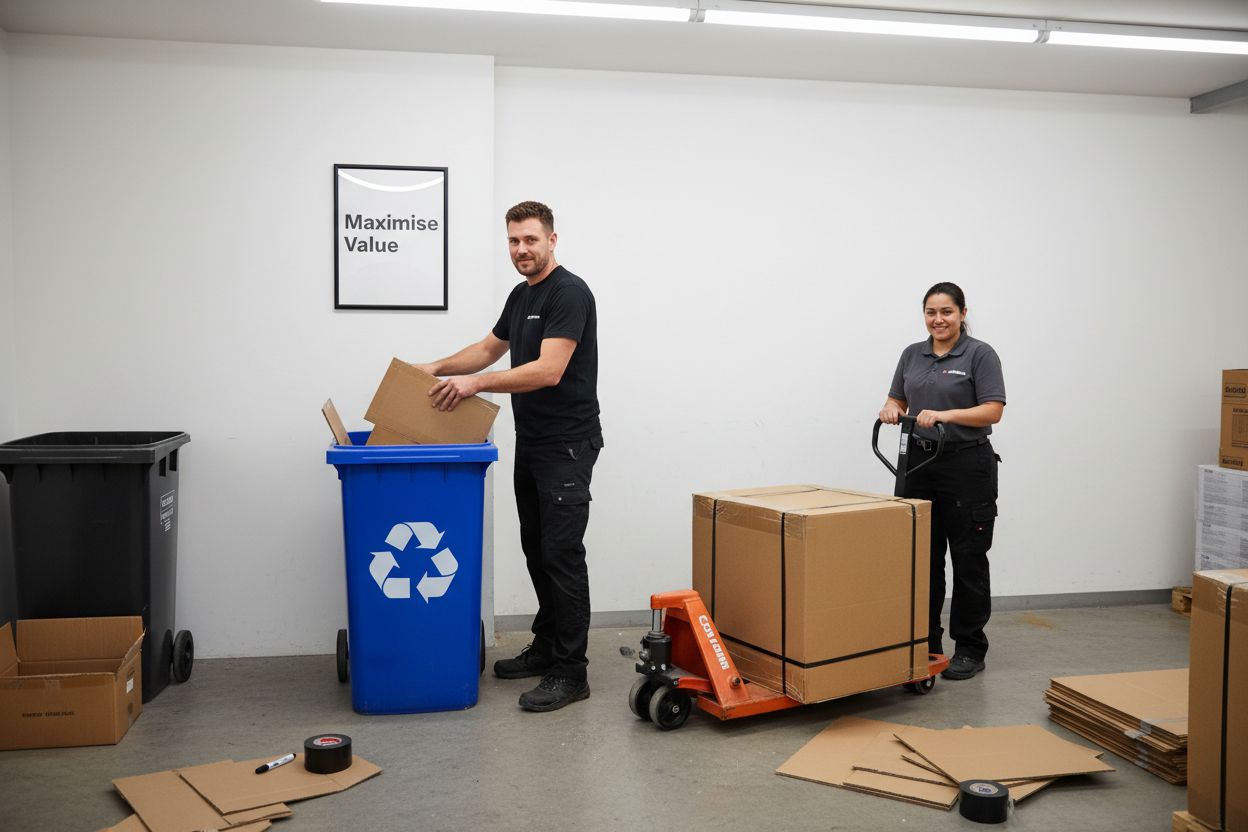
Turn Cardboard Waste into Real Value with Venture Waste
Struggling to make the most out of your cardboard recycling efforts? If you find yourself facing mounting disposal costs or missed rebate opportunities, you are not alone. As this article explains, the key to maximising cardboard rebates lies in efficient segregation, quality control, and the right collection infrastructure. Many businesses overlook how the right equipment, such as cardboard balers, can transform their waste into a profitable resource and allow them to capitalise on market rebate rates.
Explore our cardboard baler solutions

Take action today and start converting your waste stream into revenue for your business. With Venture Waste, it is simple to arrange reliable collection, benefit from expert advice, and ensure your recycling process aligns with the latest industry best practices. Visit Venture Waste Management now to book an efficient collection or to get advice on the best solutions for your cardboard waste. Making a positive change is easier than ever when you work with a trusted UK waste management partner.
Frequently Asked Questions
What are cardboard rebates?
Cardboard rebates are financial incentives offered to businesses for collecting, segregating, and selling their used cardboard materials to recycling processors. They enable companies to generate revenue from their cardboard waste stream.
How do I maximise my cardboard rebate value?
To maximise cardboard rebate value, focus on proper waste segregation, ensure materials are clean and free from contaminants, invest in dedicated collection systems, and partner with reliable waste management providers.
What factors affect the value of cardboard rebates?
The value of cardboard rebates is influenced by the global demand for recycled materials, current market prices for recovered fibres, the cleanliness of the cardboard, and the quantity of material processed.
How can effective cardboard waste management benefit my business?
Proper cardboard waste management can reduce disposal costs, generate income through rebates, improve operational efficiency, and enhance corporate sustainability credentials.


Leave a Reply
Want to join the discussion?Feel free to contribute!