

Complete Guide to UK Waste Management Laws 2025
Over £1 billion in waste-related fines have been levied against UK businesses in the past five years, highlighting the intense pressure to improve compliance. As rules tighten and penalties rise, staying ahead of new waste management laws is now a vital task for companies of every size. Understanding these detailed regulations means more than just avoiding fines—it is about building practical strategies that protect your business while supporting the push for a cleaner environment.
Table of Contents
- Defining UK Waste Management Laws and Scope
- Types of Waste and Regulated Categories
- Key Laws Governing Waste Management
- Business Responsibilities and Compliance Steps
- Penalties, Enforcement and Common Pitfalls
Key Takeaways
| Point | Details |
|---|---|
| Regulatory Changes | UK waste management laws are evolving, imposing stricter compliance requirements and financial penalties for businesses. |
| Mandatory Waste Separation | From March 31, 2025, businesses in England must separately manage various waste categories to enhance recycling efforts. |
| Compliance Requirements | Companies must conduct waste audits and engage licensed carriers, emphasizing the importance of thorough waste management strategies. |
| Increased Enforcement | The Environment Agency can impose unlimited fines for non-compliance, making adherence to regulations critical for business operations. |
Defining UK Waste Management Laws and Scope
Understanding the landscape of UK waste management laws requires a comprehensive view of recent regulatory developments that are reshaping environmental responsibility for businesses. According to the UK government, significant changes are being implemented to strengthen waste management practices and environmental accountability. Waste Management Step by Step: A Guide for UK Businesses 2025 provides more detailed insights into these evolving requirements.
The current legislative framework introduces unprecedented financial penalties designed to ensure businesses prioritize proper waste management. As reported by the government, unlimited financial penalties can now be imposed on organisations that fail to comply with environmental regulations, creating a strong deterrent against improper waste disposal. This represents a significant shift towards holding polluters directly accountable for their environmental impact.
Specifically, new waste separation requirements in England mandate comprehensive waste stream management for workplaces. Businesses must now separately collect and manage multiple waste categories, including:
- Glass waste
- Metal waste
- Plastic waste
- Paper and cardboard
- Food waste
These requirements represent a strategic approach to improving recycling rates and reducing environmental contamination. By requiring granular waste separation, the UK government aims to create a more sustainable waste management ecosystem that encourages responsible environmental practices across all business sectors.
Types of Waste and Regulated Categories
Understanding the waste classification system is crucial for businesses navigating UK environmental regulations. The landscape of waste management has become increasingly complex, with specific categories requiring distinct handling and disposal protocols. Types of Hazardous Waste: Business Waste Guide UK 2025 provides comprehensive insights into the nuanced world of waste categorisation.
Businesses must now recognize multiple waste streams, each with unique regulatory requirements. These categories range from general commercial waste to highly specialised hazardous materials that demand stringent management protocols. Critically, from March 31, 2025, businesses in England face mandatory requirements for food waste separation, representing a significant shift in waste management practices.
The primary waste categories businesses must understand include:
Here’s a summary of the main waste categories and their regulatory requirements:
| Waste Category | Examples | Key Regulations |
|---|---|---|
| General Waste | Non-recyclable office waste | Landfill restrictions |
| Recyclable Waste | Paper Cardboard Metals Glass Plastics |
Mandatory segregation Reporting |
| Food Waste | Kitchen scraps Catering residue |
Separate collection required by 2025 |
| Hazardous Waste | Batteries Clinical waste Electronics |
Special handling Strict documentation |
| Construction Waste | Bricks Concrete Rubble |
Site-specific protocols |
- General Waste: Non-recyclable materials typically sent to landfill
- Recyclable Waste: Paper, cardboard, plastics, metals, and glass
- Food Waste: Organic materials now requiring separate collection
- Hazardous Waste: Chemicals, batteries, clinical waste, electronic equipment
- Construction Waste: Materials from building and demolition sites
Each waste category demands specific disposal methods, with potential financial penalties for improper management.
 Businesses must develop robust waste segregation strategies, ensuring compliance with increasingly stringent environmental regulations and demonstrating commitment to sustainable waste management practices.
Key Laws Governing Waste Management
The UK waste management legal framework represents a comprehensive approach to environmental sustainability, with increasingly stringent regulations designed to transform how businesses handle and dispose of waste. Waste Management News UK 2025: What Businesses Need to Know highlights the critical legislative developments that are reshaping waste management practices across various sectors.
According to recent research, the UK government has established ambitious targets to achieve a 65% recycling rate for municipal waste by 2035. This goal is supported by a series of strategic legal mechanisms, including increased landfill taxes and more rigorous waste separation requirements.
Notably, the government is also introducing innovative regulatory approaches, such as requiring online marketplaces to contribute more significantly to the recycling costs of electrical items.
Key legislative priorities include:
- Environmental Protection Act updates
- Resources and Waste Strategy implementation
- Enhanced producer responsibility regulations
- Stricter waste tracking and reporting requirements
- Increased financial penalties for non-compliance
The legal landscape is particularly complex for businesses, with regulations now extending beyond traditional waste management. Online retailers and manufacturers are being held increasingly accountable for the entire lifecycle of their products, creating a more holistic approach to waste reduction and environmental responsibility. Businesses must stay informed and proactively adapt to these evolving legal requirements to avoid potential financial penalties and demonstrate environmental stewardship.
Business Responsibilities and Compliance Steps
Navigating the complex landscape of waste management compliance requires businesses to implement comprehensive strategies that align with the latest regulatory requirements. Waste Disposal Legal Requirements UK 2025: What Businesses Must Know provides critical guidance for organisations seeking to meet their legal obligations.
According to recent regulations, businesses must now separate waste into distinct categories, including dry recyclables, food waste, and residual waste, and arrange collection exclusively through licensed waste carriers. The Extended Producer Responsibility (EPR) scheme introduces significant financial risks, with potential penalties reaching up to 5% of a company’s turnover for late or missed payments related to packaging waste disposal fees.
Key compliance steps for businesses include:
- Conduct a comprehensive waste audit
- Implement robust waste separation systems
- Register with appropriate environmental regulators
- Engage only licensed waste management carriers
- Maintain detailed waste tracking documentation
- Train staff on new waste management protocols
- Regularly review and update waste management practices
Business leaders must recognize that compliance is no longer optional. The regulatory environment demands proactive management, with substantial financial penalties for non-compliance. Companies must invest in understanding and implementing these requirements, transforming waste management from a administrative task to a strategic business responsibility that demonstrates environmental stewardship and regulatory awareness.
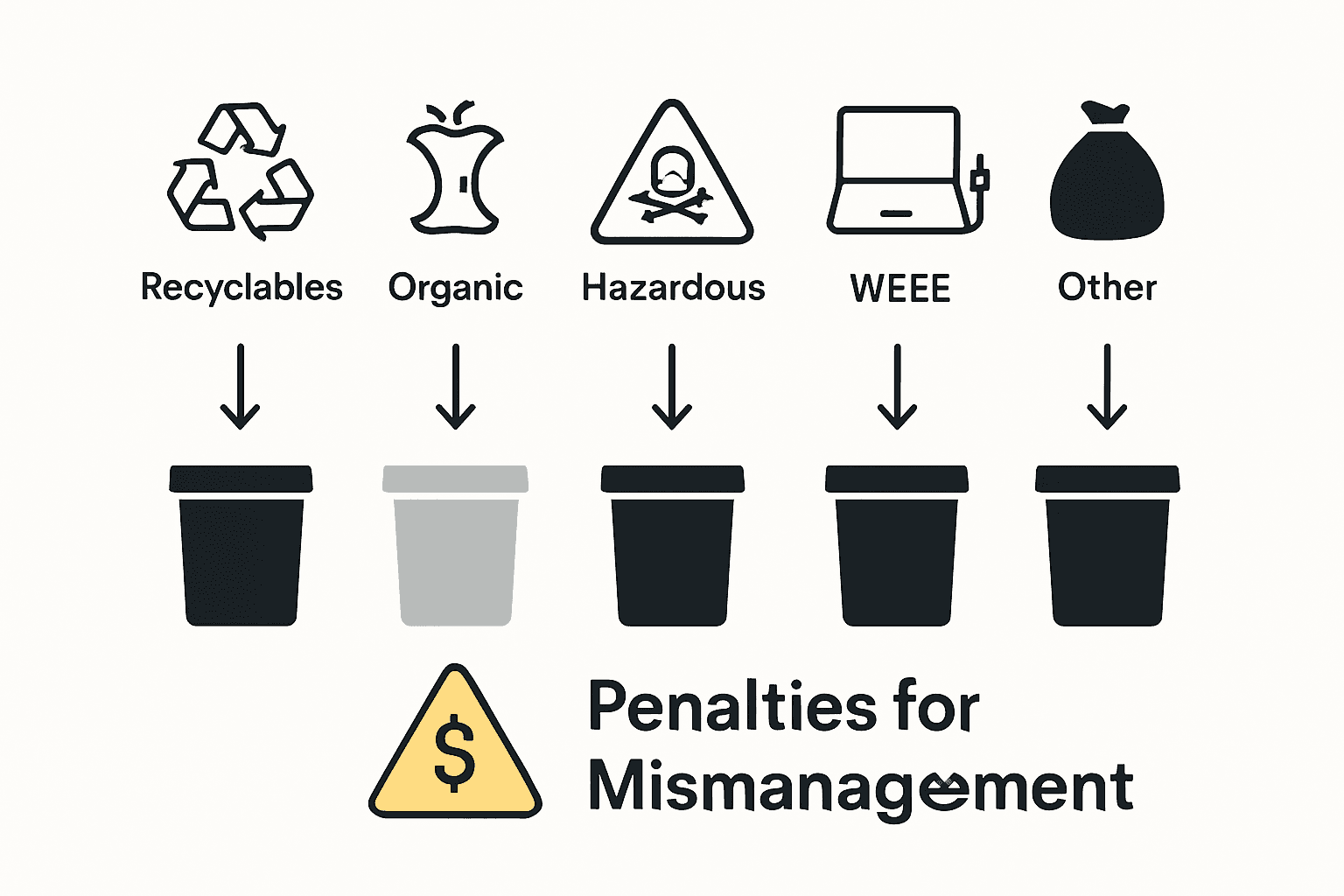
Penalties, Enforcement and Common Pitfalls
The waste management enforcement landscape has dramatically transformed, with regulatory bodies now wielding unprecedented powers to penalise environmental non-compliance. Business Waste Penalties UK: Avoid Fines in 2025 offers critical insights into navigating these stringent new regulations.
According to recent government announcements, the Environment Agency now possesses the authority to impose unlimited financial penalties for environmental offences. This represents a significant escalation in regulatory approach, expanding the range of covered offences and substantially strengthening enforcement mechanisms. The potential consequences extend beyond financial penalties, with some sectors facing the prospect of executive-level accountability that could even include potential imprisonment.
Common pitfalls businesses must avoid include:
- Incomplete waste segregation
- Using unlicensed waste carriers
- Inadequate record-keeping
- Missed reporting deadlines
- Improper hazardous waste handling
- Neglecting staff training on new regulations
- Failing to conduct regular waste audits
Businesses must understand that compliance is no longer a checkbox exercise but a fundamental operational requirement. The financial and legal risks of non-compliance have never been higher, with penalties potentially reaching significant proportions of a company’s turnover. Proactive management, continuous education, and a commitment to environmental responsibility are now essential for survival in this increasingly regulated business environment.
Take Control of Your Business Waste with Confidence
Navigating the complexities of UK waste management laws in 2025 can feel overwhelming, especially with new requirements for waste separation and increased financial penalties for non-compliance. Your business deserves a waste management partner that understands these challenges and is ready to guide you every step of the way. At Venture Waste Management, we specialise in helping businesses comply with regulations by providing tailored solutions for hazardous waste, food waste, and general commercial waste.

Discover how our streamlined Waste Collection Process in the UK for Businesses 2025 aligns with the latest legal requirements. Explore How the Waste Collection Network in UK Serves Businesses in 2025 to see how we support your compliance goals. Stay informed with insights from our food waste category and be confident that your waste management meets all regulatory demands. Visit Venture Waste today and take the first step towards legal compliance, environmental responsibility, and hassle-free waste disposal.
Frequently Asked Questions
What are the new waste separation requirements for businesses in the UK?
Businesses are now required to separately collect and manage multiple waste categories, including glass, metal, plastic, paper, cardboard, and food waste as part of new waste separation regulations.
What are the potential penalties for non-compliance with waste management laws?
Businesses can face unlimited financial penalties for failing to comply with waste management laws, with potential fines reaching up to 5% of a company’s turnover for late or missed waste disposal payments.
How can businesses ensure compliance with UK waste management laws?
To ensure compliance, businesses should conduct comprehensive waste audits, implement robust waste separation systems, engage only licensed waste management carriers, and maintain detailed waste tracking documentation.
What are the main types of waste businesses need to manage?
Businesses must manage various waste types, including general waste, recyclable waste, food waste, hazardous waste, and construction waste, each with specific disposal and handling protocols.


Leave a Reply
Want to join the discussion?Feel free to contribute!