

Types of recyclable materials in the UK: 15% contamination risk explained
Nearly 15% of recyclable materials collected from UK businesses are rejected due to contamination, costing firms money and compliance headaches. Understanding which materials are recyclable, how to handle them properly, and what UK laws require can dramatically cut rejection rates. This guide walks you through the main recyclable material categories, debunks common myths, and provides actionable steps to keep your recycling streams clean and legally compliant.
Table of Contents
- Introduction To Recyclable Materials In The UK
- Detailed Overview Of Key Recyclable Materials
- UK Regulatory Compliance And Legal Requirements
- Common Misconceptions About Recyclable Materials
- Challenges And Best Practices In Recycling Management
- Practical Recycling Solutions For UK Businesses
- Summary And Next Steps For Facility Managers And Business Owners
- Optimise Your Business Recycling With Venture Waste
Key takeaways
| Point | Details |
|---|---|
| Main recyclable materials | Paper, plastics (PET, HDPE), glass, metals, and organics dominate UK commercial waste streams. |
| Contamination impact | Contamination causes nearly 15% rejection in UK recycling streams, driving up costs and compliance risks. |
| Legal obligations | UK commercial waste laws require proper segregation, secure storage, transfer notes, and detailed record keeping. |
| Plastic recycling limits | Not all plastics with recycling symbols are accepted; only PET and HDPE are widely recycled commercially. |
| Segregation benefits | Proper segregation at source improves recycling rates, reduces contamination, and minimises legal exposure. |
Introduction to recyclable materials in the UK
Understanding the types of recyclable materials your business generates is the first step toward compliance and cost control. Paper, plastics, metals, glass, and organics make up the majority of UK commercial recyclable waste, each with distinct handling requirements. Recognising these categories helps you design effective segregation systems and choose the right collection services.
UK businesses face a patchwork of recycling regulations that mandate proper sorting, storage, and documentation. The Waste Duty of Care under the Environmental Protection Act 1990 places legal responsibility on you to manage waste correctly from cradle to grave. Failure to classify and segregate materials properly can trigger fines, enforcement notices, and reputational damage.
Knowing your commercial recyclable waste types in the UK means you can:
- Reduce contamination and rejection rates at recycling facilities.
- Meet legal obligations and avoid penalties.
- Lower disposal costs by diverting materials from landfill.
- Improve your environmental credentials and stakeholder trust.
Each material type has unique characteristics that affect how it should be collected, stored, and processed. Mixing incompatible materials or allowing contamination ruins entire batches, turning recyclables into residual waste. The following sections break down the specifics for each category so you can implement practical, compliant recycling systems.
Detailed overview of key recyclable materials
Paper and cardboard are among the easiest materials to recycle, but contamination from food residue, grease, or mixed fibre types can render them unrecyclable. Clean, dry paper products like office paper, newspapers, and corrugated cardboard are highly valuable. Keep them separate from food packaging and ensure they remain dry during storage to maintain fibre quality.
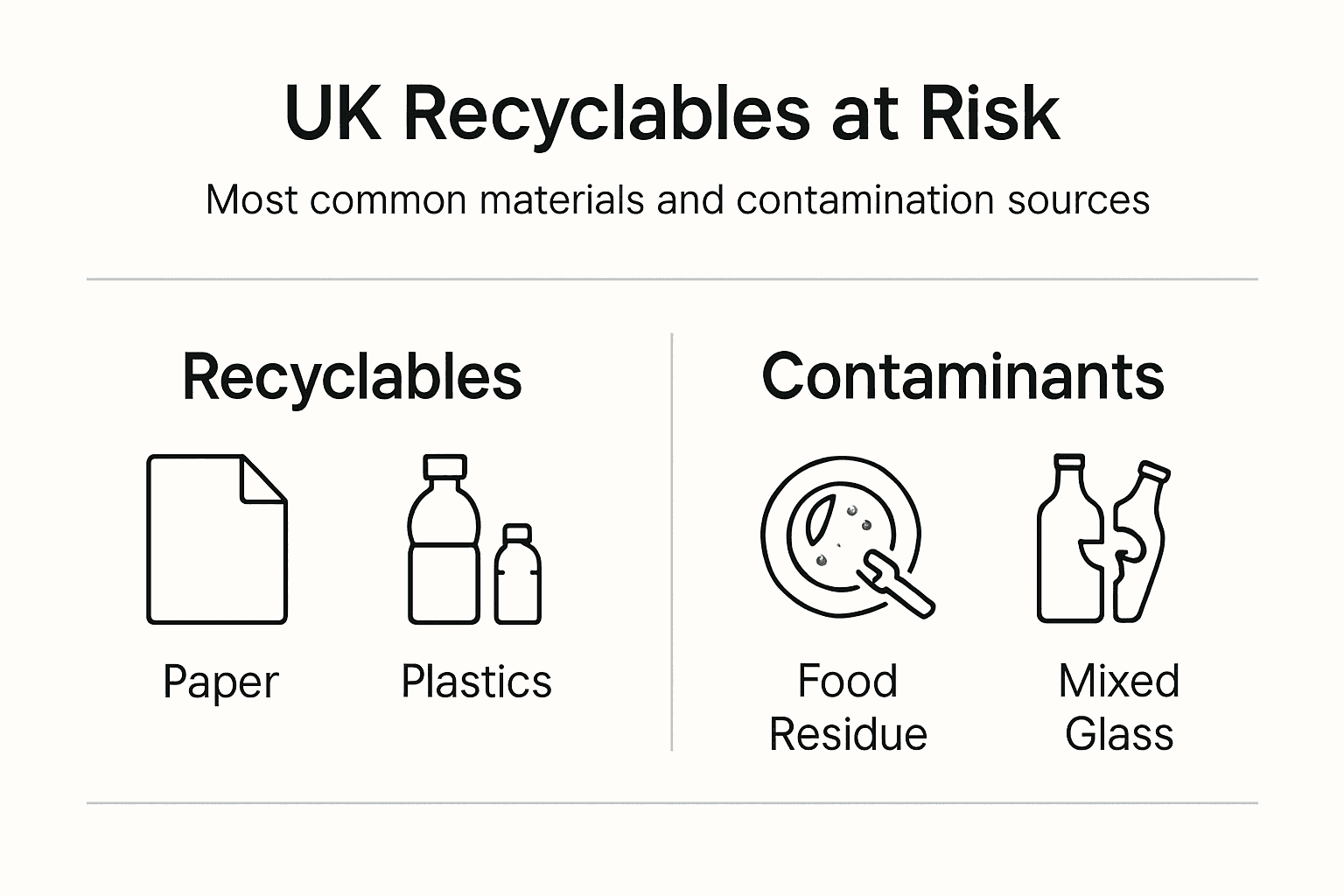
Plastics present a more complex challenge. While many plastic items carry recycling symbols, only certain polymers are widely accepted in UK commercial facilities. PET (polyethylene terephthalate) and HDPE (high density polyethylene) dominate recycling streams because they are easy to process and have strong end markets. Other plastics like PVC, polystyrene, and mixed polymers often lack recycling infrastructure, meaning they end up in general waste even if labelled recyclable. Always check with your waste contractor which plastic types they accept.
Glass is infinitely recyclable in theory, but colour contamination affects quality and market value. Glass recyclables in the UK commercial sector must be colour separated to facilitate reuse and high quality production, with clear glass commanding higher recycling value due to market demand. Separate clear, green, and brown glass at source to maximise recycling potential. Broken glass should still be segregated by colour and stored safely to prevent injury.
Metals, particularly aluminium and steel, boast some of the highest recycling rates in the UK. Aluminium cans can be recycled indefinitely without quality loss, and steel from food tins, construction materials, and appliances is equally valuable. Magnetic sorting makes steel easy to separate, while aluminium’s lightweight and energy savings make it economically attractive. Ensure metal containers are rinsed to avoid contamination and kept separate from other materials.
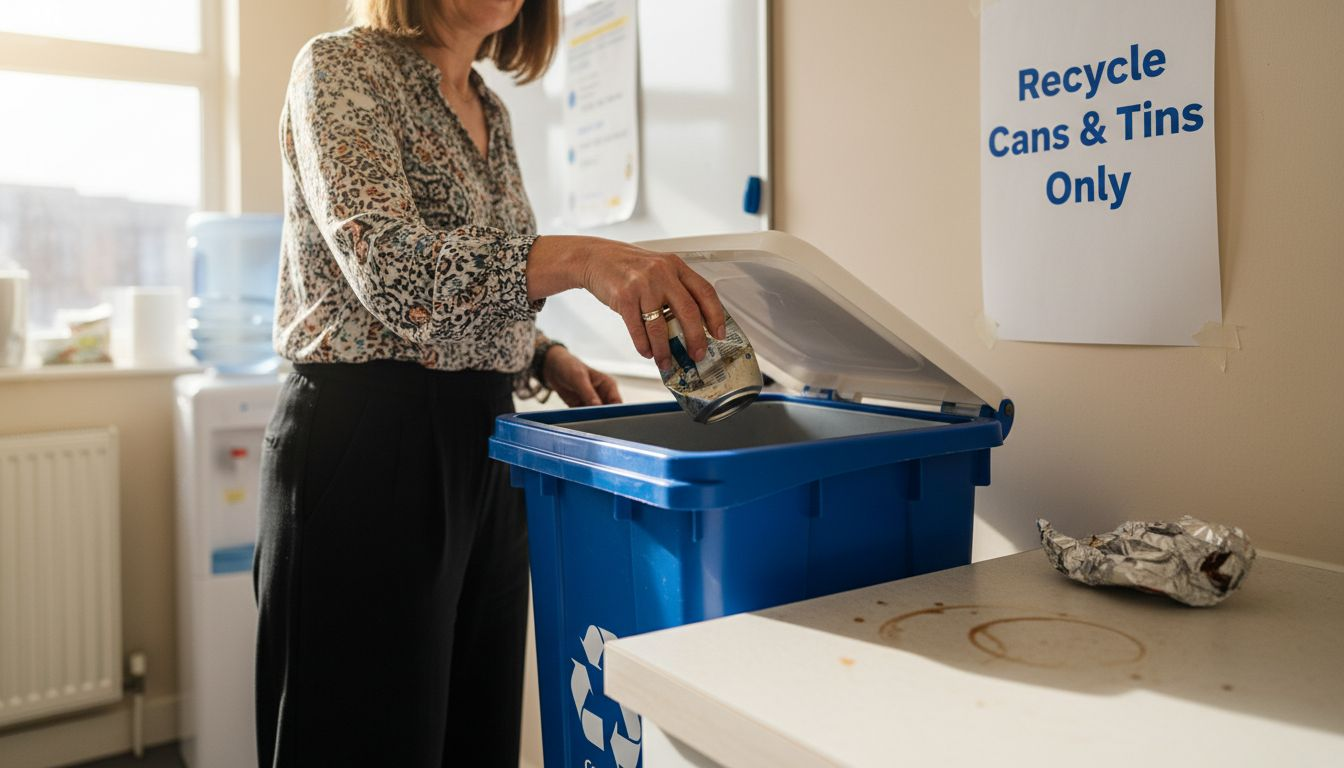
Organics, including food waste and compostable packaging, offer recycling opportunities through composting or anaerobic digestion. Food waste from catering, retail, and hospitality can be converted into biogas and fertiliser, diverting it from landfill where it would generate methane. Many UK councils and private contractors now offer dedicated food waste collection for businesses. Keep organics separate from dry recyclables to prevent contamination.
| Material | Common forms | Recycling method | Key challenge |
|---|---|---|---|
| Paper/cardboard | Office paper, boxes, newspapers | Pulping and reprocessing | Moisture and grease contamination |
| Plastics (PET/HDPE) | Bottles, containers | Mechanical recycling | Polymer separation and mixed plastic rejection |
| Glass | Bottles, jars | Colour sorted crushing and melting | Colour contamination reduces quality |
| Metals | Cans, tins, scrap | Magnetic/eddy current sorting | Food residue and mixed metal types |
| Organics | Food waste, compostables | Composting or anaerobic digestion | Mixing with non organic materials |
Pro Tip: Label your bins clearly with images and text showing exactly which items belong in each stream. Visual cues reduce sorting errors and contamination, especially in busy commercial environments.
For more detailed guidance on recognising and handling these materials, explore key recycling facts for UK businesses and consult British Glass recycling specifics for technical standards.
UK regulatory compliance and legal requirements
UK law places strict duties on businesses to manage waste responsibly. The Waste Duty of Care and Environmental Protection Act 1990 compel UK businesses to segregate, store, and record waste properly. You must ensure waste is stored securely, transferred only to authorised carriers, and accompanied by accurate waste transfer notes. These legal obligations apply to all commercial waste, including recyclables.
Your legal checklist includes:
- Segregate recyclable materials at source to prevent contamination and maximise recovery.
- Store waste securely in appropriate containers to avoid leaks, spills, or unauthorised access.
- Use only registered waste carriers with valid Environment Agency permits.
- Complete waste transfer notes for every collection, detailing waste type, quantity, and destination.
- Retain records for at least two years to demonstrate compliance during inspections.
- Implement a written waste management plan outlining your procedures and responsibilities.
Non compliance carries serious consequences. Local authorities and the Environment Agency can issue fixed penalty notices, enforcement notices, or prosecute businesses that fail to meet their Duty of Care. Fines can reach thousands of pounds, and in severe cases, directors may face personal liability. Beyond financial penalties, non compliance damages your reputation and can lead to loss of contracts or certifications.
“Every business has a legal responsibility to manage its waste properly. The Waste Duty of Care is not optional; it is a legal requirement that protects the environment and public health.”
Specialised waste streams carry additional regulations. Electrical and electronic equipment falls under Waste Electrical and Electronic Equipment regulations, which require separate collection and treatment. If your business handles hazardous substances, you must also comply with COSHH regulations and waste compliance to ensure safe disposal.
Pro Tip: Conduct a waste audit to identify all material streams your business generates. This audit forms the foundation of a compliant waste management plan and helps you select the right contractors and services.
Staying on top of UK recycling obligations and regulations protects you from legal exposure while improving operational efficiency. Regular staff training and clear documentation are your best defences against compliance failures.
Common misconceptions about recyclable materials
Many businesses assume that any plastic item bearing a recycling symbol can be recycled, but this is misleading. The symbol indicates the polymer type, not whether recycling infrastructure exists for it. Only certain polymers like PET and HDPE are widely recycled in UK commercial facilities despite many plastics bearing recycling symbols. Other plastics like polystyrene, PVC, and mixed polymer films typically lack end markets and are rejected by recyclers.
Another myth is that glass can be recycled infinitely without quality loss. While glass is theoretically infinitely recyclable, colour mixing degrades quality and limits reuse applications. Coloured glass often undergoes downcycling into aggregate or insulation rather than returning as high quality containers. To maximise recycling value, always separate clear, green, and brown glass.
Contamination is widely underestimated. Contamination causes nearly 15% of recyclable materials collected to be rejected in UK commercial recycling facilities. Common contaminants include food residue on paper or plastics, mixed material types in one bin, and non recyclable items placed in recycling streams. Even small amounts of contamination can spoil entire loads, forcing facilities to send them to landfill or incineration.
Businesses also mistakenly believe that all recyclable materials can be handled the same way. In reality, different materials require tailored collection, storage, and processing. Mixing paper with wet organics ruins the paper. Combining different plastic types prevents effective reprocessing. Each material stream needs its own bin, signage, and handling protocol.
Key misconceptions to avoid:
- Assuming all plastics with symbols are recyclable (only PET and HDPE are widely accepted).
- Believing glass recycling is always high quality (colour mixing causes downcycling).
- Underestimating contamination impact (15% rejection rate costs money and harms compliance).
- Treating all recyclables the same (each material needs specific segregation and handling).
Understanding these realities helps you design effective recycling systems and avoid costly mistakes. For more insight into contamination challenges, visit recycling contamination and misconceptions.
Challenges and best practices in recycling management
Contamination remains the biggest operational challenge for UK businesses managing recyclable materials. Contamination causes nearly 15% of recyclable materials collected to be rejected in UK commercial recycling facilities. Common sources include mixing polymer types, placing food soiled items in dry recycling bins, and staff confusion about what belongs where. Each contamination incident reduces recycling rates and increases disposal costs.
Segregation at source is the most effective way to combat contamination. When materials are separated correctly from the moment they are discarded, contamination risk plummets. This requires clear bin placement, intuitive labelling, and regular staff training. Conduct refresher sessions every quarter to reinforce sorting rules and address new questions.
Best practices for effective recycling management:
- Install clearly labelled, colour coded bins at all waste generation points (kitchens, offices, loading bays).
- Use visual guides showing exactly which items belong in each bin, including photos of acceptable and unacceptable materials.
- Train all staff, contractors, and visitors on your recycling procedures, emphasising contamination risks.
- Conduct regular waste audits to identify contamination hotspots and adjust bin placement or signage accordingly.
- Work with your waste contractor to review rejected loads and understand root causes of contamination.
- Implement a continuous improvement process, refining your system based on feedback and performance data.
Handling mixed material streams requires extra diligence. Products like laminated packaging, composite materials, and items with multiple components (labels, caps, sleeves) can confuse sorters. Where possible, disassemble items into their constituent materials. If this is impractical, consult your waste contractor about specialist recycling options or treat them as residual waste.
Pro Tip: Appoint a waste champion in each department to oversee recycling compliance, answer questions, and report issues. This decentralised approach improves accountability and responsiveness.
For detailed guidance on setting up segregation systems, review waste segregation guidelines and explore waste segregation best practices. These resources provide step by step instructions tailored to UK commercial environments.
Practical recycling solutions for UK businesses
Choosing the right service provider and infrastructure is crucial for effective recycling management. Skip hire offers a flexible solution for bulky recyclables, construction waste, and large volume collections. Modern skip services cater to specific material types, ensuring clean segregation and maximising recycling rates. Look for providers offering segregated skips for paper, metal, wood, and mixed recyclables.
Certified recycling services guarantee that your materials are processed responsibly and in compliance with UK regulations. Verify that your contractor holds valid Environment Agency permits, carries appropriate insurance, and provides waste transfer notes for every collection. Ask for evidence of their recycling and recovery rates to ensure they are not simply landfilling materials.
Tracking tools and technologies can improve compliance monitoring and contamination detection. Digital waste management platforms allow you to log collections, track tonnages, and generate compliance reports automatically. Some providers offer bin sensors that alert you when contamination is detected or bins are full, enabling proactive intervention. These tools are particularly valuable for multi site operations where consistency is challenging.
Outsourcing recycling management to experienced firms offers several benefits:
- Expertise in navigating complex UK waste regulations and compliance requirements.
- Access to specialist equipment, collection schedules, and processing facilities.
- Reduced administrative burden, freeing your staff to focus on core business activities.
- Scalability to accommodate seasonal fluctuations or business growth.
- Peace of mind that materials are handled responsibly and legally.
When evaluating service providers, consider skip hire services for UK businesses for cost effective, compliant solutions. Comprehensive commercial waste transport services ensure materials reach authorised facilities safely and on schedule. For operational guidance, review waste collection best practices UK to align your internal procedures with industry standards.
Summary and next steps for facility managers and business owners
Effective recycling management hinges on understanding material types, maintaining clean segregation, and meeting legal obligations. Paper, plastics (PET and HDPE), glass, metals, and organics each require specific handling to avoid the 15% contamination rate that plagues many UK commercial recyclers. Proper segregation at source, clear labelling, and regular staff training are non negotiable for maintaining recycling quality and legal compliance.
Your immediate action plan should include:
- Conduct a waste audit to identify all recyclable material streams and current contamination levels.
- Review and update bin placement, signage, and labelling to reflect best practices.
- Schedule quarterly staff training sessions covering sorting rules, contamination risks, and legal requirements.
- Verify that your waste contractor holds valid permits and provides detailed waste transfer notes.
- Implement a continuous improvement process, using audit data and contractor feedback to refine your system.
Regulatory compliance protects you from fines, enforcement action, and reputational damage. Keep records for at least two years, complete waste transfer notes for every collection, and ensure all materials are handled by authorised carriers. Specialised waste streams like electrical equipment and hazardous materials require additional compliance measures, so consult relevant regulations and specialist contractors.
For ongoing support, refer to waste segregation guidelines and stay informed about regulatory changes affecting your sector. Effective recycling management is an ongoing commitment, but the financial, legal, and environmental benefits make it well worth the effort.
Optimise your business recycling with Venture Waste
Navigating UK commercial recycling regulations and reducing contamination requires expertise and reliable service partners. Venture Waste offers tailored recycling and waste management solutions designed to keep your business compliant, cost effective, and environmentally responsible. Our services support proper segregation, contamination control, and full regulatory compliance across all recyclable material types.

We provide comprehensive waste collection best practices support, from initial waste audits to ongoing collection and reporting. Our skip hire for UK businesses delivers flexible, segregated solutions for bulky recyclables and construction materials. Our waste transport services ensure your materials reach authorised recycling facilities safely and on schedule, complete with detailed transfer notes and compliance documentation. Contact Venture Waste today to request a consultation and discover how we can simplify your recycling management while reducing costs and legal risks.
Frequently asked questions
What types of plastic can UK businesses recycle commercially?
PET and HDPE are the primary plastics accepted in most UK commercial recycling streams due to their ease of processing and strong end markets. Other plastics like polystyrene, PVC, and mixed polymer films often lack recycling infrastructure and are rejected by facilities. Always confirm accepted plastic types with your waste contractor before placing items in recycling bins. For more detail, see plastic recycling facts UK.
How can businesses reduce contamination in recycling bins?
Implement source segregation stations with clear, visual bin labelling showing exactly which items belong in each stream. Conduct regular staff training sessions emphasising contamination risks and correct sorting procedures. Avoid placing food waste, liquids, or non recyclable materials in recycling bins, and ensure bins are positioned where waste is generated to encourage correct sorting. Review reduce recycling contamination for step by step guidance.
What are the legal consequences of improper recycling management in the UK?
The UK Environmental Protection Act 1990 allows for fines and prosecution in cases of improper waste management. Businesses failing to meet their Duty of Care can face fixed penalty notices, enforcement action, and in severe cases, criminal prosecution with substantial fines. Maintaining proper segregation, secure storage, accurate waste transfer notes, and detailed records is essential to avoid penalties and protect your business reputation. Learn more about UK recycling legal consequences.
How often should businesses conduct waste audits?
Conduct a comprehensive waste audit at least annually to assess material volumes, identify contamination hotspots, and evaluate contractor performance. Quarterly mini audits focusing on specific areas or material streams help you track progress and adjust procedures quickly. Regular audits provide the data you need to refine bin placement, improve training, and demonstrate compliance during regulatory inspections.
Can coloured glass be recycled to the same quality as clear glass?
Coloured glass can be recycled, but colour mixing degrades quality and limits reuse applications. Clear glass commands higher recycling value because it can be remade into any colour container, while green and brown glass often undergo downcycling into lower value products like aggregate or insulation. Always segregate glass by colour at source to maximise recycling potential and market value.
Recommended
- Recycling Contamination – How It Affects UK Healthcare – Venture Waste
- Recycling Contamination – How It Affects UK Healthcare – Venture Waste
- Recycling Hazardous Materials: Safe Disposal for UK Businesses 2025 – Venture Waste
- 7 Top Recycling Mistakes UK Businesses Must Avoid – Venture Waste
- 7 Smart Ways to Use Eco Cleaning Supplies at Home | Rozie – Malta’s Best Cleaning Services
- 7 Sustainable Home Decor Ideas for Eco-Friendly Living – FunLifeNow


Leave a Reply
Want to join the discussion?Feel free to contribute!