

The cardboard recycling market in the UK historic prices at UK mills and trends for businesses
Cardboard recycling is a major force in the UK’s push for sustainability and economic efficiency. Businesses across the country produce millions of tonnes of cardboard waste each year, yet most never realise how much the value of that waste can swing. Prices have shot from £40 to £150 per tonne, leaving many caught out by sudden market shifts. What few expect is that the smartest companies are now turning these unpredictable ups and downs into real competitive advantages, simply by rethinking how they approach sorting, partnerships, and technology.
Table of Contents
- Understanding Cardboard Recycling In The UK
- Historic Prices At UK Cardboard Mills
- Business Impacts And Opportunities
- How To Maximise Recycling Value
Quick Summary
| Takeaway | Explanation |
|---|---|
| Invest in Advanced Sorting Technologies | Implementing upgraded sorting equipment boosts material quality and efficiency, which leads to better pricing for recycled cardboard. |
| Understand Market Price Fluctuations | Historic prices for cardboard recycling are influenced by factors like global demand and local infrastructure; staying informed helps businesses negotiate better deals. |
| Build Strategic Partnerships | Collaborating with recycling mills enhances negotiation power, providing insights into market trends and potential cost savings in waste management. |
| Maximise Waste Separation Practices | Effective waste separation can enhance the value of recycled materials, impacting the overall profitability of cardboard recycling initiatives. |
| Leverage Circular Economy Principles | Embracing sustainable practices not only meets regulatory requirements but can also create new revenue streams and improve corporate reputation. |
Understanding Cardboard Recycling in the UK
Cardboard recycling represents a critical component of sustainable waste management in the United Kingdom, playing a significant role in reducing environmental impact and supporting circular economy principles. The process involves collecting, sorting, and reprocessing used cardboard materials to create new paper and packaging products, thereby minimising waste and conserving natural resources.
The Lifecycle of Cardboard Recycling
In the UK, cardboard recycling follows a comprehensive process that begins with collection and ends with the production of new cardboard products. Businesses can explore detailed cardboard recycling strategies to understand their role in this ecosystem. According to UK government waste management statistics, the nation generates millions of tonnes of cardboard waste annually, with a significant portion originating from commercial and industrial sectors.
The recycling journey typically involves several key stages. First, businesses and households separate cardboard from other waste streams. Commercial establishments in regions like Newcastle, Durham, and Sunderland play a crucial role in this initial sorting process. Once collected, cardboard is transported to specialised recycling facilities where it undergoes thorough cleaning and preparation. The materials are then shredded, pulped, and transformed into new paper or packaging products.
The step-by-step process of cardboard recycling is crucial for businesses aiming to optimise their recycling efforts. The table below outlines each key stage in the lifecycle of cardboard recycling as described in the article.
| Stage | Description |
|---|---|
| Separation | Businesses/households separate cardboard from other waste at the source |
| Collection | Cardboard is collected by local authority or commercial recycling companies |
| Transportation | Materials are transported to specialist recycling facilities |
| Cleaning & Preparation | Cardboard is cleaned to remove contaminants and prepared for processing |
| Shredding & Pulping | Cardboard is shredded and pulped to create usable material for manufacture |
| New Product Manufacturing | Recycled pulp is turned into new cardboard or paper packaging products |
Economic and Environmental Implications
Cardboard recycling offers substantial economic and environmental benefits for UK businesses. By redirecting cardboard waste from landfills, companies can significantly reduce their carbon footprint and contribute to national sustainability goals. The recycling process consumes considerably less energy compared to producing new cardboard from virgin materials. Research indicates that recycling one tonne of cardboard saves approximately 17 trees and reduces water pollution associated with paper manufacturing.
Moreover, the UK waste management sector has witnessed a growing trend towards more sophisticated recycling technologies. Advanced sorting mechanisms and innovative processing techniques have improved the efficiency and quality of recycled cardboard products. This technological advancement not only enhances recycling rates but also creates new economic opportunities within the waste management industry.
Businesses across the North East and beyond are increasingly recognising the strategic importance of effective cardboard recycling. By implementing robust waste management practices, companies can achieve multiple objectives: reducing disposal costs, demonstrating environmental responsibility, and supporting the transition towards a more sustainable economic model.
Understanding the nuances of cardboard recycling requires a holistic approach that considers technological, economic, and environmental factors. As the UK continues to strengthen its commitment to circular economy principles, cardboard recycling will undoubtedly remain a critical component of sustainable waste management strategies.
Historic Prices at UK Cardboard Mills
The cardboard recycling market in the United Kingdom has experienced significant price fluctuations over the past decade, reflecting complex global economic dynamics and environmental regulations. Understanding these historic price trends provides crucial insights for businesses engaged in waste management and recycling strategies.
Market Volatility and Price Determinants
Cardboard mill prices in the UK have been characterised by substantial volatility, influenced by multiple interconnected factors. Learn more about waste management pricing strategies to navigate these complex markets. According to UK government waste data, the national recycling infrastructure plays a significant role in price determination.
Historically, prices have ranged from £40 to £150 per tonne, with dramatic shifts occurring due to global economic conditions, export market demands, and recycling infrastructure investments. The North East region, including industrial centres like Newcastle and Sunderland, has been particularly sensitive to these market fluctuations. Key price determinants include global paper demand, international trade policies, transportation costs, and the quality of recycled cardboard materials.
To provide a quick reference to the various factors influencing cardboard recycling mill prices in the UK, the following table summarises the main determinants and their specific impacts as discussed in the article.
| Price Determinant | Impact on Cardboard Mill Prices |
|---|---|
| Global Paper Demand | Increases or decreases prices based on international market requirements |
| International Trade Policies | Import/export rules (e.g., China’s restrictions) cause significant price fluctuations |
| Domestic Recycling Infrastructure | Helps stabilise prices and reduce volatility by improving processing capacity |
| Transportation Costs | Influence final mill prices, especially in regional markets |
| Material Quality | Higher quality, well-sorted cardboard fetches better prices |
| Economic Downturns (e.g., COVID) | Lead to unpredictable price swings due to reduced supply and demand |
| Corporate Sustainability Demand | Greater demand for recycled materials helps provide some price stability |
Economic Factors Influencing Cardboard Mill Prices
The UK cardboard recycling market has been significantly impacted by global economic trends. Between 2015 and 2023, the market witnessed considerable price variations driven by several critical factors. The emergence of China’s stringent import policies in 2018, which dramatically reduced global cardboard waste imports, created substantial disruptions in the UK recycling market.
Domestic recycling infrastructure has played a crucial role in stabilising prices. Investments in advanced sorting and processing technologies have enabled UK mills to improve material quality and reduce processing costs. This technological advancement has helped mitigate some of the price volatility experienced in previous years.
Economic downturns, such as the COVID-19 pandemic, further complicated pricing dynamics. Reduced industrial production and changing consumption patterns led to significant fluctuations in cardboard waste volumes and subsequent recycling market prices. Businesses in the waste management sector had to adapt quickly to these unprecedented market conditions.
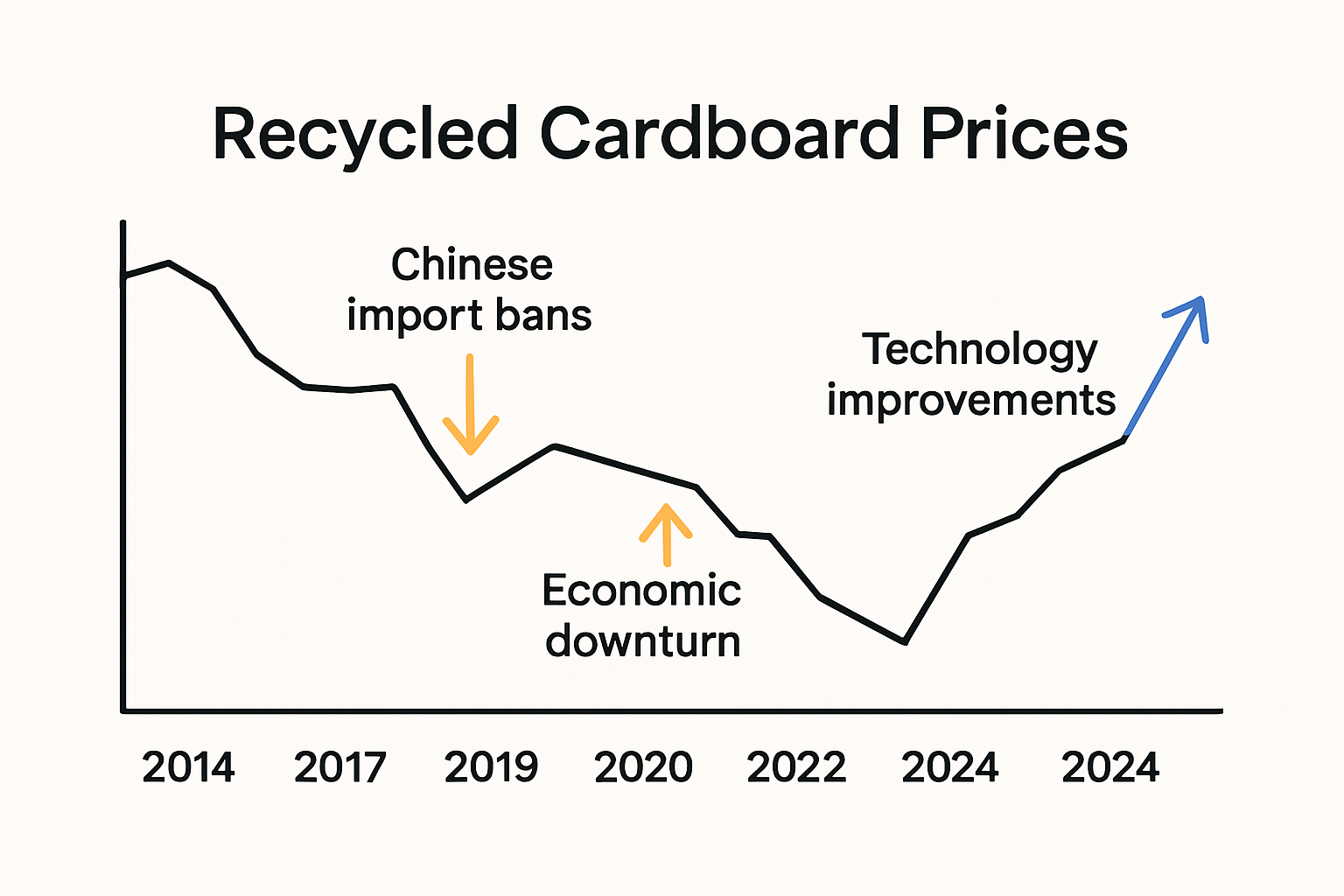
The renewable energy sector and increasing corporate sustainability commitments have also influenced cardboard mill prices. As more companies prioritise circular economy principles, demand for recycled materials has become more consistent, providing some stability to historical price trends.
Regional variations remain significant, with mills in different parts of the UK experiencing slightly different pricing mechanisms. The North East, with its strong industrial heritage, has developed particularly resilient recycling infrastructure that helps buffer against extreme price fluctuations.
Understanding these historic price trends requires a comprehensive approach that considers global economic contexts, technological innovations, and environmental regulations. For businesses involved in cardboard recycling, staying informed about these dynamics is crucial for developing effective waste management strategies and maintaining financial sustainability.
Business Impacts and Opportunities
The cardboard recycling market presents significant strategic opportunities and challenges for businesses across the United Kingdom, demanding innovative approaches to waste management and sustainable resource utilisation. Companies that proactively engage with these dynamics can transform potential environmental obligations into competitive advantages.
Strategic Value and Economic Implications
Businesses in the North East and across the UK are increasingly recognising cardboard recycling as more than a regulatory requirement. Explore sustainable waste management strategies to understand potential economic benefits. According to UK government environmental reports, organisations that implement comprehensive recycling programmes can achieve substantial cost savings and enhanced corporate reputation.
The economic landscape reveals multiple strategic opportunities. Companies can generate additional revenue streams by selling high-quality cardboard waste to recycling mills, effectively turning a disposal expense into a potential income source. Advanced sorting technologies and efficient waste management practices enable businesses to maximise the value of their cardboard waste, creating a more circular economic model.
Technological Innovation and Competitive Advantage
Technological advancements are reshaping how businesses approach cardboard recycling. Innovative waste management technologies, particularly in regions like Newcastle, Durham, and Sunderlands industrial corridors, are enabling more precise sorting, reducing contamination, and improving recycling efficiency. These technological improvements translate directly into economic benefits, reducing processing costs and increasing the market value of recycled materials.
Companies investing in advanced waste management technologies can differentiate themselves in increasingly environmentally conscious markets. By demonstrating commitment to sustainable practices, businesses can attract environmentally aware customers, investors, and potential employees. This strategic approach goes beyond mere compliance, positioning organisations as responsible corporate citizens committed to environmental stewardship.
Moreover, the evolving regulatory landscape increasingly favours businesses with robust recycling strategies. Government policies are progressively encouraging circular economy principles, with potential tax incentives and penalties that can significantly impact a companys financial performance. Businesses that proactively adapt to these changing requirements can mitigate potential future regulatory risks while capitalising on emerging opportunities.
The cardboard recycling market also presents unique collaborative opportunities. Cross-sector partnerships between waste management companies, manufacturing firms, and recycling mills can create innovative solutions that benefit all stakeholders. These collaborations can lead to more efficient recycling processes, reduced environmental impact, and shared economic benefits.
For small and medium enterprises particularly, cardboard recycling represents a pathway to enhanced operational efficiency. By implementing structured recycling programmes, businesses can reduce waste disposal costs, improve resource utilisation, and contribute to broader sustainability goals. The potential for cost savings and environmental impact reduction makes cardboard recycling a strategic imperative rather than a mere optional practice.
Ultimately, businesses that view cardboard recycling as a strategic opportunity rather than a compliance burden will be best positioned to thrive in an increasingly sustainability-focused economic environment. The ability to adapt, innovate, and integrate sustainable practices into core business strategies will distinguish progressive organisations in the evolving waste management landscape.
How to Maximise Recycling Value
Maximising cardboard recycling value requires a strategic approach that combines technological innovation, operational efficiency, and comprehensive waste management practices. Businesses across the United Kingdom, particularly in industrial regions like the North East, can significantly enhance their recycling economic potential by implementing targeted strategies.
Optimising Waste Collection and Sorting
Discover advanced cardboard recycling solutions for businesses to improve waste management efficiency. According to UK government waste statistics, effective sorting can increase recycling material value by up to 40%. Implementing rigorous waste segregation processes is crucial for maximising recycling value.
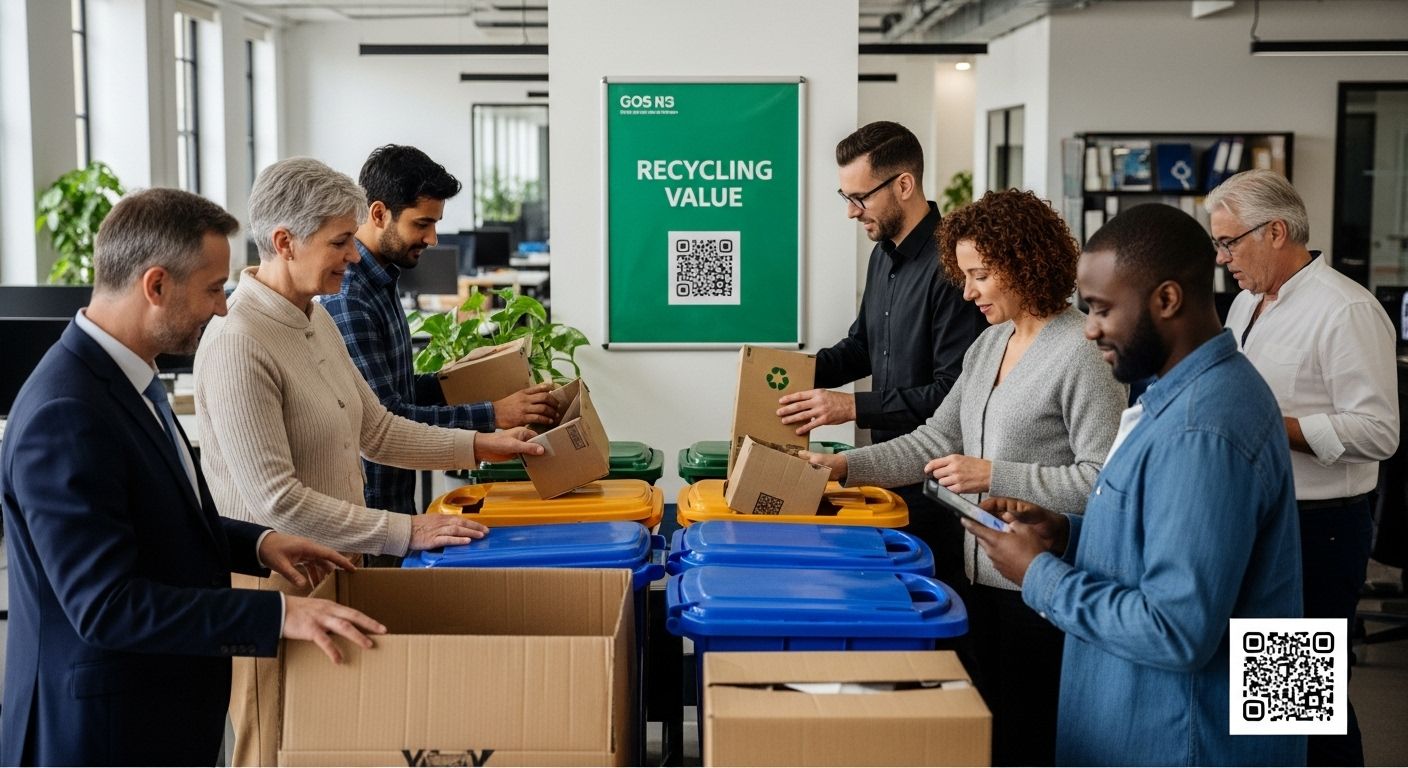
Key strategies include investing in high-quality sorting equipment, training staff in proper waste identification, and establishing clear internal recycling protocols. Businesses should focus on minimising contamination, as clean and well-sorted cardboard commands higher prices in the recycling market. This involves creating designated collection areas, using colour-coded bins, and educating employees about proper waste disposal techniques.
Technology and Quality Control
Technological advancements play a critical role in enhancing cardboard recycling value. Advanced baling equipment, optical sorting technologies, and digital tracking systems can significantly improve material quality and processing efficiency. Companies in industrial centres like Newcastle, Durham, and Sunderland can leverage these technologies to reduce processing costs and increase the market value of recycled cardboard.
Quality control is paramount in maximising recycling value. Businesses should implement strict quality assessment protocols, ensuring that cardboard waste meets the highest industry standards. This includes removing non-recyclable contaminants, managing moisture levels, and maintaining consistent material density. Research from Rabobank highlights that high-quality recycled materials can command premium prices in both domestic and international markets.
Strategic Partnerships and Market Engagement
Building strategic partnerships with recycling mills and waste management companies can unlock additional value for businesses. By establishing long-term relationships with recycling processors, companies can negotiate better rates, gain insights into market trends, and develop more efficient recycling strategies.
Understanding market dynamics is crucial. Businesses should monitor global recycling trends, international trade policies, and domestic market conditions. The UK recycling market is particularly sensitive to global economic shifts, such as changes in international waste import regulations. Staying informed about these dynamics allows businesses to adapt their recycling strategies proactively.
Financial considerations extend beyond direct recycling revenues. Many businesses can benefit from potential tax incentives, grants, and sustainability credits associated with effective waste management. The circular economy approach not only generates direct economic value but also enhances corporate reputation and attracts environmentally conscious customers and investors.
For small and medium enterprises, collaborative approaches can be particularly effective. Joining local business networks, participating in regional recycling initiatives, and sharing best practices can help smaller organisations overcome resource limitations and maximise their recycling potential.
Ultimately, maximising cardboard recycling value requires a holistic approach that combines technological innovation, operational excellence, and strategic market engagement. Businesses that view recycling as a strategic opportunity rather than a mere operational necessity will be best positioned to derive maximum economic and environmental benefits from their waste management practices.
Frequently Asked Questions
What are the main factors influencing cardboard recycling prices in the UK?
Cardboard recycling prices in the UK are influenced by global paper demand, international trade policies, transportation costs, the quality of recycled materials, and domestic recycling infrastructure. Economic downturns and corporate sustainability demands also play significant roles in price fluctuations.
How can businesses maximise the value of their cardboard recycling?
To maximise the value of cardboard recycling, businesses should focus on optimising waste collection and sorting practices, investing in advanced sorting technologies, ensuring quality control, and building strategic partnerships with recycling mills.
What economic benefits can companies gain from effective cardboard recycling?
Companies that implement comprehensive cardboard recycling programmes can reduce disposal costs, generate additional revenue through the sale of high-quality recycled materials, and enhance their corporate reputation by demonstrating environmental responsibility.
How does technological innovation impact cardboard recycling efficiency?
Technological innovations, such as advanced baling equipment and optical sorting systems, significantly improve the efficiency and quality of cardboard recycling by reducing contamination and processing costs, leading to better pricing for recycled cardboard.
Ready to Take Control of Cardboard Recycling Profitability?
If unpredictable cardboard mill prices and confusing recycling trends are making it harder for your business to get the most value from waste, you are not alone. Many companies in the UK are struggling with market volatility, unclear sorting requirements, and the challenge of turning recycling into a real advantage. The need for efficient separation, reliable collection, and the right technology is greater than ever. Find out how mastering every step of the process can help you secure better rates and meet both your sustainability and financial goals. For a clearer view on how to optimise your operations, visit our Waste Collection Process in the UK for Businesses 2025 page.

Stop letting market swings hold your business back. Join those already benefitting from smarter waste processes and trusted local collection networks. Explore Venture Waste Management today to discover comprehensive services and a simple booking experience that quickly adapts to your unique business needs. Take control of your cardboard recycling now and see measurable improvement in both cost and compliance.


Leave a Reply
Want to join the discussion?Feel free to contribute!