

What Is Confidential Waste? Guide for UK Businesses 2025
Confidential waste is not just about shredding old paperwork. British businesses now face fines of up to €20 million or 4 percent of global turnover for mishandling sensitive information. Yet, it is not only the steep penalties making headlines. The real surprise is how easily digital files and even old hard drives can expose a company to crippling reputational harm. Most firms focus on paper, but overlooking digital and specialist materials could cost far more than anyone expects.
Table of Contents
- Defining Confidential Waste In The Workplace
- Types Of Confidential Waste Across Sectors
- Risks Of Mishandling Confidential Materials
- Secure Disposal Solutions For UK Businesses
Quick Summary
| Takeaway | Explanation |
|---|---|
| Understand What Constitutes Confidential Waste | Confidential waste includes a range of materials such as paper documents, digital media, electronic records, and specialist materials that must be securely destroyed to maintain privacy and comply with legal obligations. |
| Implement a Comprehensive Waste Management Strategy | Businesses should adopt a holistic approach to confidential waste management, including clear destruction protocols, staff training, and partnerships with certified waste management professionals. |
| Recognise the Legal and Reputational Risks | Mishandling confidential materials can lead to severe legal penalties, significant reputational damage, and vulnerabilities to cybersecurity threats, necessitating diligence in waste disposal practices. |
| Utilise Secure Disposal Solutions | Employ a variety of secure disposal methods, such as industrial shredding for physical documents and certified data wiping for electronic media, to ensure compliance with regulations and protect sensitive information. |
| Stay Informed on Compliance Requirements | From 31 March 2025, UK businesses are required to have robust confidential waste management systems in place to meet legal standards, highlighting the importance of regulatory compliance and environmental responsibility. |
Defining Confidential Waste in the Workplace
Confidential waste represents a critical component of information security for businesses across various sectors. At its core, confidential waste encompasses any materials containing sensitive or private information that must be destroyed securely to protect organisational and individual privacy.
What Constitutes Confidential Waste
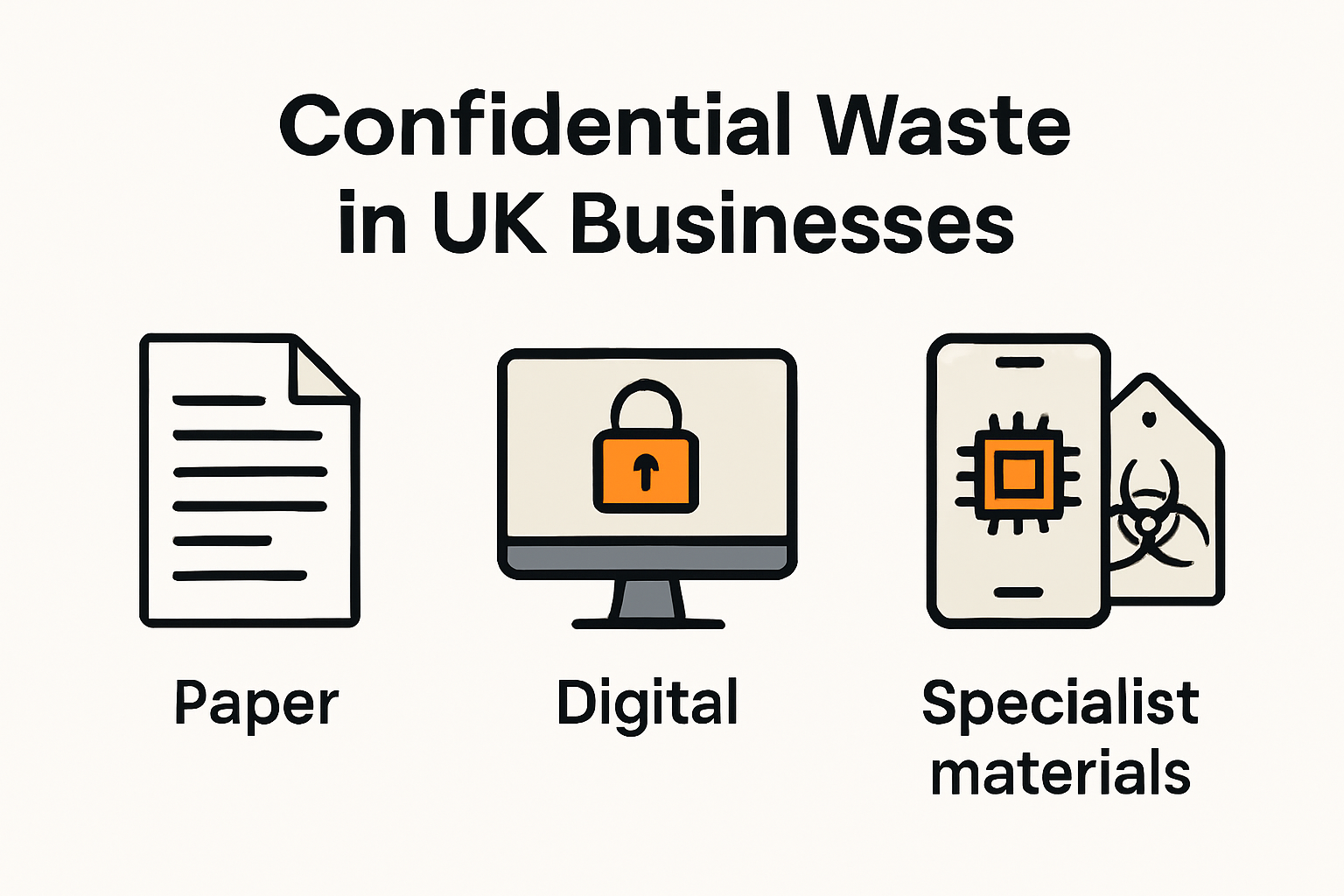
Confidential waste goes far beyond simple paper documents. Modern businesses generate multiple types of sensitive materials that require secure disposal. These include:
- Paper Documents: Financial records, personnel files, client contracts, business strategies, legal correspondence
- Digital Media: Hard drives, USB drives, backup tapes, computer disks
- Electronic Records: Printed emails, deleted computer files, digital photographs, electronic presentations
- Specialist Materials: Prototype designs, medical records, research data, customer databases
According to British Standard BS EN 15173, organisations must implement comprehensive protocols for destroying materials that could potentially compromise business or personal confidentiality.
Legal and Regulatory Framework
UK businesses face stringent obligations regarding confidential waste management. The General Data Protection Regulation (GDPR) mandates strict protocols for handling and destroying personal data. Failure to properly manage confidential waste can result in significant financial penalties and reputational damage.
Businesses must understand that confidential waste management is not optional but a legal requirement. From healthcare providers protecting patient information to financial institutions safeguarding client data, every sector has specific responsibilities for secure information disposal.
Comprehensive Approach to Confidential Waste
Effective confidential waste management requires a holistic strategy. This means implementing robust processes that cover physical and digital information streams. Key considerations include:
- Identifying all potential sources of sensitive information
- Creating clear destruction protocols
- Training staff on proper handling procedures
- Partnering with certified waste management professionals
For businesses seeking more comprehensive guidance, our confidential waste risk management guide provides in-depth insights into developing a comprehensive waste disposal strategy.
By understanding what constitutes confidential waste and implementing rigorous disposal mechanisms, businesses can protect themselves from potential data breaches, legal complications, and financial risks. The landscape of information security continues to evolve, making proactive and thorough confidential waste management more crucial than ever.
Types of Confidential Waste Across Sectors
Confidential waste varies significantly across different professional sectors, with each industry generating unique sensitive materials that require secure and specialised disposal methods. Understanding these sector-specific nuances is crucial for implementing robust waste management strategies.
Healthcare and Social Care Sector
Healthcare and social care organisations produce some of the most sensitive confidential waste. Patient records, medical histories, psychological assessments, and personal care plans contain deeply private information that demands rigorous protection. According to Business Waste UK, these materials include:
- Patient medical files
- Treatment records
- Prescription information
- Personal care assessments
- Mental health documentation
- Social worker reports
The stakes are particularly high in these sectors, where data breaches could compromise individual privacy and potentially violate strict healthcare confidentiality regulations.
Legal and Financial Sectors
Law firms, financial institutions, and corporate offices generate extensive confidential waste that could have significant commercial and personal implications if improperly handled. Research from Waste Managed highlights critical documents requiring secure disposal:
- Client contracts
- Financial transaction records
- Merger and acquisition documents
- Legal case files
- Personal identification documents
- Banking statements
- Intellectual property documentation
These sectors face substantial financial and reputational risks from potential information leaks, making secure confidential waste management paramount.
Education and Research Institutions
Universities, research centres, and educational institutions generate unique confidential waste streams that require careful management. These materials often include:
- Student academic records
- Research grant applications
- Sensitive research data
- Examination papers
- Staff personnel files
- Funding proposals
- Sensitive research methodologies
For comprehensive insights into managing these complex waste streams, explore our confidential waste risk management guide which provides sector-specific strategies.
Across all sectors, the fundamental principle remains consistent: confidential waste must be systematically identified, securely collected, and thoroughly destroyed to protect individual and organisational privacy. Each industry’s unique documentation requires tailored approaches that respect legal requirements, ethical standards, and data protection regulations.
Risks of Mishandling Confidential Materials
Confidential material mishandling represents a significant threat to businesses, with potential consequences far beyond simple administrative errors. The risks extend across legal, financial, and reputational domains, making comprehensive understanding and prevention critical for organisational survival.
Legal and Financial Consequences
The legal landscape surrounding confidential waste is uncompromising. According to UK Data Protection Act 2018, businesses face severe penalties for improper data disposal. Regulatory bodies can impose substantial fines up to €20 million or 4% of global annual turnover, transforming what might seem like a minor administrative oversight into a potentially catastrophic financial burden.
Key legal risks include:
- Breach of data protection regulations
- Potential criminal prosecution
- Mandatory reporting of data incidents
- Compulsory external audits
- Potential suspension of business operations
Reputational Damage and Trust Erosion
Beyond financial penalties, mishandled confidential materials can trigger irreparable reputational damage. Brewsters Waste Disposal Research highlights that improper waste disposal effectively surrenders company materials into public domain, exposing sensitive information to potential misuse.
Reputation risks encompass:
- Loss of client confidence
- Negative media coverage
- Decreased market valuation
- Potential contract terminations
- Reduced competitive positioning
Cybersecurity and Identity Theft Vulnerabilities
Confidential waste mismanagement creates direct pathways for cybercriminals and identity thieves. Documents discarded without proper destruction become potential goldmines of sensitive information. This risk extends beyond paper documents to digital media, including hard drives, backup tapes, and electronic records.
For businesses seeking comprehensive protection strategies, our confidential waste risk management guide provides detailed insights into mitigating these complex risks.
Potential security vulnerabilities include:
- Personal data exposure
- Corporate espionage opportunities
- Targeted phishing campaigns
- Financial fraud potential
- Systematic identity theft risks
Ultimately, confidential material mishandling is not merely an administrative concern but a strategic business risk. Proactive, systematic approaches to secure waste management are no longer optional but essential for organisational integrity and survival in an increasingly data-sensitive business environment.
Secure Disposal Solutions for UK Businesses
Secure disposal solutions are essential for UK businesses navigating the complex landscape of confidential waste management. As regulatory requirements become increasingly stringent, organisations must adopt comprehensive strategies that protect sensitive information and ensure legal compliance.
Physical Document Destruction Methods
Physical document destruction represents a critical component of secure waste management. Data Protection Act 2018 guidelines mandate rigorous destruction protocols for paper-based confidential materials. Businesses have several professional options:
- Industrial Shredding: Cross-cut shredders that transform documents into microscopic particles
- Bulk Destruction Services: Professional on-site or off-site document destruction
- Secure Consoles: Locked collection containers for confidential documents
- Witnessed Destruction: Processes where waste destruction is directly observed and certified
Each method provides different levels of security, with cross-cut shredding offering the highest protection against potential information reconstruction.
Digital Media and Electronic Waste Disposal
Electronic confidential waste requires equally meticulous disposal strategies. According to Yorwaste Compliance Guidelines, digital media destruction must go beyond simple deletion:
- Hard drive degaussing
- Physical hard drive destruction
- Secure data wiping technologies
- Certified electronic waste recycling
- Cryptographic data erasure
Our comprehensive risk management guide provides detailed insights into selecting appropriate electronic waste disposal techniques.
Compliance and Certification Considerations
From 31 March 2025, UK workplaces must implement robust confidential waste management systems. Businesses should prioritise solutions that offer:
- Certified destruction processes
- Detailed waste disposal documentation
- Compliance with GDPR regulations
- Environmental sustainability credentials
- Chain of custody tracking
Choosing a professional waste management partner ensures not just regulatory compliance, but also demonstrates organisational commitment to data protection and environmental responsibility.
Ultimately, secure disposal solutions are more than a legal requirement—they represent a critical strategy for protecting business integrity, client trust, and organisational reputation in an increasingly data-driven world.
Frequently Asked Questions
What is confidential waste?
Confidential waste refers to any materials containing sensitive information that must be securely disposed of to protect privacy and comply with legal obligations. This includes paper documents, digital media, and electronic records.
Why is it important for UK businesses to manage confidential waste?
Properly managing confidential waste is crucial for UK businesses to avoid severe legal penalties, which can be up to €20 million or 4% of global turnover. Additionally, it helps prevent reputational damage and vulnerabilities to cybersecurity threats.
What are the consequences of not disposing of confidential waste securely?
Failing to dispose of confidential materials securely can lead to significant legal and financial penalties, reputational harm, loss of client trust, and increased risks of cybersecurity breaches or identity theft.
What methods are used to securely dispose of confidential waste?
Secure disposal methods include industrial shredding for physical documents, hard drive destruction, and certified data wiping for digital media. Using professional waste management services ensures compliance with legal and regulatory requirements.
Protect Your Reputation with Expert Confidential Waste Solutions
Mishandling confidential waste can expose your business to crippling fines and reputation loss, as you saw in our guide. GDPR, risk of identity theft, and sector-specific challenges mean even a single oversight can have lasting effects. Do not let outdated processes or unclear protocols threaten your compliance and trust in 2025. For proven support, explore our confidential waste solutions designed for UK businesses facing exactly these pressures.

See how easy it is to secure your sensitive information and achieve total compliance. Visit Venture Waste Management now to start your hassle-free booking. Protect your company and impress your clients with a confidential waste partner that puts legal safety and peace of mind first. Act today to guarantee you meet the new standards before they take effect.


