

WEEE Waste Collection: Secure Business Disposal Solutions 2025

WEEE waste is piling up across the UK, with electronic waste rising three times faster than regular rubbish. Most would expect strict disposal to be all about environmental fines or recycling rates. Yet, the real disruption coming in 2025 is about data security and legal risk. Get this: businesses will soon face not only tighter rules, but also the need to prove that every electronic device, from a broken laptop to an old printer, is handled securely and without exposing confidential information. That shift changes everything for companies managing their electrical and electronic disposals.
Table of Contents
- What Is WEEE Waste And Why Collection Matters
- WEEE Waste Collection Solutions For UK Businesses
- Compliance, Confidentiality, And Secure Waste Disposal
- Steps To Arrange Reliable WEEE Waste Collection
Quick Summary
| Takeaway | Explanation |
|---|---|
| Understanding WEEE is Essential | Waste Electrical and Electronic Equipment (WEEE) encompasses a wide range of discarded electrical items, and recognising its environmental and regulatory importance is crucial for responsible business management. |
| Compliance with WEEE Regulations | Businesses must adhere to WEEE Regulations to avoid financial penalties and reputational damage, ensuring safe recycling and responsible disposal of electronic waste. |
| Develop a Comprehensive Waste Management Strategy | Effective WEEE collection involves thorough inventory assessments, categorisation of waste, and collaboration with licensed waste management partners to facilitate compliance and secure disposal. |
| Data Security in Disposal Processes | Implement secure data destruction protocols, including certified processes and chain of custody documentation, to protect sensitive information during WEEE disposal. |
| Anticipate Emerging Regulatory Changes | As of January 2025, UK importers will face new responsibilities regarding producer registration and reporting requirements, highlighting the need for proactive compliance measures in waste management. |
What Is WEEE Waste and Why Collection Matters
Waste Electrical and Electronic Equipment (WEEE) represents a critical environmental challenge in modern business operations. These discarded electronic and electrical items range from complex industrial machinery to everyday office equipment like computers, printers, and telecommunications systems. Understanding what constitutes WEEE and recognising its significant environmental impact is crucial for responsible business management.
The Comprehensive Definition of WEEE
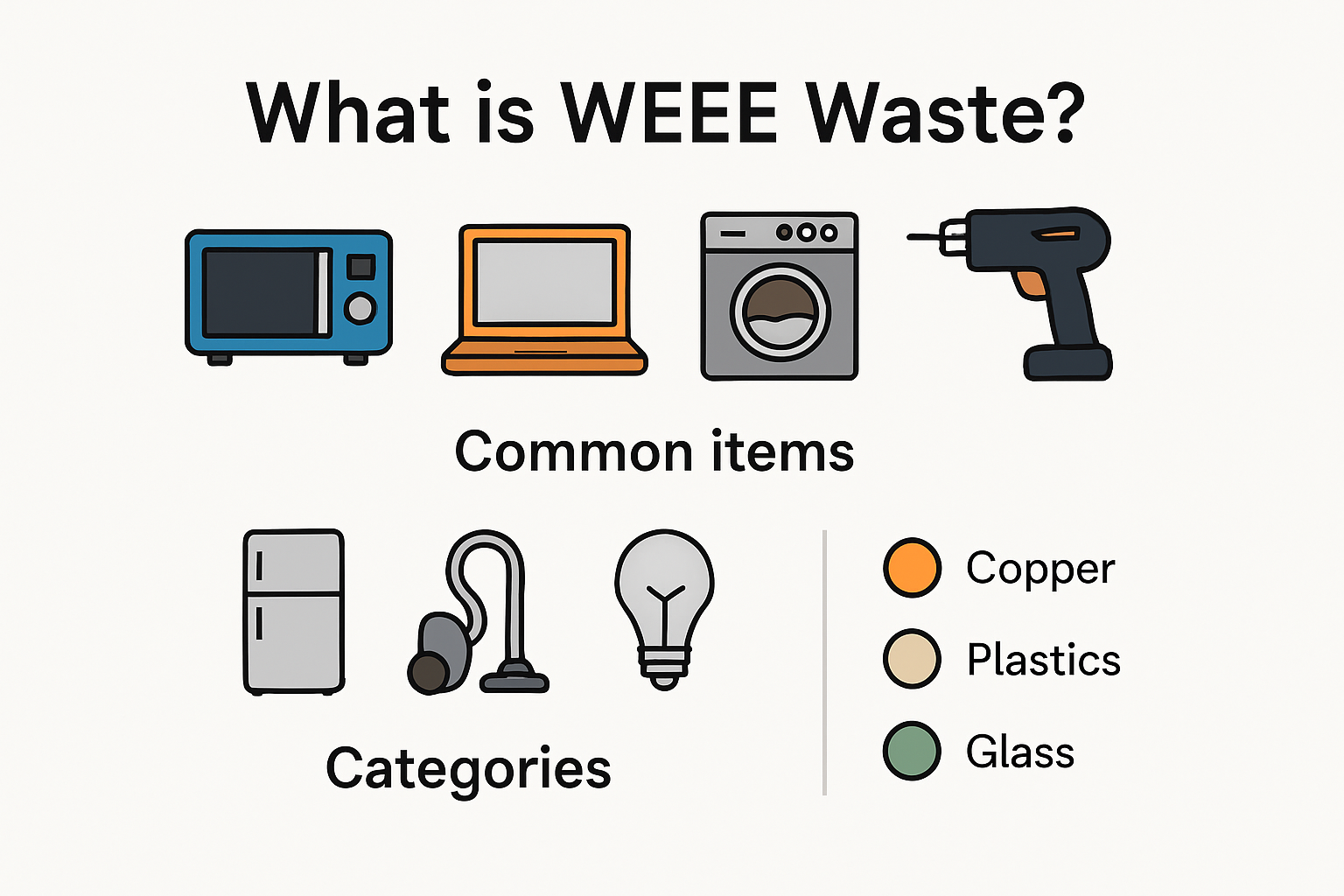
WEEE encompasses a broad spectrum of electrical and electronic items that have reached the end of their functional life. This includes everything from large industrial equipment to small office peripherals. According to Scottish Environment Protection Agency, WEEE covers devices such as:
- Large household appliances like refrigerators and washing machines
- IT and telecommunications equipment
- Consumer electronics
- Small electrical tools
- Medical devices
- Monitoring and control instruments
The complexity of these items means they contain multiple materials including metals, plastics, and potentially hazardous components that require specialised handling and responsible disposal methods.
Environmental and Regulatory Implications
The environmental significance of proper WEEE collection cannot be overstated. Research from the UK Government reveals that WEEE is one of the fastest-growing waste streams, increasing at a rate three times faster than average municipal waste. This rapid growth presents significant challenges for businesses and environmental management.
The WEEE Regulations, implemented in the UK since 2013, mandate that producers and distributors of electrical and electronic equipment must ensure safe recycling, recovery, and treatment of end-of-life products. These regulations aim to:
- Reduce landfill waste
- Minimize environmental contamination
- Promote circular economy principles
- Encourage responsible resource management
Businesses that fail to comply with these regulations risk substantial financial penalties and potential reputational damage. Moreover, improper disposal can lead to the release of toxic substances like lead, mercury, and cadmium into the environment, posing serious health and ecological risks.
Proper WEEE waste collection is not just a legal requirement but a critical corporate social responsibility. By implementing robust waste management strategies, businesses can contribute to environmental protection, demonstrate their commitment to sustainability, and potentially reduce long-term waste management costs.
The journey towards effective WEEE management begins with understanding its scope, recognising its environmental impact, and committing to responsible disposal practices that align with current regulatory frameworks and environmental best practices.
WEEE Waste Collection Solutions for UK Businesses
Businesses across the United Kingdom face complex challenges when managing their electrical and electronic waste. Developing comprehensive WEEE waste collection solutions requires strategic planning, regulatory compliance, and a commitment to environmental responsibility. Effective disposal strategies not only mitigate legal risks but also contribute to sustainable business practices.
Strategic Approaches to WEEE Management
Successful WEEE waste collection begins with understanding the unique waste streams within an organisation. Comprehensive waste management strategies must address the diverse range of electronic equipment businesses generate. According to Waste Direct, only 31% of electronic waste in the UK is currently recycled, presenting significant opportunities for improvement.
Businesses should implement systematic approaches that include:
- Inventory Assessment: Conduct thorough audits of existing electrical and electronic equipment
- Categorisation: Classify items based on potential recyclability and hazardous components
- Secure Collection: Establish dedicated collection points within organisational premises
- Certified Disposal: Partner with licensed waste management providers specialising in WEEE disposal

Compliance and Environmental Responsibility
Navigating the complex regulatory landscape of WEEE disposal requires meticulous attention to detail. The UK Government’s waste electrical regulations mandate strict protocols for electronic waste management. Businesses must ensure:
- Proper documentation of all waste electrical equipment
- Use of approved treatment facilities
- Accurate reporting of waste quantities
- Adherence to environmental protection standards
Statistical data indicates that approximately 120,000 metric tons of electronic waste are collected quarterly in the UK, underscoring the critical importance of robust disposal mechanisms. Non-compliance can result in substantial financial penalties and potential reputational damage.
Modern WEEE waste collection solutions integrate technological tracking, secure destruction processes, and environmentally responsible recycling methods. By adopting a holistic approach, businesses can transform waste management from a regulatory obligation into a strategic opportunity for demonstrating corporate social responsibility and environmental stewardship.
The future of WEEE waste management lies in proactive, innovative approaches that prioritise circular economy principles, minimise environmental impact, and create value from potentially discarded electronic resources.
Compliance, Confidentiality, and Secure Waste Disposal
Secure waste disposal represents a critical intersection of regulatory compliance, data protection, and environmental responsibility for businesses handling electrical and electronic equipment. As regulations evolve and technological complexity increases, organisations must develop sophisticated approaches to WEEE management that protect both sensitive information and environmental standards.
Regulatory Landscape and Emerging Obligations
The WEEE disposal ecosystem is experiencing significant transformations in 2025. Comprehensive hazardous waste handling strategies have become essential as new regulations reshape business responsibilities. According to UK Government guidelines, significant changes are emerging for businesses and online marketplaces.
Key regulatory developments include:
- Producer Responsibility: From January 2025, UK importers must fully register as producers
- Reporting Requirements: Mandatory reporting of equipment volumes and types
- Financial Obligations: Businesses must finance collection and recycling processes
- Marking Compliance: Specific product marking requirements for electronic items
Data Security and Confidential Disposal Protocols
Confidentiality represents a paramount concern in WEEE waste disposal. Electronic devices often contain sensitive corporate information, customer data, and proprietary business insights. Research from The Recycler highlights the increasing complexity of secure disposal mechanisms.
Businesses must implement rigorous disposal protocols that include:
- Secure Data Destruction: Complete erasure of digital information before physical disposal
- Certified Destruction Processes: Working with accredited waste management providers
- Chain of Custody Documentation: Maintaining transparent records of equipment handling
- Physical Device Destruction: Guaranteed destruction of storage media
The emerging regulatory framework places unprecedented emphasis on transparency and accountability. Online marketplaces, for instance, will be required to join approved compliance schemes, pay registration fees, and contribute to collection and treatment costs.
Moreover, retailers with electrical and electronic equipment sales areas exceeding 400 square metres must now accept small WEEE items (under 25 cm) from private households free of charge, regardless of new product purchases. This regulation underscores the growing expectation of corporate environmental responsibility.
Effective WEEE disposal is no longer just a technical challenge but a comprehensive business strategy that integrates legal compliance, environmental stewardship, and robust data protection. Organisations that proactively develop holistic waste management approaches will not only mitigate regulatory risks but also demonstrate significant corporate social responsibility.
Steps to Arrange Reliable WEEE Waste Collection
Arranging reliable WEEE waste collection requires a systematic and strategic approach that ensures environmental compliance, data security, and responsible disposal. Businesses must navigate complex regulatory requirements while implementing robust waste management protocols that protect both organisational interests and environmental standards.
Initial Assessment and Preparation
The first critical step in WEEE waste collection involves comprehensive organisational assessment. Comprehensive waste management strategies play a crucial role in establishing effective disposal mechanisms. According to UK Government regulations, businesses must meticulously prepare for WEEE disposal by:
- Conducting Complete Equipment Inventory: Documenting all electrical and electronic equipment
- Categorising Waste Types: Identifying potential hazardous components
- Determining Collection Frequency: Establishing regular waste assessment schedules
- Identifying Sensitive Information: Mapping devices containing critical corporate data
Selecting Authorised Waste Management Partners
Choosing the right waste management partner represents a pivotal decision in WEEE disposal. Research from ERP Recycling emphasises the importance of working with licensed waste carriers and Approved Authorised Treatment Facilities (AATF).
Key considerations for partner selection include:
- Certification Verification: Confirming WEEE handling credentials
- Secure Data Destruction Capabilities: Ensuring complete information erasure
- Environmental Compliance: Validating adherence to current regulations
- Transparent Reporting: Demanding comprehensive waste transfer documentation
Businesses must ensure their chosen partner can provide detailed waste transfer notes, track the entire disposal process, and guarantee environmentally responsible treatment of electrical and electronic equipment.
From January 2025, UK importers will face enhanced responsibilities, including mandatory registration as producers, precise equipment volume reporting, and financing collection and recycling processes. These emerging regulations underscore the critical nature of selecting a waste management partner with comprehensive understanding of evolving compliance requirements.
The successful arrangement of WEEE waste collection transcends mere disposal. It represents a sophisticated approach to corporate environmental responsibility, data protection, and regulatory compliance. Organisations that invest time in developing structured, transparent waste management strategies will not only mitigate potential legal risks but also demonstrate significant commitment to sustainable business practices.
Ultimately, reliable WEEE waste collection is about creating a holistic system that balances technological complexity, environmental stewardship, and organisational security. By following systematic steps and partnering with certified waste management professionals, businesses can transform potential waste challenges into opportunities for responsible resource management.
Frequently Asked Questions
What is WEEE waste?
WEEE waste, or Waste Electrical and Electronic Equipment, refers to discarded electrical and electronic devices, ranging from large appliances like washing machines to small items such as mobile phones and computers. Proper disposal is essential for environmental protection and compliance with regulations.
Why is proper WEEE waste collection significant for businesses?
Proper WEEE waste collection is crucial for businesses as it helps avoid financial penalties, mitigates legal risks, and demonstrates corporate social responsibility. Additionally, it ensures compliance with environmental regulations while contributing to sustainable waste management practices.
What are the new regulations for WEEE waste management in 2025?
As of January 2025, UK importers will face new responsibilities including registration as producers, mandatory reporting of equipment volumes, and obligations to finance collection and recycling processes. These changes aim to enhance data security and environmental compliance in waste disposal.
How can businesses ensure data security during WEEE disposal?
To ensure data security during WEEE disposal, businesses should implement secure data destruction protocols, work with accredited waste management providers, maintain chain of custody documentation, and guarantee the physical destruction of storage media. This protects sensitive corporate information from potential breaches.
Ready for Secure WEEE Disposal and Full Compliance?
Struggling to keep up with 2025 WEEE regulations or worried about safeguarding sensitive business data during electronic waste disposal? You are not alone. Recent changes mean that even one missed rule can put your business at risk, and confidential information left on devices is now a bigger liability than ever. If responsible disposal and data security are your top concerns, our expertise in confidential waste is built exactly for this challenge.

Take the uncertainty out of compliance and protect your business reputation today. Book your secure WEEE waste collection now at Venture Waste Management or learn more about navigating complex environmental rules in our regulation hub. With our trusted three-step service, you are only moments away from peace of mind and airtight legal protection.


