

Sustainable Waste Solutions – Enhancing UK Healthcare Compliance
Waste generated by British healthcare facilities accounts for a significant portion of public sector environmental impact, with some sources reporting clinical waste treatment emits up to 30% of the NHS’s carbon from waste management. As regulatory scrutiny intensifies and sustainability targets become stricter, facilities managers face tough questions about compliance and cost control. This guide explores how practical, sustainable waste solutions can help your organisation manage complex waste streams, reduce your carbon footprint, and stay ahead of legal requirements.
Table of Contents
- Sustainable Waste Solutions Defined And Debunked
- Types Of Healthcare Waste And Disposal Methods
- Key Uk Regulations For Waste Compliance
- Practical Steps For Responsible Waste Handling
- Risks, Costs, And Common Compliance Pitfalls
Key Takeaways
| Point | Details |
|---|---|
| Sustainable Waste Solutions | Healthcare organisations in the UK are increasingly adopting sustainable waste management strategies to reduce environmental impact and operational costs. |
| Regulatory Compliance | Adhering to UK regulations for waste management is essential to protect public health and minimise risks associated with mismanagement. |
| Comprehensive Staff Training | Regular training on waste segregation and handling is crucial for ensuring compliance and improving waste management practices. |
| Proactive Risk Management | Implementing continuous improvement mechanisms and regular audits can help mitigate risks and enhance institutional reputation. |
Sustainable Waste Solutions Defined and Debunked
Sustainable waste solutions in healthcare represent strategic approaches designed to minimise environmental impact while maintaining rigorous clinical standards. The NHS recognises these solutions as critical pathways for transforming waste management, with an ambitious goal of reducing carbon emissions from clinical waste by up to 30% through innovative processing techniques.
Healthcare organisations across the United Kingdom are increasingly adopting advanced waste management strategies that go beyond traditional disposal methods. These approaches include specialised segregation protocols, on-site treatment technologies like pyrolysis and microwave treatment, and comprehensive recycling programmes. By implementing these sustainable solutions, healthcare providers can simultaneously reduce environmental harm, decrease operational costs, and demonstrate corporate social responsibility.
Key components of sustainable waste solutions in healthcare encompass several interconnected strategies:
This table contrasts traditional and sustainable waste management approaches in healthcare settings:
| Approach | Key Characteristics | Long-Term Benefit |
|---|---|---|
| Traditional Management | Landfill disposal, limited segregation | Higher costs, increased emissions |
| Sustainable Solutions | Recycling, advanced treatments, circular economy | Lower environmental impact, cost savings |
- Waste Segregation: Precise categorisation of medical waste streams
- Innovative Processing: Utilising technologies that minimise environmental impact
- Circular Economy Principles: Focusing on waste reduction and potential reuse
- Carbon Emission Reduction: Targeting significant decreases in waste-related carbon footprints
Expert Tip: Conduct regular waste audits to identify potential reduction opportunities and track your organisation’s sustainable waste management progress.
Types of Healthcare Waste and Disposal Methods
Healthcare waste management is a complex and critical process that requires meticulous categorisation and specialised disposal techniques. Medical waste categories are diverse and demand precise handling protocols, with each type presenting unique challenges for safe and responsible elimination.
The primary classifications of healthcare waste include six fundamental categories, each requiring distinct disposal strategies:
- Infectious Waste: Materials potentially contaminated with pathogens
- Sharps Waste: Needles, scalpels, and other puncture-risk instruments
- Pharmaceutical Waste: Expired or unused medications
- Anatomical Waste: Human tissue, organs, and body parts
- Offensive Waste: Non-infectious materials with potential biological risks
- General Domestic Waste: Standard non-hazardous waste similar to household rubbish
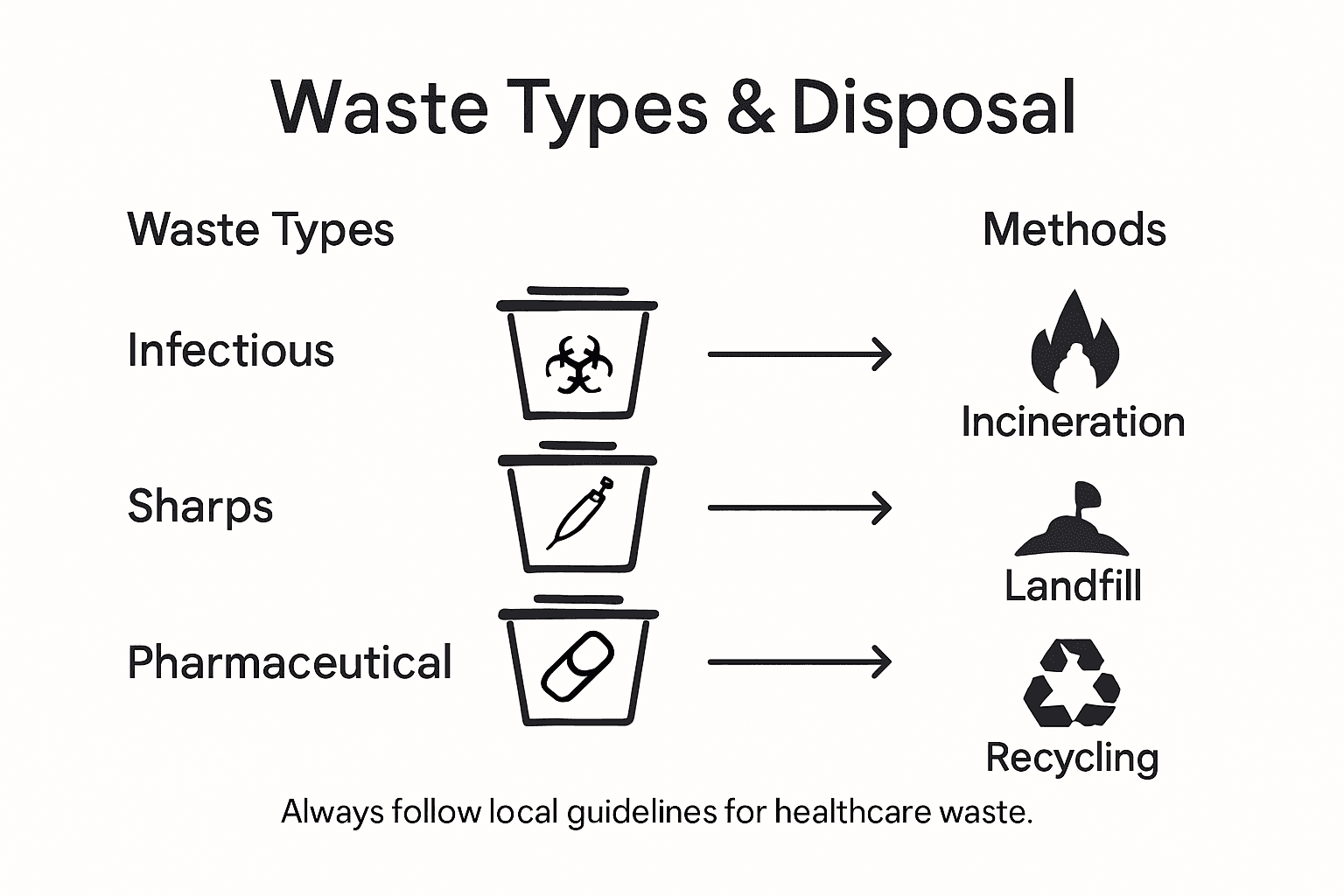
Each waste type demands specialised containment and processing methods to ensure environmental safety and prevent potential health risks. Infectious and anatomical wastes typically require high-temperature incineration, while sharps demand puncture-proof containment and careful handling. Pharmaceutical waste needs careful chemical neutralisation or specialised treatment to prevent environmental contamination.
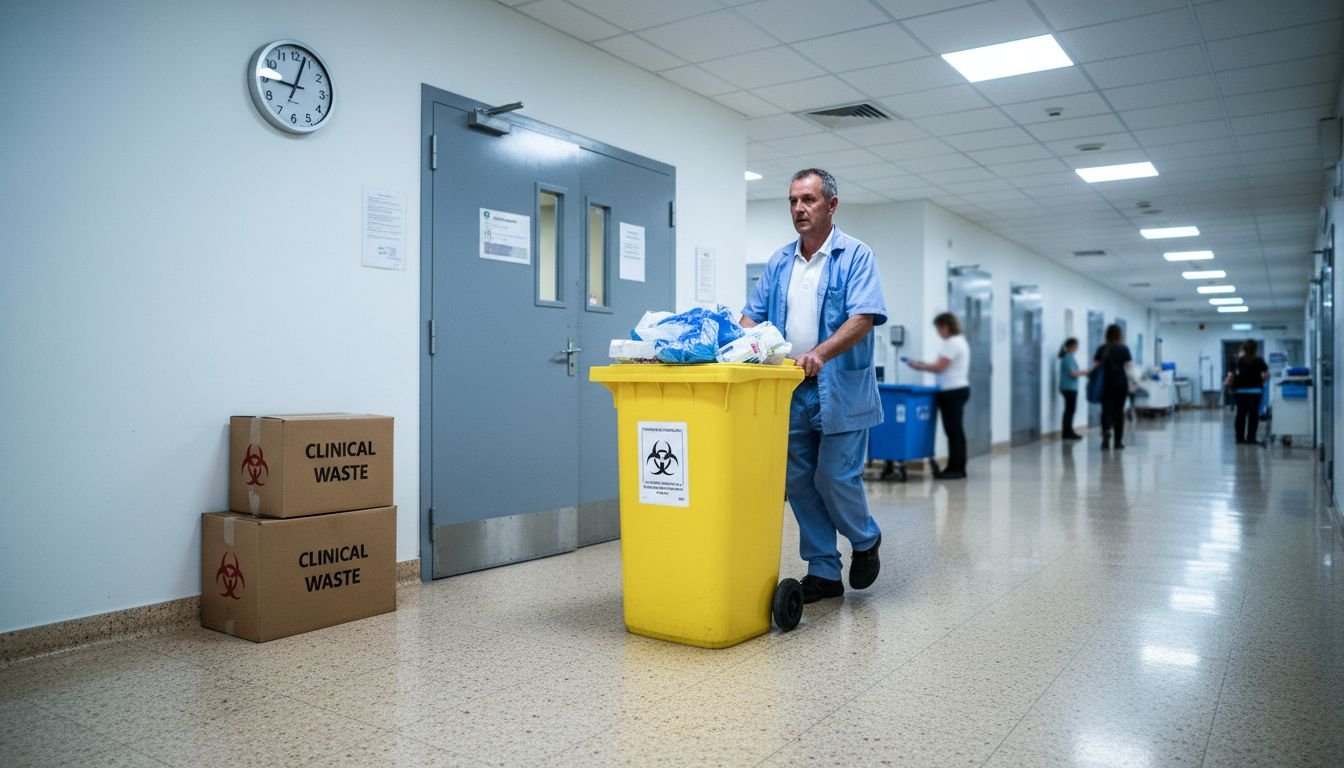
The following table summarises how different types of healthcare waste are processed and their associated environmental considerations:
| Waste Type | Typical Disposal Method | Environmental Consideration |
|---|---|---|
| Infectious Waste | High-temperature incineration | Produces emissions, energy-intensive |
| Sharps Waste | Puncture-proof containers, incineration | Safe handling, risk of needlestick injuries |
| Pharmaceutical Waste | Chemical neutralisation, specialist treatment | Prevents water and soil contamination |
| Anatomical Waste | High-temperature incineration | Strict controls, public health concern |
| Offensive Waste | Landfill or clinical treatment | Potential odour, careful segregation |
| General Domestic Waste | Recycling or landfill | Focus on landfill reduction, recycling rates |
Expert Tip: Implement colour-coded waste segregation systems to improve staff compliance and reduce cross-contamination risks in healthcare settings.
Key UK Regulations for Waste Compliance
Healthcare waste management in the United Kingdom is governed by a comprehensive framework of stringent regulations designed to protect public health and the environment. The NHS Clinical Waste Strategy mandates rigorous compliance requirements that healthcare organisations must systematically implement across their waste management practices.
Key regulatory frameworks governing healthcare waste compliance include:
- Environmental Protection Act 1990: Establishes fundamental waste management principles
- Hazardous Waste Regulations 2005: Specifies handling protocols for dangerous medical materials
- Controlled Waste Regulations 2012: Defines categorisation and disposal standards
- Health and Safety at Work Act 1974: Ensures worker protection during waste handling
- Carriage of Dangerous Goods Regulations: Governs transportation of hazardous medical waste
These regulations collectively mandate comprehensive waste segregation, precise documentation, staff training, and environmentally responsible disposal methods. Healthcare providers must develop robust internal systems that track waste from generation through final disposal, ensuring each waste stream receives appropriate treatment according to its specific risk profile and legal requirements.
Expert Tip: Conduct quarterly internal audits to verify waste management compliance and identify potential procedural improvements across your healthcare waste management system.
Practical Steps for Responsible Waste Handling
Effective healthcare waste management requires systematic and strategic approaches that prioritise safety, environmental protection, and regulatory compliance. Healthcare facilities must develop comprehensive waste handling protocols that address every stage of waste generation, segregation, storage, and disposal.
Key practical steps for responsible waste handling include:
- Comprehensive Staff Training
- Conduct regular educational sessions on waste segregation
- Implement hands-on practical training modules
- Ensure staff understand colour-coded waste container systems
- Waste Segregation Protocols
- Implement precise sorting mechanisms at point of generation
- Use designated containers for different waste categories
- Label containers clearly with waste type and handling instructions
- Documentation and Tracking
- Maintain detailed waste management records
- Create transparent audit trails for each waste stream
- Monitor waste volumes and disposal methods
Successful waste management demands a holistic approach that integrates technical procedures with organisational culture. Healthcare providers must foster an environment of continuous learning, where staff understand the critical importance of proper waste handling in protecting public health and environmental sustainability.
Expert Tip: Develop a monthly review process to assess and refine your waste management strategies, ensuring ongoing improvement and regulatory compliance.
Risks, Costs, and Common Compliance Pitfalls
Medical waste mismanagement represents a complex landscape of significant organisational risks that extend far beyond simple regulatory compliance. Healthcare providers face multifaceted challenges that can potentially compromise patient safety, financial stability, and institutional reputation.
The primary compliance pitfalls and associated risks include:
- Financial Risks
- Escalating disposal costs from improper waste segregation
- Potential substantial regulatory fines
- Increased treatment expenses for misclassified waste
- Operational Risks
- Potential disruption of clinical services
- Legal sanctions and potential institutional investigations
- Compromised staff and patient safety protocols
- Reputational Risks
- Damage to institutional credibility
- Potential loss of professional accreditations
- Negative public perception
Successful risk management demands a proactive approach that integrates comprehensive staff training, robust documentation systems, and continuous improvement mechanisms. Healthcare organisations must view waste management not as an administrative burden, but as a critical component of patient care and environmental stewardship.
Expert Tip: Implement a quarterly comprehensive waste management risk assessment to identify and mitigate potential compliance vulnerabilities before they escalate.
Streamline Sustainable Healthcare Waste Management with Confidence
Healthcare providers in the United Kingdom face pressing challenges managing complex waste streams while meeting strict compliance and sustainability goals. This article highlights critical pain points such as effective waste segregation, innovative processing, and reducing carbon emissions — all essential for ensuring patient safety and environmental stewardship. At Venture Waste Management, we understand these demands and offer tailored solutions designed to simplify your waste handling operations without compromising on legal or ecological responsibilities.

Discover how our comprehensive Waste Collection Process in the UK for Businesses 2025 – Venture Waste supports healthcare facilities in achieving sustainable waste outcomes while maintaining full regulatory compliance. Learn more about the How the Waste Collection Network in UK Serves Businesses in 2025 – Venture Waste to see how our broad coverage ensures timely and reliable service. Take the first step towards responsible healthcare waste management by visiting Venture Waste Management today and booking your tailored waste service. Act now to reduce operational risks, lower costs, and contribute to a greener NHS.
Frequently Asked Questions
What are sustainable waste solutions in healthcare?
Sustainable waste solutions in healthcare refer to strategic approaches aimed at minimising environmental impact while ensuring clinical standards are upheld. These solutions include recycling programmes, innovative waste processing technologies, and waste segregation protocols.
How can healthcare providers reduce carbon emissions related to waste?
Healthcare providers can reduce carbon emissions by implementing advanced waste management strategies, such as on-site treatment technologies, proper waste segregation, and focusing on circular economy principles that emphasise waste reduction and potential reuse.
What types of waste are generated in healthcare settings?
Healthcare waste is categorised into six types: infectious waste, sharps waste, pharmaceutical waste, anatomical waste, offensive waste, and general domestic waste. Each type requires specific handling and disposal methods to ensure safety and compliance.
What are some common compliance pitfalls in healthcare waste management?
Common compliance pitfalls include improper waste segregation leading to increased disposal costs, potential regulatory fines, disruption of clinical services, and damage to institutional reputation. Establishing robust training and documentation systems can help mitigate these risks.


Leave a Reply
Want to join the discussion?Feel free to contribute!