

Sustainable Waste Practices: Impact on UK Businesses
Over 200 million tonnes of waste are generated in the United Kingdom each year, yet only a fraction is managed using sustainable methods. For british businesses, the pressure to adopt greener waste practices is no longer just an ethical choice but a regulatory expectation. Understanding the latest sustainable waste strategies will help organisations protect their bottom line, reduce environmental impact, and stay ahead of evolving legal requirements.
Table of Contents
- Defining Sustainable Waste Practices In The UK
- Major Waste Types And Sustainable Options
- Legal Obligations For Business Waste Disposal
- Practical Strategies For Reducing Waste
- Risks Of Non-Compliance And Cost Implications
Key Takeaways
| Point | Details |
|---|---|
| Sustainable Waste Practices are Essential | Organisations must adopt sustainable waste management strategies to minimise environmental impact and enhance resource efficiency. |
| Legal Compliance is Critical | Businesses must understand and comply with stringent waste regulations to avoid substantial financial penalties and legal repercussions. |
| Waste Reduction Strategies are Key | Implementing annual waste audits and innovative waste management approaches can significantly decrease waste generation and operational costs. |
| Circular Economy Principles Offer Opportunities | Redesigning products and processes within a circular economy framework enables businesses to reduce waste and turn it into a resource. |
Defining Sustainable Waste Practices in the UK
Sustainable waste practices represent a comprehensive approach to managing organisational waste streams with minimal environmental impact. These practices go beyond traditional disposal methods, focusing instead on reducing waste generation, maximising resource efficiency, and implementing circular economy principles across business operations.
In the United Kingdom, sustainable waste management has become increasingly critical, driven by stringent environmental regulations and growing corporate responsibility. The government has been proactively promoting waste reduction strategies, particularly through initiatives that encourage businesses to minimise waste generation and increase recycling across various industrial sectors. This approach involves multiple strategic elements, including waste prevention, reuse, recycling, energy recovery, and responsible disposal.
Key components of sustainable waste practices encompass several interconnected strategies. Businesses must develop robust waste management systems that prioritise resource conservation and environmental protection. These strategies typically include conducting comprehensive waste audits, implementing waste segregation protocols, investing in recycling infrastructure, exploring alternative waste treatment technologies, and continuously training employees on sustainable waste management techniques. By adopting a holistic approach, organisations can significantly reduce their carbon footprint, minimise landfill contributions, and potentially generate cost savings through more efficient resource utilisation.
Pro Tip: Waste Reduction Strategy: Conduct a detailed waste audit annually to identify potential reduction opportunities and track your organisation’s progress towards more sustainable waste management practices.
Major Waste Types and Sustainable Options
UK businesses encounter diverse waste streams that require strategic management and sustainable solutions. These waste types range from general commercial refuse to specialised industrial byproducts, each demanding unique approaches to minimisation and responsible disposal. Understanding the characteristics and potential recycling or recovery pathways for different waste categories is crucial for developing effective environmental management strategies.
The most common waste types in commercial settings include general waste, recyclable materials, organic waste, construction waste, and electronic waste. For electronic equipment specifically, the UK government has been proactively developing frameworks to improve collection and sustainable management of Waste Electrical and Electronic Equipment, emphasising design principles that facilitate easier recycling and reuse.
Plastic waste represents a particularly challenging category, requiring innovative management approaches. Recent research has introduced comprehensive frameworks like the Plastics Hierarchy of Fates, which evaluates multiple end-of-life options to support a circular plastics economy. By prioritising strategies such as redesign, reuse, mechanical recycling, chemical recycling, and energy recovery, businesses can systematically reduce their plastic waste environmental footprint. This hierarchical approach encourages organisations to first minimise plastic usage, then explore multiple sustainable disposal pathways that maximise resource recovery and minimise environmental impact.
The following table summarises the main commercial waste types in the UK alongside recommended sustainable management approaches and common business challenges:
| Waste Type | Sustainable Approach | Typical Business Challenge |
|---|---|---|
| General waste | Reduce at source, segregate | High landfill costs |
| Recyclable materials | Invest in recycling systems | Sorting contamination |
| Organic waste | Compost or anaerobic digestion | Handling food waste on-site |
| Construction waste | Material recovery, reuse | Managing mixed debris streams |
| Electronic waste | Producer take-back, repair | Data security, legal compliance |
| Plastics | Redesign, mechanical recycling | Limited local recycling infrastructure |
Pro Tip: Waste Stream Assessment: Conduct a comprehensive waste audit annually to identify specific waste types, quantify their volumes, and develop targeted reduction and recycling strategies tailored to your organisation’s unique waste profile.
Legal Obligations for Business Waste Disposal
Business waste disposal in the United Kingdom involves a complex framework of legal requirements designed to promote environmental responsibility and sustainable resource management. Companies must navigate stringent regulations that govern waste generation, segregation, transportation, and ultimate disposal, with significant potential penalties for non-compliance.
Key legislative requirements mandate that businesses take proactive steps in waste management. Most notably, businesses in England are required to separate food waste and dry recyclable materials from non-recycled waste by specific deadlines. Smaller enterprises have until 31st March 2027 to implement these waste segregation protocols, while larger organisations must comply by 31st March 2025. These regulations are part of a broader governmental strategy to reduce landfill contributions and enhance recycling infrastructure.
The legal framework encompasses multiple dimensions of waste management, including waste transfer documentation, duty of care regulations, and environmental permitting requirements. Businesses must maintain comprehensive records of waste generation and disposal, ensure waste is transferred only to licensed waste management operators, and demonstrate a systematic approach to minimising environmental impact. Failure to comply can result in substantial financial penalties, potential legal action, and reputational damage. Moreover, these regulations extend beyond mere compliance, encouraging businesses to adopt innovative waste reduction strategies that contribute to the circular economy and support national environmental objectives.
Here is a comparison of key legal waste management obligations and the consequences of non-compliance for UK businesses:
| Legal Duty | Business Requirement | Consequence of Non-Compliance |
|---|---|---|
| Waste segregation | Separate specified waste streams | Fines, reputational harm |
| Waste transfer documentation | Maintain accurate waste records | Penalties, possible business restrictions |
| Licensed carrier usage | Use only authorised waste operators | Legal action, remediation orders |
| Environmental permitting | Obtain permits for certain waste types | Business closure risk, large financial fines |
Pro Tip: Compliance Documentation: Maintain meticulous waste transfer records, including consignment notes and carrier licensing information, to ensure full legal compliance and protect your organisation from potential regulatory penalties.
Practical Strategies for Reducing Waste
Reducing waste represents a critical challenge for UK businesses seeking to enhance environmental sustainability and operational efficiency. Companies must adopt a holistic approach that encompasses waste prevention, strategic reduction, and innovative recycling methodologies across all organisational processes and departments.

Businesses can implement several practical strategies to minimise waste generation. The UK Business Climate Hub recommends comprehensive waste stream management approaches that involve systematic waste segregation, detailed tracking, and continuous improvement. Key strategies include conducting regular waste audits, implementing digital documentation systems, training employees on waste reduction techniques, and establishing clear waste minimisation targets that align with broader organisational sustainability goals.
Technology and process redesign play pivotal roles in waste reduction efforts. Circular economy principles encourage businesses to rethink product design, packaging, and operational workflows to minimise waste generation at source. This might involve strategies such as investing in reusable packaging, developing take-back programmes for electronic equipment, implementing digital workflows to reduce paper consumption, and exploring opportunities for material repurposing. By treating waste as a potential resource rather than a disposal problem, organisations can transform their waste management approach from a compliance exercise to a strategic business advantage.
Pro Tip: Waste Mapping Strategy: Conduct a comprehensive waste audit every six months to identify reduction opportunities, track progress, and continuously refine your organisation’s waste minimisation approach.
Risks of Non-Compliance and Cost Implications
Business waste management non-compliance represents a significant financial and reputational risk for organisations across the United Kingdom. Companies that fail to adhere to established waste disposal regulations expose themselves to substantial economic penalties, legal challenges, and potential operational disruptions that can dramatically impact their bottom line.
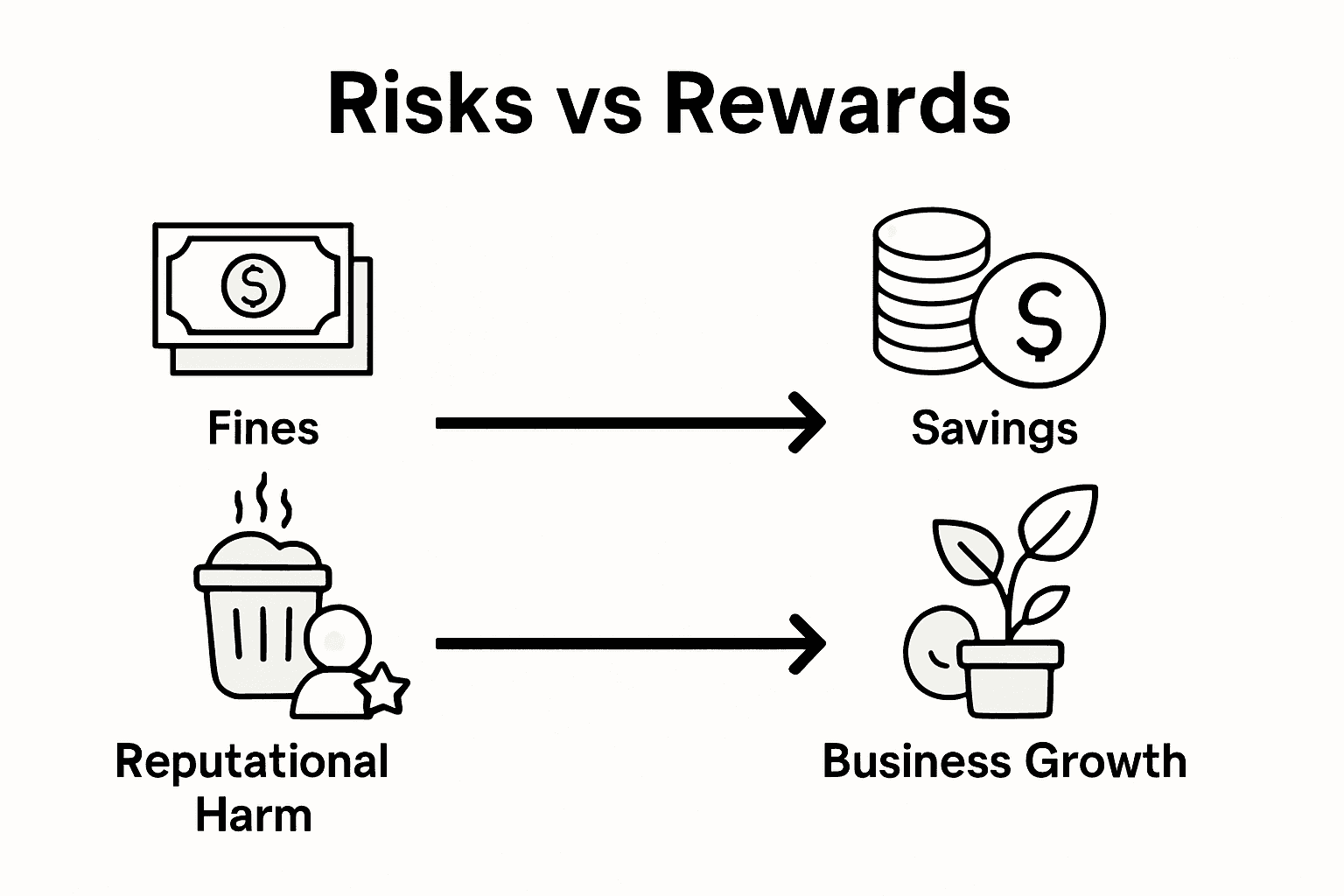
Non-compliance with waste regulations can result in significant costs for businesses, including escalating landfill taxes, substantial environmental fines, and potential legal enforcement actions. These financial implications extend beyond immediate monetary penalties, potentially encompassing increased waste management expenses, mandatory remediation costs, and long-term reputational damage that can negatively influence customer perception and investor confidence.
The financial risks associated with waste management non-compliance are multifaceted and can manifest through several critical channels. Regulatory penalties can include fixed monetary fines ranging from £300 to £50,000 depending on the severity of the violation, while persistent non-compliance might trigger more severe consequences such as compulsory environmental audits, operational restrictions, or even business licence revocations. Additional indirect costs may arise from increased waste disposal expenses, inefficient resource utilisation, and potential contractual penalties from clients or partners who maintain stringent environmental standards.
Pro Tip: Compliance Monitoring: Establish a dedicated internal compliance team or appoint a waste management compliance officer to continuously track regulatory changes, conduct regular internal audits, and ensure your organisation remains ahead of evolving waste management requirements.
Take Control of Your Business Waste with Expert Sustainable Solutions
The challenge of managing diverse waste streams while staying compliant and reducing environmental impact can be complex for UK businesses. From navigating legal duties like waste segregation to implementing effective waste minimisation strategies, companies must actively reduce costs and environmental risks. If you seek practical ways to align with sustainable waste practices mentioned in the article, such as conducting waste audits or embracing circular economy principles, our tailored services are designed to help.

Explore how our streamlined Waste Collection Process in the UK for Businesses 2025 simplifies compliance and boosts efficiency. Learn about How the Waste Collection Network in UK Serves Businesses in 2025 to keep your waste management seamless and lawful. For specialised waste streams like food waste, check out our dedicated food waste solutions to reduce environmental impact safely. Start your journey towards responsible waste disposal today at Venture Waste and secure your business from costly non-compliance risks while building a greener future.
Frequently Asked Questions
What are sustainable waste practices?
Sustainable waste practices involve managing waste streams effectively to reduce environmental impact, focusing on waste prevention, resource efficiency, and circular economy principles.
How can businesses reduce their waste footprint?
Businesses can reduce their waste footprint by conducting waste audits, implementing waste segregation, investing in recycling systems, and training employees on sustainable practices.
What are the consequences of non-compliance with waste disposal regulations?
Non-compliance with waste regulations can lead to significant penalties, including fines, operational restrictions, and reputational damage that may affect customer perception and business operations.
What types of waste should businesses manage sustainably?
Businesses should manage various waste types sustainably, including general waste, recyclable materials, organic waste, construction waste, electronic waste, and plastics, each requiring tailored management strategies.
Recommended
- Waste Reduction for SMEs: Practical UK Strategies for 2025 – Venture Waste
- Waste Management Challenges UK: Solutions for Businesses 2025 – Venture Waste
- How UK Businesses Can Save Money on Waste Management in 2025 – Venture Waste
- Effective Waste Minimisation Strategies for UK Businesses 2025 – Venture Waste
- Where Do All Disposable Water Bottles End Up? – EQUA – Sustainable Water Bottles
- Nachhaltig Mit Batterien Umgehen: Der Komplettguide – accu.blog


Leave a Reply
Want to join the discussion?Feel free to contribute!