

The Essential Guide to Sustainable Waste Management
Every year, the UK generates over 220 million tonnes of waste, highlighting a growing concern for both businesses and households. Managing this waste affects not only the environment but also impacts legal compliance and long-term costs. Understanding the core principles, legal requirements, and practical methods of sustainable waste management can help you protect the planet and your bottom line while staying ahead of regulatory demands.
Table of Contents
- Defining Sustainable Waste Management Core Principles
- Main Types of Waste and Treatment Methods
- UK Laws and Environmental Compliance Explained
- Eco-Friendly Practices for Businesses and Homes
- Responsibilities, Costs, and Common Pitfalls
Key Takeaways
| Point | Details |
|---|---|
| Sustainable Waste Management Principles | Focuses on waste reduction, reuse, recycling, recovery, and disposal in a prioritized hierarchy to minimize environmental impact. |
| Waste Treatment Methods | Businesses must select appropriate treatment methods based on waste type to ensure compliance and reduce environmental hazards. |
| Regulatory Responsibilities | Compliance with UK laws mandates proper waste classification and segregation to avoid legal repercussions and environmental harm. |
| Common Management Pitfalls | Organizations should address issues like improper classification and inadequate training to streamline waste management processes and minimize costs. |
Defining Sustainable Waste Management Core Principles
Sustainable waste management represents a strategic approach to handling waste that prioritizes environmental protection, resource efficiency, and long-term economic sustainability. According to Discovery UCL, it involves implementing practices that significantly reduce environmental impact while promoting the circular economy through minimizing waste generation and maximizing material recovery.
At its core, sustainable waste management follows a hierarchical framework that guides decision-making and waste treatment strategies. UK Government guidelines outline this hierarchy, which prioritizes waste management approaches in the following order:
- Prevention: Reducing waste generation at the source
- Reuse: Finding alternative uses for materials before discarding
- Recycling: Converting waste materials into new products
- Recovery: Extracting energy or value from waste
- Disposal: The final and least preferred option
Implementing these principles requires a holistic approach that integrates technological innovation, regulatory compliance, and organizational commitment. By understanding and applying these core principles, businesses can transform waste from a potential environmental liability into a valuable resource. For comprehensive guidance on navigating these challenges, check out our steps to waste compliance guide.
Main Types of Waste and Treatment Methods
Understanding the diverse landscape of waste types is crucial for effective management and environmental protection. UK Government categorizes waste into several key classifications, each requiring specialized handling and treatment approaches. These primary waste categories include construction and demolition waste, electrical and electronic equipment waste, hazardous waste, healthcare waste, packaging waste, and vehicle and oily wastes.
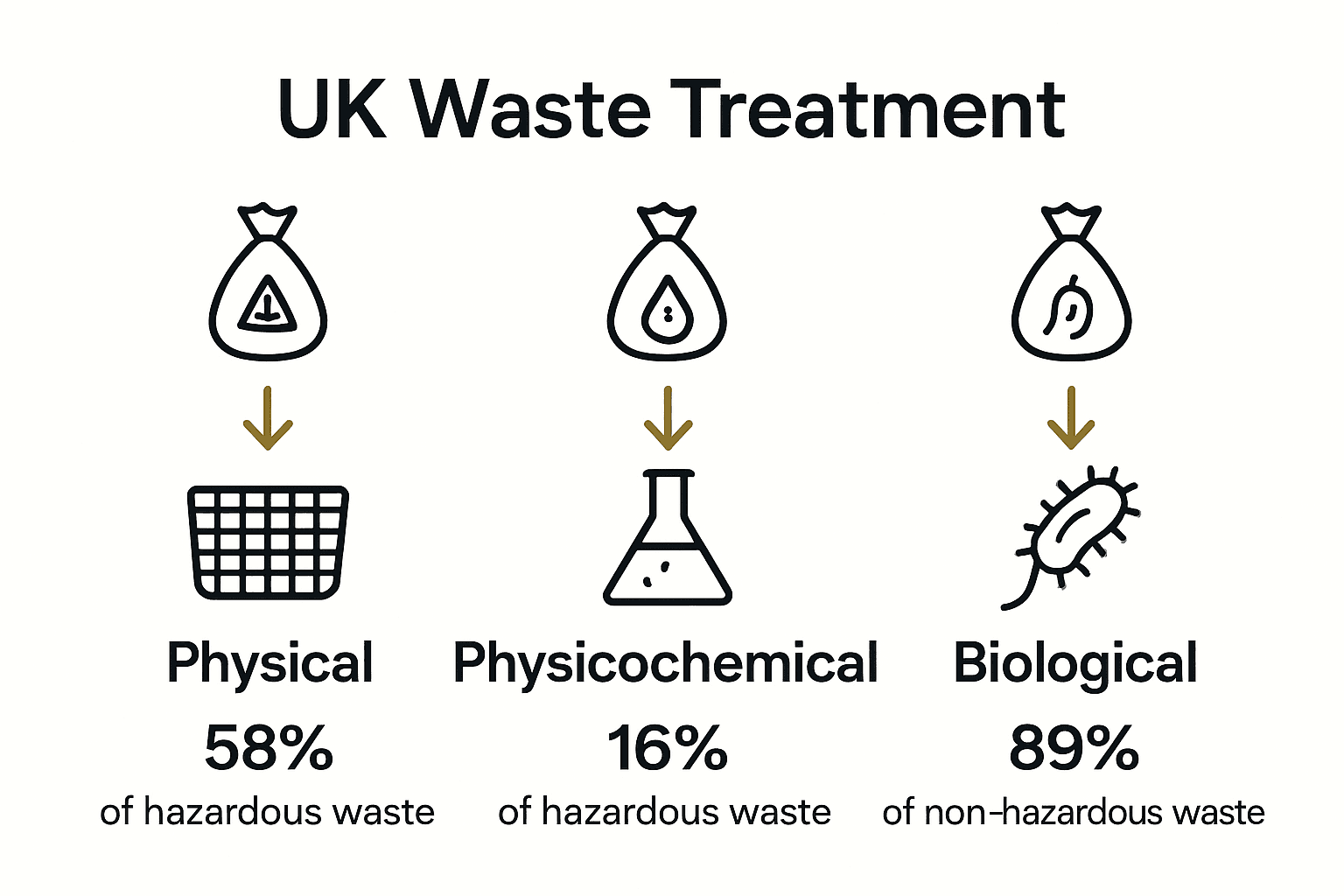
Waste treatment methods are equally diverse and strategically designed to minimize environmental impact. According to Discovery UCL, these methods can be broadly categorized into three primary approaches:
- Physical Treatment: Includes size reduction and material separation techniques
- Physicochemical Treatment: Involves chemical stabilization processes
- Biological Treatment: Encompasses methods like composting and anaerobic digestion
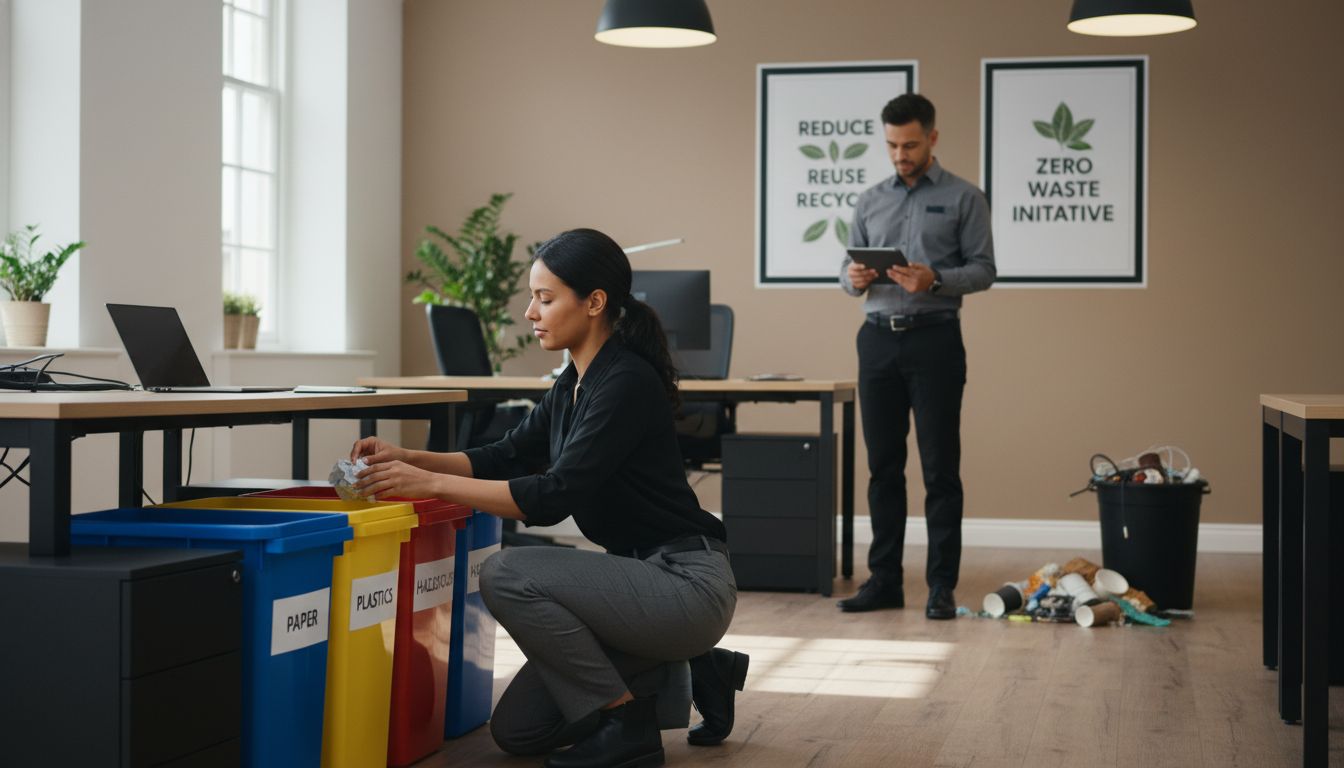
Businesses must understand these waste types and treatment methods to ensure compliance and environmental responsibility. Each waste stream requires a nuanced approach, with the ultimate goal of reducing waste volume and potential hazards.
 For more detailed insights into managing specific waste types, explore our guide on hazardous waste regulations to help your organization develop a comprehensive waste management strategy.
Here’s a summary of the main waste types and their recommended treatment methods:
| Waste Type | Typical Treatment Methods | Key Considerations |
|---|---|---|
| Construction & Demolition | Physical treatment Recycling |
Material recovery |
| Electrical & Electronic Equipment | Recycling Physicochemical treatment |
Hazardous content risks |
| Hazardous Waste | Segregation Physicochemical treatment |
Strict regulatory controls |
| Healthcare Waste | Biological treatment Incineration |
Infection/contamination risks |
| Packaging Waste | Recycling Physical treatment |
High recycling potential |
| Vehicle & Oily Wastes | Recovery Physicochemical treatment |
Pollutant management |
UK Laws and Environmental Compliance Explained
Navigating the complex landscape of waste management regulations requires a comprehensive understanding of legal responsibilities and environmental protection standards. UK Government mandates that waste producers must meticulously classify their waste to determine its hazardous potential and ensure appropriate handling, with the Environment Agency overseeing these critical compliance measures.
Waste segregation is a fundamental requirement in UK environmental law. According to government guidelines, businesses must adhere to strict protocols that prohibit mixing different waste types. UK Hazardous Waste Regulations specifically outline that:
- Hazardous waste must be separated from non-hazardous waste
- Mixing of waste types is strictly forbidden
- Proper classification prevents potential harm to people and the environment
- Detailed documentation and tracking are mandatory
Companies operating in the UK face significant legal and financial consequences for non-compliance. Understanding these regulations is not just about avoiding penalties, but about creating a responsible waste management ecosystem that protects both business interests and environmental sustainability. For businesses seeking to navigate these complex legal requirements, our guide on waste disposal legal requirements provides comprehensive insights into maintaining full regulatory compliance.
Eco-Friendly Practices for Businesses and Homes
Adopting sustainable waste management practices is crucial for both environmental protection and responsible resource utilization. UK Government recommends a strategic waste hierarchy that provides a comprehensive framework for eco-friendly waste management, prioritizing actions from prevention to responsible disposal.
The waste hierarchy offers a systematic approach to minimizing environmental impact:
- Waste Prevention: Reducing waste generation at the source
- Reuse: Finding alternative uses for materials
- Recycling: Converting waste into new products
- Energy Recovery: Extracting energy from unavoidable waste
- Disposal: Final option when no other alternatives exist
Additionally, innovative eco-friendly practices like composting and anaerobic digestion play a significant role in sustainable waste management. UK Government highlights these methods as transformative approaches that convert organic waste into valuable resources like compost and biogas, simultaneously reducing landfill use and greenhouse gas emissions. For businesses seeking practical strategies to implement these principles, our guide on waste reduction for SMEs provides actionable insights into creating a more sustainable waste management approach.
Responsibilities, Costs, and Common Pitfalls
Navigating waste management involves understanding complex responsibilities and potential financial implications. UK Government emphasizes that waste producers bear critical legal obligations to correctly classify and handle their waste, with costs directly influenced by waste type and selected treatment methods.
Common waste management pitfalls can create significant challenges for businesses and organizations:
- Improper waste classification
- Inadequate segregation practices
- Lack of compliance documentation
- Inconsistent waste tracking
- Insufficient staff training
Particularly critical is the management of hazardous waste. UK Government warns that failing to segregate hazardous materials can result in severe environmental and legal consequences. Organizations must implement rigorous waste management protocols that prioritize proper separation, documentation, and compliance. For businesses seeking to understand potential financial implications and avoid costly penalties, our guide on waste disposal cost factors provides comprehensive insights into navigating these complex regulatory landscapes.
Take Charge of Sustainable Waste Management Today
The essential guide highlights common challenges faced by businesses trying to adopt sustainable waste management principles such as waste prevention, segregation, and compliance with UK regulations. If you are struggling with complex waste streams or unclear legal obligations, such as proper hazardous waste handling or effective recycling, you are not alone. Reducing environmental impact while ensuring full regulatory compliance requires a trusted partner who understands these core principles and can simplify your waste processes.
How the Waste Collection Network in UK Serves Businesses in 2025 – Venture Waste illustrates how an experienced waste management network can cover your needs with ease and legal certainty.

Start transforming your waste management from a costly burden into a resource-efficient solution right now. Visit Venture Waste to explore services that encompass general and hazardous waste collection, recycling, and compliant disposal in just three simple steps. Discover exactly how our efficient Waste Collection Process in the UK for Businesses 2025 – Venture Waste can streamline your operations while protecting the environment. Take the first step towards a cleaner, compliant future today and turn sustainability goals into achievable results.
Frequently Asked Questions
What are the core principles of sustainable waste management?
The core principles include waste prevention, reuse, recycling, recovery, and disposal, organized in a hierarchical framework that prioritizes reducing environmental impact and promoting resource efficiency.
What types of waste require specialized treatment methods?
Key waste types include construction and demolition waste, electrical and electronic equipment waste, hazardous waste, healthcare waste, packaging waste, and vehicle and oily wastes, each needing specific handling techniques.
What are common pitfalls in waste management that businesses should avoid?
Common pitfalls include improper waste classification, inadequate segregation practices, lack of compliance documentation, inconsistent waste tracking, and insufficient staff training.
How can businesses implement eco-friendly waste management practices?
Businesses can adopt eco-friendly practices by focusing on waste prevention, reuse, recycling, and energy recovery, along with innovative methods like composting and anaerobic digestion to reduce landfill use and greenhouse gas emissions.


Leave a Reply
Want to join the discussion?Feel free to contribute!