

Skips, Roll on Roll off and More: North East Bulky Waste Collections for Housebuilding Projects—Best Value via Our Contractor Network
Waste from housebuilding projects in the North East is piling up faster than ever and skipping proper planning can send project costs soaring. Think skips and roll-on-roll-off containers are your only options. Actually, using a contractor network can cut your waste management costs by up to 25 percent compared to sticking with a single supplier. This fresh approach does more than trim expenses—it brings new flexibility and smarter compliance to any construction job.
Table of Contents
- Choosing The Right Waste Solution For Your Project
- Benefits Of Using A Contractor Network Over A Single Supplier
- Specialist Waste Services For Businesses And Organisations
- Maximising Value And Compliance For Complex Waste Streams
Quick Summary
| Takeaway | Explanation |
|---|---|
| Conduct a waste assessment first | Identify unique waste volumes and types to select the right solution for your project. |
| Use a contractor network for flexibility | Access multiple services and competitive pricing by leveraging various suppliers instead of a single one. |
| Implement specialist waste management services | Tailor waste strategies to specific industry needs for enhanced compliance and efficiency. |
| Maximise value with advanced technology | Use cutting-edge tools for waste tracking and reporting to optimise waste management performance. |
| Stay compliant with regulatory standards | Ensure adherence to local environmental regulations to avoid penalties and enhance sustainability. |
Choosing the Right Waste Solution for Your Project
Constructing successful housebuilding projects in the North East requires strategic waste management that balances efficiency, cost-effectiveness, and environmental responsibility. Newcastle, Sunderland, and Durham’s construction landscapes demand tailored waste collection solutions that meet specific project requirements.
Understanding Your Project’s Waste Profile
Every construction project generates unique waste volumes and types. A residential development in Gateshead might produce different waste streams compared to a commercial complex in Middlesbrough. Before selecting a waste solution, contractors must conduct a comprehensive waste assessment. The U.S. Environmental Protection Agency recommends designing for adaptability and disassembly to minimize waste generation.
Key considerations include:
- Estimated total waste volume
- Types of materials (concrete, timber, metal, mixed)
- Project duration
- Site accessibility
- Local disposal regulations
Matching Waste Solutions to Project Needs
North East contractors have multiple waste collection options. Skips remain popular for smaller projects, while roll-on-roll-off containers suit larger developments. Web-based tracking tools can help contractors electronically manage waste plans, identify recyclable materials, and generate comprehensive disposal reports.
Consider our guide on reducing waste management expenses to understand how strategic waste collection can drive project cost efficiencies. Different container sizes and types offer varying benefits:
To help you choose the most suitable waste container for your construction project, the following table summarises the key options, their typical applications, and the types of projects they best serve:
| Waste Solution | Typical Use | Best Suited For |
|---|---|---|
| Mini Skips | Small-scale waste removal | Small renovations, tight urban sites |
| Midi Skips | Medium-sized waste volumes | Medium residential projects |
| Maxi Skips | Large quantities of mixed construction waste | Large-scale construction, industrial |
| Roll-on-Roll-off Containers | Very large, bulky or ongoing construction waste | Extensive commercial & infrastructure |
- Mini Skips: Ideal for small renovations or tight urban sites in places like Tynemouth
- Midi Skips: Perfect for medium residential projects in areas like Gosforth
- Maxi Skips: Suitable for large-scale construction in industrial zones around Teesside
- Roll-on-Roll-off Containers: Best for extensive commercial and infrastructure developments
Proper waste management isn’t just about disposal—it’s about creating sustainable, efficient construction processes that minimize environmental impact while maintaining project timelines and budgets. By carefully selecting the right waste solution, North East contractors can optimize their projects’ waste streams, reduce costs, and contribute to more sustainable building practices.
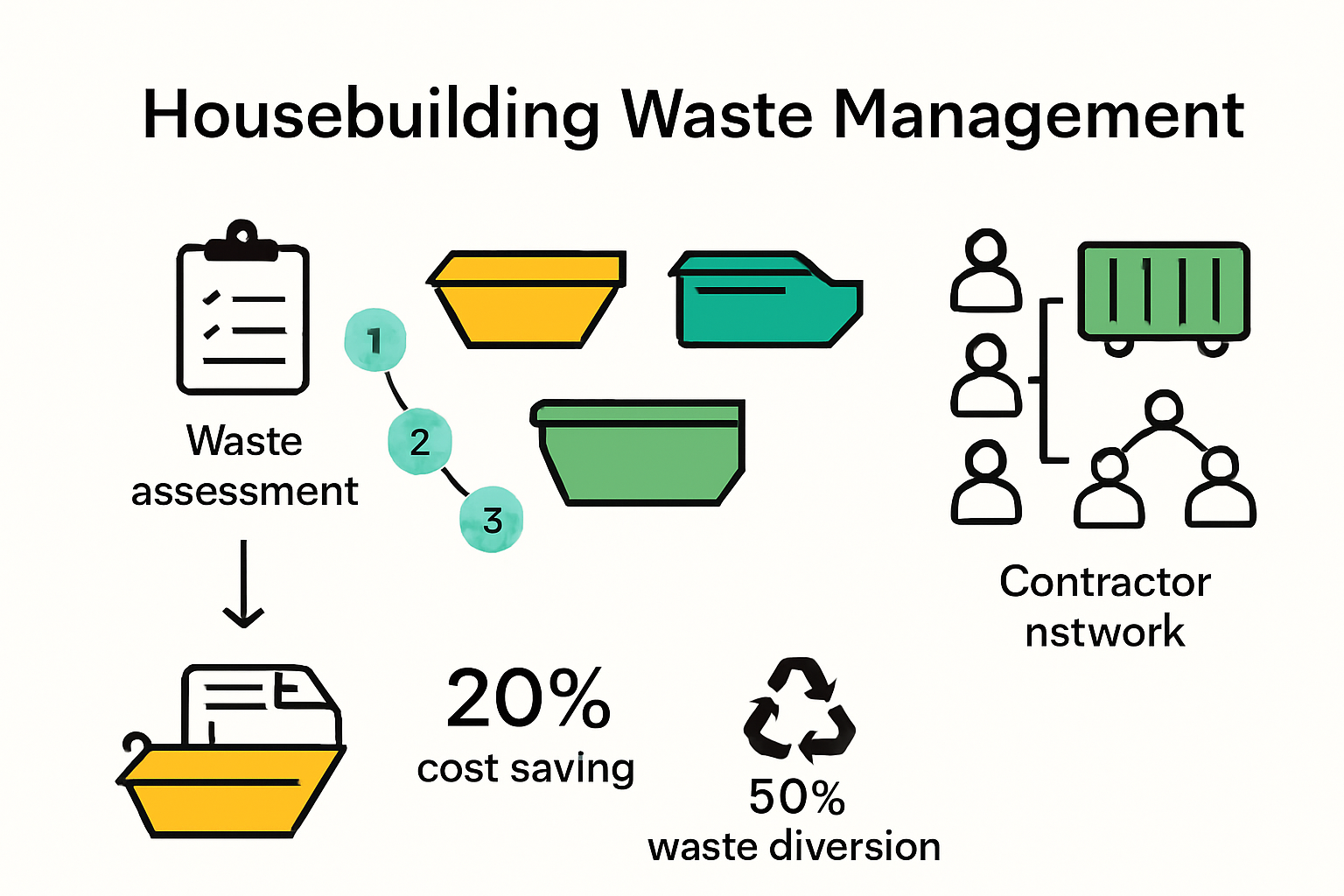
Benefits of Using a Contractor Network Over a Single Supplier
Navigating waste management for housebuilding projects in the North East requires strategic decision-making that goes beyond simply selecting a single supplier. A robust contractor network offers construction professionals in Newcastle, Durham, and Sunderland unparalleled flexibility, competitive pricing, and comprehensive waste management solutions.
Competitive Pricing and Diverse Options
Relying on a single waste management supplier limits your project’s potential for cost-effectiveness and innovation. The U.S. Environmental Protection Agency emphasizes that separating service procurements can increase competition and reduce conflicts of interest. By leveraging a contractor network, housebuilding projects can access multiple pricing structures, specialised services, and competitive rates across different regions of the North East.
Key advantages of a diverse contractor network include:
- Dynamic pricing models
- Specialised expertise for different waste types
- Geographical flexibility across Newcastle, Sunderland, and rural Northeast areas
- Reduced risk of service disruption
Performance-Driven Waste Management
A contractor network introduces performance-based incentives that single suppliers often cannot match. EPA research suggests that aligning contractor compensation with waste diversion goals can significantly enhance waste management efficiency. This approach encourages contractors to develop innovative solutions, invest in training, and continuously improve their service delivery.
Additionally, our comprehensive guide on waste management expenses provides insights into how strategic contractor selection can drive cost reductions and operational improvements.
Technological and Operational Advantages
Modern housebuilding projects demand sophisticated waste management solutions. A contractor network provides access to cutting-edge technologies, diverse expertise, and adaptable service models. EPA recommendations highlight the importance of contractors who can compensate, train, and manage workers to achieve higher waste diversion rates.
By working with multiple contractors, construction projects benefit from:
- Advanced waste tracking technologies
- Specialised handling for different construction waste streams
- Faster response times and flexible scheduling
- Enhanced sustainability reporting capabilities
Ultimately, choosing a contractor network over a single supplier transforms waste management from a mere logistical necessity into a strategic advantage. Construction professionals in the North East can unlock greater operational efficiency, cost savings, and environmental responsibility by embracing a more dynamic and collaborative approach to waste collection and disposal.
Specialist Waste Services for Businesses and Organisations
Businesses and organisations across the North East require sophisticated waste management solutions that extend far beyond simple disposal. From Newcastle’s bustling industrial sectors to Durham’s expanding commercial landscapes, specialist waste services provide tailored strategies that address complex waste streams and regulatory compliance requirements.
Customised Waste Management Solutions
Every business generates unique waste profiles demanding expert handling. The U.S. Environmental Protection Agency highlights the critical importance of specialized waste management approaches that prioritize material recovery and environmental responsibility. Manufacturing facilities in Sunderland, construction companies in Gateshead, and commercial enterprises throughout the region need comprehensive waste collection services that understand their specific operational nuances.
Key considerations for specialist waste services include:
The following table gives a clear overview of specialist waste service features to help North East businesses and organisations assess their needs more quickly:
| Feature | Description |
|---|---|
| Industry-specific waste characterisation | Handling waste profiles unique to each business sector |
| Compliance with environmental regulations | Ensuring legal disposal & documentation |
| Advanced sorting and recycling | Enhanced material recovery and sustainability |
| Confidential document/material destruction | Secure disposal for sensitive or confidential items |
| Hazardous waste management protocols | Safe and legal handling of dangerous materials |
- Industry-specific waste characterisation
- Compliance with environmental regulations
- Advanced sorting and recycling capabilities
- Confidential document and sensitive material destruction
- Hazardous waste management protocols
Technological Integration and Reporting
Modern organisations demand more than basic waste collection. They require data-driven insights, transparent reporting, and technologically advanced waste management strategies. Our comprehensive guide for North East waste management companies provides insights into how businesses can leverage cutting-edge waste management technologies.
Advanced specialist services now offer:
- Real-time waste tracking systems
- Detailed environmental impact reporting
- Customised waste reduction strategies
- Digital waste stream analytics
- Sustainability performance measurements

Sector-Specific Waste Management Approaches
Different industries demand nuanced waste management approaches. Healthcare facilities require stringent medical waste protocols, while manufacturing plants need robust industrial waste handling. Construction companies necessitate specialized debris management, and educational institutions demand secure document destruction services.
The North East’s diverse economic landscape requires flexible, intelligent waste management solutions that adapt to each sector’s unique requirements. Our general waste collection services demonstrate our commitment to providing comprehensive, tailored waste management strategies that align with businesses’ operational objectives.
By partnering with specialist waste service providers, organisations can transform waste management from a logistical challenge into a strategic advantage. Businesses gain not just disposal solutions, but comprehensive environmental stewardship that supports operational efficiency, regulatory compliance, and sustainable practices across the North East’s dynamic commercial ecosystem.
Maximising Value and Compliance for Complex Waste Streams
Navigating complex waste streams demands strategic expertise and comprehensive understanding of regulatory requirements. Construction and industrial projects across the North East require sophisticated approaches that transform waste management from a potential liability into a strategic asset.
Strategic Waste Characterisation and Management
The U.S. Green Building Council emphasizes developing comprehensive Construction Waste Management (CWM) plans that identify multiple material streams for diversion from landfills. For businesses in Newcastle, Sunderland, and Durham, this means implementing sophisticated sorting strategies that maximise material recovery and minimise environmental impact.
Key strategies for complex waste stream management include:
- Detailed waste stream characterisation
- Early identification of recyclable and reusable materials
- Implementing on-site segregation protocols
- Developing material recovery and recycling pathways
- Tracking and documenting waste diversion metrics
Compliance and Regulatory Navigation
Complex waste streams require meticulous attention to evolving environmental regulations. The Whole Building Design Guide highlights that responsible waste management involves eliminating waste where possible, minimizing waste where feasible, and strategically reusing materials. North East businesses must stay ahead of regulatory requirements while maintaining operational efficiency.
Our comprehensive guide to waste compliance provides insights into navigating these intricate regulatory landscapes. Critical compliance considerations include:
- Current environmental protection standards
- Sector-specific waste disposal regulations
- Documentation and reporting requirements
- Hazardous material handling protocols
- Sustainability certification prerequisites
Technology-Driven Waste Performance Optimization
The U.S. Environmental Protection Agency recommends leveraging advanced tracking tools to benchmark waste management activities. By implementing sophisticated digital solutions, businesses can transform waste management from a cost centre into a performance-driven strategic function.
Advanced waste management technologies enable:
- Real-time waste stream monitoring
- Predictive analytics for waste generation
- Automated compliance reporting
- Cost optimization through data-driven insights
- Comprehensive sustainability performance tracking
Maximising value in complex waste streams requires a holistic approach that combines regulatory expertise, technological innovation, and strategic material management. By embracing these comprehensive strategies, North East businesses can turn waste management into a competitive advantage, reducing environmental impact while optimizing operational and financial performance.
Frequently Asked Questions
What are the different types of waste containers suitable for housebuilding projects?
There are several waste containers suitable for housebuilding projects, including mini skips for small renovations, midi skips for medium-sized waste, maxi skips for large construction volumes, and roll-on-roll-off containers for extensive commercial or infrastructure developments.
How can a contractor network reduce waste management costs?
Utilising a contractor network can cut waste management costs by up to 25 percent by providing access to competitive pricing, diverse options, and performance-driven waste management strategies compared to relying on a single supplier.
What factors should I consider when choosing a waste management solution for my project?
When selecting a waste management solution, consider the estimated total waste volume, types of materials, project duration, site accessibility, and local disposal regulations to find the most suitable option for your needs.
Why is it important to conduct a waste assessment before starting a housebuilding project?
Conducting a waste assessment is vital as it helps identify the unique waste volumes and types generated by your project. This information is crucial for selecting the right waste management solutions and implementing effective strategies to minimise waste generation.
Stop Letting Complex Construction Waste Derail Your Project Budget
Struggling with unpredictable waste costs and compliance risks on your North East housebuilding site? When bulky materials pile up and traditional skip or roll-on roll-off hire just adds more hassle, it is easy to feel overwhelmed. The article highlights the headaches of finding best-fit waste solutions for unique project needs alongside the chance to unlock up to 25 percent cost savings by using a contractor network. Venture Waste understands the real-world pressures you face to achieve efficiency, meet regulations, and keep your development on track.

Transform the way you manage construction waste with our flexible waste collection network designed for UK businesses in 2025. Book in seconds and instantly access multiple suppliers who compete to give you the best value across Newcastle, Sunderland and beyond. Do not let waste handling become another delay or hidden cost. Visit Venture Waste now and discover how our streamlined waste collection process for businesses gets your housebuilding project moving forward today.


Leave a Reply
Want to join the discussion?Feel free to contribute!