

Skip Hire Guide 2025: Essential Tips for UK Businesses

UK businesses are preparing for stricter waste rules this year, with mandatory waste separation coming into force for all workplaces by 31 March 2025. Most assume this is just another tick-box exercise in compliance or paperwork. The truth is that getting skip hire wrong now can cost you more than just a fine because new requirements will completely change how your business sorts, stores and disposes of everything—down to your last bin bag.
Table of Contents
- Choosing The Right Skip For Your Business Waste
- Safe Disposal Of Hazardous And Confidential Materials
- Skip Hire Regulations For Uk Workplaces In 2025
- Best Practices For Managing Business Waste Efficiently
Quick Summary
| Takeaway | Explanation |
|---|---|
| Choosing the Right Skip Size | Selecting an appropriate skip size is crucial for operational efficiency and compliance. Understand waste volume and type to ensure effective disposal and legal adherence. |
| Mandatory Waste Separation by 2025 | UK businesses must sort waste into distinct categories: dry recyclables, food waste, and non-recyclable waste by 31 March 2025, improving both compliance and environmental impact. |
| Implementing Hazardous Waste Management Protocols | Strict protocols must be established for the handling and disposal of hazardous materials, as well as confidential data, to prevent legal issues and environmental harm. |
| Conducting Comprehensive Waste Audits | A waste audit is essential for identifying inefficiencies and developing strategies for waste reduction, which can lead to cost savings and enhanced environmental performance. |
| Adopting the Waste Hierarchy | Businesses should focus on reducing waste at its source, reusing materials, recycling, recovering energy from waste, and treating disposal as a last resort, fostering sustainable practices. |
Choosing the Right Skip for Your Business Waste
Selecting the appropriate skip for your business waste is a critical decision that impacts both operational efficiency and regulatory compliance. As of 2025, businesses across the UK face increasingly stringent waste management regulations that demand precise and responsible waste disposal strategies.
Understanding Skip Size Requirements
Choosing the right skip size is more than a matter of convenience – it’s a strategic business decision. Explore cost-effective waste solutions that align with your specific waste management needs. Different business sectors require different skip capacities:
- 4-yard skip: Ideal for small office clear-outs, holding approximately 40 bin bags of waste. Perfect for businesses with limited waste generation like small retail outlets or professional services.
- 8-yard skip: Accommodates around 80 bin bags, suitable for larger refurbishments, construction projects, or businesses with substantial waste production such as manufacturing facilities or large retail environments.
- 12-yard skip: Recommended for extensive commercial renovations, industrial waste management, or businesses undergoing significant structural changes.
According to government regulations from gov.uk, businesses must now separate recyclable materials including plastic, metal, glass, paper, and card from general waste. This requirement makes skip selection even more crucial for maintaining legal compliance.
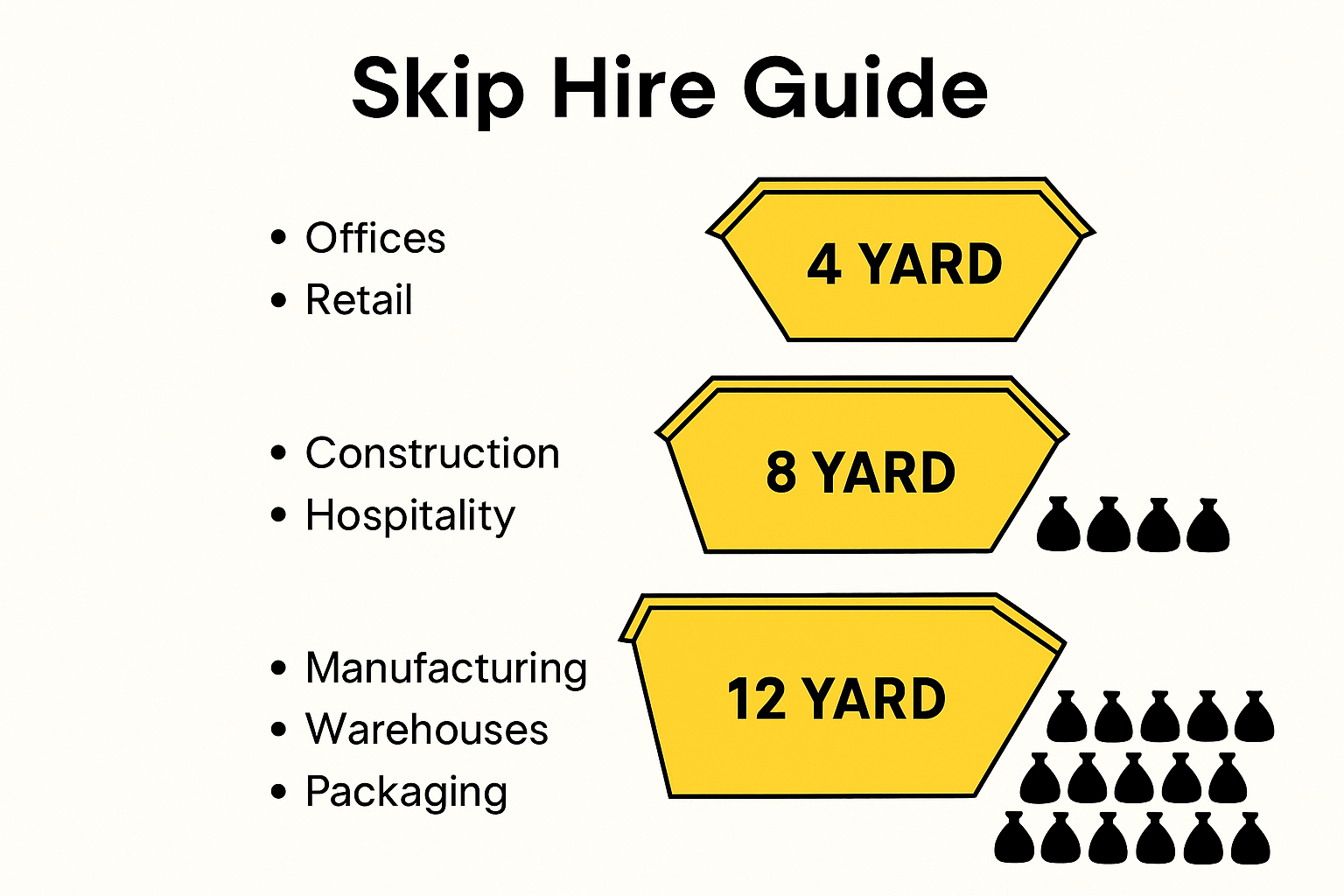
To help you select the best skip size for your business, the following table compares the different skip types, their capacities, and typical business uses as discussed above.
| Skip Size | Capacity (Approx. Bin Bags) | Typical Business Use |
|---|---|---|
| 4-yard | 40 | Small office clear-outs, small retail outlets, professional services |
| 8-yard | 80 | Large refurbishments, construction, manufacturing, large retail |
| 12-yard | 120 | Extensive renovations, industrial waste, major structural changes |
Waste Classification and Skip Selection
Before hiring a skip, businesses must carefully assess their waste type. Different materials require specific handling:
- Construction and demolition waste: Requires robust, durable skips capable of handling heavy materials
- Office clearance waste: Needs skips that can accommodate mixed materials while facilitating easy recycling
- Hazardous materials: Demand specialized skips with strict containment protocols
The Waste Management Industry Association emphasizes that businesses must use registered waste carriers to ensure legal and environmentally responsible disposal. This means not just selecting the right skip, but partnering with certified waste management professionals.
Practical considerations extend beyond size and waste type. Businesses must also evaluate:
- Available space for skip placement
- Duration of waste collection needed
- Budget constraints
- Frequency of waste generation
By meticulously matching skip specifications to your business’s unique waste management requirements, you can optimize disposal processes, reduce environmental impact, and maintain full regulatory compliance in 2025 and beyond.
Safe Disposal of Hazardous and Confidential Materials
Navigating the complex landscape of hazardous and confidential waste disposal requires meticulous planning and strict adherence to UK regulatory standards. Businesses must implement comprehensive strategies to protect sensitive information and manage potentially dangerous materials responsibly.
Hazardous Waste Management Protocols
Hazardous waste represents a significant challenge for UK businesses. According to the Health and Safety Executive, proper handling and disposal are critical to prevent environmental contamination and workplace risks. The Control of Substances Hazardous to Health (COSHH) Regulations 2002 mandate rigorous assessment and control procedures for potentially dangerous materials.
Key considerations for hazardous waste management include:
- Chemical Waste: Requires specialized containment and disposal methods
- Electronic Waste: Demands secure destruction to prevent data breaches
- Medical Waste: Needs stringent segregation and specialized treatment
Learn more about confidential waste management to understand the critical importance of secure disposal processes for sensitive materials.
Here’s a summary table outlining the requirements and focus for each hazardous waste type mentioned above.
| Waste Type | Key Requirement | Primary Focus |
|---|---|---|
| Chemical Waste | Specialised containment/disposal | Environmental protection |
| Electronic Waste | Secure destruction | Data security |
| Medical Waste | Segregation & special treatment | Health & safety/compliance |
Compliance and Legal Requirements
The UK government’s Waste Duty of Care Code of Practice establishes clear guidelines for waste management. Businesses must provide accurate waste descriptions, including:
- Precise classification codes
- Exact quantity of materials
- Specific nature of waste
- Unique handling requirements
The UK government regulations emphasize that businesses bear full responsibility for ensuring their waste is handled legally and safely throughout its entire disposal journey.
Confidential materials demand special attention. Organizations must implement secure destruction processes that completely eliminate the risk of information compromise. This involves:
- Certified destruction certificates
- Witnessed disposal procedures
- Comprehensive documentation tracking
Beyond legal compliance, businesses must consider environmental impact. Responsible disposal means working with certified waste management providers who can guarantee secure, environmentally friendly waste treatment. This approach protects both corporate interests and broader ecological concerns.
By developing a comprehensive waste management strategy that addresses both hazardous materials and confidential information, businesses can mitigate risks, ensure legal compliance, and demonstrate their commitment to responsible corporate practices in 2025 and beyond.
Skip Hire Regulations for UK Workplaces in 2025
The landscape of workplace waste management is undergoing significant transformation in 2025, with stringent regulations reshaping how UK businesses approach skip hire and waste disposal. Understanding these evolving requirements is crucial for maintaining legal compliance and environmental responsibility.
Mandatory Waste Separation Requirements
Starting 31 March 2025, UK workplaces face comprehensive waste management mandates. Check out our guide on efficient waste removal to stay ahead of regulatory changes. According to government regulations, businesses must now separate their waste into three distinct categories:
- Dry Recyclable Materials: Including plastic, metal, glass, paper, and card
- Food Waste: Requiring separate collection and processing
- Non-Recyclable Waste: Designated for general disposal
Interestingly, workplaces with fewer than 10 full-time equivalent employees receive a temporary extension, with compliance deadline set for 31 March 2027. This phased approach allows smaller businesses additional time to adapt to new waste management protocols.
Safety and Operational Compliance
The Health and Safety Executive emphasizes critical safety considerations for skip hire and waste management. Businesses must ensure:
- Proper training for skip handler vehicle operators
- Secure skip placement that does not obstruct public spaces
- Compliance with load weight and height restrictions
- Appropriate personal protective equipment for waste handling staff
Additional operational requirements include:
- Maintaining accurate waste transfer documentation
- Ensuring waste is collected only by licensed waste carriers
- Implementing robust tracking mechanisms for waste disposal
Environmental and Legal Implications
Beyond mere compliance, these regulations reflect a broader commitment to environmental sustainability. Businesses must now demonstrate:
- Proactive waste reduction strategies
- Clear documentation of waste management processes
- Commitment to minimizing environmental impact
Non-compliance can result in significant penalties, including:
- Substantial financial fines
- Potential legal prosecution
- Reputational damage
The 2025 skip hire regulations represent more than bureaucratic requirements. They signal a fundamental shift towards responsible waste management, encouraging businesses to view waste not as a disposal problem, but as a resource that can be minimized, recycled, and managed efficiently.
By embracing these regulations, UK businesses can contribute to national environmental goals, reduce operational costs, and position themselves as forward-thinking, responsible organizations in an increasingly sustainability-conscious marketplace.
Best Practices for Managing Business Waste Efficiently
Efficient waste management is no longer an optional strategy but a critical business imperative in 2025. UK businesses must adopt comprehensive approaches that balance environmental responsibility, regulatory compliance, and operational cost-effectiveness.
Comprehensive Waste Auditing
Conducting a thorough waste audit represents the foundational step in developing an effective waste management strategy. Discover strategies to reduce waste management costs and optimize your business’s environmental performance. According to environmental management experts, a comprehensive waste audit should systematically evaluate:
- Total waste volume by category
- Current disposal and recycling practices
- Potential opportunities for waste reduction
- Financial implications of existing waste management approaches
The audit process helps businesses identify inefficiencies, quantify waste streams, and develop targeted reduction strategies. By understanding precise waste generation patterns, organizations can implement more strategic and cost-effective waste management solutions.
Implementing the Waste Hierarchy
The waste hierarchy provides a structured framework for responsible waste management. As outlined by the Business Climate Hub, businesses should prioritize strategies in the following order:
- Prevention: Minimizing waste generation at the source
- Reuse: Finding alternative uses for materials
- Recycling: Converting waste into new products
- Recovery: Extracting energy from non-recyclable waste
- Disposal: Final option when all other methods are exhausted
Practical implementation might involve:
- Redesigning packaging to reduce material use
- Establishing internal recycling stations
- Partnering with suppliers committed to sustainable practices
- Investing in staff training on waste reduction techniques
Operational Waste Management Strategies
Successful waste management requires a holistic, systematic approach. Key operational strategies include:
- Developing clear waste management guidelines
- Implementing robust tracking and documentation systems
- Regular staff training on waste segregation protocols
- Establishing partnerships with certified waste management providers
- Investing in appropriate waste storage and handling infrastructure
Businesses should also consider technological solutions such as digital waste tracking systems, which can provide real-time insights into waste generation, help identify reduction opportunities, and ensure regulatory compliance.
By adopting these best practices, UK businesses can transform waste management from a compliance requirement into a strategic opportunity for cost savings, environmental stewardship, and organizational efficiency. The most successful organizations will view waste not as a problem to be disposed of, but as a resource to be carefully managed and minimized.
Frequently Asked Questions
What are the mandatory waste separation requirements for businesses in the UK by 2025?
UK businesses must separate their waste into three categories: dry recyclables (plastic, metal, glass, paper, and card), food waste, and non-recyclable waste, with compliance enforced by 31 March 2025.
How do I choose the right skip size for my business needs?
Consider the type and volume of waste generated by your business. For small office clear-outs, a 4-yard skip may suffice, while larger refurbishments may require an 8-yard or 12-yard skip.
What are the best practices for safely disposing of hazardous waste?
Implement strict hazardous waste management protocols, such as using specialised containers, ensuring proper training for staff, and partnering with certified waste management companies to meet legal requirements.
What should I do to ensure compliance with skip hire regulations in 2025?
Maintain accurate waste transfer documentation, ensure skips are handled by licensed waste carriers, and conduct regular training for staff involved in waste management processes.
Secure Your Business Waste Management for 2025 – Stay Ahead of Compliance
The shift to stricter UK waste regulations by 2025 is causing real concerns for businesses. If you are worried about choosing the right skip, meeting legal waste separation rules or managing hazardous and confidential materials, you are not alone. The pressure to avoid costly penalties and maintain full compliance means you need reliable waste partners and tailored solutions now.
Explore our expert support for confidential waste if you are handling sensitive documents and ensure you never risk data breaches or legal troubles.

Ready to take the stress out of waste management? For fast, compliant and simple skip hire, visit Venture Waste Management today. Streamline your waste collection process with our three-step booking, expert guidance and nationwide coverage. Act now to protect your business and gain confidence your waste solutions are fully up to date for 2025.
Recommended
- bulky waste removal tips Archives – Venture Waste
- Bulky Waste Removal Tips for UK Businesses in 2025 – Venture Waste
- 7 Steps to Waste Compliance for UK Businesses in 2025 – Venture Waste
- Hazardous Waste Handling for UK Businesses: Complete 2025 Guide – Venture Waste
- Blog Archives – Venture Waste
- hazardous waste handling Archives – Venture Waste


Leave a Reply
Want to join the discussion?Feel free to contribute!