

Site Waste Management Plans: Guide for UK Businesses 2025
Site waste is piling up across UK businesses, with financial penalties reaching up to £50,000 for each violation. Most think a simple recycling bin is enough to tick all the boxes. Yet a proper site waste management plan does far more than just satisfy regulators. It actually opens doors to reduced costs, a cleaner reputation, and even fresh income streams few have spotted.
Table of Contents
- Why Uk Businesses Need Site Waste Management Plans
- Key Elements Of An Effective Site Waste Management Plan
- Practical Steps For Different Business Sectors
- Legal Compliance And Sustainable Waste Disposal
Quick Summary
| Takeaway | Explanation |
|---|---|
| Site waste management plans are essential. | They help UK businesses comply with legal regulations and enhance operational efficiency. |
| Implement comprehensive waste assessments. | Thorough evaluations of waste streams identify reduction opportunities and establish baseline measures for improvement. |
| Adopt waste reduction and segregation strategies. | These strategies minimise environmental impact and lower operational costs by prioritising waste prevention and recycling. |
| Monitor progress regularly for improvement. | Continuous tracking of waste metrics allows businesses to adapt their strategies and ensure compliance with evolving regulations. |
| Tailor approaches for different sectors. | Recognising unique waste management needs in sectors like construction or healthcare leads to more effective plans and operational practices. |
Why UK Businesses Need Site Waste Management Plans
Site waste management plans represent a critical strategic approach for UK businesses to systematically address their environmental responsibilities and operational efficiency. These comprehensive frameworks are no longer optional but essential mechanisms for organisations seeking to navigate complex regulatory landscapes while demonstrating corporate environmental stewardship.
Legal Compliance and Regulatory Requirements
In the United Kingdom, businesses face increasingly stringent waste management regulations that mandate structured approaches to waste disposal and resource management. The Environmental Protection Act 1990 and subsequent updates compel organisations to develop robust waste management strategies. Research from the Environment Agency indicates that businesses without comprehensive site waste management plans risk substantial financial penalties, potentially ranging from £1,000 to £50,000 per violation.
Moreover, the Waste (England and Wales) Regulations 2011 explicitly require businesses to apply the waste hierarchy principle, prioritising waste prevention, preparation for reuse, recycling, and other recovery methods before disposal. A well-structured site waste management plan enables organisations to demonstrate compliance and proactively manage their environmental impact.
Economic and Environmental Benefits
Beyond regulatory compliance, site waste management plans offer significant economic advantages. By implementing systematic waste reduction and recycling strategies, businesses can substantially reduce disposal costs. The U.S. Environmental Protection Agency highlights that structured waste management approaches can improve resource efficiency and reduce overall operational expenses.
Businesses in industrial regions like Newcastle, Manchester, and Birmingham can particularly benefit from these plans. For instance, manufacturing facilities can identify opportunities to repurpose waste materials, creating potential secondary revenue streams and reducing raw material procurement costs. This approach not only minimises environmental impact but also supports circular economy principles.
Moreover, companies with comprehensive waste management strategies often experience enhanced corporate reputation. Modern consumers and stakeholders increasingly value environmentally responsible businesses, making site waste management plans a strategic tool for brand positioning and stakeholder engagement. Learn more about optimising your waste management approach with our comprehensive guide.
By treating waste management as a strategic priority rather than a mere compliance requirement, UK businesses can transform potential environmental challenges into opportunities for innovation, cost reduction, and sustainable growth. Site waste management plans are not just documents but roadmaps towards more responsible and efficient organisational practices.
Key Elements of an Effective Site Waste Management Plan
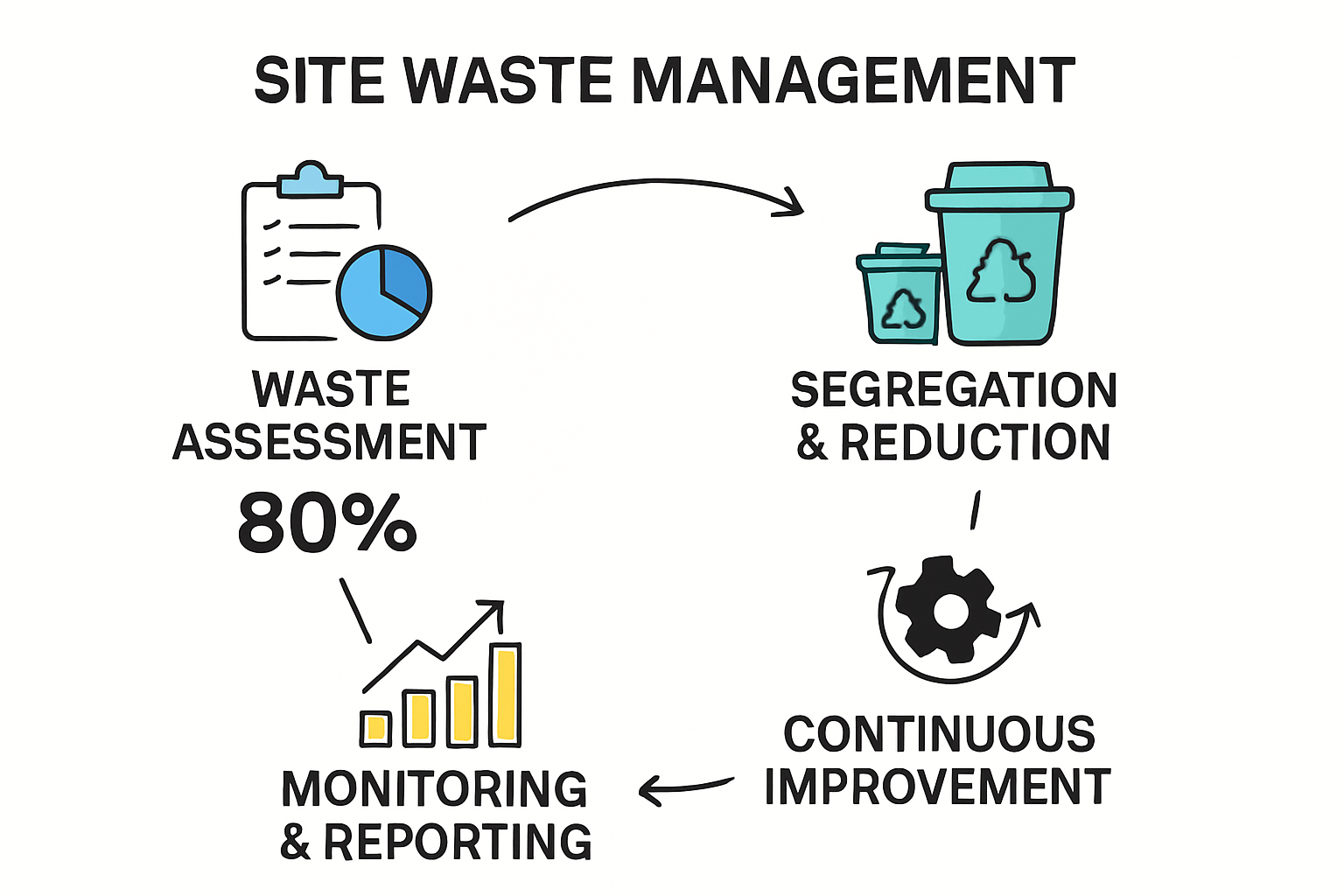
An effective site waste management plan is a comprehensive strategy that goes beyond mere compliance, serving as a strategic blueprint for sustainable business operations. Developing a robust framework requires careful consideration of multiple interconnected elements that address environmental, legal, and operational challenges.
Comprehensive Waste Assessment and Identification
The foundation of an effective site waste management plan begins with a thorough waste assessment. Research from the Environment Agency recommends businesses conduct detailed waste stream analyses to understand the precise nature and volume of waste generated. This involves categorising waste types, identifying potential reduction opportunities, and establishing baseline measurements.
Businesses must meticulously document various waste streams, including general waste, recyclable materials, hazardous substances, and industry-specific waste. The Better Buildings Partnership emphasizes the importance of creating a comprehensive inventory that considers waste generated across different operational stages, from initial procurement to final disposal.
Waste Reduction and Segregation Strategies
Implementing effective waste reduction and segregation strategies is crucial for minimising environmental impact and operational costs. The U.S. Environmental Protection Agency highlights the importance of applying the waste hierarchy principle: prioritising waste prevention, followed by reuse, recycling, recovery, and finally disposal.
Businesses in industrial regions like Newcastle, Manchester, and Birmingham can benefit from developing targeted waste segregation protocols. This might include dedicated recycling stations, clear signage, colour-coded waste containers, and staff training programmes. Explore our comprehensive waste management approach to understand how to implement these strategies effectively.
Monitoring, Reporting, and Continuous Improvement
A dynamic site waste management plan requires robust monitoring and continuous improvement mechanisms. According to the Federal Emergency Management Agency, businesses should establish clear systems for tracking waste generation, documenting waste removals, and regularly auditing waste management performance.
Key performance indicators might include total waste generated, recycling rates, waste reduction targets, and compliance with legal requirements. Regular reporting not only ensures regulatory adherence but also provides valuable insights for ongoing operational improvements. Businesses should create flexible frameworks that allow for periodic reviews and adaptations based on changing environmental regulations, technological advancements, and organisational needs.
By integrating these critical elements, UK businesses can transform their site waste management plans from mere compliance documents into strategic tools for environmental sustainability, cost reduction, and operational excellence.
To help summarise the most important components, the following table highlights key elements of an effective site waste management plan and their associated actions:
| Key Element | Description | Example Actions |
|---|---|---|
| Waste Assessment | Analyse and document all waste streams and volumes | Baseline measurements, waste categorisation |
| Segregation Strategies | Separate waste types and implement prevention and recycling steps | Colour-coded bins, signage, staff training |
| Monitoring & Reporting | Track waste generation, removal and compliance performance | Regular audits, reporting KPIs, reviews |
| Continuous Improvement | Adapt plan to changing regulations and operational needs | Update strategies, implement new tech |
| Legal Compliance | Fulfil national and local waste regulatory requirements | Maintain records, use licensed carriers |
Practical Steps for Different Business Sectors
Different business sectors require tailored approaches to site waste management, recognising that waste generation and disposal strategies vary significantly across industries. Understanding sector-specific challenges and opportunities is crucial for developing effective and efficient waste management plans.
Construction and Manufacturing Sectors
The construction and manufacturing industries generate substantial volumes of potentially recyclable and hazardous waste. Research from the US Environmental Protection Agency highlights the importance of implementing comprehensive waste management strategies specific to these sectors.
For construction businesses, practical steps include conducting pre-demolition audits, implementing strict material segregation protocols, and establishing on-site waste sorting stations. Contractors in cities like Newcastle, Manchester, and Birmingham should prioritise material reuse, ensuring that salvageable materials like metals, timber, and concrete are separated and redirected for recycling or repurposing.
Manufacturing facilities can benefit from implementing closed-loop waste management systems. This approach involves identifying waste streams that can be internally recycled or transformed into secondary raw materials, reducing overall waste generation and procurement costs. Learn more about optimising industrial waste processes to understand comprehensive waste reduction strategies.
Healthcare and Hospitality Sectors
Healthcare and hospitality sectors face unique waste management challenges requiring specialised approaches. A peer-reviewed study on ResearchGate emphasizes the critical importance of source separation and targeted waste reduction strategies.
In healthcare settings, waste management must address multiple categories including general waste, infectious materials, pharmaceutical waste, and potentially hazardous medical equipment. Practical steps include implementing colour-coded waste bins, providing comprehensive staff training on waste segregation, and establishing clear protocols for disposing of sensitive medical materials.
Hospitality businesses, including restaurants, hotels, and catering services, can focus on organic waste reduction. Strategies might include composting food waste, partnering with local agricultural initiatives, implementing portion control measures, and developing food donation programmes for unused edible items.
Retail and Office Environments
Retail and office environments, while generating less complex waste streams, still require structured waste management approaches. These sectors can focus on reducing paper waste, implementing comprehensive recycling programmes, and minimising single-use packaging and consumables.
Key strategies include digitising documents, establishing clear recycling guidelines, providing staff training on waste reduction, and selecting suppliers with sustainable packaging solutions. Office managers should consider implementing digital-first communication strategies, using electronic documents, and promoting a culture of waste consciousness among employees.
By recognising the unique waste management requirements of different business sectors, organisations can develop more targeted, effective site waste management plans that reduce environmental impact, lower disposal costs, and demonstrate corporate responsibility.
Below is a comparison table summarising practical sector-specific steps for effective site waste management in construction, manufacturing, healthcare, hospitality, and office/retail sectors:
| Sector | Waste Challenges | Key Strategies & Actions |
|---|---|---|
| Construction | High volume, mixed materials | Pre-demolition audits, on-site segregation, material reuse |
| Manufacturing | Industrial/process waste streams | Closed-loop recycling, internal waste transformation |
| Healthcare | Hazardous/medical waste | Colour-coded bins, staff training, clear disposal protocols |
| Hospitality | Organic & food waste | Composting, portion control, food donations |
| Retail & Office | Paper & packaging, general waste | Digitisation, supplier selection, comprehensive recycling |
Legal Compliance and Sustainable Waste Disposal
Legal compliance in waste disposal represents a critical responsibility for UK businesses, encompassing complex regulatory frameworks that demand strategic understanding and proactive implementation. Navigating these legal requirements requires comprehensive knowledge of environmental regulations, waste management standards, and sustainable disposal practices.
Regulatory Framework and Legal Obligations
The United Kingdom’s waste management legal landscape is structured through multiple legislative instruments, including the Environmental Protection Act 1990, Waste (England and Wales) Regulations 2011, and the Environmental Permitting Regulations. Research from the U.S. Environmental Protection Agency emphasizes the importance of understanding waste hierarchy principles, which prioritize waste prevention, preparation for reuse, recycling, and responsible disposal.
Businesses operating in industrial regions like Newcastle, Manchester, and Birmingham must ensure comprehensive documentation of waste streams, maintain accurate waste transfer notes, and demonstrate due diligence in waste management practices. Failure to comply can result in significant financial penalties, ranging from £1,000 to £50,000 per violation, and potential legal prosecution.
Sustainable Disposal and Environmental Responsibility
Sustainable waste disposal goes beyond mere legal compliance, representing a fundamental commitment to environmental stewardship. A government research report highlights the importance of developing comprehensive waste management strategies that minimise environmental impact and promote circular economy principles.
Key strategies for sustainable disposal include implementing waste reduction programmes, investing in recycling infrastructure, partnering with certified waste management providers, and continuously monitoring and reporting waste generation and disposal metrics. Businesses should prioritise waste streams that can be recycled, repurposed, or transformed into secondary raw materials, thereby reducing overall environmental footprint.
Practical Compliance Strategies
Implementing effective legal compliance and sustainable waste disposal requires a multifaceted approach. Businesses must develop robust internal policies, provide comprehensive staff training, and establish clear waste management protocols. Learn about our comprehensive waste compliance guide to understand the intricate details of legal waste management.
Practical steps include conducting regular waste audits, maintaining detailed records of waste generation and disposal, obtaining necessary environmental permits, and working with licensed waste carriers. Companies should also invest in technology and systems that enable precise tracking and reporting of waste streams, ensuring transparency and demonstrating commitment to environmental regulations.
By integrating legal compliance with sustainable disposal practices, UK businesses can transform waste management from a regulatory requirement into a strategic opportunity for environmental leadership and operational efficiency.

Frequently Asked Questions
What is a Site Waste Management Plan (SWMP)?
A Site Waste Management Plan (SWMP) is a strategic document that outlines how a UK business will manage its waste throughout its operations. It includes comprehensive assessments, waste reduction strategies, monitoring procedures, and compliance with legal regulations.
Why do UK businesses need a SWMP?
UK businesses are required to have a SWMP to comply with environmental regulations. It helps avoid significant financial penalties, improves operational efficiency, reduces waste disposal costs, and enhances corporate reputation by demonstrating environmental responsibility.
What are the key elements of an effective SWMP?
An effective SWMP includes a thorough waste assessment, waste reduction and segregation strategies, monitoring and reporting frameworks, continuous improvement mechanisms, and adherence to legal compliance requirements.
How can different business sectors tailor their SWMPs?
Different sectors, such as construction, healthcare, and hospitality, can tailor their SWMPs by addressing their unique waste challenges, adopting sector-specific strategies for waste segregation, and focusing on the specific types of waste generated within their operations.
Transform Your Site Waste Management Plan Into Real Results
Implementing a site waste management plan can feel overwhelming, especially with the complexity of legal compliance and the risk of heavy fines for every misstep. The pressure to keep up with new regulations, monitor your waste streams, and meet efficiency targets is real. Many business leaders worry about missing something important that could put their reputation or finances at risk.
Discover how easy compliance and responsible waste handling can be when you partner with a trusted provider. Our Waste Collection Process in the UK for Businesses 2025 page shows exactly how we help businesses manage site waste efficiently, from initial assessment to final reporting.

Move your waste strategies forward today. Visit Venture Waste Management for expert support in general and hazardous waste collection, confidential document destruction, and tailored recycling. Secure your compliance, save on operational costs, and create a cleaner business image. Don’t wait until a legal deadline approaches – book your complete waste solution now and turn complex regulations into a smooth process.
Recommended
- Waste Management News UK 2025: What Businesses Need to Know – Venture Waste
- 7 Steps to Waste Compliance for UK Businesses in 2025 – Venture Waste
- steps to waste compliance Archives – Venture Waste
- Skip Hire Guide 2025: Essential Tips for UK Businesses – Venture Waste
- Top Green Building Certifications for Construction in 2025 – Sterling Access
- Top Sustainable Logistics Solutions for 2025: Guide for Retailers and Brands – ORNER


Leave a Reply
Want to join the discussion?Feel free to contribute!