

Secure Waste Transport UK: Legal Standards and Best Practice
Every british business faces growing pressure to transport waste safely, yet nearly 40 percent of hazardous incidents stem from poor handling during transit. The consequences reach far beyond regulatory fines, impacting public health and environmental trust across the United Kingdom. This guide clarifies the core principles of secure waste transport so your organisation can meet strict legal standards and protect communities from risk.
Table of Contents
- Secure Waste Transport: Core Principles Defined
- Types Of Waste Requiring Secure Transport
- Legal Obligations For UK Waste Carriers
- Risk Management And Compliance Challenges
- Best Practices For Secure Waste Logistics
Key Takeaways
| Point | Details |
|---|---|
| Importance of Secure Waste Transport | Effective management of hazardous waste is essential to prevent environmental contamination and ensure public safety during transportation. |
| Regulatory Compliance | UK businesses must adhere to strict regulations, including acquiring waste carrier registration and stringent documentation processes. |
| Risk Management Strategies | Businesses should develop comprehensive risk management strategies that include proper waste classification, staff training, and implementation of safety protocols. |
| Best Practices for Logistics | Establishing advanced packaging, secure storage, and detailed tracking systems is crucial for successful waste logistics and compliance with regulatory standards. |
Secure Waste Transport: Core Principles Defined
Secure waste transport represents a critical operational standard for UK businesses managing potentially hazardous or sensitive materials. The fundamental principle centres on preventing environmental contamination and ensuring public safety during waste movement. Waste transportation requires meticulous planning and strict adherence to regulatory frameworks established by governing bodies such as the Environment Agency.
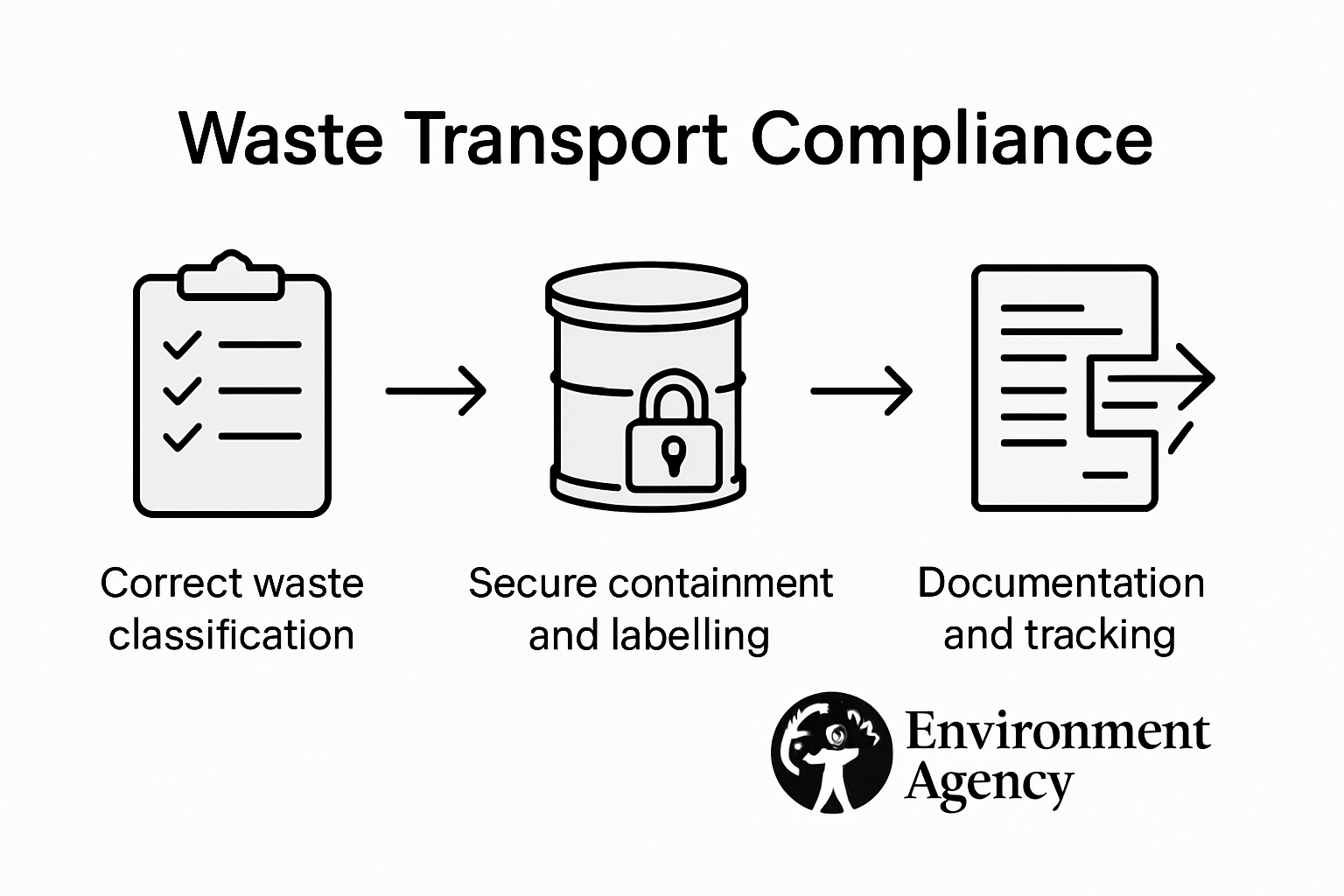
The core principles of secure waste transport encompass several key strategic elements. Hazardous waste handling regulations mandate that businesses must implement comprehensive protocols to classify, contain, and transport waste safely. These protocols include:
- Proper waste classification and categorisation
- Use of approved, robust containment vessels
- Detailed documentation tracking waste movement
- Implementing safety measures to prevent spillage or leakage
- Training personnel in specialised waste management techniques
Transportation safety begins with rigorous container selection and preparation. According to the Health and Safety Executive, dangerous waste materials must be packed, loaded, and documented with exceptional precision. This means selecting containers that are chemically compatible with the waste, sealed against potential leaks, and clearly labelled with appropriate hazard indicators. The transportation vehicle itself must be equipped to handle potential chemical interactions and prevent environmental exposure during transit.
Navigating the complex landscape of waste transport requires more than just technical compliance. Businesses must develop a comprehensive risk management strategy that anticipates potential challenges and mitigates potential environmental or safety risks. Confidential waste risk management involves not just physical containment, but also understanding the legal and environmental implications of waste movement, ensuring that every stage of transportation meets the stringent standards set by UK regulatory bodies.
Types Of Waste Requiring Secure Transport
Secure waste transport is a complex process that demands specialised handling for various waste categories, each presenting unique challenges and regulatory requirements. Hazardous waste represents the most critical classification requiring stringent transportation protocols to protect public health and environmental safety. Domestic waste types encompass a broad spectrum of materials that necessitate careful management during transit.
The primary categories of waste requiring secure transport include:
- Hazardous Chemical Waste
- Industrial solvents
- Toxic chemicals
- Corrosive substances
- Radioactive Materials
- Medical waste
- Nuclear industry byproducts
- Research facility waste
- Biological Waste
- Medical and clinical waste
- Infectious materials
- Pharmaceutical residues
- Electronic Waste (WEEE)
- Computer equipment
- Electronic circuit boards
- Batteries and electronic components
The UK government mandates that waste shipments involving hazardous materials must adhere to strict control measures during transportation. These regulations ensure comprehensive protection against potential environmental contamination and public health risks. Particularly for radioactive materials, specialised transport requirements are paramount. The UK Radioactive Waste & Materials Inventory emphasises the critical need for high-integrity packaging capable of withstanding significant physical damage to prevent radioactive material release.
Complex waste transportation demands more than merely moving materials from one location to another. Operators must implement comprehensive risk management strategies that include detailed documentation, specialised containment techniques, and personnel training. Waste management protocols require businesses to understand the intricate legal and environmental implications of transporting different waste types, ensuring every consignment meets the most stringent UK regulatory standards.
Legal Obligations For UK Waste Carriers
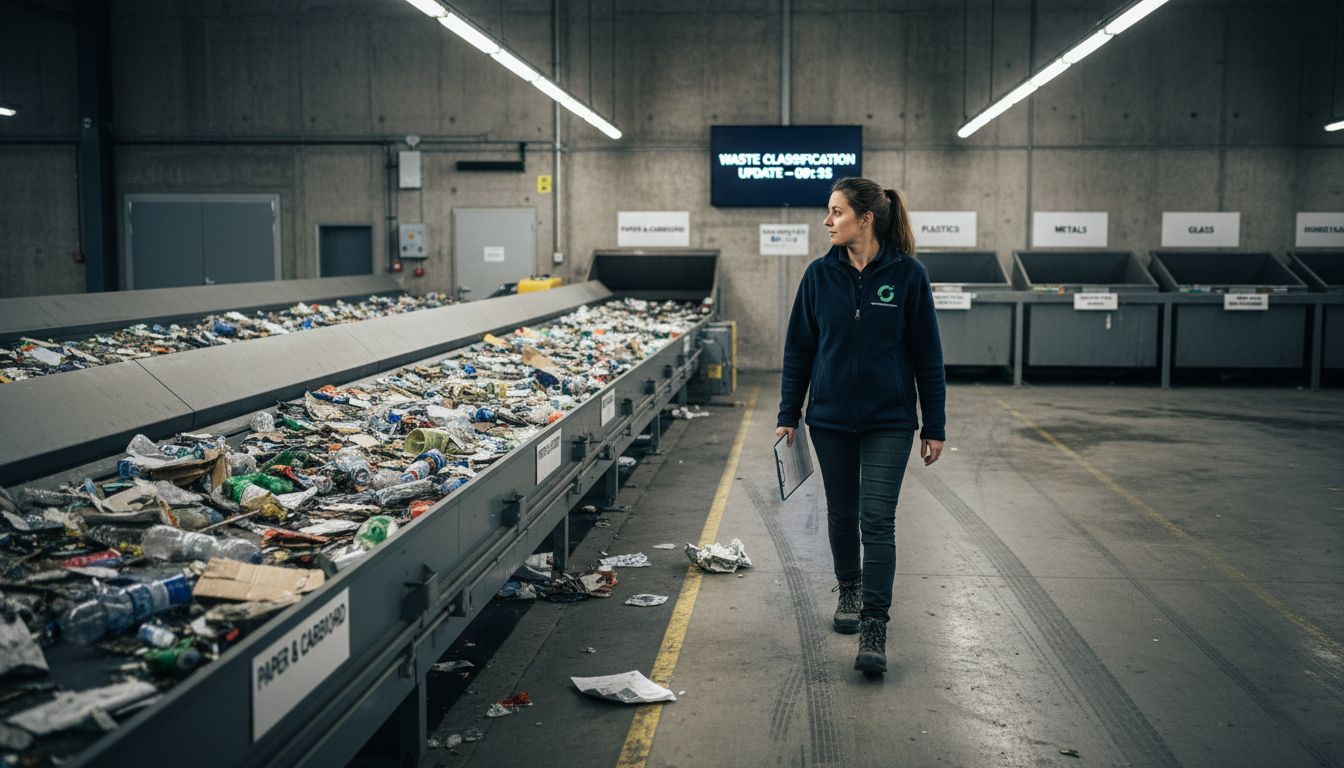
Waste carriers in the United Kingdom operate within a complex regulatory landscape that demands meticulous compliance and rigorous professional standards. Legal obligations for waste transportation extend far beyond simple logistics, representing a critical framework designed to protect environmental and public health. Waste transport regulations encompass multiple layers of legal requirements that businesses must navigate carefully.
The primary legal obligations for UK waste carriers include:
- Obtaining appropriate waste carrier registration
- Maintaining comprehensive waste transfer documentation
- Ensuring proper waste classification and packaging
- Implementing strict safety protocols during transportation
- Demonstrating environmental responsibility and compliance
- Maintaining accurate records of waste movements
- Providing staff training on regulatory requirements
Waste compliance guidelines mandate that carriers must adhere to specific regulations enforced by the Health and Safety Executive. The HSE requires waste carriers to meticulously classify, package, load, and document dangerous waste materials, ensuring comprehensive protection against potential environmental and health risks. Each waste movement must be accompanied by precise documentation that tracks the entire transportation process.
The UK government imposes stringent controls on waste shipments, compelling carriers to demonstrate robust accountability throughout the waste management lifecycle. Waste carriers are legally required to pass materials only to authorized recipients, maintaining a transparent chain of custody. This involves implementing sophisticated tracking mechanisms, conducting regular compliance audits, and developing comprehensive risk management strategies that prioritise environmental protection and public safety. These legal obligations represent more than mere bureaucratic requirements they are fundamental commitments to responsible waste management that protect both the environment and community.
Risk Management And Compliance Challenges
Risk management in waste transportation represents a critical operational challenge for UK businesses, demanding sophisticated strategies to navigate complex regulatory landscapes. Compliance challenges emerge from multiple interconnected legal and operational dimensions that require comprehensive understanding and proactive management. Hazardous waste risks present particularly nuanced challenges that demand meticulous attention and strategic planning.
The primary risk management challenges for waste carriers include:
- Complex regulatory interpretation
- Evolving environmental legislation
- Sophisticated documentation requirements
- Advanced safety protocol implementation
- Continuous staff training needs
- Financial risk from potential non-compliance
- Technical challenges in waste classification
The Health and Safety Executive emphasises that improper handling of dangerous waste can lead to significant operational and legal risks. Organisations must develop robust risk mitigation strategies that address potential environmental hazards, legal vulnerabilities, and operational disruptions. This requires implementing comprehensive tracking mechanisms, maintaining rigorous documentation, and ensuring continuous staff training on emerging regulatory requirements.
Business waste penalties underscore the critical importance of compliance in waste management. The UK government has established stringent controls that can result in substantial financial penalties, potential criminal prosecution, and reputational damage for organisations failing to meet regulatory standards. Effective risk management therefore demands a holistic approach that integrates legal compliance, environmental responsibility, and proactive operational strategies to mitigate potential challenges before they escalate into significant organisational liabilities.
Best Practices For Secure Waste Logistics
Secure waste logistics represents a sophisticated operational framework that demands precision, strategic planning, and comprehensive risk management for UK businesses. Waste transportation involves intricate processes that extend far beyond simple movement from one location to another. Waste handling best practices highlight the critical importance of developing robust, systematic approaches to waste management that prioritise safety, compliance, and environmental responsibility.
Key best practices for secure waste logistics include:
- Comprehensive waste classification protocols
- Advanced packaging and containment strategies
- Detailed documentation and tracking systems
- Specialised staff training programmes
- Rigorous vehicle maintenance and inspection
- Secure storage mechanisms
- Emergency response and contingency planning
- Regular compliance audits
The UK Environment Agency recommends storing waste in secure, designated containers located at separate sites, emphasising the critical need to take all reasonable precautions to prevent waste escape and unauthorised access. This approach requires organisations to develop sophisticated storage strategies that go beyond basic containment, incorporating advanced security measures and comprehensive risk mitigation techniques.
The Health and Safety Executive provides additional guidance, highlighting the importance of precise waste classification, packaging, loading, and documentation during transportation. Clinical waste disposal represents a particularly complex domain that demands exceptional attention to detail. Effective secure waste logistics therefore requires a holistic approach that integrates technological solutions, rigorous training, meticulous documentation, and a proactive commitment to continuous improvement and regulatory compliance.
Ensure Compliance and Safety with Expert Secure Waste Transport Solutions
Managing secure waste transport in the UK is a challenge fraught with complex legal standards, detailed documentation, and strict safety requirements. If your business struggles with risk management, regulatory compliance, or safe handling of hazardous materials, you are not alone. The need to follow precise waste classification, packaging, and transport protocols cannot be overstated. This is where Venture Waste Management can help you meet these challenges head on with confidence.

Take control of your waste transport needs with our streamlined, legally compliant services. From hazardous waste to confidential document destruction, our experienced team ensures every consignment is managed safely and according to the highest UK standards. Visit our regulation Archives – Venture Waste to stay informed on legal updates or discover how the waste collection network in UK serves businesses in 2025. Ready for a seamless waste solution? Act now, visit Venture Waste and secure your business’s compliance and environmental responsibility today.
Frequently Asked Questions
What are the core principles of secure waste transport?
The core principles of secure waste transport include proper waste classification, use of approved containment vessels, detailed documentation tracking, safety measures to prevent spillage, and personnel training in waste management techniques.
What types of waste require secure transport procedures?
Types of waste requiring secure transport include hazardous chemical waste, radioactive materials, biological waste, and electronic waste (WEEE). Each type has specific handling and regulatory requirements.
What are the legal obligations for waste carriers in the UK?
Legal obligations for waste carriers include obtaining waste carrier registration, maintaining waste transfer documentation, ensuring proper waste classification, implementing safety protocols, and demonstrating environmental responsibility and compliance.
How can businesses manage compliance challenges in waste transportation?
Businesses can manage compliance challenges by developing robust risk management strategies, ensuring continuous staff training, maintaining accurate documentation, and implementing advanced safety protocols to meet evolving regulatory requirements.
Recommended
- Waste Transport Regulations: Complete UK Guide – Venture Waste
- Waste Transport Compliance in 2025: Essential UK Business Guide – Venture Waste
- Sustainable Waste Transport: Complete UK Guide – Venture Waste
- Complete Guide to Responsible Waste Disposal UK – Venture Waste
- Industry Standards for Testing in Diesel Injection Services – My WordPress


Leave a Reply
Want to join the discussion?Feel free to contribute!