

Secure Waste Containers: Protecting UK Business Compliance
Over eighty percent of British businesses face strict regulations around waste management that can impact both safety and reputation. Companies handling sensitive materials need more than just a basic bin, since secure containment is now a cornerstone of legal and environmental responsibility across the United Kingdom. This guide breaks down the essential features, types, and legal obligations tied to secure waste containers so that every British organisation can confidently protect people, data, and the environment.
Table of Contents
- Defining Secure Waste Containers In Practice
- Varieties And Purposes Of Secure Waste Bins
- Key Features Ensuring Security And Safety
- Legal Responsibilities For Uk Businesses
- Risks Of Non-Compliance And Best Practices
Key Takeaways
| Point | Details |
|---|---|
| Importance of Secure Waste Containers | Secure waste containers are essential for compliance in handling sensitive materials, preventing environmental contamination, and safeguarding organisational integrity. |
| Legal Responsibilities | UK businesses must adhere to stringent waste management regulations, which include maintaining accurate documentation and ensuring proper waste disposal practices. |
| Risks of Non-Compliance | Failure to comply with waste management laws can result in severe financial penalties, legal repercussions, and damage to a company’s reputation. |
| Best Practices for Waste Management | Implementing robust waste management strategies and investing in secure containers are crucial for mitigating risks and ensuring environmental responsibility. |
Defining Secure Waste Containers in Practice
Secure waste containers represent critical infrastructure for businesses managing potentially sensitive or hazardous materials. Preventing unauthorized access to waste storage requires understanding specific design features and regulatory requirements that protect both environmental and organisational interests.
At their core, secure waste containers must incorporate several fundamental protective elements. These include robust physical construction, lockable mechanisms, tamper-evident seals, and materials resistant to environmental degradation. Businesses across sectors like healthcare, legal services, and manufacturing need containers that prevent accidental spillage, information leakage, and potential environmental contamination. Secure containment means more than simply having a receptacle with a lid – it involves strategic design that meets stringent compliance standards.
The Scottish Government’s Duty of Care Code of Practice outlines specific requirements for waste storage that businesses must consider. Key considerations include:
- Container material durability
- Resistance to external environmental factors
- Ability to prevent unauthorized access
- Clear labelling for waste categorisation
- Compatibility with professional waste disposal protocols
Businesses in Newcastle, Leeds, Manchester, and other major UK industrial centres must recognise that secure waste containers are not optional extras but fundamental compliance requirements. Proper waste management protects organisational reputation, ensures legal adherence, and demonstrates commitment to responsible environmental stewardship.
Varieties and Purposes of Secure Waste Bins
The landscape of secure waste bins encompasses diverse designs tailored to specific organisational needs and regulatory requirements. Healthcare waste management guidelines demonstrate the critical importance of selecting appropriate containers that meet stringent safety and compliance standards.
Secure waste bins can be categorised into several key types based on their specific purposes and waste management requirements. Specialised containers range from lockable confidential document bins used in legal and financial sectors to hazardous material containers designed for chemical and industrial waste. These bins are engineered with robust features like tamper-evident seals, colour-coded identification systems, and materials resistant to chemical interactions or potential contamination.
Unique design considerations are particularly evident in sectors with high-risk waste management needs. Reusable sharps containers meeting UK ISO standards represent an innovative approach to waste management, highlighting how container design can simultaneously address safety, environmental sustainability, and regulatory compliance. Key variations include:
- Rigid lockable bins for confidential document disposal
- Colour-coded containers for different waste categories
- Chemical-resistant containers for industrial waste
- Temperature-controlled bins for medical and biological materials
- Specialised sharps containers with safety mechanisms
Businesses across Manchester, Birmingham, Newcastle, and other major UK industrial centres must carefully select waste bins that not only meet legal requirements but also protect organisational integrity, employee safety, and environmental responsibilities. The right secure waste bin is more than a storage solution – it is a critical component of responsible waste management strategy.
Key Features Ensuring Security and Safety
Waste container security represents a complex interplay of design, material science, and regulatory compliance. Government guidelines for waste storage emphasise comprehensive safety measures that go far beyond simple containment, requiring businesses to implement multi-layered protection strategies.

The fundamental security features of modern waste containers encompass several critical design elements. Physical integrity remains paramount, with containers constructed from robust materials that resist tampering, corrosion, and environmental degradation. Lockable mechanisms, reinforced seals, and tamper-evident closures prevent unauthorised access and potential contamination. These features are especially crucial for businesses handling sensitive materials like confidential documents, hazardous chemicals, or medical waste.
Key security and safety features include:
- Robust locking systems with multiple authentication points
- Tamper-evident seals that show clear signs of interference
- Material composition resistant to chemical interaction
- Colour-coded identification for waste categorisation
- Impact-resistant external surfaces
- Internal leak-prevention mechanisms
- Weatherproof design protecting contents from environmental exposure
Businesses across Liverpool, Manchester, Birmingham, and other major UK industrial centres must recognise that secure waste containers are not merely storage solutions, but critical infrastructure protecting organisational integrity, employee safety, and regulatory compliance. Selecting the right container involves a comprehensive assessment of potential risks, waste types, and specific operational requirements.
Legal Responsibilities for UK Businesses
Businesses across the United Kingdom are subject to stringent legal obligations regarding waste management, with comprehensive waste duty of care requirements establishing clear frameworks for responsible disposal. Waste management compliance is not merely an optional consideration but a fundamental legal requirement that carries significant potential consequences for non-adherence.
The legal framework surrounding waste management imposes multiple layers of responsibility on organisations. Businesses must demonstrate proactive management of waste streams, ensuring that all materials are handled, stored, and disposed of in a manner that minimises environmental and health risks. This includes maintaining detailed documentation of waste movements, selecting appropriate secure containers, and working exclusively with licensed waste management providers who can demonstrate proper handling protocols.
Key legal responsibilities for businesses include:
- Maintaining accurate waste transfer documentation
- Selecting secure and compliant waste containers
- Preventing environmental contamination
- Ensuring waste is transferred only to authorised collectors
- Implementing robust waste tracking mechanisms
- Providing staff training on proper waste management procedures
- Conducting regular internal audits of waste handling practices
Businesses operating in major UK industrial centres like Manchester, Liverpool, Newcastle, and Birmingham must understand that legal compliance extends beyond mere paperwork. The Scottish Government’s Duty of Care Code of Practice emphasises that organisations bear direct responsibility for their waste management practices, with potential financial penalties and reputational damage for those failing to meet established standards. Proactive engagement with legal requirements is not just a regulatory obligation, but a fundamental aspect of responsible business operations.
Risks of Non-Compliance and Best Practices
Waste management non-compliance represents a significant operational risk for businesses across the United Kingdom. Health and Safety Executive guidelines highlight the potential catastrophic consequences of unsecured waste storage, emphasising that improper waste handling can lead to substantial legal, financial, and reputational damages.
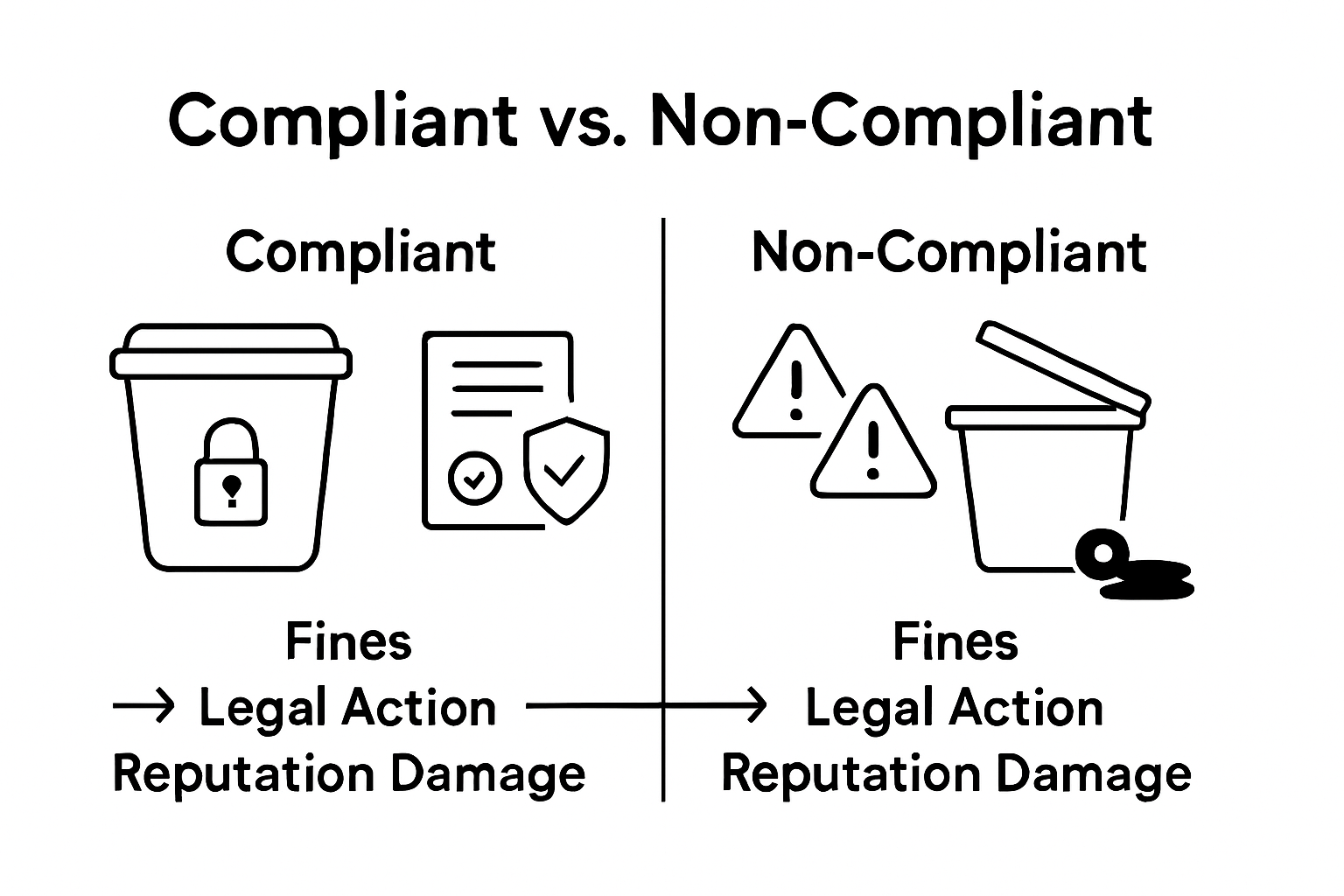
The spectrum of potential risks extends far beyond simple regulatory infractions. Organisations that fail to implement robust waste management protocols may encounter severe consequences, including substantial financial penalties, potential legal prosecution, and permanent damage to their corporate reputation. These risks are particularly acute in sectors handling sensitive or hazardous materials, where improper containment can create immediate environmental and health hazards.
Key risks associated with non-compliance include:
- Substantial financial penalties from regulatory bodies
- Potential criminal prosecution for serious breaches
- Environmental contamination liability
- Increased insurance premiums
- Potential operational shutdown
- Loss of business licensing and certifications
- Significant reputational damage
Government guidance for healthcare waste management underscores the critical importance of implementing comprehensive waste management strategies. Businesses operating in Manchester, Birmingham, Newcastle, and other major UK industrial centres must recognise that compliance is not merely a legal requirement, but a fundamental aspect of responsible corporate citizenship. Proactive risk management, continuous staff training, and investment in secure waste infrastructure represent the most effective strategies for mitigating potential non-compliance risks.
Secure Your Business Compliance with Expert Waste Management Solutions
Managing secure waste containers is a critical challenge for UK businesses striving to meet strict legal duties of care. This article highlights the importance of robust, tamper-evident containers and comprehensive waste handling to prevent unauthorised access and environmental contamination. If your organisation is seeking to protect sensitive materials and stay fully compliant, understanding the detailed regulatory requirements and practical security features is essential.
At Venture Waste Management, we offer a full range of compliant waste services tailored to your business needs. From hazardous waste disposal to secure confidential document destruction, our solutions prioritise safety, environmental protection, and legal adherence. Explore our insights on regulation Archives – Venture Waste to stay informed about compliance updates and best practices.

Act now to safeguard your organisation’s reputation and operational integrity with waste management services designed for secure containment and efficient disposal. Visit Venture Waste Management for a hassle-free three-step booking process. Learn more about our services and take the first step towards safer, compliant waste practices today.
Frequently Asked Questions
What are the essential features of secure waste containers?
Secure waste containers should include robust physical construction, lockable mechanisms, tamper-evident seals, and materials resistant to environmental degradation to prevent unauthorized access and ensure safety.
Why is compliance important for businesses using secure waste containers?
Compliance is crucial as it protects an organisation’s reputation, ensures adherence to legal requirements, prevents environmental contamination, and helps avoid significant financial penalties for non-compliance.
What types of waste require secure containers?
Types of waste that require secure containers include confidential documents, hazardous materials, medical waste, and other sensitive materials that could pose risks to health and the environment if not properly contained.
How can businesses ensure they meet legal responsibilities regarding waste management?
Businesses can ensure compliance by maintaining accurate waste transfer documentation, selecting secure containers, training staff on proper waste management procedures, and working exclusively with licensed waste management providers.
Recommended
- How to Store Confidential Waste Safely in 2025 – Venture Waste
- Why Dispose Confidentially: Essential Guide for UK Businesses 2025 – Venture Waste
- Waste Disposal Legal Requirements UK 2025: What Businesses Must Know – Venture Waste
- Office Confidential Waste Policy UK: Compliance and Best Practices 2025 – Venture Waste
- Understanding the HIPAA Security Rule for Businesses


Leave a Reply
Want to join the discussion?Feel free to contribute!