

Complete Guide to Responsible WEEE Recycling UK
Every year, the world generates over 50 million tonnes of electronic waste, but only a fraction gets recycled properly. As our dependence on electronic devices grows, so does the challenge of managing outdated equipment without harming the environment. Learning what counts as responsible WEEE recycling empowers businesses to protect the planet, stay compliant with strict UK regulations, and discover new value in equipment they no longer use.
Table of Contents
- Defining Responsible WEEE Recycling Practices
- WEEE Categories and Common Waste Types
- Legal Obligations and Compliance Standards
- Environmental and Carbon Impact of WEEE Recycling
- Business Benefits and Cost Considerations
Key Takeaways
| Point | Details |
|---|---|
| Responsible WEEE Recycling Practices | Involves comprehensive assessment, secure collection, and certified processing to ensure legal compliance and environmental protection. |
| Understanding WEEE Categories | Essential for proper waste segregation and compliance, focusing on ten distinct categories of electronic waste. |
| Legal Obligations and Compliance | Businesses must adhere to strict waste management regulations, ensuring proper documentation and environmentally responsible practices. |
| Economic Benefits | Effective WEEE recycling can reduce costs, generate revenue from materials, and enhance corporate reputation, positioning it as a strategic business investment. |
Defining Responsible WEEE Recycling Practices
Responsible WEEE recycling represents a comprehensive approach to managing electrical and electronic waste that prioritizes environmental protection, legal compliance, and sustainable resource management. According to gov.uk guidance, the UK has established clear regulatory frameworks to ensure businesses and consumers handle electronic waste with precision and care.
At its core, responsible WEEE recycling involves several critical practices that go beyond simple disposal. These practices include comprehensive waste assessment, secure collection, environmentally certified processing, and data protection. Businesses must systematically identify all electronic equipment reaching end-of-life status, categorize them according to regulatory standards, and ensure they are processed through authorized recycling channels that meet stringent environmental regulations.
The key components of responsible WEEE recycling encompass multiple strategic elements:
- Detailed inventory management of electronic assets
- Secure data destruction for devices containing sensitive information
- Tracking and documenting the entire waste disposal journey
- Partnering with certified recycling facilities
- Minimizing environmental contamination through proper processing techniques
For businesses in regions like Newcastle, Durham, and Sunderland, implementing these practices isn’t just about regulatory compliance—it’s about demonstrating corporate responsibility and environmental stewardship. Choosing a reputable WEEE waste disposal company becomes crucial in ensuring that electronic waste is managed safely, securely, and in alignment with the UK’s strict environmental standards.
WEEE Categories and Common Waste Types
WEEE waste represents a complex ecosystem of electronic and electrical equipment that requires systematic categorization and specialized disposal strategies. According to gov.uk guidance, the UK has developed a comprehensive classification system that divides electronic waste into ten distinct categories, each with unique handling and recycling requirements.
These ten categories encompass a wide range of electronic equipment found in both residential and commercial settings. As detailed by CIWM, the categories include:
- Large household appliances (refrigerators, washing machines)
- Small household appliances (toasters, coffee makers)
- IT and telecommunications equipment (computers, mobile phones)
- Consumer electronics (televisions, gaming consoles)
- Lighting equipment (fluorescent tubes, LED fixtures)
- Electrical and electronic tools (drills, electric saws)
- Toys and leisure equipment (electronic games, sports devices)
- Medical devices (diagnostic machines, monitoring equipment)
- Monitoring and control instruments (smoke detectors, thermostats)
- Automatic dispensers (vending machines, ticket dispensers)
Businesses in North East regions like Newcastle and Durham must understand these categories to ensure proper waste segregation and compliance.
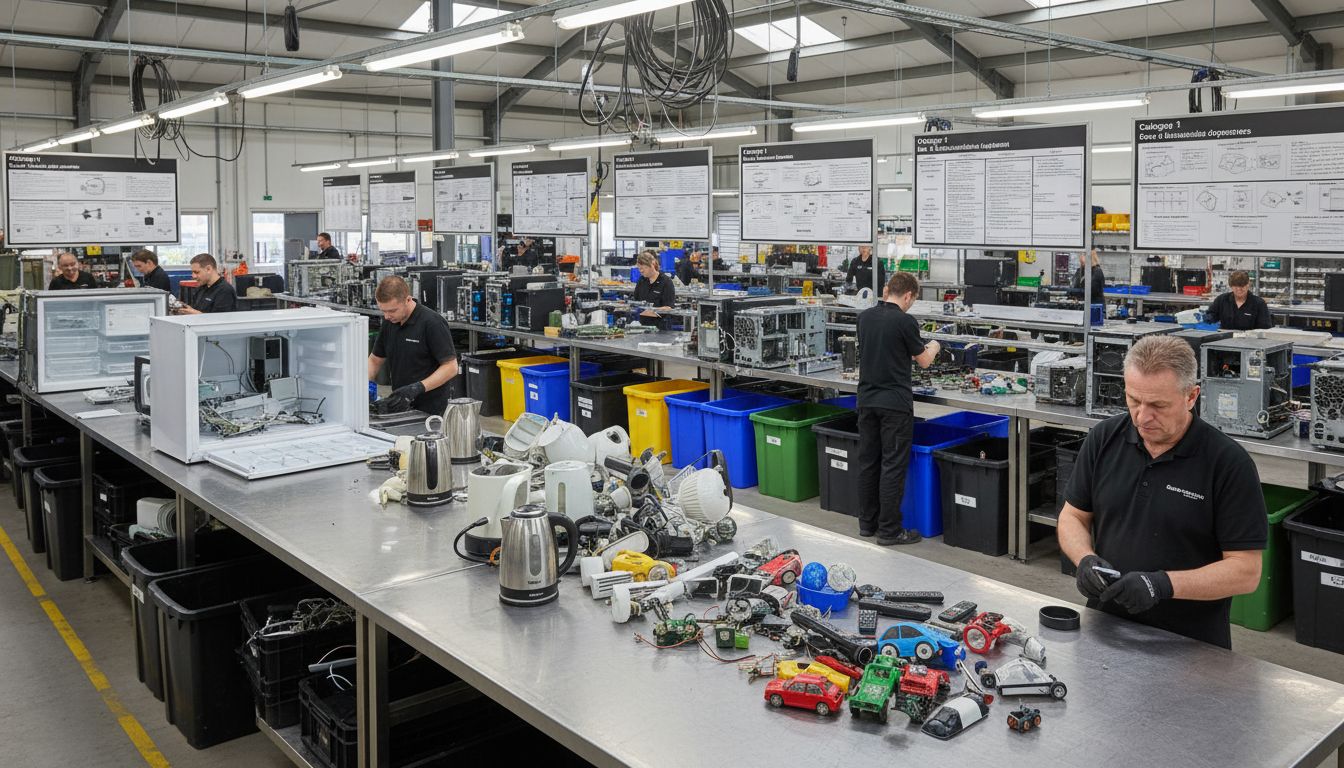 Understanding what constitutes WEEE waste is crucial for developing effective waste management strategies that protect both environmental and corporate interests.
Legal Obligations and Compliance Standards
WEEE regulations in the United Kingdom establish a comprehensive legal framework that mandates strict responsibilities for businesses handling electronic and electrical waste. According to gov.uk guidance, these regulations create a structured approach to minimize environmental impact and ensure responsible waste management across various industry sectors.
The legal obligations for businesses handling WEEE are multifaceted and encompass several critical requirements:
- Proper waste segregation and categorization
- Maintaining detailed documentation of electronic waste disposal
- Ensuring all waste is processed through authorized recycling channels
- Protecting sensitive data during equipment disposal
- Implementing environmentally responsible recycling practices
- Complying with national and European waste management standards
For businesses in North East England, including those in Newcastle, Durham, and Sunderland, understanding these legal requirements is not just about avoiding penalties. Navigating waste disposal legal requirements represents a fundamental aspect of corporate environmental responsibility. Companies must develop comprehensive waste management strategies that align with UK regulations, demonstrating commitment to sustainable practices and legal compliance while protecting both their operational interests and the broader environmental ecosystem.
Environmental and Carbon Impact of WEEE Recycling
Electronic waste recycling represents a critical strategy for mitigating environmental degradation and reducing carbon emissions associated with discarded electrical and electronic equipment. According to gov.uk guidance, the UK’s regulatory framework aims to enforce comprehensive practices that conserve resources and minimise the ecological footprint of electronic waste disposal.
The environmental benefits of responsible WEEE recycling are substantial and multifaceted:
- Reduction of raw material extraction
- Significant decrease in greenhouse gas emissions
- Prevention of toxic materials entering landfills
- Conservation of energy required for new product manufacturing
- Minimisation of electronic waste accumulation in global ecosystems
- Preservation of natural resources through material recovery
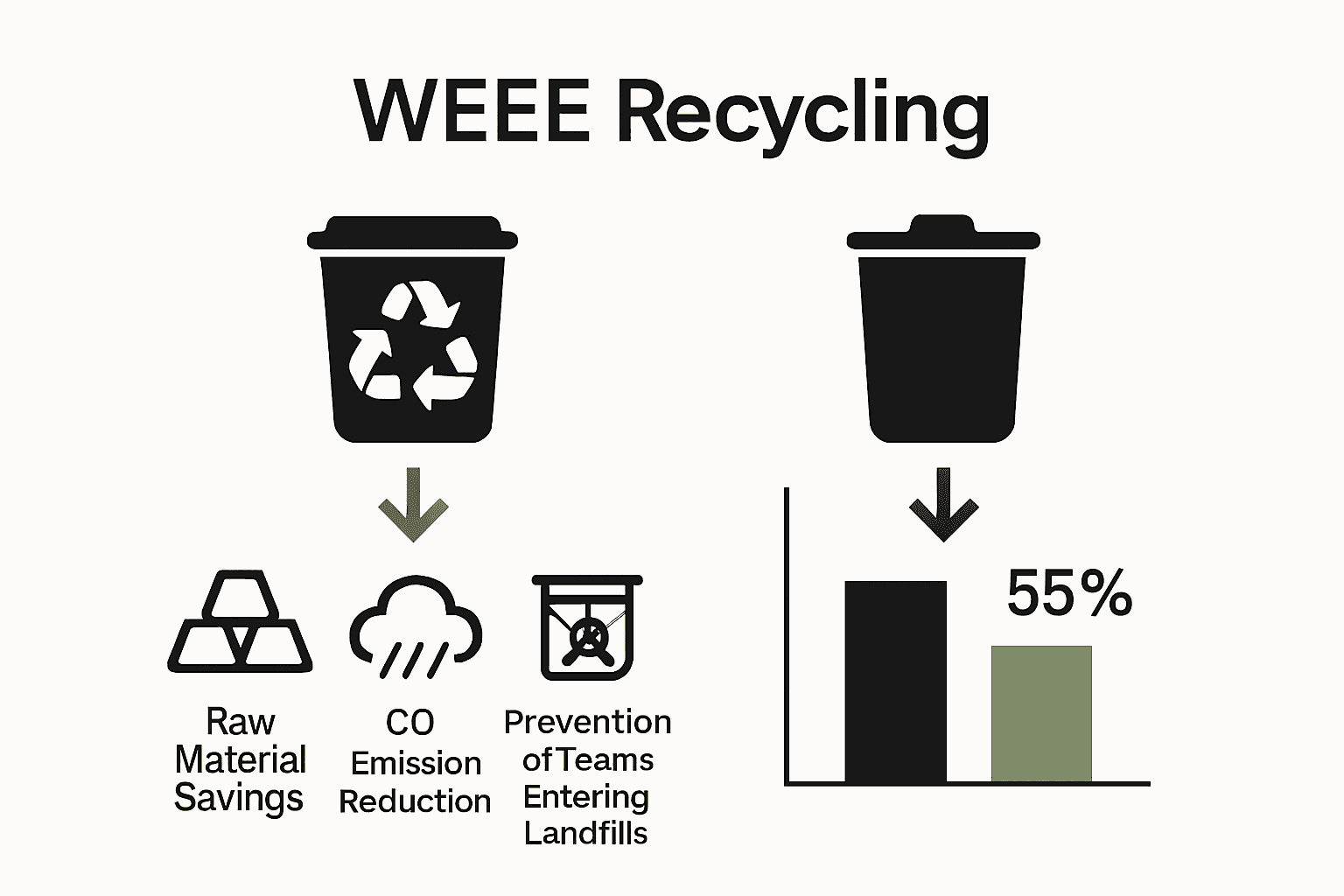
For businesses in North East England, particularly in industrial hubs like Newcastle, Durham, and Sunderland, understanding the carbon impact extends beyond regulatory compliance. Exploring the journey of WEEE recycling reveals how strategic waste management can transform environmental challenges into sustainable opportunities. By implementing robust recycling practices, companies can simultaneously reduce their carbon footprint, demonstrate corporate responsibility, and contribute to a more circular economic model that prioritises resource efficiency and environmental protection.
Business Benefits and Cost Considerations
Responsible WEEE recycling represents more than just an environmental obligation—it’s a strategic business opportunity with significant financial implications. According to gov.uk guidance, adhering to electronic waste regulations can generate tangible economic benefits for businesses through innovative waste management approaches.
The financial advantages of comprehensive WEEE recycling strategies include:
- Reduced waste disposal costs
- Potential revenue from recovered materials
- Lower procurement expenses through resource recovery
- Enhanced corporate reputation and brand value
- Tax incentives for sustainable practices
- Decreased long-term environmental compliance risks
For businesses across North East England, particularly in industrial centres like Newcastle, Durham, and Sunderland, understanding these economic dynamics is crucial. Exploring waste reduction strategies for SMEs reveals that proactive WEEE management is not just an expense, but an investment in operational efficiency. By implementing sophisticated recycling processes, companies can transform potential waste management costs into opportunities for resource optimization, demonstrating that environmental responsibility and financial prudence can coexist harmoniously.
Make Responsible WEEE Recycling Simple and Effective for Your Business
Managing electrical waste responsibly is a challenge every business faces today. The article highlighted crucial points like legal compliance, secure data destruction, and environmental protection. If you find navigating complex WEEE categories or meeting UK regulations overwhelming, you are not alone. Many companies want to reduce their environmental impact but struggle with practical, reliable solutions. At Venture Waste Management, we understand these pain points and provide tailored services to turn responsible recycling into a seamless process.
Explore how WEEE Waste management services can simplify your operations while ensuring compliance and sustainability.

Take control now by partnering with Venture Waste. Our straightforward booking process and expert support ensure your electronic waste is handled with care from start to finish. Visit Venture Waste Management and discover how our reliable network can support your responsible waste disposal goals. Learn more about how our waste collection network is designed to serve businesses across the UK efficiently and compliantly.
Frequently Asked Questions
What are the key components of responsible WEEE recycling?
Responsible WEEE recycling includes detailed inventory management, secure data destruction, tracking and documentation of waste disposal, partnering with certified recycling facilities, and minimizing environmental contamination through proper processing techniques.
What categories of WEEE waste exist and how are they classified?
WEEE waste is classified into ten categories, including large household appliances, small household appliances, IT and telecommunications equipment, consumer electronics, lighting equipment, electrical tools, toys and leisure equipment, medical devices, monitoring instruments, and automatic dispensers. Each category has specific handling and recycling requirements.
What are the legal obligations for businesses handling WEEE in the UK?
Businesses must segregate and categorize WEEE properly, maintain detailed documentation of waste disposal, process all waste through authorized recycling channels, protect sensitive data during disposal, and comply with national and European waste management standards.
How does responsible WEEE recycling impact the environment?
Responsible WEEE recycling reduces raw material extraction, significantly decreases greenhouse gas emissions, prevents toxic materials from entering landfills, conserves energy needed for manufacturing, and minimizes electronic waste accumulation in ecosystems.


Leave a Reply
Want to join the discussion?Feel free to contribute!