

Complete Guide to Responsible Waste Disposal UK
Over 80 percent of UK businesses face penalties every year for failing to meet waste disposal regulations. Responsible waste disposal goes beyond ticking a few boxes. It shapes your company’s environmental impact and legal standing. With rules tightening and the risks of non-compliance on the rise, understanding how to handle waste properly protects your business and the planet. This guide brings clarity to the responsibilities, risks, and practical steps every organization needs to know.
Table of Contents
- Responsible Waste Disposal Defined And Explained
- Major Types Of Waste And Disposal Methods
- Uk Legal Requirements And Environmental Standards
- Business And Household Obligations Explained
- Common Risks And Best Practice Solutions
Key Takeaways
| Point | Details |
|---|---|
| Responsible Waste Disposal | It is a legal and ethical obligation for UK businesses to manage waste effectively to minimize environmental impact and promote public health. |
| Waste Duty of Care | Businesses must classify, store, and document waste accurately and only transfer it to authorized carriers to ensure compliance with legal standards. |
| Types of Waste Management | Different waste types require specialized disposal methods; businesses must understand these categories to implement compliant practices. |
| Mitigating Risks | Implementing a systematic waste management approach reduces environmental contamination, health risks, legal penalties, and reputational damage. |
Responsible Waste Disposal Defined and Explained
Responsible waste disposal isn’t just a legal requirement—it’s a critical environmental and ethical commitment for UK businesses. At its core, responsible waste disposal means systematically managing waste to minimize environmental impact, protect human health, and comply with national regulations.
According to Gov.uk, businesses have a fundamental waste duty of care that encompasses several key responsibilities:
- Correctly classifying waste before disposal
- Storing waste securely and safely
- Transferring waste only to authorized waste carriers
- Maintaining comprehensive documentation of waste movements
- Preventing potential environmental contamination
The legal framework surrounding waste management in the UK is comprehensive and stringent.
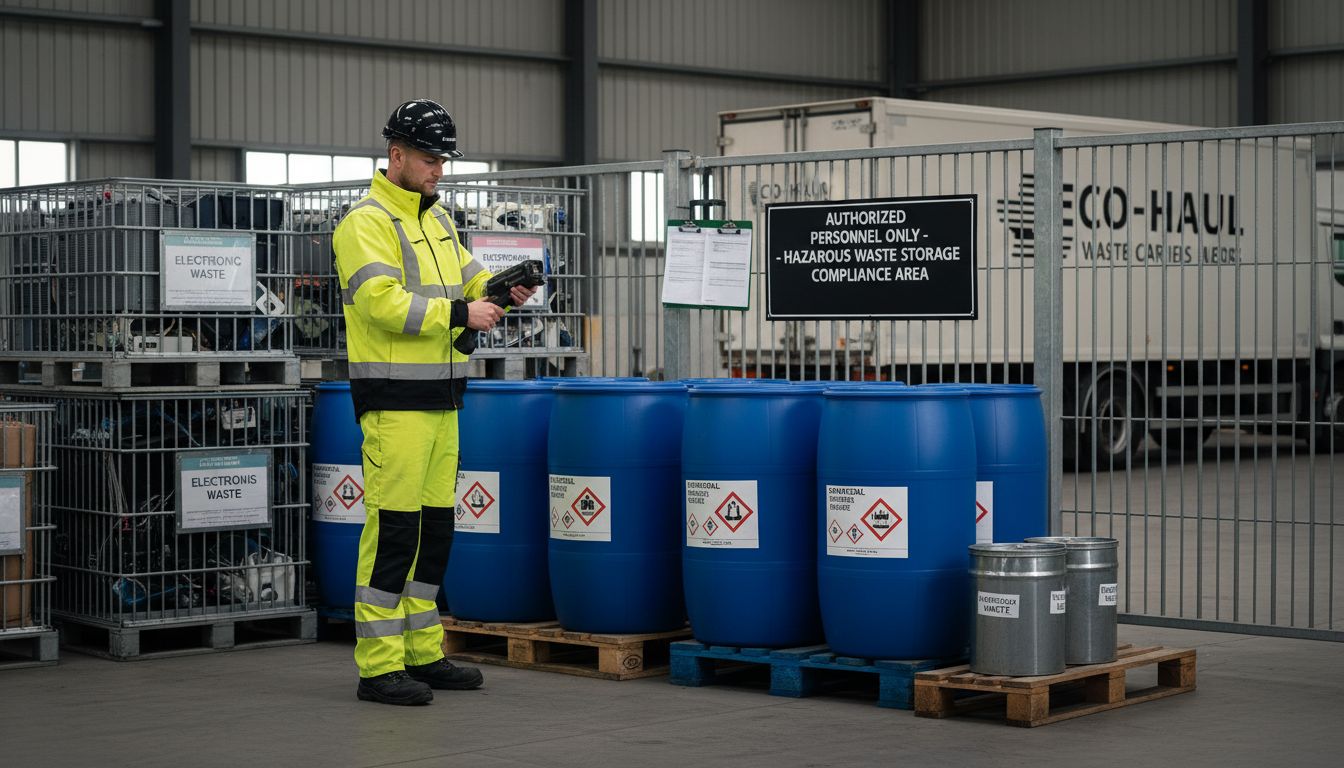 Gov.uk emphasizes that businesses must actively work to minimize waste production, implement robust sorting systems, and ensure all waste transfer processes are meticulously documented. This approach transforms waste disposal from a mere administrative task into a strategic environmental management practice.
In practice, responsible waste disposal means going beyond basic compliance. It involves understanding your waste streams, investing in proper segregation techniques, exploring recycling opportunities, and working with certified waste management partners who prioritize sustainable disposal methods. Whether you’re a small office in Newcastle or a large manufacturing facility in Durham, the principles remain consistent: protect the environment, minimize waste, and handle disposal with professional diligence.
Key considerations for responsible waste disposal include:
- Understanding your specific waste types
- Implementing effective sorting strategies
- Choosing certified waste management partners
- Maintaining accurate waste transfer documentation
- Continuously reviewing and improving waste reduction methods
By adopting these principles, businesses can transform waste disposal from a regulatory obligation into an opportunity for environmental stewardship and operational efficiency.
Major Types of Waste and Disposal Methods
Waste management in the UK encompasses a complex landscape of diverse waste types, each requiring specialized disposal strategies. Understanding these categories is crucial for businesses to implement effective and legally compliant waste management practices.
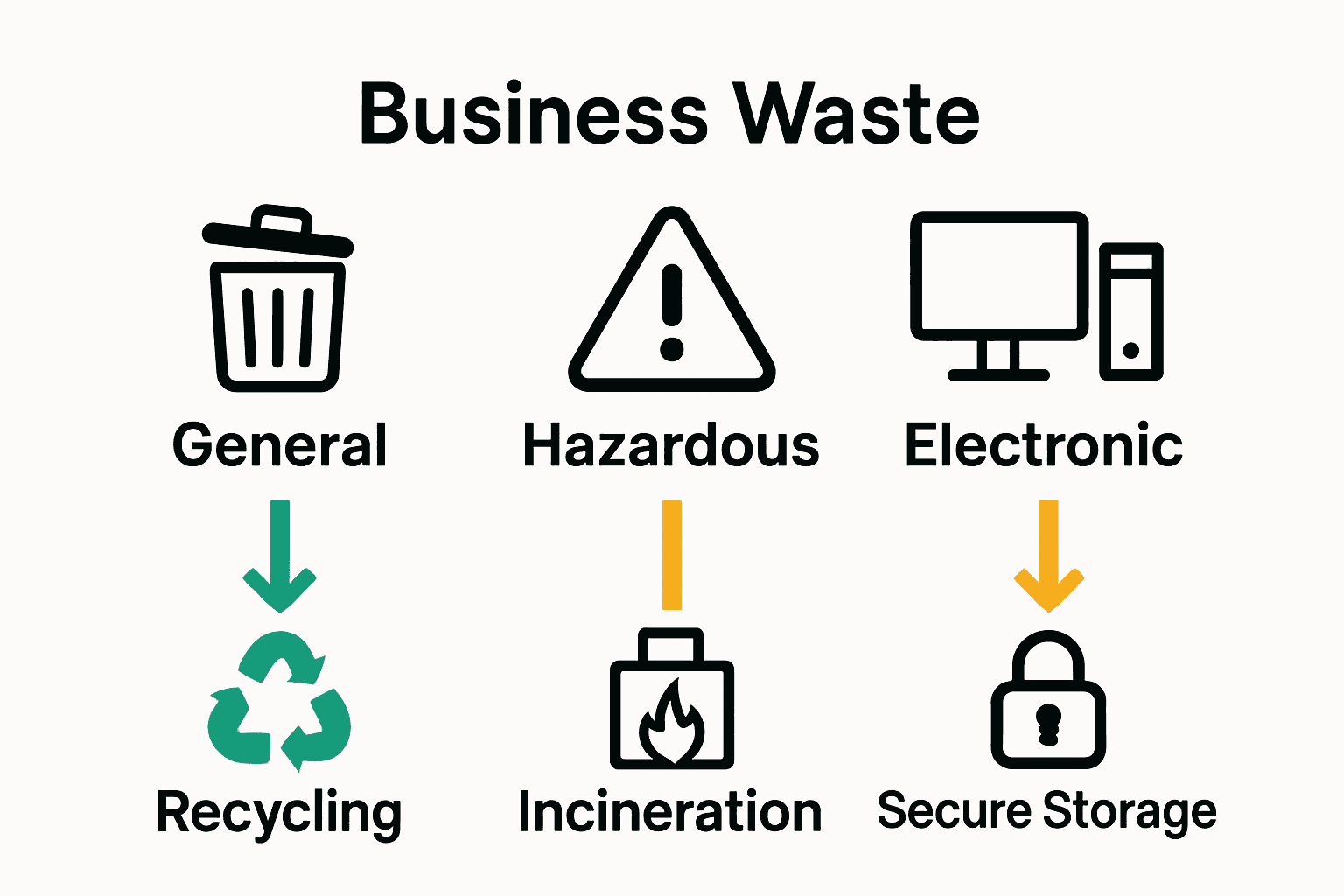
Here’s a summary of major UK waste types and their typical disposal methods:
| Waste Type | Description | Common Disposal Methods |
|---|---|---|
| General/Mixed Waste | Office, retail, non-hazardous waste | Recycling Landfill |
| Hazardous Waste | Harmful chemicals, contaminated materials | Specialised treatment Authorised incineration |
| Construction Waste | Building and demolition debris | Recycling Landfill |
| Electronic Waste (WEEE) | Electrical and electronic equipment | Specialised recycling Authorised disposal |
| Biological/Organic Waste | Food, garden, biodegradable materials | Composting Anaerobic digestion |
| Chemical Waste | Industrial chemicals, solvents | Specialist treatment Secure storage |
Gov.uk emphasizes the critical importance of precise waste classification as the foundation for appropriate disposal. Broadly, waste can be categorized into several key types:
- General/Mixed Waste: Non-hazardous waste from offices, retail, and commercial settings
- Hazardous Waste: Materials containing substances harmful to human health or the environment
- Construction Waste: Debris and materials from building and demolition sites
- Electronic Waste (WEEE): Discarded electrical and electronic equipment
- Biological/Organic Waste: Food waste, garden materials, and biodegradable substances
- Chemical Waste: Industrial chemicals, solvents, and contaminated materials
According to Gov.uk, non-hazardous waste disposal methods include multiple approaches designed to minimize environmental impact:
- Recycling: Converting waste materials into new products
- Incineration: Controlled burning with energy recovery
- Landfill: Controlled depositing of waste in designated areas
- Composting: Biological decomposition of organic waste
- Anaerobic Digestion: Breaking down organic matter without oxygen
For businesses in regions like Newcastle, Durham, and across the North East, understanding these waste types and disposal methods is not just about legal compliance—it’s about demonstrating environmental responsibility. Proper waste management reduces environmental footprint, potentially reduces disposal costs, and showcases a commitment to sustainable business practices.
Hazardous waste requires particularly careful handling. Dive into our comprehensive guide on hazardous waste disposal to understand the specific protocols for managing these complex materials. Businesses must work closely with certified waste management partners to ensure safe, legal, and environmentally responsible disposal of all waste streams.
UK Legal Requirements and Environmental Standards
Navigating the complex landscape of waste management regulations is crucial for UK businesses seeking to maintain legal compliance and environmental responsibility. The UK’s waste management framework is designed to protect public health, preserve environmental quality, and promote sustainable business practices.
Gov.uk outlines the Waste Duty of Care Code of Practice, which establishes critical legal obligations for businesses handling waste. These fundamental requirements include:
- Correctly classifying all waste types
- Ensuring secure and safe waste storage
- Transferring waste exclusively to authorized carriers
- Maintaining comprehensive waste movement documentation
- Preventing potential environmental or health hazards
For businesses handling hazardous materials, the legal landscape becomes even more stringent. Gov.uk emphasizes that businesses must adhere to specific protocols when managing potentially dangerous waste streams. This means implementing robust systems for identification, segregation, and disposal that go beyond standard waste management practices.
The environmental standards in the UK are designed to create a comprehensive approach to waste management. Companies must not only comply with legal requirements but also demonstrate a proactive commitment to reducing environmental impact. This involves implementing waste reduction strategies, investing in recycling infrastructure, and continuously improving waste management processes.
Businesses across the North East—from manufacturing facilities in Newcastle to commercial enterprises in Durham—must stay informed about evolving regulations. Learn more about the latest waste disposal legal requirements to ensure your organization remains fully compliant and environmentally responsible. Ultimately, effective waste management is about more than just following rules—it’s about creating a sustainable future for our communities and environment.
Business and Household Obligations Explained
Waste management responsibilities extend beyond mere disposal—they represent a critical environmental and legal commitment for both businesses and households across the United Kingdom. Understanding these obligations is key to maintaining environmental integrity and avoiding potential legal complications.
Gov.uk clearly outlines the legal requirements for businesses, which are comprehensive and stringent:
- Minimizing overall waste production
- Implementing secure waste sorting systems
- Storing waste safely and systematically
- Completing detailed waste transfer documentation
- Verifying waste carrier registration and credentials
- Ensuring proper disposal through authorized channels
For households, the responsibilities are equally important. Gov.uk emphasizes that householders must take proactive steps to ensure responsible waste management. This includes carefully verifying the credentials of waste carriers and ensuring that waste is disposed of in a manner that prevents potential environmental harm.
Businesses in regions like Newcastle, Durham, and across the North East face additional scrutiny in waste management practices. The legal framework demands not just compliance, but a demonstrable commitment to sustainable waste reduction and environmentally conscious disposal methods. This means going beyond basic regulations and actively seeking innovative ways to minimize waste generation.
For businesses looking to navigate these complex requirements effectively, our step-by-step waste management guide provides comprehensive insights into meeting legal obligations while promoting environmental responsibility. Ultimately, waste management is a shared responsibility that requires commitment, knowledge, and proactive engagement from both businesses and households.
Common Risks and Best Practice Solutions
Responsible waste management is a critical challenge for businesses and organizations, with potential risks extending far beyond simple regulatory compliance. Understanding these risks and implementing strategic solutions can protect both environmental health and organizational reputation.
Gov.uk highlights the significant risks associated with improper waste disposal, emphasizing the importance of comprehensive waste management strategies. The primary risks businesses face include:
- Environmental Contamination: Potential soil and water pollution
- Health Hazards: Risks to human health from improper waste handling
- Legal Penalties: Substantial fines and potential legal prosecution
- Reputational Damage: Loss of business credibility and public trust
- Resource Wastage: Inefficient use of potentially recyclable materials
Gov.uk specifically warns that hazardous waste demands exceptional care. Businesses must implement robust protocols for waste classification, secure storage, and authorized transfer to mitigate potential risks. This involves creating comprehensive systems that go beyond basic compliance.
Best practices for risk mitigation include developing a systematic waste management approach tailored to your specific organizational needs. This means conducting thorough waste audits, implementing comprehensive training programs, and establishing clear protocols for waste segregation, storage, and disposal. Businesses across the North East—from manufacturing facilities in Newcastle to service enterprises in Durham—must take a proactive approach to waste management.
Learn more about confidential waste risk management strategies to ensure your organization remains protected. Ultimately, effective waste management is about transforming potential risks into opportunities for environmental responsibility and operational excellence.
Take Control of Responsible Waste Disposal with Venture Waste
Facing the complex challenge of meeting strict UK waste management laws while aiming for environmental responsibility can feel overwhelming. This Complete Guide to Responsible Waste Disposal UK highlights crucial pain points such as waste classification, secure storage, and the need for authorised disposal partners. You may worry about legal risks or damaging your company’s reputation without expert support. That is why understanding options like hazardous waste handling and efficient waste collection networks is essential for compliance and peace of mind.

Start securing your business’s environmental future today with Venture Waste. Explore our dedicated hazardous waste services to ensure safe handling of difficult waste streams. Learn how our extensive waste collection network in UK serves businesses in 2025 and streamlines your compliance efforts. Visit Venture Waste now to simplify waste disposal, reduce risks, and demonstrate your commitment to sustainability with an easy three-step booking process.
Frequently Asked Questions
What is responsible waste disposal?
Responsible waste disposal refers to the systematic management of waste to minimize environmental impact, protect human health, and adhere to national regulations. It includes classifying waste, using authorized carriers, and maintaining documentation.
What are the key responsibilities of businesses regarding waste disposal?
Businesses have a fundamental duty of care towards waste that includes classifying waste correctly, storing it securely, transferring it to authorized waste carriers, and maintaining accurate documentation of waste movements to prevent environmental contamination.
What types of waste are commonly generated by businesses, and how should they be disposed of?
Common types of waste include general/mixed waste, hazardous waste, construction waste, electronic waste, biological/organic waste, and chemical waste. Disposal methods vary by type but typically involve recycling, specialized treatment, incineration, or composting.
What are the legal requirements for waste disposal in the UK?
The legal requirements include classifying all waste types, storing waste securely and safely, transferring waste only to authorized carriers, and preventing environmental hazards. Businesses must also document waste movements comprehensively and strive to minimize overall waste production.


Leave a Reply
Want to join the discussion?Feel free to contribute!