

Reducing General Waste: Practical Steps for UK Businesses
Nearly half of all British businesses report struggling to cut their general waste, sparking urgent calls for smarter solutions. With regulations tightening and sustainability becoming a core value for every sector, understanding your waste streams is more than just a green initiative. Discover practical steps that help British companies reduce waste, save money, and build a greener reputation—all through methods that align with new national targets.
Table of Contents
- Step 1: Assess Current Waste Streams
- Step 2: Set Waste Reduction Targets
- Step 3: Implement Segregation and Reuse Practices
- Step 4: Adopt Efficient Collection and Recycling Solutions
- Step 5: Monitor Results and Adjust Programmes
Quick Summary
| Important Insight | Clear Explanation |
|---|---|
| 1. Conduct a Detailed Waste Audit | Perform a comprehensive waste assessment to identify all waste types and quantities produced across your organisation. |
| 2. Set Clear Waste Reduction Targets | Develop specific, measurable objectives for reducing waste, using baseline data gathered from your audit. |
| 3. Implement Effective Waste Segregation | Install clearly labelled waste stations and train staff on proper sorting techniques to enhance recycling efforts. |
| 4. Adopt Tailored Collection Solutions | Partner with waste management providers to create efficient collection strategies tailored to your business needs. |
| 5. Monitor Performance and Adjust Strategy | Establish a robust monitoring system to evaluate waste management metrics and adjust practices based on performance insights. |
Step 1: Assess Current Waste Streams
Reducing general waste starts with a thorough understanding of your current waste generation patterns. Before implementing any reduction strategy, businesses must conduct a comprehensive waste management assessment to identify exactly what types of waste your organisation produces and in what quantities.
To effectively assess your waste streams, begin by conducting a detailed waste audit. This process involves carefully documenting and categorising all waste produced across different departments and operational areas. Track waste volumes for categories like paper, packaging, food waste, electronic equipment, and general refuse. Use standardised measurement tools to record weights and volumes, creating a baseline dataset that will help you design targeted waste reduction strategies. Consider performing this audit over a representative period such as one quarter to capture seasonal variations in waste generation.
The audit should not just focus on quantity but also examine disposal methods currently in use. Identify which waste streams are being recycled, which are going to landfill, and where potential improvements can be made in waste segregation and management practices. Map out your current waste disposal routes and identify any inefficiencies or unnecessary waste generation points within your organisational processes.
Chief tip: Systematic documentation is key. Create a detailed waste tracking spreadsheet that captures waste type, volume, disposal method, and potential reduction opportunities for each departmental waste stream.
Step 2: Set Waste Reduction Targets
Establishing clear and measurable waste reduction targets is crucial for any business committed to minimising environmental impact. Government environmental improvement plans provide a strategic framework, with official targets aiming to cut residual waste by 50% by 2042, which businesses can use as a benchmark for their own waste management goals.
To set effective waste reduction targets, start by analysing the baseline data collected during your waste audit. Develop specific, measurable objectives that are realistic yet challenging for your organisation. For instance, you might aim to reduce general waste by 20% within the first year, focusing on areas like paper consumption, packaging materials, and food waste. Break down these overarching targets into department specific goals, ensuring each team understands their role in achieving the broader waste reduction strategy. Consider using the SMART framework selecting targets that are Specific, Measurable, Achievable, Relevant, and Time-bound.
Regularly review and adjust your waste reduction targets based on progress and emerging opportunities. The National Audit Office emphasises the importance of clear long-term planning, highlighting that businesses need flexible strategies that can adapt to changing regulatory landscapes and technological advancements in waste management.
Chief tip: Document your waste reduction journey transparently. Create quarterly progress reports that track your performance against targets, celebrate achievements, and identify areas needing improvement to maintain momentum and stakeholder engagement.
Step 3: Implement Segregation and Reuse Practices
Implementing effective waste segregation and reuse practices is a critical step in transforming your business waste management strategy. UK Simpler Recycling reforms mandate that all businesses in England must separate food waste and dry recyclable materials from non recycled waste by 31st March 2025, creating a clear regulatory framework for your waste management approach.
To successfully implement segregation practices, start by installing clearly labelled waste stations throughout your workplace. These stations should include separate bins for different waste categories such as paper, plastics, metals, electronic waste, and organic materials. Train your staff comprehensively on proper waste sorting techniques and provide visual guides demonstrating exactly how to segregate different types of waste. Consider conducting regular workshops that explain the environmental impact of correct waste segregation and the specific role each employee plays in achieving your organisational waste reduction goals.
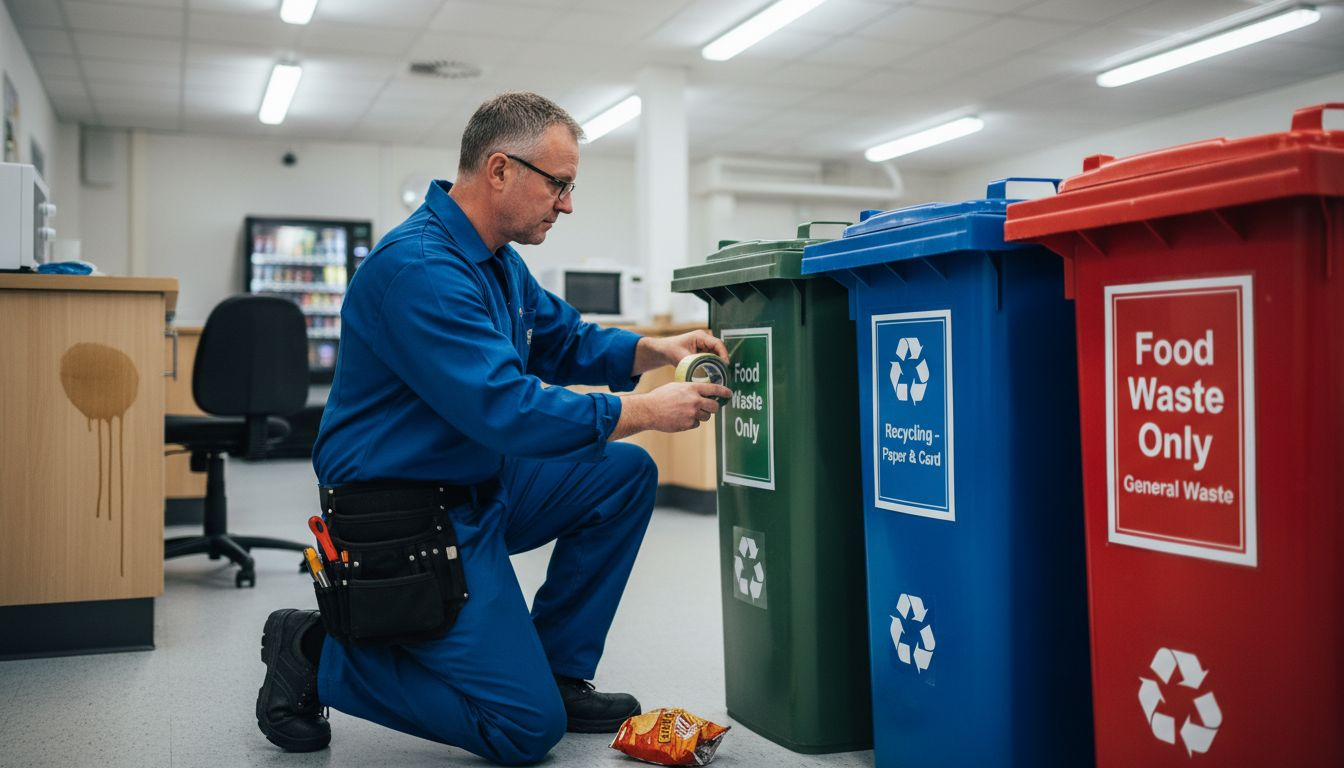
Reuse practices are equally important in minimising waste generation. Develop internal policies that prioritise equipment repair, component reuse, and material repurposing wherever possible. Institutional models like the University of Manchester demonstrate how organisations can set ambitious targets such as recycling 45% of campus waste and diverting 100% of waste from landfill. Encourage departments to find creative ways to reuse materials, implement digital solutions to reduce paper consumption, and explore partnerships with local recycling and upcycling organisations.
Chief tip: Create a waste management champion programme within your organisation. Designate representatives from different departments to lead waste reduction efforts, track progress, and motivate their colleagues towards more sustainable practices.
Step 4: Adopt Efficient Collection and Recycling Solutions
Adopting efficient collection and recycling solutions is fundamental to transforming your business waste management strategy. UK Simpler Recycling reforms provide a comprehensive framework that mandates businesses to implement systematic approaches to waste management, ensuring more sustainable and streamlined practices.
To develop an efficient waste collection system, partner with professional waste management providers who can offer tailored solutions for your specific business needs. Conduct a thorough assessment of your current waste generation patterns and design a collection strategy that minimises transportation costs and environmental impact. This might involve implementing scheduled collections, using specialised containers for different waste types, and exploring opportunities for on-site waste sorting and preprocessing. Consider investing in compaction equipment to reduce waste volume and optimise collection frequencies, which can significantly reduce your overall carbon footprint and operational expenses.
Maximise your recycling potential by establishing clear internal protocols for material segregation and exploring innovative recycling partnerships. Research local recycling facilities that can process your specific waste streams and develop relationships that facilitate more effective material recovery. Implement digital tracking systems that monitor waste generation, recycling rates, and environmental performance, allowing your business to continuously improve its waste management approach and demonstrate commitment to sustainable practices.
Chief tip: Create a comprehensive waste management dashboard that tracks real time recycling metrics, helping your team visualise progress and maintain motivation towards achieving your organisational waste reduction goals.
Step 5: Monitor Results and Adjust Programmes
Effective waste management requires continuous evaluation and strategic adjustments to ensure your business remains on track with its sustainability objectives. University monitoring approaches demonstrate the critical importance of systematically tracking waste reduction performance and maintaining flexibility in your environmental strategy.
Establish a robust monitoring system that captures comprehensive waste management metrics including total waste volume, recycling rates, landfill diversion percentages, and cost savings achieved through your waste reduction initiatives. Implement quarterly review meetings where key stakeholders analyse performance data and identify potential improvements. Develop a standardised reporting framework that allows for transparent assessment of your waste management progress, comparing actual results against the original waste reduction targets you established. Use digital dashboards and analytics tools to visualise data trends, making it easier for your team to understand and interpret performance insights.

Here is a comparison of common waste monitoring metrics and their significance:
| Metric | What It Measures | Business Impact |
|---|---|---|
| Total Waste Volume | Weight or volume of all waste streams | Reveals cost-saving potential |
| Recycling Rate | Proportion diverted from landfill | Demonstrates sustainability |
| Landfill Diversion % | Amount not sent to landfill | Improves green brand image |
| Cost Savings | Money saved via reduction measures | Increases profit margins |
Regular programme adjustments are essential for maintaining momentum. National audit recommendations emphasise the need for adaptive strategies that can respond quickly to changing regulatory environments and emerging waste management technologies. Be prepared to modify your waste segregation processes, update staff training protocols, or explore new recycling partnerships based on the insights gained from your monitoring efforts. Encourage a culture of continuous improvement where employees are actively engaged in suggesting and implementing waste reduction innovations.
Chief tip: Develop a recognition programme that rewards departments or teams demonstrating exceptional waste reduction performance, transforming sustainability metrics into a motivational tool for organisational change.
The following table summarises key benefits of each waste reduction step for UK businesses:
| Step | Key Activity | Main Business Benefit |
|---|---|---|
| Assess Current Waste Streams | Conduct detailed audits | Identifies saving opportunities |
| Set Waste Reduction Targets | Define measurable objectives | Improves compliance, tracking |
| Implement Segregation and Reuse | Install bin systems, staff training | Increases recycling rates |
| Adopt Collection and Recycling Solutions | Partner for tailored collection and reporting | Reduces costs, optimises process |
| Monitor and Adjust Programmes | Continuous data review and recognition | Drives long-term improvement |
Practical Waste Reduction Starts With Reliable Collection Solutions
Struggling to transform your waste streams into measurable reduction? This article highlights the importance of assessing waste, setting clear targets, and embracing segregation as essential steps for UK businesses aiming to reduce general waste. However, without efficient waste collection and recycling solutions your efforts might stall. At Venture Waste Management we understand these challenges and provide tailored services to support your journey towards sustainability. Explore our insights on the Waste Collection Process in the UK for Businesses 2025 for how streamlined collection enables smarter waste management.

Take control of your waste reduction goals now by partnering with Venture Waste. Our simple three-step booking process guarantees compliant, environmentally responsible waste disposal while boosting your operational efficiency. Learn how the Waste Collection Network in UK supports businesses in meeting regulatory demands. Visit https://venturewaste.co.uk today to start building a cleaner future with dependable waste services designed for your business needs.
Frequently Asked Questions
How can I assess my business’s current waste streams?
To assess your business’s current waste streams, conduct a detailed waste audit. Document and categorise all waste produced across different departments, tracking volumes and disposal methods for categories like paper and packaging.
What waste reduction targets should I set for my organisation?
Establish specific, measurable waste reduction targets based on your waste audit data. For example, aim to reduce general waste by 20% within the first year, breaking down this goal into department-specific targets for clarity and accountability.
What are effective practices for waste segregation and reuse?
Effective waste segregation involves installing clearly labelled bins for different waste types and training staff on proper waste sorting. Additionally, develop policies that prioritise the reuse of materials and explore partnerships for recycling initiatives to minimise waste generation.
How can I implement efficient collection and recycling solutions?
Partner with professional waste management providers to tailor collection solutions to your needs. Assess your current waste patterns to design a system that minimises costs and environmental impact, such as scheduled collections and on-site sorting practices.
What should I monitor to ensure my waste reduction programmes are effective?
Monitor key metrics such as total waste volume, recycling rates, and cost savings achieved through your initiatives. Conduct quarterly reviews to analyse this data and adjust your waste management strategy as necessary to remain on track with your goals.
How can I motivate my staff to engage in waste reduction practices?
Create a recognition programme that rewards departments or teams demonstrating outstanding waste reduction performance. Celebrate achievements publicly, transforming sustainability metrics into a motivating tool that fosters a culture of continuous improvement.
Recommended
- Waste Reduction for SMEs: Practical UK Strategies for 2025 – Venture Waste
- Effective Waste Minimisation Strategies for UK Businesses 2025 – Venture Waste
- Reducing Business Waste in 2025: Practical Strategies for UK Organisations – Venture Waste
- How to Reduce Waste in UK Businesses: Essential Steps for 2025 – Venture Waste
- Nachhaltig Mit Batterien Umgehen: Der Komplettguide – accu.blog
- Nachhaltige Gewinnung von Gold und Silber – GoldSilberMarkt
- Hur Du Integrerar Återvinning Och Avfallshantering Snyggt: Effektiva Tips | Stiligt


Leave a Reply
Want to join the discussion?Feel free to contribute!