

Recycling Contamination – How It Affects UK Healthcare
Most british healthcare facilities experience costly setbacks due to recycling contamination. When just a small amount of medical waste is mixed incorrectly, entire batches of recyclables can be lost, driving up expenses and triggering potential compliance issues. For facilities managers, understanding the sources and risks of contamination is crucial to safeguarding public health and meeting the strict standards set by United Kingdom regulators. This guide highlights what every british healthcare facility needs to know to tackle these challenges head on.
Table of Contents
- What Recycling Contamination Means For Healthcare
- Common Contaminants In Clinical Recycling Streams
- How Contamination Impacts Recycling Processes
- Legal And Compliance Risks In The UK
- Preventing Contamination In Healthcare Facilities
Key Takeaways
| Point | Details |
|---|---|
| Recycling Contamination Risks | Healthcare facilities must prioritise waste segregation to prevent public health risks and regulatory penalties associated with contaminated recycling streams. |
| Financial Implications | Inadequate waste management can lead to significant operational costs, including potential fines and increased disposal fees for healthcare institutions. |
| Proactive Strategies | Implementing rigorous staff training and comprehensive waste segregation protocols is essential to reduce contamination and ensure compliance with legal standards. |
| Environmental Consequences | Effective waste management practices can significantly decrease landfill waste and enhance the sustainability of healthcare operations. |
What Recycling Contamination Means for Healthcare
Recycling contamination represents a significant challenge for healthcare facilities across the United Kingdom, potentially compromising waste management protocols and environmental compliance. When medical waste streams become mixed or improperly sorted, the consequences extend far beyond simple operational inefficiencies. Clinical waste management strategies require precision to prevent potentially dangerous cross-contamination scenarios.
Healthcare facilities face multiple risks from recycling contamination, including potential pathogen transmission, regulatory penalties, and increased disposal costs. Contaminated medical waste can introduce harmful bacteria and infectious materials into recycling streams, creating substantial public health risks. Specific contamination challenges include:
- Biomedical waste mixed with general recyclables
- Improperly disposed sharps and medical instruments
- Chemical residues from medical equipment
- Infectious materials inadvertently entering recycling processes
The financial implications are equally significant. Hospital waste management practices directly impact operational budgets, with improper waste segregation potentially leading to substantial fines and increased disposal expenses. Healthcare administrators must implement rigorous training programmes and waste management protocols to mitigate these risks effectively.
Below is a summary of the main risks and associated impacts of recycling contamination in UK healthcare facilities:
| Risk Category | Key Example | Potential Impact |
|---|---|---|
| Operational | Improper waste sorting | Increased disposal cost |
| Public Health | Pathogen transmission | Infection outbreaks |
| Regulatory/Legal | Breach of waste legislation | Large fines and audits |
| Environmental | Contaminated recyclables sent to landfill | Increased landfill waste |
| Financial | Inadequate staff training | Budget overruns |
Pro Tip: Waste Segregation Strategy: Develop comprehensive colour-coded waste management guidelines and conduct quarterly staff training sessions to ensure consistent, accurate medical waste disposal practices across all hospital departments.
Common Contaminants in Clinical Recycling Streams
Clinical recycling streams present complex challenges for healthcare facilities, with numerous potential contaminants threatening proper waste management protocols. Health and safety regulations for medical waste emphasise the critical importance of understanding and identifying these hazardous materials to prevent potential transmission risks and environmental contamination.
The most prevalent contaminants in clinical recycling streams can be categorised into several key groups:
- Biological Contaminants:
- Blood-soaked materials
- Used bandages and dressings
- Bodily fluid-contaminated equipment
- Sharps and Infectious Materials:
- Discarded needles
- Surgical instruments
- Contaminated diagnostic equipment
- Chemical Contaminants:
- Pharmaceutical residues
- Disinfectant-laden materials
- Chemical treatment waste
- Radioactive Materials:
- X-ray film
- Radiation treatment residues
- Nuclear medicine waste
These contaminants pose significant risks to waste management personnel, potentially causing infection, injury, and environmental hazards. Healthcare facilities must implement rigorous segregation protocols to prevent cross-contamination and ensure safe disposal of medical waste streams.
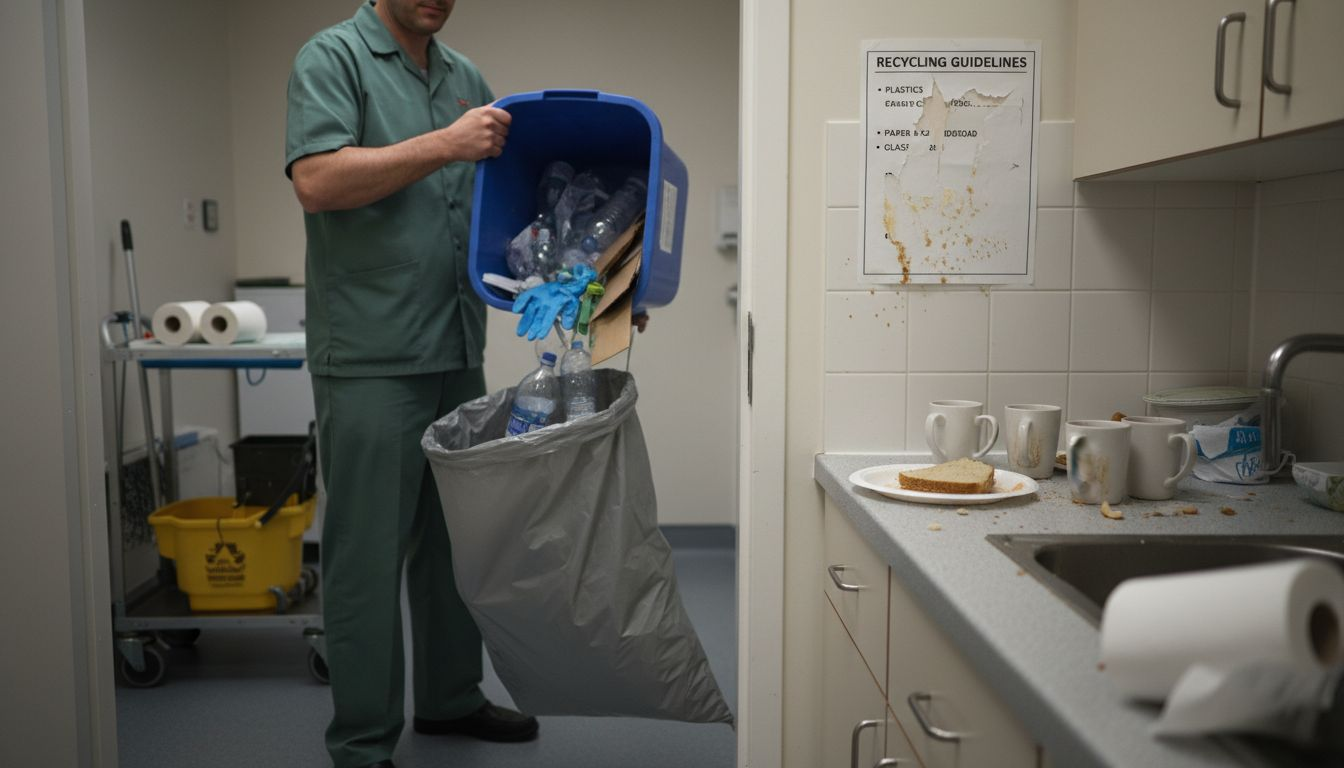
Pro Tip: Contamination Prevention Protocol: Implement colour-coded waste segregation systems with comprehensive staff training, ensuring immediate and accurate separation of different waste categories to minimise contamination risks and protect public health.
How Contamination Impacts Recycling Processes
Recycling contamination represents a profound challenge for waste management systems, with significant implications for environmental sustainability and resource efficiency. Contamination dynamics in recycling streams demonstrate that even small volumes of inappropriate materials can compromise entire recycling batches, rendering substantial quantities of potentially recyclable materials unsuitable for processing.
In healthcare settings, contamination presents particularly complex challenges. Medical plastic recycling challenges highlight the intricate problems arising from materials exposed to biological and chemical substances. The primary contamination impacts include:
- Volume Reduction: Contaminated batches often require complete disposal
- Economic Inefficiency: Increased processing costs and reduced recycling yields
- Environmental Consequences: Higher landfill volumes and increased waste generation
- Operational Disruption: Extended sorting and processing timelines
The financial and environmental implications are substantial. Contamination can transform potentially recyclable materials into waste, with statistical evidence suggesting that in 2020, enough contaminated materials were generated to fill 4.8 million bin bags. Healthcare facilities must therefore develop rigorous segregation protocols that minimise cross-contamination and preserve the integrity of recyclable materials.
Pro Tip: Material Segregation Protocol: Implement comprehensive staff training programmes focusing on precise waste categorisation, utilising colour-coded bins and clear visual guidance to ensure maximum recycling efficiency and minimal contamination risks.
Legal and Compliance Risks in the UK
Healthcare facilities face substantial legal and financial risks associated with improper medical waste management. Medical waste regulatory requirements underscore the potential consequences of non-compliance, with penalties potentially reaching up to £500,000 for serious breaches.
Workplace health and safety regulations impose stringent obligations on healthcare providers to protect workers and prevent environmental contamination. The key legal risks include:
- Regulatory Fines: Substantial financial penalties for non-compliance
- Operating License Suspension: Risk of temporary or permanent facility closure
- Criminal Prosecution: Potential legal action for serious regulatory breaches
- Reputational Damage: Loss of public trust and professional credibility
- Worker Protection Violations: Legal liability for employee health risks
The complexity of medical waste regulations demands a comprehensive approach to compliance. Healthcare facilities must develop robust waste management systems that address biological, chemical, and infectious waste streams, ensuring precise segregation, documentation, and disposal protocols.
The table below contrasts proactive and reactive approaches to managing healthcare recycling contamination:
| Approach Type | Main Strategy | Advantages | Drawbacks |
|---|---|---|---|
| Proactive | Staff training and clear protocols | Prevents contamination incidents | Requires investment/time |
| Reactive | Responding to incidents and fines | Addresses immediate breaches | Higher long-term costs |
Pro Tip: Compliance Documentation Strategy: Maintain meticulous records of waste management processes, including detailed logs of waste segregation, treatment, and disposal, creating a comprehensive audit trail to demonstrate regulatory adherence and mitigate potential legal risks.
Preventing Contamination in Healthcare Facilities
NHS Clinical Waste Management Strategies emphasise a proactive approach to preventing contamination within healthcare environments. Effective waste management requires comprehensive protocols that address multiple stages of waste handling, from initial segregation to final disposal.
Successful contamination prevention hinges on several critical strategies:
- Waste Stream Segregation:
- Colour-coded waste bins for different material types
- Clear signage indicating appropriate waste categories
- Dedicated disposal routes for specific waste streams
- Personal Protection:
- Mandatory protective equipment for waste handlers
- Regular training on infection control procedures
- Comprehensive hygiene protocols
- Staff Education:
- Regular contamination risk workshops
- Updated training on regulatory requirements
- Practical demonstrations of correct waste handling
Worker hygiene and safety protocols play a crucial role in minimising contamination risks. Healthcare facilities must provide adequate washing facilities and promote rigorous personal hygiene practices among staff members responsible for waste management.
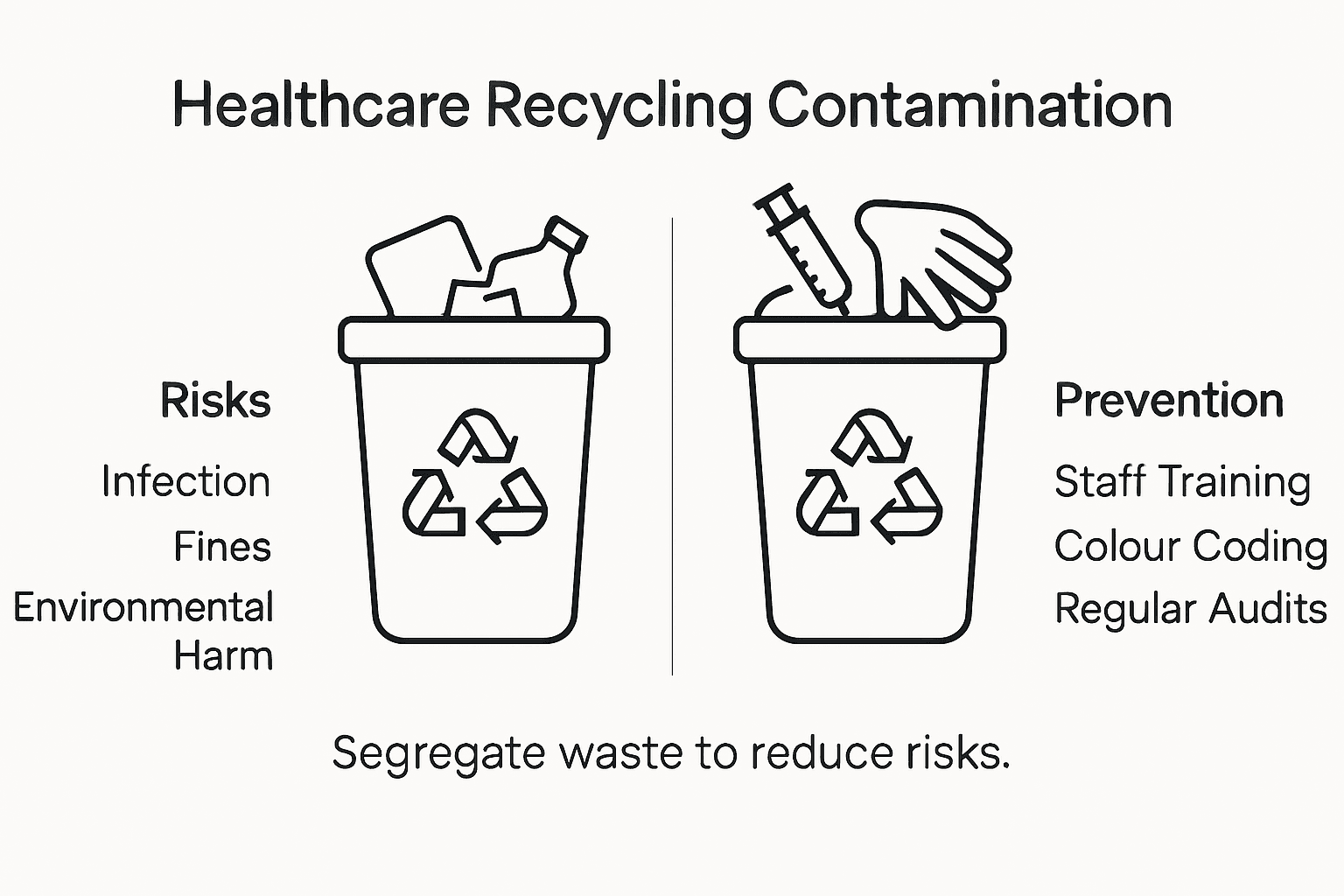
Pro Tip: Contamination Prevention Training: Develop interactive, scenario-based training modules that simulate real-world waste management challenges, enabling staff to practise correct segregation and handling techniques in a controlled learning environment.
Take Control of Recycling Contamination in UK Healthcare with Venture Waste
Recycling contamination poses serious risks for healthcare facilities, from regulatory fines to infection hazards. If you are striving to maintain strict waste segregation protocols and reduce operational costs, Venture Waste offers tailored solutions that address these exact challenges. Our expertise in Waste Collection Process in the UK for Businesses 2025 – Venture Waste ensures your facility stays fully compliant with health and safety standards while optimising environmental protection.

Act now to safeguard your healthcare operations against recycling contamination. Visit Venture Waste today to explore our comprehensive waste management services. Whether you need secure handling of confidential medical waste or effective recycling strategies, our dedicated team is ready to support you. Learn more about effective waste disposal methods in our confidential waste Archives – Venture Waste and take the first step towards a safer, cleaner healthcare environment.
Frequently Asked Questions
What is recycling contamination in healthcare?
Recycling contamination in healthcare refers to the mixing or improper sorting of medical waste and recyclable materials, leading to public health risks, regulatory penalties, and increased disposal costs.
What are the common contaminants found in clinical recycling streams?
Common contaminants include biological materials (e.g., blood-soaked items), sharps (e.g., needles and instruments), chemical residues (e.g., pharmaceutical waste), and radioactive materials.
How does recycling contamination impact healthcare operations?
Recycling contamination can lead to increased disposal costs, potential public health risks from pathogen transmission, and legal repercussions, including substantial fines for non-compliance with waste legislation.
What strategies can healthcare facilities employ to prevent recycling contamination?
Healthcare facilities can implement colour-coded waste segregation systems, provide staff training on waste management practices, and maintain strict hygiene protocols to minimise contamination risks.


Leave a Reply
Want to join the discussion?Feel free to contribute!