

Recycling Best Practices for UK Healthcare Facilities
Waste management often feels overwhelming for facility managers in British hospitals and clinics, especially when multiple departments produce diverse materials daily. With NHS providers generating approximately 156,000 tonnes of clinical waste every year in England, the impact of recycling choices is substantial and far-reaching. Understanding and refining your recycling practices can help your institution improve sustainability and stay compliant with strict UK environmental regulations. This article guides you through practical, proven steps to assess, implement, and monitor recycling processes for healthcare facilities.
Table of Contents
- Step 1: Assess Current Waste Streams And Needs
- Step 2: Implement Clear Recycling Protocols
- Step 3: Train Staff On Recycling Best Practices
- Step 4: Monitor Waste Outputs And Adjust Processes
- Step 5: Verify Compliance With UK Regulations
Quick Summary
| Key Point | Explanation |
|---|---|
| 1. Assess your waste streams first | Conduct a thorough evaluation of all waste types, volumes, and disposal methods to identify recycling opportunities and needed changes. |
| 2. Implement clear recycling protocols | Establish specific procedures and signage for waste disposal to ensure staff understand their responsibilities and the proper waste segregation process. |
| 3. Provide ongoing staff training | Develop a structured training programme on waste management principles, ensuring all employees are familiar with recycling protocols and best practices. |
| 4. Regularly monitor and adjust processes | Track waste outputs and contamination rates frequently, allowing for data-driven adjustments to recycling practices and improvement measures. |
| 5. Ensure compliance with regulations | Identify applicable waste management regulations and conduct audits to ensure practices align with legal requirements and sustainability goals. |
Step 1: Assess current waste streams and needs
Assessing your current waste streams is the foundation of any effective recycling programme in your healthcare facility. Without understanding what you’re throwing away, how much of it there is, and where it comes from, you cannot make informed decisions about waste reduction or recycling improvements. This step involves gathering data on your facility’s waste types, volumes, and disposal methods to identify opportunities for change.
Start by mapping out every waste stream your facility produces. Healthcare facilities typically generate multiple types of waste that require different handling and disposal methods. Clinical waste, general waste, packaging, paper and cardboard, glass bottles, metal cans, and confidential documents all represent distinct streams with varying environmental impacts. The NHS clinical waste strategy emphasises that NHS providers across England produce approximately 156,000 tonnes of clinical waste annually, highlighting just how significant waste management is at scale. Walk through your facility with a notebook or tablet and observe where waste is generated. Visit your departments, theatres, wards, offices, and break rooms. Notice what bins exist, what gets thrown into them, and what could potentially be diverted to recycling. In Newcastle, Durham, or across other regions where Venture Waste operates, healthcare facilities often discover surprising amounts of recyclable material mixed into general waste streams simply because staff lack clear guidance or convenient segregation options.
Next, quantify your waste volumes. Work with your waste management provider or conduct your own measurements over a representative period, typically two to four weeks. Weigh or estimate the volume of each waste stream daily, then calculate weekly and monthly totals. Different waste streams vary greatly in their environmental impact, so understanding which waste types dominate your facility helps you prioritise efforts where they matter most. Engage key staff members in this assessment. Speak with porters, domestic staff, laboratory technicians, and ward managers who understand where waste is actually generated and why certain disposal choices are made. They often have insights that managers miss. Collect any existing data from your current waste contractor or previous audits. This historical information provides context for your current situation and reveals trends.
Once you’ve gathered this information, create a simple summary document. List each waste stream, its estimated monthly volume, current disposal method, and any obvious segregation problems. For example, you might discover that your facilities generate 2,000 kilograms of mixed recyclables monthly but only 300 kilograms are actually being recycled because bins are unclear or positioned inconveniently. This assessment becomes your baseline for measuring future improvements and informs all subsequent decisions about where to focus your recycling programme.
Here is a summary of typical healthcare waste streams and the challenges associated with their management:
| Waste Stream | Typical Volume (kg/month) | Key Management Challenge |
|---|---|---|
| Clinical waste | 2,500 | High disposal cost, regulatory control |
| General waste | 4,000 | Frequent contamination by recyclables |
| Mixed recyclables | 2,000 | Low recycling rate, poor segregation |
| Paper and cardboard | 800 | Missed recycling due to unclear bin labels |
| Confidential documents | 120 | Risk of information breaches |
| Glass bottles | 300 | Requires separate safe handling |
| Metal cans | 100 | Frequently binned with general waste |
Professional tip Schedule your waste stream assessment during a typical operational week rather than a holiday period or maintenance shutdown, as this captures genuine usage patterns and reflects how staff naturally sort waste under normal working conditions.
Step 2: Implement clear recycling protocols
Clear recycling protocols transform good intentions into consistent action across your entire healthcare facility. Without defined procedures and visible guidance, staff revert to guesswork, resulting in contaminated waste streams and failed recycling efforts. This step involves creating straightforward, written protocols that specify exactly what goes where, who is responsible, and how often collections occur.
Begin by designing your colour coded or labelled bin system based on your facility’s waste streams. Most UK healthcare facilities use standardised systems, though your specific combination depends on what you identified during your waste assessment. Yellow bins typically receive clinical waste, black bins hold general waste, blue or green containers collect paper and cardboard, and clear bags often hold mixed recyclables. Your waste handling best practices should align with established standards like Health Technical Memorandum 07-01, which provides comprehensive guidance on segregating waste correctly at source to reduce contamination. Install these bins strategically throughout your facility. Place them where waste is actually generated rather than in distant centralised locations. A ward that must carry recyclables fifty metres to a collection point will simply use the nearest bin instead. In cities like Leeds, Manchester, or smaller hospitals across the North East, facilities that implemented proximity based bin placement saw recycling compliance increase by 40 percent or more. Create laminated instruction cards for each bin type. Use simple icons and plain language to explain what items belong in each container. For example, your recyclables card might show that syringes go in yellow clinical waste, but plastic bottles go in the clear mixed recycling container. Include examples of items that commonly get sorted incorrectly, such as needles or sharps containers being mistakenly placed in recycling bins.
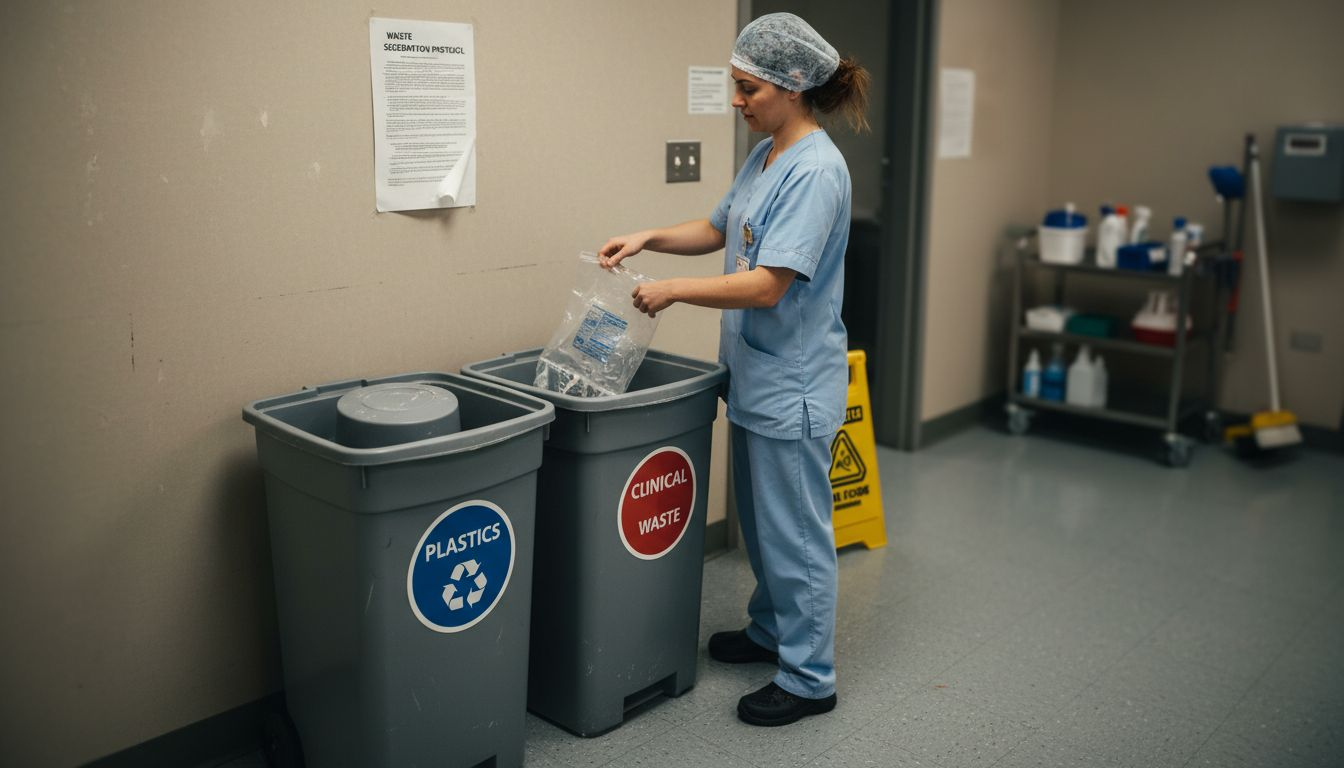
Establish collection schedules and communicate them clearly to all staff. Specify which waste streams are collected daily, weekly, or on demand. Create a collection log or checklist that porters and waste handlers can initial, creating accountability and revealing if bins are being overfilled or skipped. Assign clear responsibilities. Designate specific individuals or teams to monitor bin integrity, replace full bags, report contamination issues, and ensure protocols are followed. In busy environments, responsibility without accountability simply does not work. Provide training for all new and existing staff. A five minute induction covering bin locations, what goes where, and why proper segregation matters will dramatically improve compliance. Schedule refresher training annually or when procedures change. Document your protocols in a simple one page waste segregation guide that every staff member receives. Finally, monitor your system monthly. Check each bin type for contamination, review your waste contractor’s reports for comments about contaminated loads, and gather feedback from frontline staff about what is working and what is confusing. This data allows you to refine your protocols based on real usage patterns rather than assumptions.
Professional tip Photograph or video record your correctly sorted bins and use these images on instruction cards and staff notice boards, as visual examples of proper segregation prove far more effective than written descriptions alone.
Step 3: Train staff on recycling best practices
Your recycling protocols mean nothing if staff do not understand them or feel unprepared to follow them. Training transforms your written procedures into actual workplace behaviour. This step involves creating a structured training programme that reaches every member of your team, from porters and domestic staff to clinicians and administrators, ensuring everyone grasps their role in your facility’s recycling success.
Develop a training curriculum that covers three core areas. First, explain the segregation rules your facility uses, making clear why each waste type goes into specific containers and what happens to waste after collection. Second, communicate the environmental and financial impact of proper waste management. Staff who understand that better segregation reduces your facility’s disposal costs and carbon footprint tend to maintain better compliance over time. Third, provide practical demonstration of correct sorting using real examples from your facility. The Royal College of Physicians emphasises that training healthcare staff on waste reduction significantly improves compliance and sustainability outcomes across NHS trusts. Schedule your initial training sessions during staff induction, making recycling protocols part of standard onboarding rather than an optional topic. New staff are most receptive to learning new systems before bad habits form. In busy hospital environments across Sunderland, Newcastle, Durham, and other regions, facilities that integrated recycling training into mandatory induction saw first year participation rates above 85 percent. Keep your training sessions short and frequent rather than lengthy and infrequent. A twenty minute session works better than a two hour workshop. Use visual aids and practical demonstrations. Show staff the actual bins they will use, walk them through real sorting scenarios, and let them practise with mock waste items. Provide take home reference cards that staff can keep at their workstations. These laminated cards reduce questions and serve as quick reminders without requiring staff to recall training from weeks prior.
Make training ongoing rather than one time. Staff engagement and continued training remain essential for embedding best practices and improving compliance with waste segregation protocols according to the NHS clinical waste strategy. Schedule refresher sessions annually and whenever you change protocols. Use these sessions to address common mistakes you have observed and celebrate improvements in your recycling metrics. Invite frontline staff to share their suggestions for improving the system. Staff who work with waste daily often spot inefficiencies that managers miss. Create a feedback mechanism where staff can report confusing bins, faulty equipment, or contamination issues. Assign someone to monitor this feedback and respond promptly. When staff see their suggestions implemented, they feel valued and maintain higher engagement with the programme. Track your training completion and measure its impact. Document who has been trained and when. After training, monitor your contamination rates and waste volumes to see whether behaviour has actually changed. If compliance does not improve, investigate whether staff understood the training or whether practical barriers exist. Perhaps bins are inconveniently located or instructions remain unclear despite training. Address the root cause rather than assuming staff simply will not cooperate.
Professional tip Use colour coded training materials and practical demonstrations that match your actual bin system, as staff will retain information far better when they train with the exact equipment they will use daily rather than generic examples.
Step 4: Monitor waste outputs and adjust processes
Monitoring transforms your recycling programme from a static set of rules into a dynamic system that continuously improves. Without regular measurement and analysis, you cannot identify what is working, what is failing, or where to focus your improvement efforts. This step involves establishing systematic tracking of your waste outputs, analysing the data you collect, and making evidence based adjustments to your protocols.
Begin by establishing baseline measurements before or immediately after implementing your new recycling protocols. Work with your waste contractor to obtain accurate data on total waste volumes, waste composition by stream, and contamination rates. Ask your contractor for reports that break down what percentage of your recycling loads are actually contaminated versus genuinely recyclable. Request monthly reports rather than waiting for annual summaries. Monthly data allows you to spot problems quickly and make timely adjustments. Implement data led compliance tracking to gather accurate waste data and identify weak points in segregation and disposal practices. Consider adopting digital tracking systems if your facility’s budget allows. Simple spreadsheets work perfectly well for smaller facilities, recording daily bin weights and contamination incidents. Many waste contractors now offer digital dashboards that show your facility’s performance in real time. Conduct monthly bin audits where you physically inspect each waste stream for contamination. Open a sample of bags from each bin type and document what you find. If your yellow clinical waste bin contains plastic bottles or paper, you have a segregation problem. If your recycling bin contains syringes or clinical items, staff need retraining. These audits reveal exactly where training is failing and which departments need additional support. In hospitals across Gateshead, Leeds, and Manchester that conduct monthly audits, contamination rates typically drop 30 to 50 percent within the first six months.
The table below contrasts manual and digital waste monitoring approaches in healthcare facilities:
| Monitoring Approach | Benefits | Drawbacks |
|---|---|---|
| Manual records | Low cost, easy to implement | Time-consuming, error-prone |
| Digital dashboards | Real-time data, quick analysis | Tech investment required |
| Bin audits | Identifies real behaviours | Labour intensive, disruptive |
Analyse your data monthly and look for patterns. Are certain departments consistently contaminating their bins? Are specific waste types frequently misplaced? Does contamination spike after staff holidays or on particular days of the week? These patterns guide your corrective actions. If one ward consistently has problems, provide targeted retraining for that team. If contamination spikes on Mondays, perhaps your weekend staffing requires different protocols. Share your findings transparently with your team. Create simple monthly reports showing total waste volumes, recycling rates, contamination incidents, and cost per kilogram of waste. Celebrate improvements publicly. When staff see that their efforts resulted in 15 percent less waste or lower disposal costs, they remain motivated. The NHS clinical waste strategy emphasises annual reviews of system performance against national waste and carbon reduction targets, ensuring waste management practices remain effective, compliant, and continuously improving. Adjust your processes based on what your data reveals. If contamination remains high despite training, perhaps your bin placement needs adjustment or your instruction cards require clearer language. If specific waste types consistently get misplaced, introduce colour coded labels or pictorial guides. If a particular department struggles, assign them a dedicated waste champion who monitors compliance daily. Make changes incrementally and measure their impact. Avoid changing everything simultaneously, as this makes it impossible to determine which adjustments actually worked. Revisit your initial baseline metrics annually and measure your overall progress toward waste reduction and recycling goals.

Professional tip Establish a waste management working group that meets quarterly to review monitoring data, discuss findings, and jointly decide on process adjustments, as this collaborative approach ensures staff ownership and identifies practical barriers that data alone might not reveal.
Step 5: Verify compliance with UK regulations
Compliance with UK regulations is not optional for healthcare facilities. Failing to meet legal requirements exposes your organisation to enforcement action, financial penalties, and reputational damage. This step involves understanding which regulations apply to your waste streams, auditing your current practices against those standards, and documenting your compliance efforts systematically.
Start by identifying which regulations govern your healthcare facility’s waste management. The primary framework includes the Environmental Protection Act 1990, the Hazardous Waste Regulations 2005, the Duty of Care Regulations, and the Health and Safety at Work Act 1974. Clinical waste specifically falls under additional requirements. The Health and Safety Executive provides guidance on legal and practical requirements for healthcare waste management, outlining compliance with health and safety legislation, waste legislation, and transport legislation to protect patients, staff, and the environment. Beyond these baseline regulations, your facility must comply with local authority requirements, which vary slightly across different UK regions and council areas. Get a copy of Health Technical Memorandum 07-01, which is the definitive technical standard for NHS waste management. Even if your facility is not NHS operated, this document sets the gold standard that regulators and enforcement officers expect healthcare providers to meet. Read through HTM 07-01 carefully or assign someone to do so and summarise the key requirements for your facility. In hospitals across Sunderland, Newcastle, and other North Eastern regions, facility managers often find that HTM 07-01 provides the clarity they need to translate vague regulations into specific, measurable actions.
Conduct a compliance audit by comparing your current practices against regulatory requirements. Create a checklist covering waste segregation procedures, storage requirements, handling protocols, transport arrangements, disposal methods, staff training records, and documentation systems. For each item, record whether you fully comply, partially comply, or do not comply. If you do not comply, identify what needs to change and who is responsible for making that change. Healthcare waste management regulations detailed in HTM 07-01 support organisations in meeting legal obligations for waste segregation, handling, storage, transport, and disposal, serving as the regulatory framework for compliance with national standards. Document everything meticulously. Keep records of your waste contractor’s certifications and accreditations. Maintain training records showing when staff completed induction and refresher training. Document your waste assessments, your segregation protocols, your monitoring data, and any corrective actions you implemented. These records demonstrate your due diligence if an inspector visits or if a problem arises. Regulators want to see that you took waste management seriously and took documented steps to comply. Work closely with your waste management contractor. Verify that they hold the appropriate waste handling licenses and that their facilities meet legal standards. Ask them about their accreditations and compliance history. Ensure your waste contractor provides you with duty of care documentation for each waste collection, proving that waste reached an authorised treatment facility. Review your contracts to confirm they include appropriate liability clauses and compliance warranties. Many enforcement actions against healthcare facilities actually result from using inadequate contractors rather than from facility level failures.
Conduct your compliance audit annually or whenever regulations change. Regulations governing healthcare waste evolve periodically, so staying current requires active monitoring. Subscribe to updates from the Health and Safety Executive, your local authority, and your waste contractor. If new requirements emerge, assess their impact on your facility and adjust your procedures promptly. Keep written records of your compliance verification efforts. If an inspector asks to see your compliance documentation, you should be able to produce evidence that you systematically assessed your practices, identified gaps, and took corrective action. This documentation proves you operated in good faith and took compliance seriously, which regulators view favourably.
Professional tip Assign compliance verification to a specific staff member or team rather than expecting it to happen organically, and schedule an annual compliance review meeting with key stakeholders including your waste contractor, facilities manager, and a health and safety representative to ensure nothing slips through the cracks.
Elevate Your Healthcare Facility’s Recycling Programme Today
Managing diverse and complex waste streams within healthcare settings requires clear protocols, staff training, meticulous monitoring and strict compliance—all essential to reduce contamination and meet regulatory standards. If you are striving to overcome challenges like confusing segregation, inefficient waste collection, or compliance gaps, Venture Waste Management offers tailored solutions designed for UK healthcare providers looking to enhance their recycling best practices.
Our comprehensive services include dependable general waste collection, confidential document destruction to safeguard sensitive information, and expert guidance on hazardous waste handling. Supported by a strong national presence detailed in How the Waste Collection Network in UK Serves Businesses in 2025 – Venture Waste and specialised confidential waste services in confidential waste Archives – Venture Waste we ensure your waste is managed securely and sustainably.

Do not let waste management challenges compromise your facility’s environmental goals or legal compliance. Visit Venture Waste Management now to book your personalised assessment and start implementing robust recycling practices that protect patients, staff and the planet. Take the first step to make your healthcare facility a model of responsible waste stewardship.
Frequently Asked Questions
How can I assess the waste streams in my healthcare facility?
Assessing your waste streams involves gathering data on the types, volumes, and disposal methods of your waste. Schedule a thorough walk-through of your facility, documenting what waste is generated in different areas for two to four weeks to create a comprehensive overview of your waste situation.
What should be included in recycling protocols for health facilities?
Your recycling protocols should include a clear description of each waste type, its designated bin, and the responsibilities of staff regarding waste disposal. Create laminated instruction cards and strategically place bins throughout your facility to make compliance easier and more efficient.
How can I ensure staff are properly trained on recycling best practices?
To ensure staff are knowledgeable about recycling, implement a structured training programme covering segregation rules, environmental impacts, and practical demonstrations. Schedule training sessions during staff induction and provide ongoing refresher courses annually to reinforce good habits and compliance.
What metrics should I monitor to evaluate the success of my recycling programme?
Monitor waste volumes, recycling rates, and contamination incidents to evaluate your programme’s effectiveness. Conduct monthly audits and provide clear feedback to staff about their recycling efforts; aim for at least a 20% reduction in contamination rates within the first six months.
How do I verify compliance with UK waste management regulations?
To verify compliance, regularly audit your waste management practices against the relevant regulations and document any findings. Assign a staff member to oversee compliance efforts, and ensure all training, waste assessments, and contractor documentation are systematically recorded to demonstrate due diligence.
What should I do if I identify contamination issues in my waste disposal?
If you identify contamination issues, conduct targeted retraining for the staff members in the affected areas. Review bin placement and visual instructions, and monitor the improvements regularly to measure effectiveness and sustain compliance.
Recommended
- Recycling Contamination – How It Affects UK Healthcare – Venture Waste
- Recycling Contamination – How It Affects UK Healthcare – Venture Waste
- 7 Essential Tips for Reuse vs Recycle in Healthcare Waste – Venture Waste
- Sustainable Waste Solutions – Enhancing UK Healthcare Compliance – Venture Waste
- TV Removal & Disposal Services | Junk Dispatch – Safe & Eco-Friendly


Leave a Reply
Want to join the discussion?Feel free to contribute!