

Recycle More at Work: Boost Workplace Sustainability Easily
Over half of British office workers admit they are confused by workplace recycling rules. As corporate sustainability targets rise, facilities managers play a vital role in shaping better habits and reducing unnecessary waste across the United Kingdom. This guide breaks down proven ways to build a workplace recycling system that actually works, helping organisations tackle compliance challenges while inspiring everyone in the office to make smarter daily choices.
Table of Contents
- Step 1: Assess Existing Workplace Recycling Bins
- Step 2: Identify and Separate Common Office Waste Streams
- Step 3: Implement Targeted Recycling Stations Across Departments
- Step 4: Engage Staff Through Training and Visible Reminders
- Step 5: Monitor Recycling Rates and Optimise Processes
Quick Summary
| Key Point | Explanation |
|---|---|
| 1. Assess existing recycling bins | Evaluate current recycling bins to identify gaps and opportunities for improvement in your organisation’s recycling efforts. |
| 2. Categorise office waste streams | Recognise and separate waste categories like paper, plastic, and electronic waste to comply with regulations and enhance recycling efficiency. |
| 3. Create targeted recycling stations | Design colour-coded recycling stations tailored to each department’s waste patterns, enhancing convenience and compliance in waste disposal. |
| 4. Engage staff with training | Develop structured training and persistent reminders to cultivate a culture of sustainability and motivate employees in recycling initiatives. |
| 5. Monitor recycling rates regularly | Implement a tracking system to analyse recycling performance, which aids in identifying improvements and demonstrates commitment to sustainability. |
Step 1: Assess existing workplace recycling bins
Evaluating your workplace’s current recycling infrastructure is the foundational first step towards boosting sustainability efforts. By understanding what systems are already in place, you can identify gaps and opportunities for improvement in your recycling strategy.
Start by conducting a comprehensive visual audit of all existing recycling bins across your office spaces. Walk through each department, including communal areas like kitchens, meeting rooms, and workstations. Carefully observe the current bin placement, labelling, and usage patterns. Take note of whether bins are clearly marked, strategically located, and if employees are actually using them correctly. Many organisations discover that despite having recycling bins, staff often lack clear guidance on proper waste segregation.
As you inspect the bins, pay special attention to the recycling practices currently employed by UK businesses. Determine if your current bins accommodate different material types such as paper, plastics, glass, and electronic waste. Check for contamination issues where non recyclable items might be mixed in with recyclable materials, which can compromise entire waste streams.
Expert Suggestion: Create a simple colour coded system or use pictorial guides near bins to help staff instantly understand which items belong in each container.
Step 2: Identify and separate common office waste streams
Understanding and categorising your office waste streams is crucial for effective recycling and environmental compliance. This step will help you create a systematic approach to managing different types of workplace waste.
Begin by recognising the primary waste categories generated in your workplace. These typically include paper and cardboard, plastic packaging, electronic waste, food waste, and confidential documents. New European Union regulations mandate precise waste stream segregation, which means businesses must now implement more rigorous waste separation protocols. For paper waste, set up dedicated bins for clean white office paper, newspapers, magazines, and cardboard. Plastic waste should be collected separately ensure packaging is clean and dry before disposal. Electronic waste like old computers, printers, and mobile devices require special handling and should be stored in designated secure containers for professional recycling.

The England Simpler Recycling reforms effective March 2026 require businesses to separate ‘recycling relevant waste’ onsite before collection. This means creating clear, colour coded stations for different waste types with explicit signage indicating exactly what can be deposited in each bin. Consider creating a visual guide near waste stations to help employees understand proper sorting techniques.
Here is a summary of common office waste streams and their recommended disposal approaches:
| Waste Stream | Recommended Disposal Method | Common Risks |
|---|---|---|
| Paper and Cardboard | Separate clean, dry materials | Contamination by food |
| Plastics | Clean and dry before recycling | Mixed with general waste |
| Electronic Waste | Designated secure containers | Data security issues |
| Food Waste | Dedicated compost or food bins | Attracting pests |
| Confidential Documents | Secure shredding and collection | Privacy breaches |
Expert Suggestion: Train a small group of enthusiastic employees as ‘recycling champions’ who can help monitor and improve waste segregation practices across your organisation.
Step 3: Implement targeted recycling stations across departments
Creating strategically placed recycling stations tailored to different workplace departments will significantly improve your organisation’s waste management efforts. This approach ensures that each area receives specialised recycling infrastructure matching its unique waste generation patterns.
European recycling industry priorities emphasise the importance of dedicated recycling infrastructure that serves specific departmental needs. Start by mapping out your workplace and identifying distinct waste streams for each department. The marketing team might generate more paper waste, while the IT department will have electronic waste. Design colour coded stations with clear signage that indicates precisely what can be deposited. For instance, blue bins for paper, green for general recyclables, and secure grey containers for confidential documents and electronic equipment.
Consider the physical layout of your office when positioning these stations. Place them in high traffic areas like near photocopiers, kitchen spaces, and meeting rooms to encourage maximum usage. The Derby City Council’s waste management initiatives demonstrate how targeted station placement can dramatically improve recycling rates by making disposal convenient and intuitive for employees.
Expert Suggestion: Create visual infographics demonstrating correct waste sorting techniques and display them prominently near each recycling station to reinforce proper disposal practices.
Step 4: Engage staff through training and visible reminders
Successfully transforming your workplace recycling requires more than just infrastructure strategic staff engagement is the critical element that turns good intentions into lasting environmental practice. Your goal is to create a culture of sustainability that motivates employees to participate actively in recycling efforts.
NHS case studies demonstrate how comprehensive staff engagement programs positively influence workplace recycling cultures. Begin by developing a structured training programme that explains not just how to recycle but why it matters. This should include interactive workshops explaining waste streams, environmental impact, and your organisation’s specific recycling protocols. Consider creating short digital modules that employees can complete at their own pace, ensuring the training feels accessible rather than burdensome. Visual aids like infographics, short videos, and practical demonstrations will help reinforce key messages and make the information more digestible.
The University of St Andrews provides an excellent framework for mandatory sustainability training that can inspire your approach. Complement your training with persistent visual reminders strategically placed throughout the workplace. Install clear informative posters near recycling stations, use digital screen displays in communal areas, and incorporate recycling tips into regular internal communications. Encourage departmental competitions or recognition programmes that celebrate teams achieving outstanding recycling performance to maintain ongoing motivation.
Expert Suggestion: Rotate your visual reminders and training content quarterly to prevent information fatigue and keep sustainability messaging fresh and engaging.
The following table highlights features and business impact of staff engagement strategies for workplace recycling:
| Engagement Method | Key Feature | Likely Impact |
|---|---|---|
| Structured Training | Explains recycling rationale | Boosts participation |
| Visual Reminders | Posters, digital displays | Reinforces behaviours |
| Recognition Schemes | Rewards high-performing teams | Improves motivation |
| Recycling Champions | Peer-led monitoring | Sustains good habits |
Step 5: Monitor recycling rates and optimise processes
Tracking your workplace recycling performance is essential for understanding the effectiveness of your sustainability initiatives and identifying areas for continuous improvement. By implementing systematic monitoring strategies, you can transform raw data into actionable insights that drive meaningful environmental progress.
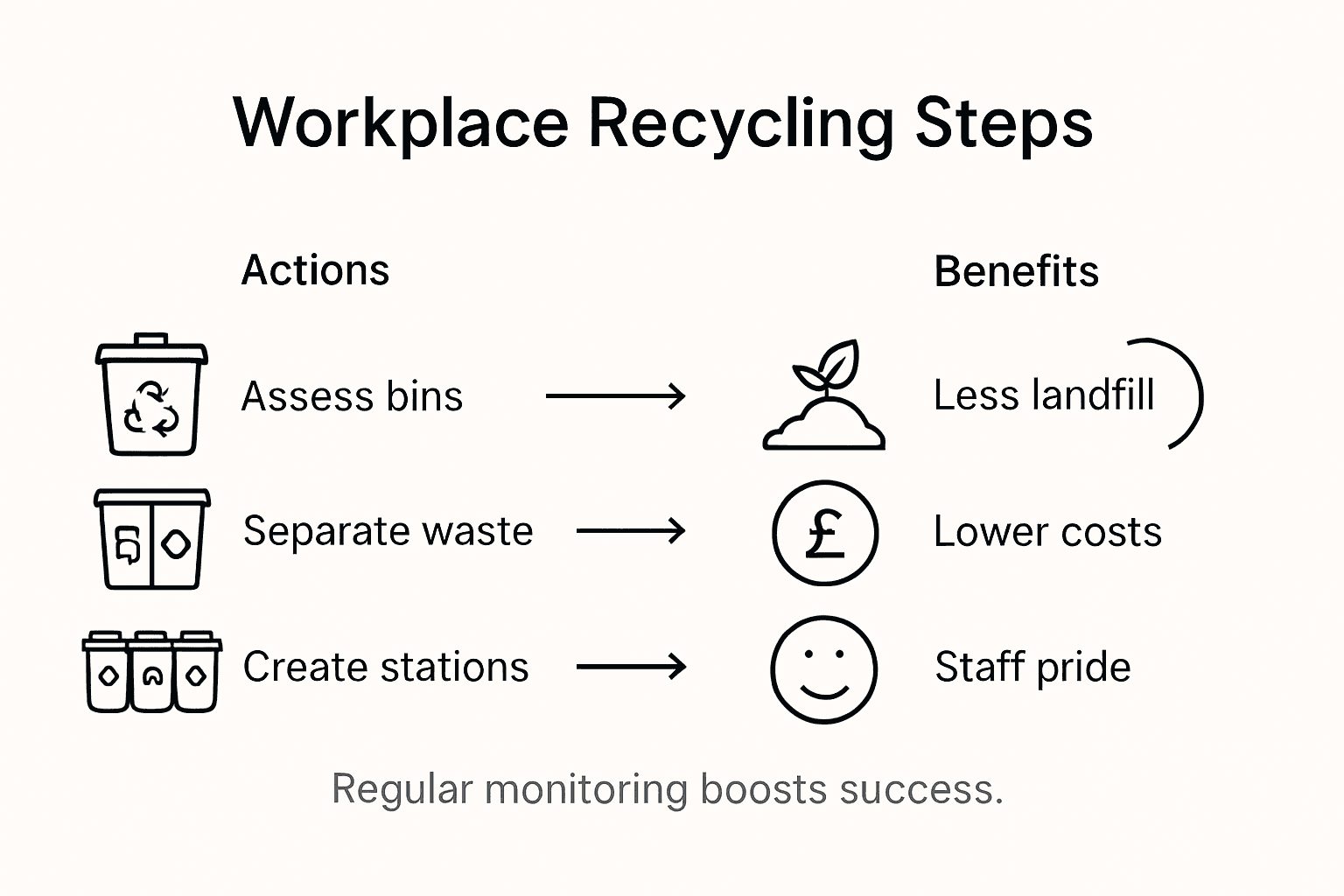
The UK government encourages voluntary monitoring and reporting for waste management processes, emphasising the importance of collecting accurate recycling data. Develop a comprehensive tracking system that captures key metrics such as total waste generated, recycling rates per department, contamination levels, and waste diversion from landfill. Implement digital tools or spreadsheets to record weekly or monthly data, allowing you to visualise trends and measure progress against your sustainability targets.
Methods for tracking recycling program effectiveness include developing participation rates, conducting staff surveys, and monitoring material capture rates. Schedule quarterly review meetings to analyse your recycling performance, discuss challenges, and brainstorm improvements. Consider creating visual dashboards that display recycling achievements to motivate staff and maintain transparency. By regularly reviewing and adapting your approach, you can continuously refine your workplace recycling strategy and demonstrate tangible environmental commitment.
Expert Suggestion: Implement a digital dashboard that automatically updates recycling statistics and provides real time visual feedback to keep staff engaged and informed about your sustainability progress.
Take Control of Your Workplace Recycling with Venture Waste
Improving workplace recycling can feel overwhelming when faced with the challenges of organising waste streams effectively and engaging staff sustainably. This article highlights the importance of tailored recycling stations, clear waste segregation, and ongoing monitoring to truly boost your office’s environmental impact. At Venture Waste, we understand these pain points and provide comprehensive solutions that align perfectly with your goals for legal compliance and efficient waste management.

Choose from our trusted services including confidential waste disposal to securely handle sensitive materials, or explore how our streamlined waste collection process supports UK businesses in maintaining high recycling standards. Act now to transform your workplace sustainability efforts with our expert support and easy three-step booking system available at Venture Waste. Start reducing contamination and improving recycling rates today by partnering with a provider that puts your environmental commitment first.
Frequently Asked Questions
How can I assess my workplace’s existing recycling bins?
To assess your workplace’s current recycling bins, conduct a visual audit of their placement, labelling, and usage patterns. Walk through each department and communal areas, taking note of any gaps in guidance or contamination issues.
What are the common waste streams in an office, and how should I separate them?
Common office waste streams include paper and cardboard, plastic packaging, electronic waste, food waste, and confidential documents. Identify these categories and implement designated bins for each type, ensuring clear signage and colour coding for ease of use.
How can I create effective recycling stations for different departments?
To create effective recycling stations, map out the unique waste generation patterns of each department. Position colour-coded bins in high-traffic areas like near photocopiers or kitchens to encourage employees to recycle more efficiently.
What strategies can engage staff in recycling efforts?
Engage staff with structured training programmes that explain both how to recycle and why it matters. Complement this training with visual reminders and recognition schemes to motivate and sustain good recycling habits.
How do I monitor and optimise my workplace recycling rates?
To monitor workplace recycling rates, develop a tracking system that captures key metrics like total waste generated and recycling rates per department. Schedule quarterly reviews to analyse performance, discuss challenges, and refine strategies for continuous improvement.


Leave a Reply
Want to join the discussion?Feel free to contribute!