

Public Health and Waste – Protecting UK Communities
Nearly 400 million tonnes of waste are generated every year in British cities, putting enormous pressure on healthcare and educational institutions to protect public health. Facilities managers know that safe disposal is more than a technical task. It is central to reducing disease risks and meeting strict legal standards. This guide reveals how implementing modern waste management practices empowers British organisations to champion both regulatory compliance and sustainability without compromising wellbeing.
Table of Contents
- Defining Public Health and Waste Management
- Types of Waste Impacting Public Health
- Legal Duties and Regulatory Compliance
- Risks of Poor Waste Handling in Institutions
- Best Practice Solutions for Sustainable Disposal
Key Takeaways
| Point | Details |
|---|---|
| Public Health and Waste Management Interconnection | Public health initiatives in the UK are fundamentally linked to waste management practices, highlighting the need for holistic strategies to protect community wellbeing. |
| Types of Waste with Health Risks | Various waste types, such as clinical and hazardous waste, pose significant public health risks, necessitating targeted management and intervention. |
| Legal Compliance in Waste Management | Organisations must adhere to stringent legal obligations to ensure effective waste management that safeguards public health and the environment. |
| Sustainable Disposal Practices | Transitioning to sustainable waste disposal strategies can mitigate environmental impact and enhance public health outcomes through innovative approaches. |
Defining Public Health and Waste Management
Public health represents a comprehensive approach to protecting and improving community wellbeing through systematic strategies that address health challenges at societal levels. In the United Kingdom, public health encompasses coordinated efforts to prevent disease, promote wellness, and create environments that support healthy living. These efforts critically intersect with waste management practices, which play a fundamental role in maintaining community health standards.
Waste management is not merely a technical process but a vital public health intervention. UK health professionals recognise waste management’s complex relationship with environmental and human health, understanding that improper waste handling can generate significant health risks. Contaminated waste streams can introduce pathogens, toxic chemicals, and environmental pollutants that compromise community safety and individual wellness.
The interconnection between public health and waste management is particularly pronounced in urban environments like Newcastle, Manchester, and Birmingham, where population density amplifies potential health risks. Effective waste management strategies must integrate scientific understanding, regulatory compliance, and community engagement. This holistic approach requires collaboration between local authorities, healthcare professionals, environmental specialists, and community stakeholders to develop sustainable waste handling protocols that protect public health.
Pro Tip – Waste Health Assessment: Conduct regular community waste audits to identify potential health risks and develop targeted intervention strategies that address specific local waste management challenges.
Types of Waste Impacting Public Health
Public health risks emerge from multiple waste categories that require strategic management and intervention. The UK government’s comprehensive waste data reveals six primary waste streams with distinct public health implications, each presenting unique challenges for environmental and community safety.
The principal waste types threatening public health include household waste, clinical waste, hazardous industrial waste, construction debris, packaging materials, and food waste. Clinical and hazardous waste streams pose the most significant immediate health risks, potentially introducing toxic chemicals, biological contaminants, and infectious agents into local environments. Construction and packaging waste can release microplastics, heavy metals, and particulate matter that compromise respiratory health and contaminate water systems.

Urban centres like Liverpool, Manchester, and Birmingham experience heightened waste management challenges due to population density. Government environmental assessments systematically evaluate health risks across different waste management routes, highlighting the critical need for targeted waste handling protocols. Industrial and medical waste require especially rigorous containment strategies to prevent potential disease transmission and environmental contamination.
The following table summarises the main types of waste and their key public health impacts in urban UK settings:
| Waste Type | Primary Health Risk | Affected Urban Area |
|---|---|---|
| Clinical waste | Infection transmission | Manchester hospitals |
| Hazardous industrial | Chemical contamination | Birmingham factories |
| Construction debris | Respiratory illness risk | Urban building sites |
| Household waste | Rodent-borne diseases | City residential areas |
| Packaging materials | Microplastic pollution | Urban recycling centres |
| Food waste | Pest infestation | Hospitality districts |
Pro Tip – Waste Risk Assessment: Develop a comprehensive waste categorisation system that tracks potential health hazards, enabling targeted interventions and proactive community health protection strategies.
Legal Duties and Regulatory Compliance
Waste management in the United Kingdom involves a complex network of legal responsibilities designed to protect public health and environmental integrity. Government guidance establishes comprehensive legal operator and competence requirements for environmental waste activities, mandating strict protocols for organisations handling waste across various sectors.
The regulatory framework encompasses multiple key components, including environmental permits, operator competence standards, meticulous record-keeping requirements, and technical management protocols. Organisations must demonstrate comprehensive understanding of waste classification, handling procedures, and disposal mechanisms. Local authorities in urban centres like Manchester, Leeds, and Birmingham enforce these regulations, with significant penalties for non-compliance including substantial financial fines and potential legal prosecution.
Key legal obligations extend beyond mere disposal, requiring organisations to implement proactive waste management strategies that minimise environmental and public health risks. This includes conducting thorough risk assessments, maintaining detailed documentation of waste streams, ensuring proper staff training, and adopting environmentally responsible disposal methods. The Environment Agency plays a crucial role in monitoring and enforcing these regulations, conducting periodic inspections to verify compliance and maintain high standards of waste management across industrial, commercial, and public sector organisations.
Pro Tip – Compliance Strategy: Develop a robust internal audit system that regularly reviews waste management practices against current legal requirements, ensuring continuous alignment with evolving regulatory standards.
Risks of Poor Waste Handling in Institutions
Institutional waste management represents a critical public health challenge with profound implications for organisational safety and community wellbeing. Comprehensive risk assessments by environmental policy experts reveal significant governance gaps and potential hazards in waste handling practices, highlighting the complex nature of waste-related risks across healthcare, educational, and commercial settings.
The Health and Safety Executive identifies multiple critical risk domains in institutional waste management, including bioaerosol exposure, manual handling injuries, hazardous substance contamination, and infection transmission pathways. Specific risks vary across institutional contexts, with healthcare facilities facing more severe potential consequences due to the presence of clinical and potentially infectious waste streams. Educational institutions and commercial organisations must navigate complex waste segregation protocols to prevent cross-contamination and minimise health risks.
Urban institutions in cities like Manchester, Birmingham, and Leeds face particularly challenging waste management landscapes, where population density and diverse waste streams amplify potential health risks. Improper waste handling can lead to serious consequences, including respiratory infections, skin disorders, potential pathogen transmission, and environmental contamination. Institutional managers must implement comprehensive risk mitigation strategies that include staff training, robust waste segregation protocols, appropriate personal protective equipment, and systematic waste stream monitoring.
Pro Tip – Risk Mapping: Develop a comprehensive waste risk assessment matrix that systematically identifies, evaluates, and prioritises potential health hazards specific to your institutional environment.
Best Practice Solutions for Sustainable Disposal
Sustainable waste disposal demands a comprehensive approach that transcends traditional waste management paradigms. DEFRA’s Waste Prevention Programme establishes strategic national principles for maximising resources and minimising waste generation, emphasising the transition towards a more circular and environmentally responsible waste management ecosystem.
Contemporary research highlights the evolution of waste management from hierarchical models to integrated circular economy approaches, focusing on technological innovations and policy frameworks that support sustainable disposal. Key strategies include waste stream segregation, comprehensive recycling programmes, advanced material recovery techniques, and designing waste management systems that prioritise resource efficiency. Urban centres like Manchester, Birmingham, and Leeds are increasingly adopting these progressive approaches, implementing localised solutions that reduce environmental impact and promote sustainable practices.
Successful sustainable disposal requires a multifaceted strategy encompassing technological innovation, regulatory compliance, and organisational commitment. Institutions must develop robust waste reduction protocols, invest in staff training, implement sophisticated sorting mechanisms, and continuously evaluate their waste management performance. This approach not only mitigates environmental risks but also contributes to broader national sustainability objectives, supporting the UK’s transition towards more responsible resource management.
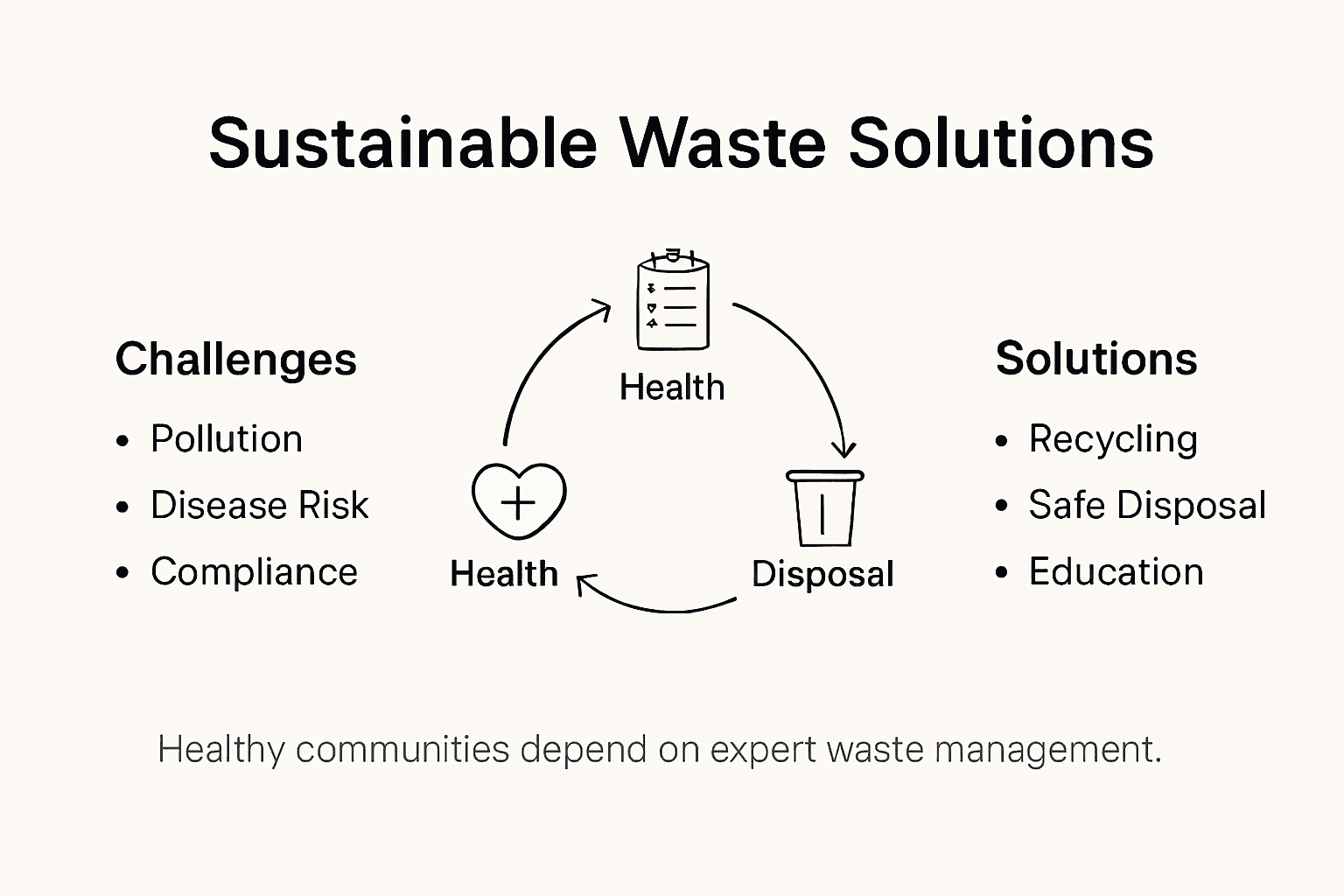
Below is a comparison of traditional and circular economy waste strategies for managing public health risks:
| Approach | Resource Use | Public Health Benefit |
|---|---|---|
| Traditional | High material wastage | Limited pollution control |
| Circular Economy | Maximised resource use | Reduced exposure to hazards |
Pro Tip – Sustainability Roadmap: Develop a comprehensive waste reduction strategy that includes quantifiable targets, regular performance audits, and continuous improvement mechanisms tailored to your specific institutional context.
Protect UK Communities with Expert Waste Management Solutions
The article highlights critical public health challenges linked to improper waste handling in busy UK urban centres. Key issues include managing hazardous and food waste streams to prevent disease transmission, chemical contamination, and pest infestations. Protecting community health requires strict legal compliance, effective risk assessments and sustainable disposal methods. At Venture Waste, we understand these needs and offer specialised services designed to tackle the most pressing public health risks from waste. From expert hazardous waste handling to innovative strategies for reducing food waste, our solutions support safer environments.

Take control of your waste to safeguard health and comply fully with UK regulations. Visit our main site at Venture Waste to explore how our comprehensive waste collection network is set to serve businesses efficiently through 2025 and beyond. Act now to implement responsible waste management practices that protect your community and demonstrate commitment to sustainability and legal standards.
Frequently Asked Questions
What is the relationship between public health and waste management?
Public health and waste management are interconnected, as effective waste management is crucial for preventing disease and promoting wellness in communities. Poor waste handling can lead to health risks such as infections, contamination, and pollution.
What types of waste pose serious health risks?
The main waste types that pose public health risks include clinical waste, hazardous industrial waste, construction debris, household waste, packaging materials, and food waste. Each category has specific dangers, such as chemical contamination and pest infestations.
What are the legal responsibilities for waste management in institutions?
Organisations involved in waste management must comply with various legal requirements, including obtaining environmental permits, ensuring operator competence, and maintaining rigorous record-keeping. These obligations aim to protect public health and ensure safe waste disposal methods.
How can institutions improve their waste handling practices?
Institutions can enhance waste handling by implementing comprehensive risk assessments, staff training on waste segregation, using personal protective equipment, and conducting regular waste audits to identify potential health hazards.


Leave a Reply
Want to join the discussion?Feel free to contribute!