

On-Site vs Off-Site Shredding: UK Business Guide 2025
Choosing how to destroy confidential documents is a decision UK businesses cannot ignore. The stakes are high when you consider that GDPR breaches can cost up to £17.5 million or 4 percent of global turnover. Most assume the cheapest shredding service is the safest option, but that logic could leave companies dangerously exposed to fines and reputational damage. There is more to the right shredding solution than just saving money.
Table of Contents
- Key Differences Between On-Site And Off-Site Shredding
- Security And Compliance For UK Businesses
- Cost Comparison And Operational Impact
- Choosing The Right Shredding Solution For Your Needs
Quick Summary
| Takeaway | Explanation |
|---|---|
| On-site shredding offers superior security. | Immediate destruction at your premises ensures higher security and transparency in document handling. |
| Off-site shredding can reduce costs. | Suitable for large volumes, off-site services utilize advanced facilities, making them more economical. |
| Compliance is crucial for document destruction. | Adhering to GDPR and industry-specific regulations is essential to avoid legal penalties and ensure data integrity. |
| Evaluate your specific business needs. | Assess document volume, sensitivity, and operational capacity to select the most fitting shredding method for your organisation. |
| Consider long-term risks and benefits. | Balance immediate costs against potential risks like data breaches and regulatory fines for a comprehensive decision. |
Key Differences Between On-Site and Off-Site Shredding
Navigating the complex landscape of document destruction requires businesses to understand the critical distinctions between on-site and off-site shredding methods. While both approaches aim to secure sensitive information, they differ significantly in execution, security protocols, and operational implications.
Security and Chain of Custody
On-site shredding provides an immediate and transparent destruction process where documents are destroyed directly at your business premises. Research from the Information Security Forum indicates that on-site shredding offers the highest level of security, as documents never leave your controlled environment. Businesses witness the entire destruction process, eliminating potential risks of document interception or mishandling during transportation.
Conversely, off-site shredding involves collecting documents and transporting them to a centralised facility for destruction. While reputable providers maintain strict security protocols, the additional steps create potential vulnerabilities. Gartner’s Data Protection Report suggests that each transfer point represents a potential security risk, making the chain of custody more complex compared to on-site methods.
Operational Efficiency and Cost Considerations
Off-site shredding often proves more cost-effective for organisations with large document volumes. Specialised industrial shredding equipment at dedicated facilities can process substantial quantities more efficiently than on-site alternatives. These facilities invest in advanced technology that smaller businesses might find prohibitively expensive to purchase and maintain.
On-site shredding, while potentially more expensive, offers unparalleled convenience and immediate destruction. Companies handling extremely sensitive information such as legal firms, healthcare providers, and financial institutions often prefer this method to maintain complete control over their confidential materials. Learn more about our secure document destruction services.
The choice between on-site and off-site shredding ultimately depends on your specific business requirements, including document volume, sensitivity of information, budget constraints, and regulatory compliance needs. Each method offers distinct advantages, and businesses must carefully evaluate their unique circumstances to select the most appropriate document destruction strategy.
By understanding these key differences, organisations can make informed decisions that protect their sensitive information while optimising operational efficiency and maintaining rigorous security standards.
To help visualise the differences, the following table compares key aspects of on-site and off-site shredding, as discussed above.
| Feature | On-Site Shredding | Off-Site Shredding |
|---|---|---|
| Destruction Location | At your business premises | Centralised facility |
| Security Level | Highest (never leaves premises) | High, but chain of custody more complex |
| Document Handling | Immediate, can be witnessed | Multiple transfer stages before destruction |
| Cost | Higher, premium service | Lower, especially for large volumes |
| Operational Efficiency | Convenient for sensitive materials | Efficient for processing substantial quantities |
| Best For | Highly sensitive/confidential information | High-volume, routine confidential waste |
| Regulatory Compliance | Simple to verify, easy certification | Requires robust tracking and documentation |
Security and Compliance for UK Businesses
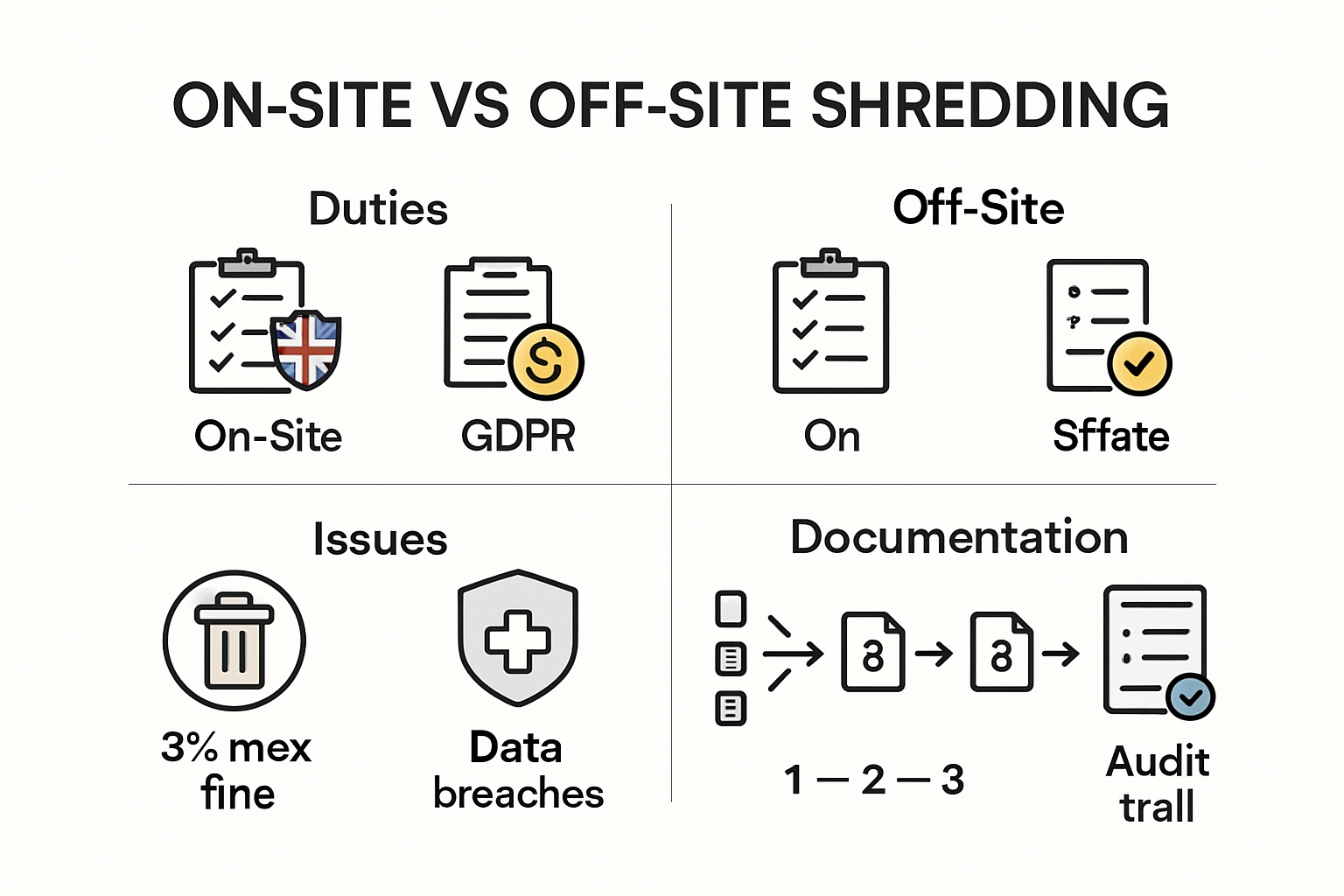
In the rapidly evolving digital landscape, UK businesses face stringent regulatory requirements for document destruction and data protection. Understanding the legal framework surrounding confidential waste management is crucial for maintaining compliance and avoiding potential legal repercussions.
Data Protection Regulations and Legal Obligations
The UK’s data protection landscape is primarily governed by the General Data Protection Regulation (GDPR) and the Data Protection Act 2018. Information Commissioner’s Office (ICO) guidelines emphasise that businesses must implement robust document destruction processes to protect sensitive information. Failure to do so can result in significant financial penalties, with fines potentially reaching up to £17.5 million or 4% of annual global turnover.
Key compliance requirements include:
- Ensuring complete and irretrievable destruction of confidential documents
- Maintaining a verifiable chain of custody
- Providing detailed destruction certificates
- Protecting personal and corporate sensitive information
Industry-Specific Compliance Challenges
Different sectors face unique compliance challenges that impact document destruction strategies. The National Cyber Security Centre highlights that industries such as healthcare, financial services, and legal sectors must adhere to additional regulatory standards beyond standard data protection requirements.
Healthcare providers must comply with strict patient confidentiality regulations, while financial institutions need to protect sensitive financial records. Legal firms face particularly rigorous requirements for maintaining client confidentiality. Check out our comprehensive guide to confidential document shredding to understand the nuanced compliance needs across various industries.
Beyond legal compliance, businesses must consider the broader implications of document destruction. This involves not just meeting regulatory requirements, but also protecting corporate reputation, preventing potential data breaches, and maintaining client trust. The most effective approach combines robust security protocols with a comprehensive understanding of sector-specific regulatory requirements.
Ultimately, businesses must view document destruction as a critical component of their overall data protection strategy. By implementing thorough and compliant shredding processes, organisations can mitigate risks, protect sensitive information, and demonstrate their commitment to data security and regulatory adherence.
Cost Comparison and Operational Impact
Businesses must carefully evaluate the financial and operational implications of document destruction strategies. The choice between on-site and off-site shredding involves nuanced considerations that extend beyond simple cost calculations.
Direct Financial Considerations
Research from Government Business reveals that the cost of document destruction varies significantly based on volume, frequency, and method. On-site shredding typically commands a premium price due to the personalised service and immediate destruction. Companies might expect to pay between £50-£150 per collection, depending on the volume of documents and complexity of the service.
Off-site shredding often presents a more economical solution for businesses with substantial document volumes. Russell Richardson’s comparative analysis indicates that off-site methods can reduce destruction costs by up to 30% for organisations processing large quantities of confidential materials. The economies of scale at centralised facilities allow providers to offer more competitive pricing structures.
Operational Efficiency and Resource Allocation
Beyond direct financial costs, businesses must consider the operational impact of their chosen shredding method. On-site shredding requires minimal internal resource allocation but comes with a higher per-unit cost. Staff can witness the destruction process, providing immediate verification and peace of mind.
Conversely, off-site shredding demands more logistical planning. Documents must be securely collected, transported, and tracked through multiple handling stages. While potentially more complex, this method allows internal teams to focus on core business activities rather than document destruction. Discover our efficient document management solutions to streamline your confidential waste processes.
The total cost of document destruction extends beyond immediate financial outlay. Businesses must factor in potential risks such as data breaches, compliance penalties, and reputational damage. A seemingly cost-effective solution that compromises security can result in significantly higher long-term expenses.
Small to medium enterprises might find off-site shredding more attractive due to lower upfront costs, while organisations handling extremely sensitive information may prioritise the immediate security of on-site destruction. The optimal approach depends on specific business requirements, document volumes, sensitivity of information, and budgetary constraints.
Ultimately, the most cost-effective document destruction strategy balances financial efficiency with robust security protocols. Businesses should conduct a comprehensive assessment of their unique operational needs, weighing the financial implications against potential risks and compliance requirements.
The following table summarises the cost and operational impacts of on-site and off-site shredding for UK businesses.
| Consideration | On-Site Shredding | Off-Site Shredding |
|---|---|---|
| Typical Cost Range | £50–£150 per collection | Typically up to 30% lower |
| Best Suited For | Highly sensitive data, legal, healthcare | Large document volumes |
| Internal Resource Use | Minimal (staff can witness) | More planning/logistics needed |
| Risk of Security Breach | Very Low | Low to Moderate (during transport) |
| Compliance Verification | Immediate, easy to audit | Requires formal documentation |
| Long-Term Cost Risk | Lower (due to security) | Potential risk if chain of custody fails |
Choosing the Right Shredding Solution for Your Needs
Selecting the appropriate document destruction strategy is a critical decision that requires careful evaluation of your organisation’s unique requirements. The complexity of this choice extends beyond simple cost considerations, demanding a comprehensive approach to information security and operational efficiency.
Assessing Your Business Specific Needs
Recorra’s industry analysis suggests businesses should conduct a thorough internal audit before selecting a shredding solution. Key factors to consider include document volume, sensitivity of information, regulatory compliance requirements, and available internal resources.
For organisations handling highly confidential materials such as legal documents, medical records, or financial statements, on-site shredding often provides the most secure option. Shred-it Ireland emphasizes that immediate destruction minimises potential data exposure risks and provides real-time verification of document elimination.
Strategic Considerations for Different Business Scales
Small businesses with limited document volumes might find off-site shredding more economical, while larger enterprises with consistent confidential waste generation could benefit from dedicated on-site services. Learn about our tailored confidential waste solutions to understand how different approaches can be customised to your specific operational needs.
Industry-specific regulations play a crucial role in determining the most appropriate shredding method. Healthcare providers, financial institutions, and legal firms often require more stringent destruction protocols compared to other sectors. Gilmore Services highlights that compliance is not just about destroying documents, but ensuring the entire process meets regulatory standards.
Consider additional factors such as environmental impact, chain of custody documentation, and the potential need for destruction certificates. Some businesses might require detailed reporting for internal audits or regulatory compliance, which can influence the choice between on-site and off-site solutions.

Ultimately, the right shredding solution is one that balances security, cost-effectiveness, operational convenience, and regulatory compliance. Businesses should not view document destruction as a standalone service, but as an integral part of their overall information management and risk mitigation strategy. Consulting with professional waste management experts can provide tailored insights specific to your organisational needs and help you make an informed decision.
Frequently Asked Questions
What is the difference between on-site and off-site shredding?
On-site shredding involves destroying documents at your premises, providing immediate security and transparency, while off-site shredding collects documents and transports them to a secure facility for destruction, which can be more cost-effective for larger volumes.
How do I choose the best shredding option for my business?
Assess your document volume, sensitivity, regulatory compliance requirements, and available internal resources. On-site shredding may be better for highly confidential materials, while off-site can suit higher volumes of routine documents.
What are the security implications of off-site shredding?
Off-site shredding introduces additional handling and transportation steps, which can pose security risks. It’s essential to ensure the shredding provider has strict security protocols and a reliable chain of custody to mitigate these risks.
How can I ensure compliance with data protection regulations during shredding?
Ensure that your shredding method provides complete, irretrievable destruction of documents, maintains a verifiable chain of custody, and issues destruction certificates. Familiarise yourself with GDPR and industry-specific compliance requirements relevant to your sector.
Secure Your Documents and Stay Compliant with Venture Waste
If navigating the differences between on-site and off-site shredding has left you concerned about data security or worried about costly GDPR penalties, you are not alone. Protecting confidential business information and choosing the safest, most reliable document destruction method is more urgent than ever. Every business faces the mounting pressure of compliance, chain of custody, and increasing risk of reputational damage if confidential documents are mishandled. At Venture Waste, we understand these challenges and have built our solutions around your need for security, compliance, and operational confidence. Find detailed insights and support in our confidential waste services archive.

Let us help you make the right choice for your organisation. With nationwide coverage, hassle-free online booking, and strict adherence to the latest data protection requirements, Venture Waste offers a confidential document shredding service you can trust. Ready to protect your business, avoid fines, and ensure your sensitive documents are destroyed securely? Discover more about our full range of solutions at Venture Waste Management and book your confidential waste collection today. Take action now to safeguard your business future.


Leave a Reply
Want to join the discussion?Feel free to contribute!