

Office Waste Solutions – Enhancing Compliance and Sustainability
Facilities managers in British corporate offices face a mounting challenge as new waste management laws will affect over 90 percent of United Kingdom businesses by 2026. The pressure to balance cost control, compliance, and sustainability has never been higher. Understanding the facts about British office waste solutions—and dispelling common myths—empowers your team to avoid costly mistakes and adopt practical strategies that deliver real environmental and financial results.
Table of Contents
- Defining Office Waste Solutions And Common Myths
- Key Waste Types In Modern UK Offices
- New Workplace Recycling Laws And 2026 Compliance
- Responsibilities, Risks And Financial Impacts For Offices
- Practical Strategies For Waste Reduction And Recycling
Key Takeaways
| Point | Details |
|---|---|
| Comprehensive Waste Solutions | Systematic approaches are essential for effective office waste management, including waste segregation and staff training. |
| Upcoming Compliance Regulations | By March 2025, businesses must adhere to new waste segregation laws, necessitating strategic planning for compliance. |
| Financial and Legal Responsibilities | Non-compliance poses significant financial risks, including fines and legal liabilities, emphasising the need for proactive waste management. |
| Strategies for Reduction and Recycling | Implementing digital systems and engaging staff are key to minimising waste generation and improving recycling rates. |
Defining Office Waste Solutions and Common Myths
Office waste management is a complex landscape that extends far beyond simply throwing items into bins. At its core, office waste solutions encompass systematic approaches to reducing, managing, and responsibly disposing of waste generated within professional environments. Understanding these solutions requires separating fact from fiction, particularly when navigating the intricate regulatory requirements of waste disposal.
Businesses frequently encounter numerous misconceptions about waste management, which can lead to inefficient practices and potential legal complications. Common waste management myths often prevent organisations from implementing truly effective sustainability strategies. These myths range from believing that recycling is always expensive to assuming that waste reduction has minimal environmental impact.
Some key components of comprehensive office waste solutions include:
- Segregation of different waste types
- Regular waste audits
- Implementing recycling programmes
- Training staff on proper waste handling
- Tracking and reporting waste metrics
- Partnering with certified waste management providers
Pro tip: Conduct a quarterly waste audit to identify potential reduction opportunities and track your organisation’s progress towards more sustainable waste management practices.
Key Waste Types in Modern UK Offices
Modern UK offices generate a diverse range of waste streams that require strategic management and careful segregation. Simpler recycling regulations now mandate specific approaches to waste classification and disposal, transforming how businesses handle their environmental responsibilities.
The primary waste types encountered in contemporary office environments typically include:
- Paper and Cardboard: Used documents, packaging materials, and printed resources
- Plastic Waste: Packaging, disposable cups, office equipment components
- Electronic Waste: Deprecated computer hardware, mobile devices, printer consumables
- Food Waste: Packaging, leftover lunch materials, catering remnants
- Glass and Metal: Beverage containers, equipment components, packaging materials
Specifically, the UK government’s waste management guidelines emphasise the importance of segregating these waste streams to maximise recycling potential and minimise environmental impact. Businesses must now implement robust waste management systems that can effectively sort and process different material types, ensuring compliance with evolving environmental regulations.
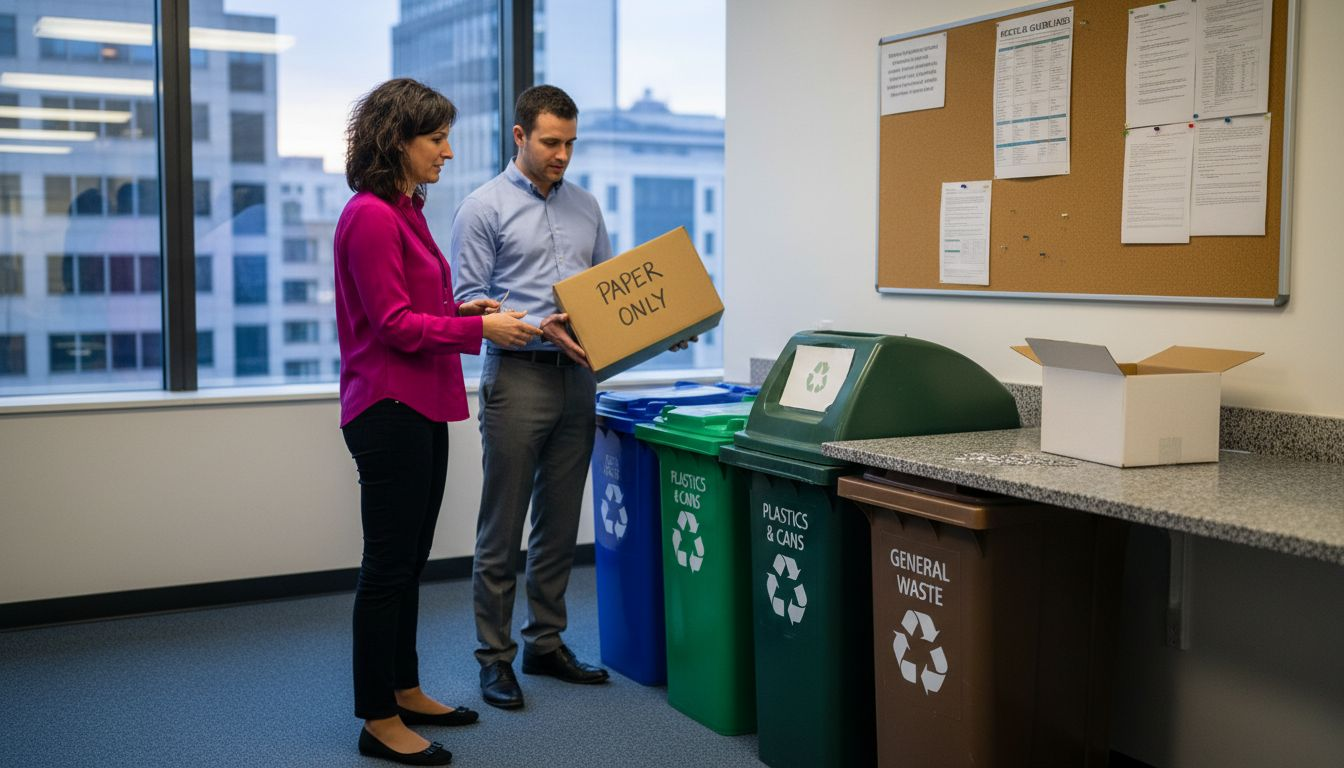
Here’s how common office waste types differ in handling and impact:
| Waste Type | Preferred Disposal Method | Typical Environmental Impact |
|---|---|---|
| Paper & Cardboard | Recycling collection | Reduces landfill, saves resources |
| Plastics | Segregated recycling | Pollution risk, low biodegradability |
| Electronics | Specialist e-waste processing | Toxin release, resource recovery |
| Food Waste | Composting or food bin | Methane production if landfilled |
| Glass & Metal | Separate recycling bins | Saves raw materials, energy saving |
Pro tip: Implement colour-coded waste bins throughout your office to simplify waste segregation and improve staff compliance with recycling protocols.
New Workplace Recycling Laws and 2026 Compliance
The landscape of workplace waste management in the United Kingdom is undergoing a significant transformation with the introduction of comprehensive recycling reforms. Starting from 31 March 2025, businesses with 10 or more employees will be required to implement stringent waste segregation practices, marking a pivotal moment in environmental regulation.
Key changes under the new regulations include mandatory separation of waste streams into distinct categories:
- Dry recyclables (paper, cardboard, plastic, metal)
- Food waste
- Residual waste
- Electronic waste
The Environment Agency will oversee enforcement, with potential penalties for non-compliance including substantial fines and increased landfill charges. Businesses must adapt their waste management infrastructure to meet these new requirements, which aim to boost recycling rates and significantly reduce carbon emissions across commercial sectors.
The phased implementation allows businesses time to adjust, with smaller organisations expected to comply by 2027. This strategic approach ensures a gradual but comprehensive transformation of waste management practices across the United Kingdom, supporting national environmental sustainability goals.
Pro tip: Conduct an immediate waste audit and invest in colour-coded waste segregation systems to ensure smooth compliance with the upcoming recycling regulations.
Responsibilities, Risks and Financial Impacts for Offices
Office waste management has evolved from a simple operational task to a complex legal and financial responsibility. Commercial office waste regulations now impose stringent requirements that demand strategic planning and proactive compliance from businesses across the United Kingdom.
The key responsibilities for offices include:
- Engaging only licensed waste carriers
- Maintaining accurate waste transfer documentation
- Implementing comprehensive waste segregation systems
- Training staff on proper waste handling procedures
- Ensuring accurate waste stream tracking and reporting
Financial risks associated with non-compliance are substantial. Businesses face significant penalties, including:
- Substantial monetary fines
- Increased landfill tax charges
- Potential legal prosecution
- Reputational damage affecting business relationships
Proactive waste management is no longer optional but a critical business strategy. Companies that invest in robust waste management systems can potentially reduce disposal costs, mitigate legal risks, and demonstrate corporate environmental responsibility.
The following table summarises offices’ compliance risks and opportunities:
| Responsibility | Risk if Ignored | Potential Business Benefit |
|---|---|---|
| Using licensed waste carriers | Legal prosecution | Reduced liability, audit trail |
| Accurate documentation | Monetary fines | Proof of compliance, efficiency |
| Regular staff training | Poor segregation, fines | Staff engagement, fewer mistakes |
| Tracking and reporting waste | Increased landfill costs | Cost savings, sustainability |
Pro tip: Develop a comprehensive waste management policy and conduct regular staff training to minimise compliance risks and potential financial penalties.
Practical Strategies for Waste Reduction and Recycling
Addressing waste management requires a comprehensive approach that integrates technology, behaviour change, and strategic planning. Office waste management strategies have evolved to become critical components of organisational sustainability efforts, focusing on reducing waste generation and maximising recycling potential.
Effective waste reduction strategies include:
- Implementing digital document management systems
- Encouraging double-sided printing
- Using reusable office supplies
- Installing clearly labelled recycling stations
- Conducting regular waste audits
- Providing staff training on waste segregation
The most successful approaches combine technological solutions with staff engagement. This means creating convenient recycling infrastructure, providing clear guidance, and developing a workplace culture that values waste minimisation. Companies can significantly reduce their environmental footprint by systematically tracking waste streams, partnering with certified recycling providers, and continuously refining their waste management protocols.

Pro tip: Create visual waste sorting guides and place them near recycling stations to improve staff understanding and compliance with waste segregation requirements.
Take Control of Your Office Waste with Expert Solutions
Managing complex office waste streams while adhering to new recycling laws and avoiding costly fines can feel overwhelming. The challenges of segregating paper, plastics, food waste, and confidential materials demand trusted expertise and reliable services. Venture Waste understands these pain points and offers tailored support that ensures your business stays compliant and sustainable. With comprehensive waste management solutions including specialised handling of confidential waste Archives – Venture Waste and guidance on food waste reduction via our food waste Archives – Venture Waste, we help you transform regulatory burdens into opportunities for environmental leadership.

Do not wait until the 2026 regulations take effect. Act now to streamline your waste segregation systems, avoid financial penalties, and demonstrate your commitment to sustainability. Visit Venture Waste today to explore how our expert team and practical services can turn your office waste challenges into a seamless compliance success story.
Frequently Asked Questions
What are the key components of effective office waste solutions?
Effective office waste solutions include segregation of waste types, regular waste audits, implementing recycling programmes, training staff on proper waste handling, tracking waste metrics, and partnering with certified waste management providers.
How can implementing colour-coded waste bins improve office recycling efforts?
Colour-coded waste bins simplify waste segregation for staff, making it easier to identify and dispose of different waste types correctly, thus improving compliance with recycling protocols and enhancing overall waste management efficiency.
What are the new recycling laws for workplaces that will be enforced in 2026?
Starting from 31 March 2025, businesses will be required to segregate waste into distinct categories including dry recyclables, food waste, residual waste, and electronic waste, ensuring compliance with new regulations aimed at increasing recycling rates.
What are the financial risks of poor waste management in offices?
Poor waste management can lead to significant financial risks such as substantial fines, increased landfill tax charges, legal prosecution, and reputational damage that can adversely affect business relationships.
Recommended
- Waste Handling Best Practices for UK Businesses in 2025 – Venture Waste
- 7 Steps to Waste Compliance for UK Businesses in 2025 – Venture Waste
- Recycling Hazardous Materials: Safe Disposal for UK Businesses 2025 – Venture Waste
- Unlocking a Sparkling Workspace: Your Guide to Local Office Cleaning Excellence – Majic Maids Cleaning Services


Leave a Reply
Want to join the discussion?Feel free to contribute!