

North East Waste Management: Largest Companies and Facilities for Recycling and Landfill
Waste management in the North East is not only big business. The region hosts some of the UK’s largest firms and facilities that achieve over 85 percent material recovery rates for certain waste streams. Most people think recycling just means popping cardboard and bottles in a bin. Actually, this area is leading the way with sophisticated technologies that turn complicated waste like electronics and construction debris into valuable new materials. The North East is quietly redefining what it means to manage waste efficiently and sustainably.
Table of Contents
- Leading Waste Management Companies In The North East
- Comprehensive Recycling Facilities For All Business Types
- Landfill Sites And Special Disposal Solutions
- Choosing The Right Waste Partner For Your Organisation
Quick Summary
| Takeaway | Explanation |
|---|---|
| North East is a waste management hub | The region hosts major companies offering various waste services like recycling and hazardous waste management. |
| Advanced recycling facilities enhance resource recovery | Innovative technologies allow high recovery rates for complex waste streams, including electronics and construction materials. |
| Specialised solutions for different industries | Tailored services cater to specific sectors, like healthcare and manufacturing, ensuring compliance and efficiency. |
| Strategic waste partner selection is vital | Evaluating potential providers on technology, sustainability, and flexibility maximises operational benefits. |
| Landfills use advanced technologies for sustainability | Modern landfill sites focus on minimising environmental impact through methane capture and stringent containment measures. |
Leading Waste Management Companies in the North East
The North East of England has emerged as a significant hub for waste management services, hosting several prominent companies that provide comprehensive solutions for recycling, landfill management, and sustainable waste disposal. This region, spanning cities like Newcastle, Sunderland, Durham, and Middlesbrough, boasts a robust waste management infrastructure that serves both commercial and industrial sectors.
Regional Waste Management Leaders
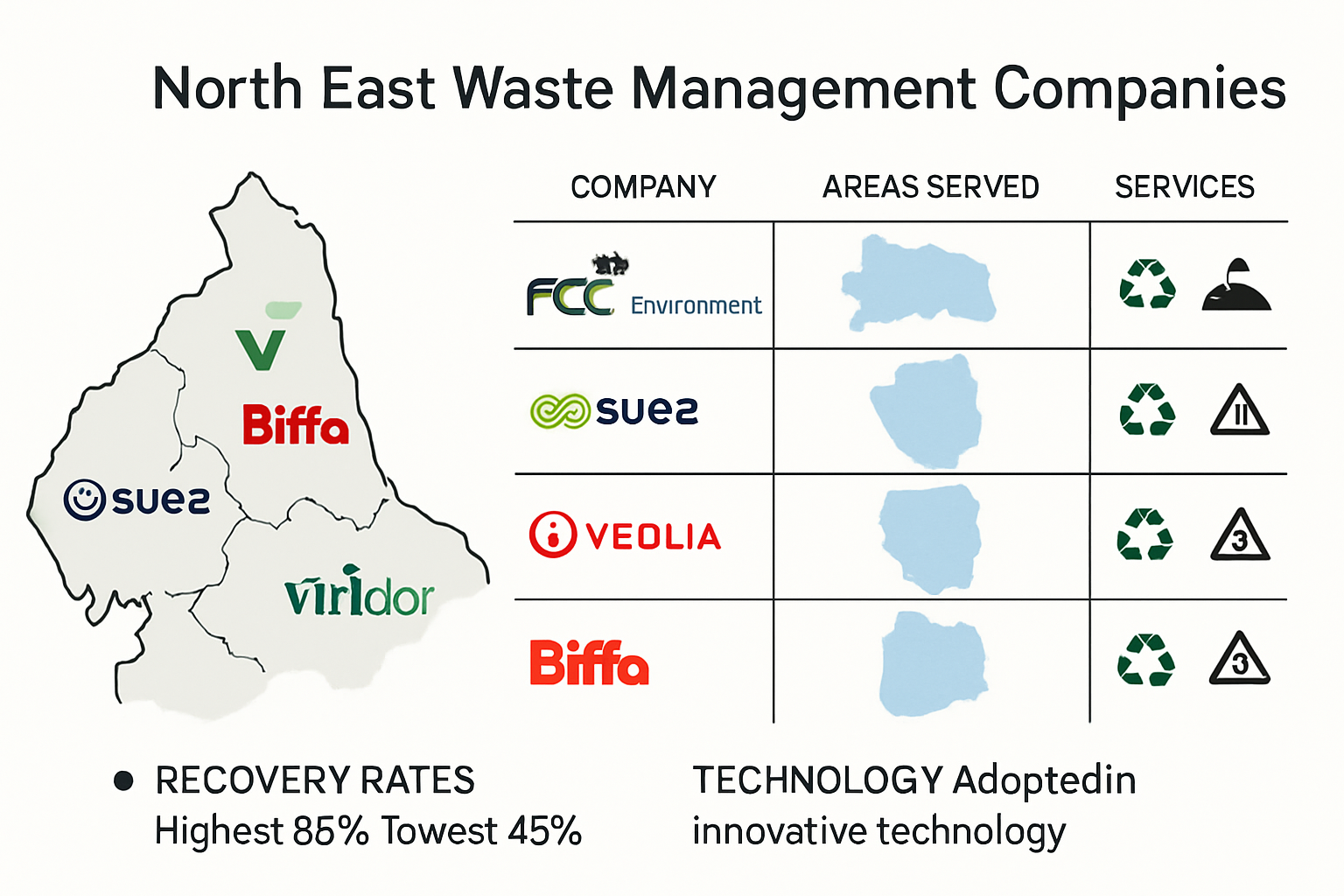
Several key players dominate the waste management landscape in the North East. According to WRAP UK, companies like Biffa, SUEZ, and Veolia have established substantial operational networks across the region. These companies offer a wide range of services including general waste collection, recycling, hazardous waste handling, and advanced waste treatment technologies.
Biffa, one of the largest waste management companies in the UK, has significant operations in the North East. Their facilities in areas like Newcastle and Sunderland specialise in comprehensive waste management solutions, processing thousands of tonnes of commercial and industrial waste annually. Environmental Services Association reports that such companies are critical in helping the region meet increasingly stringent environmental regulations and recycling targets.
To help readers quickly compare the offerings and focus areas of the major waste management companies operating in the North East, the following table summarises their key services and regional presence as described in the article:
| Company | Key Services | Regional Presence | Technology/Innovation Highlights |
|---|---|---|---|
| Biffa | General waste, recycling, hazardous waste | Newcastle, Sunderland | Comprehensive solutions, large-scale processing |
| SUEZ | Advanced recycling, complex waste, waste-to-energy | Durham, Northumberland, Teesside | State-of-the-art recycling, waste-to-energy, AI sorting |
| Veolia | Waste collection, advanced treatment technologies | North East-wide | Investment in sustainable treatment technology |
| Local Companies | Confidential shredding, specialist services | Various North East locations | Digital tracking, real-time reporting |
Innovative Waste Processing Facilities
The North East is home to several innovative waste processing facilities that go beyond traditional waste management approaches. For instance, facilities in areas like Teesside have developed advanced technologies for waste-to-energy conversion and materials recovery. These facilities not only manage waste effectively but also contribute to the region’s circular economy objectives.
Companies like SUEZ have invested heavily in state-of-the-art recycling centres that can process complex waste streams, including electronic waste, construction materials, and industrial byproducts. Their facilities in Durham and Northumberland demonstrate a commitment to sustainable waste management practices that minimise environmental impact.
Moreover, local waste management companies in the North East are increasingly focusing on digital innovations. Venture Waste’s guide on regional waste management highlights how these companies are implementing advanced tracking systems, real-time reporting, and data-driven waste reduction strategies.
The waste management sector in the North East is not just about disposal but about creating value from waste. Companies are transforming waste into resources, with recycling rates and sustainable practices becoming key differentiators in the market. From confidential document destruction to complex industrial waste processing, these companies are setting national standards for efficient and environmentally responsible waste management.
With continued investment in technology, infrastructure, and sustainable practices, the North East is positioning itself as a leading region for innovative waste management solutions that balance economic efficiency with environmental stewardship.
Comprehensive Recycling Facilities for All Business Types
The North East of England offers an expansive and sophisticated network of recycling facilities designed to cater to diverse business requirements across multiple industries. From small local enterprises to large industrial corporations, the region provides comprehensive recycling solutions that prioritise environmental sustainability and efficient waste management.
Specialised Recycling Infrastructure
Businesses in the North East benefit from highly specialised recycling facilities that can handle complex waste streams. According to Resource Recovery International, the region has developed advanced material recovery facilities capable of processing multiple waste types including electronic waste, construction materials, plastics, metals, and confidential documents.
These facilities employ cutting-edge sorting technologies that can separate different materials with remarkable precision. For instance, facilities in areas like Teesside and Newcastle utilise optical scanning, magnetic separation, and artificial intelligence-driven sorting systems to ensure maximum material recovery and minimal contamination. Waste Management World reports that such advanced technologies can achieve material recovery rates exceeding 85% for certain waste streams.
Industry-Specific Recycling Solutions
Different business sectors have unique waste management requirements, and the North East’s recycling infrastructure reflects this complexity. Manufacturing facilities can access specialised metal and industrial waste recycling services, while healthcare providers have dedicated facilities for safe medical waste processing. Retail and commercial enterprises can utilise comprehensive paper, cardboard, and packaging recycling streams.
The following table provides an overview of the industry-specific recycling solutions available in the North East, illustrating how the region’s infrastructure addresses unique waste management needs across various sectors:
| Industry Sector | Types of Waste Handled | Specialised Facilities/Services |
|---|---|---|
| Manufacturing | Metals, industrial byproducts | Dedicated metal and industrial recycling |
| Healthcare | Medical waste | Safe medical waste processing |
| Retail & Commercial | Paper, cardboard, packaging | Paper, cardboard, packaging recycling |
| Construction | Debris, building materials | Construction waste sorting & recycling |
| IT and Electronics | Electronic waste, components | Electronics dismantling, metals recovery |
| Administration/Offices | Confidential documents | Secure shredding and document recycling |
Moreover, Venture Waste’s comprehensive business recycling guide highlights the importance of tailored recycling strategies. Businesses are no longer limited to generic waste disposal but can now access targeted solutions that align with their specific operational needs and sustainability goals.
The region’s recycling facilities also emphasise circular economy principles. Instead of viewing waste as a disposal problem, these centres transform discarded materials into valuable resources. Electronic waste gets dismantled and processed, with rare metals and components recovered and reintroduced into manufacturing supply chains. Construction waste is sorted and recycled into new building materials, reducing the demand for virgin resources.
Technological innovation plays a crucial role in these advanced recycling capabilities. Many North East facilities now incorporate real-time tracking systems, allowing businesses to monitor their waste’s journey from collection through processing. This transparency helps companies understand their environmental impact and make more informed sustainability decisions.
Environmental regulations continue to drive improvements in recycling infrastructure. Facilities must comply with stringent UK and EU waste management standards, ensuring that recycling processes meet the highest environmental and safety criteria. This commitment to quality means businesses can trust that their waste is being handled responsibly and efficiently.
As the global focus on sustainability intensifies, the North East’s recycling facilities are positioning themselves at the forefront of waste management innovation. By offering flexible, technology-driven solutions for businesses of all sizes and sectors, the region demonstrates a forward-thinking approach to resource recovery and environmental stewardship.
Landfill Sites and Special Disposal Solutions
The North East of England maintains a sophisticated approach to landfill management and special waste disposal, balancing environmental responsibilities with innovative waste treatment strategies. This region has developed a complex infrastructure that goes beyond traditional landfill operations, focusing on sustainable waste management solutions that minimise environmental impact.
Advanced Landfill Management Strategies
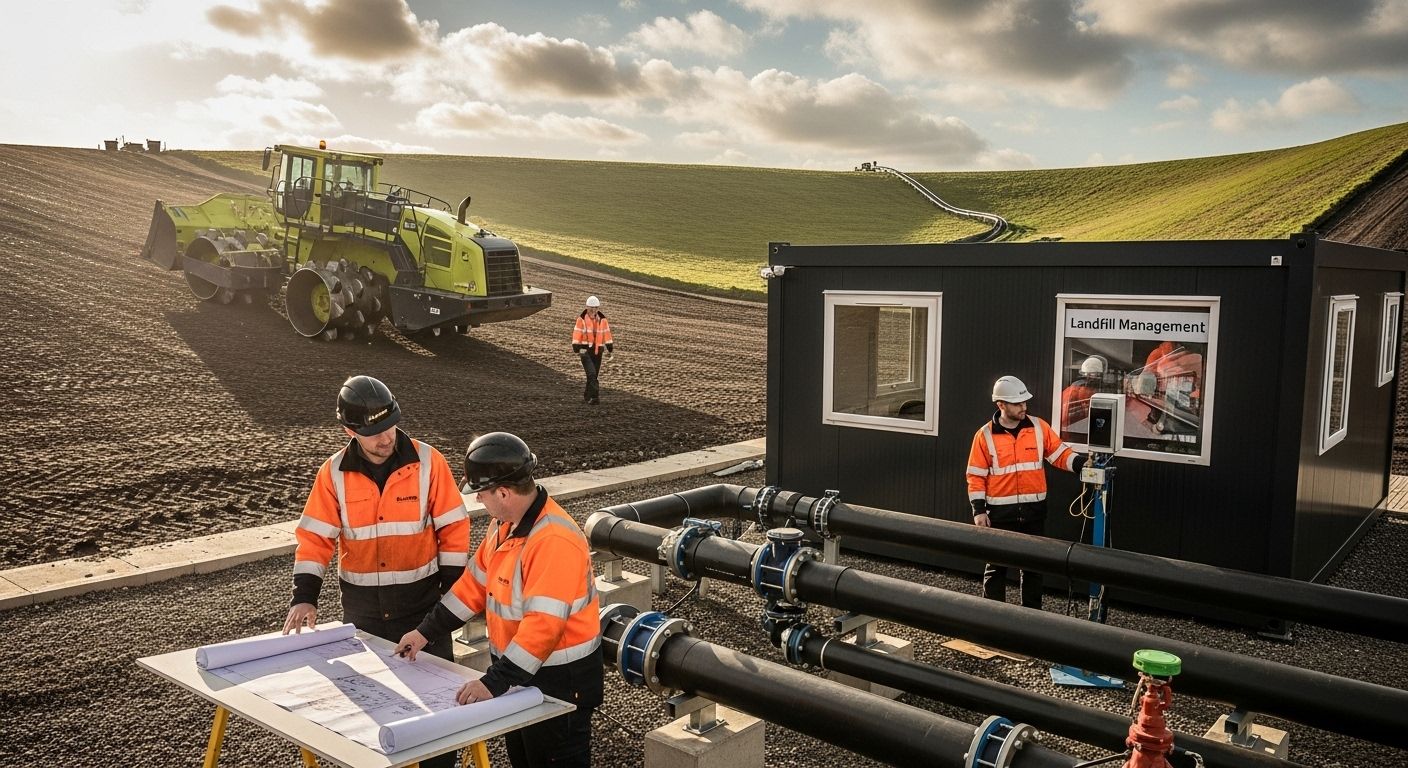
Modern landfill sites in the North East are far more than simple waste repositories. According to the Environment Agency, these facilities incorporate advanced technological systems for waste containment, leachate management, and methane capture. Sites in areas like County Durham and Teesside have implemented state-of-the-art environmental protection measures that significantly reduce potential ecological risks.
These landfill facilities employ multiple layers of protection, including synthetic liners, clay barriers, and sophisticated drainage systems that prevent groundwater contamination. Waste Management Research highlights that the North East’s landfill sites now represent a model of responsible waste management, with comprehensive monitoring systems that track environmental impact in real-time.
Specialised Waste Disposal Solutions
Beyond traditional landfill operations, the region offers highly specialised disposal solutions for complex waste streams. Industries with challenging waste disposal requirements – such as chemical manufacturing, healthcare, and industrial processing – can access targeted disposal services that meet stringent regulatory standards.
Venture Waste’s comprehensive guide to liquid waste disposal emphasises the importance of sector-specific waste management approaches. Hazardous materials, medical waste, and industrial byproducts receive carefully controlled treatment, ensuring minimal environmental risk and maximum safety compliance.
The North East has developed dedicated facilities for handling exceptional waste types. Pharmaceutical waste undergoes precise chemical neutralisation, while industrial chemical waste is processed through advanced thermal treatment technologies. These specialised approaches transform potentially harmful materials into less dangerous forms or recover valuable resources.
Environmental regulations have been instrumental in driving innovation in waste disposal. The region’s facilities must comply with rigorous UK and European Union standards, which mandate extensive pre-treatment processes before any waste can be consigned to landfill. This approach ensures that only truly non-recyclable and non-hazardous materials reach final disposal sites.
Technological advancements have revolutionised landfill management in the North East. Modern sites incorporate methane capture systems that convert landfill gas into renewable energy, effectively transforming waste management into a potential energy production opportunity. Some facilities can generate sufficient electricity to power thousands of local homes, demonstrating a circular economy approach to waste disposal.
The future of landfill management in the North East looks increasingly sustainable. Emerging technologies are reducing the volume of waste requiring permanent disposal, with an emphasis on recycling, energy recovery, and material reprocessing. Intelligent waste sorting, advanced separation technologies, and comprehensive recycling strategies are gradually diminishing the region’s reliance on traditional landfill methods.
As environmental consciousness grows, the North East continues to position itself at the forefront of innovative waste management. By combining technological expertise, strict regulatory compliance, and a commitment to environmental stewardship, the region demonstrates how landfill sites can evolve from simple disposal locations to sophisticated resource management centres.
Choosing the Right Waste Partner for Your Organisation
Selecting the appropriate waste management partner is a critical decision for organisations across the North East, with far-reaching implications for environmental sustainability, regulatory compliance, and operational efficiency. The region’s diverse waste management landscape offers multiple options, requiring businesses to carefully evaluate potential partners based on comprehensive criteria.
Strategic Selection Criteria
Effective waste partner selection demands a holistic approach that extends beyond mere cost considerations. According to WRAP UK, organisations should assess potential waste management providers across multiple dimensions including technological capabilities, environmental credentials, compliance track record, and service flexibility.
To help businesses evaluate potential waste management partners strategically, the following table lists key selection criteria and their relevance, as outlined in the article:
| Selection Criterion | Why It Matters |
|---|---|
| Recycling & Recovery Rates | Ensures effectiveness & compliance with regulations |
| Technological Capabilities | Enables transparency, tracking, and efficiency |
| Geographical Coverage | Guarantees localised, prompt service |
| Compliance Track Record | Reduces risk of fines and ensures legal conformity |
| Environmental Credentials | Supports sustainability goals, circular economy alignment |
| Service Flexibility | Allows tailored, sector-specific solutions |
| Cost vs. Long-Term Value | Balances economy with environmental responsibility |
Key evaluation parameters include the provider’s recycling rates, technological infrastructure, geographical coverage, and commitment to circular economy principles. Chartered Institution of Wastes Management recommends that businesses conduct thorough due diligence, examining potential partners’ certifications, waste processing technologies, and environmental management systems.
Tailored Waste Management Solutions
Businesses in the North East require waste management partners who can provide nuanced, industry-specific solutions. Venture Waste’s comprehensive guide to regional waste management emphasises the importance of finding a provider that understands sector-specific waste streams and regulatory requirements.
For manufacturing enterprises, this might mean partnering with a provider capable of handling complex industrial waste. Healthcare organisations need providers with specialised medical waste disposal capabilities. Retail and commercial sectors require comprehensive recycling and general waste management solutions that align with sustainability targets.
The EPA’s WasteWise program suggests implementing a Resource Management (RM) approach, where waste contractors are compensated based on achieving an organisation’s waste reduction goals. This innovative model incentivises contractors to identify cost-effective opportunities for waste prevention, recycling, and resource recovery.
Technological integration has become a crucial selection criterion. Modern waste management partners should offer real-time tracking systems, detailed waste auditing, comprehensive reporting, and digital platforms that provide transparency and insights into an organisation’s waste management performance.
Financial considerations remain important, but should not compromise environmental responsibility. Venture Waste’s guide on waste management cost optimisation highlights strategies for balancing economic efficiency with sustainable practices. Businesses should look beyond initial contract costs and evaluate long-term value, including potential savings from improved waste reduction and recycling strategies.
Environmental credentials have become increasingly significant. Organisations are now assessing waste management partners based on their commitment to carbon reduction, investment in green technologies, and alignment with circular economy principles. Providers demonstrating innovative approaches to waste minimisation and resource recovery are gaining competitive advantage.
The ideal waste management partner for North East organisations should combine local expertise with national capabilities. They must understand regional environmental regulations, possess advanced technological infrastructure, and demonstrate a genuine commitment to sustainable waste management practices.
Ultimately, choosing the right waste management partner is about establishing a strategic relationship that supports an organisation’s operational efficiency, environmental goals, and regulatory compliance. By conducting comprehensive assessments and prioritising providers with holistic, innovative approaches, businesses can transform waste management from a necessary expense into a strategic asset.
Frequently Asked Questions
What are the main services offered by waste management companies in the North East?
The main services include general waste collection, recycling, hazardous waste handling, and advanced waste treatment technologies. Major companies like Biffa, SUEZ, and Veolia provide comprehensive waste management solutions across the region.
How do North East recycling facilities achieve high material recovery rates?
Recycling facilities in the North East employ advanced technologies, such as optical scanning, magnetic separation, and AI-driven sorting systems, enabling them to achieve material recovery rates exceeding 85% for certain waste streams, including electronics and construction materials.
What is the role of landfill sites in waste management in the North East?
Landfill sites in the North East serve as controlled disposal locations for non-recyclable waste. They incorporate advanced environmental protection measures, such as methane capture systems, that convert landfill gas into renewable energy, thus minimising ecological impact.
How can businesses choose the right waste management partner in the North East?
Businesses should evaluate potential waste management partners based on their technological capabilities, environmental credentials, recycling rates, compliance history, and service flexibility to ensure they align with specific operational needs and sustainability goals.
Ready for Advanced Waste Solutions Tailored to the North East?
Is your business struggling to keep pace with the rapid innovation in North East waste management? Whether you grapple with complex recycling, strict compliance pressures, or simply want the smoothest waste collection process across cities like Newcastle, Sunderland and Durham, now is the time to bridge the gap between challenge and solution. Explore how the up-to-date waste collection process for UK businesses can improve material recovery rates and ensure regulatory success for your organisation.

Act today and let Venture Waste turn sustainability goals into results. Discover our full spectrum of business and domestic services on Venture Waste Management or learn how the UK’s waste collection network is transforming business operations in 2025. Book now and join other North East leaders choosing a compliant and stress-free approach.


Leave a Reply
Want to join the discussion?Feel free to contribute!