

Master Confidential Paper Recycling for Businesses
Secure document disposal is more than just shredding a few sheets at the office. Administrative departments, finance, HR, and legal teams together generate the largest volume of confidential paperwork in any business environment. It sounds like a logistical nightmare to sort and recycle it all safely. Yet, most companies overlook one fact. The key to protecting sensitive information and meeting strict regulations often starts with a simple yet thorough assessment of your everyday paper waste. The process is easier and more reliable than you might think.
Table of Contents
- Step 1: Assess Your Current Paper Waste
- Step 2: Choose A Secure Recycling Service
- Step 3: Prepare Paper For Recycling
- Step 4: Schedule Collection Or Drop-Off
- Step 5: Verify Proper Disposal Method
- Step 6: Maintain Record Of Disposal
Quick Summary
| Key Point | Explanation |
|---|---|
| 1. Assess Your Paper Waste | Conduct a detailed audit of all paper documents to understand the volume, type, and sensitivity of paper materials in your organisation. |
| 2. Choose a Secure Recycling Service | Select a recycling partner with certifications such as BS7858 and ISO 9001 to ensure information security and compliance with regulations. |
| 3. Prepare Documents for Recycling | Segregate confidential materials, remove non-paper elements, and establish secure collection points to protect sensitive information before disposal. |
| 4. Schedule Collections Efficiently | Establish a clear collection schedule that aligns with your document generation patterns, ensuring secure transport and proper documentation. |
| 5. Verify Disposal Methods | Request and review destruction certificates to ensure compliance with data protection regulations and maintain a clear audit trail for disposed documents. |
Step 1: Assess Your Current Paper Waste
Confidential paper recycling begins with a comprehensive assessment of your current waste streams, a critical first step for businesses across Newcastle, Durham, and the broader North East region. Understanding your paper waste profile enables targeted, efficient recycling strategies that protect sensitive information while reducing environmental impact.
To conduct a thorough waste assessment, start by performing a detailed audit of all paper documents generated within your organisation. This process involves meticulously tracking the volume, type, and sensitivity of paper materials across different departments. Administrative offices, finance teams, human resources, and legal departments typically produce the most confidential documentation requiring secure handling.
Map out your paper waste generation by collecting data on monthly document volumes, identifying which materials contain sensitive information. Consider consulting our guide on how to recycle printer’s waste for additional insights into managing printed materials. Pay special attention to documents containing personal identifiable information, financial records, client details, and internal strategic communications.
Your assessment should categorise paper waste into distinct groups:
- Confidential documents requiring secure destruction
- General office paper suitable for standard recycling
- Sensitive materials needing specialised disposal protocols
Successful completion of this step means having a clear, documented understanding of your organisation’s paper waste composition, enabling more strategic recycling and information protection approaches. By systematically evaluating your current waste streams, you create a foundation for implementing robust confidential paper recycling practices that safeguard both your business’s sensitive information and environmental responsibilities.
Step 2: Choose a Secure Recycling Service
Selecting a secure recycling service represents a critical decision in your confidential paper recycling strategy, requiring careful evaluation of potential providers to ensure complete information protection and regulatory compliance. Businesses across Newcastle and the North East must prioritise services that demonstrate robust security protocols and comprehensive destruction capabilities.
Certification and compliance are paramount when choosing a confidential paper recycling partner. Look for providers holding recognised accreditations such as BS7858 and ISO 9001, which indicate rigorous security screening and quality management standards. These certifications signal a commitment to professional information handling and demonstrate the company’s capability to manage sensitive document destruction with the highest level of integrity.
When evaluating potential recycling services, request detailed information about their destruction processes. Seek providers offering secure on-site shredding or locked consignment services, which minimise the risk of information interception during transportation and disposal. Learn more about confidential waste management to understand the nuanced requirements of secure document handling.
Key criteria for selecting a confidential paper recycling service include:
- Provision of secure, tamper-proof collection containers
- Documented chain of custody for all collected materials
- Transparent destruction reporting and certification
- Compliance with Data Protection Act and GDPR regulations
Careful vendor selection transcends merely finding a recycling provider; it involves partnering with a trusted organisation that understands the intricate balance between environmental responsibility and information security. By thoroughly investigating potential services and their security credentials, businesses can develop a confidential paper recycling strategy that protects sensitive information while supporting sustainable waste management practices.
Successful completion of this step means identifying a recycling partner who can provide comprehensive, secure, and legally compliant document destruction services tailored to your specific organisational needs.
Step 3: Prepare Paper for Recycling
Preparing paper for confidential recycling requires a systematic approach that balances information security with environmental responsibility. Businesses must implement a strategic process that ensures sensitive documents are appropriately sorted, processed, and readied for secure destruction and recycling across Newcastle and the North East region.
Effective paper preparation begins with comprehensive document segregation. Create distinct collection streams for different types of confidential materials, distinguishing between highly sensitive documents requiring immediate secure destruction and standard office paper suitable for conventional recycling. This initial sorting prevents potential information breaches and streamlines the recycling workflow.
Implement a clear organisational protocol for document handling. Remove plastic elements like paperclips, staples, and plastic covers from documents before recycling. While small metal fasteners can typically remain, larger plastic components must be manually separated to ensure recycling quality. Explore our guide on cardboard recycling practices for additional insights into effective waste management strategies.
Establish secure collection points within your organisation where confidential documents can be deposited safely. These collection areas should feature lockable containers that prevent unauthorized access and maintain document integrity until secure collection. Critical considerations include controlling access, monitoring collection points, and maintaining a clear chain of custody.
Key preparation steps include:
- Removing non-paper materials from documents
- Segregating documents by sensitivity level
- Using designated secure collection containers
- Maintaining a log of collected materials
Successful document preparation protects sensitive information while facilitating efficient recycling processes. By implementing a structured approach to paper preparation, businesses can simultaneously address data protection requirements and environmental sustainability goals. The ultimate objective is creating a seamless, secure workflow that transforms potentially vulnerable paper waste into a responsible recycling opportunity.

Step 4: Schedule Collection or Drop-off
Scheduling confidential paper recycling collection represents a critical junction in your waste management strategy, bridging the gap between careful preparation and secure disposal. Businesses across Newcastle and the broader North East region must approach this step with precision and strategic planning to ensure seamless, secure document handling.
Timing and coordination are paramount when arranging confidential paper recycling services. Contact your selected recycling provider to establish a collection schedule that aligns with your organisation’s specific needs and document generation patterns. Some businesses benefit from regular, scheduled collections, while others might require more flexible, on-demand services depending on their document volume and sensitivity.
When scheduling, provide your recycling partner with detailed information about the anticipated volume of confidential documents, special handling requirements, and any specific security protocols your organisation demands. Learn more about efficient waste collection scheduling to optimise your approach and ensure smooth logistics.
Businesses have two primary collection options: scheduled recurring collections or one-time drop-off services. Recurring collections work best for organisations generating consistent volumes of confidential documents, providing regular, predictable disposal cycles. One-time drop-off services suit companies with sporadic document destruction needs or those managing significant document clear-outs.
The following table summarises the two primary options for confidential paper recycling collection, making it easier to compare their suitability for different business needs.
| Collection Option | Description | Best for | Key Considerations |
|---|---|---|---|
| Scheduled Recurring | Regular collection at set intervals (weekly, monthly, etc.) | Organisations with consistent document volumes | Predictable schedule, ongoing contract |
| One-Time Drop-Off | Single, ad hoc disposal for occasional or bulk clear-outs | Businesses with sporadic or large-scale needs | Flexible, may require advance booking |
Key considerations for collection scheduling include:
- Confirming precise collection/drop-off times
- Ensuring secure transportation arrangements
- Verifying chain of custody documentation
- Understanding destruction and recycling confirmation processes
Successful collection scheduling requires clear communication with your recycling service provider. Confirm all logistical details, including access points, security protocols, and documentation requirements. By meticulously planning your confidential paper recycling collection, you transform a potentially complex process into a streamlined, secure workflow that protects sensitive information while supporting environmental sustainability goals.
Step 5: Verify Proper Disposal Method
Verifying the proper disposal method is the final critical checkpoint in your confidential paper recycling journey, ensuring that sensitive documents are destroyed securely and environmentally responsibly. Businesses across Newcastle and the North East must approach this step with meticulous attention to detail and a commitment to comprehensive information protection.
Requesting and carefully reviewing destruction certificates represents the cornerstone of verification. These official documents provide tangible proof that your confidential documents have been processed through secure, compliant destruction channels. Each certificate should detail the date of destruction, volume of materials processed, and specific method used, creating a clear audit trail for your organisation’s information management practices.
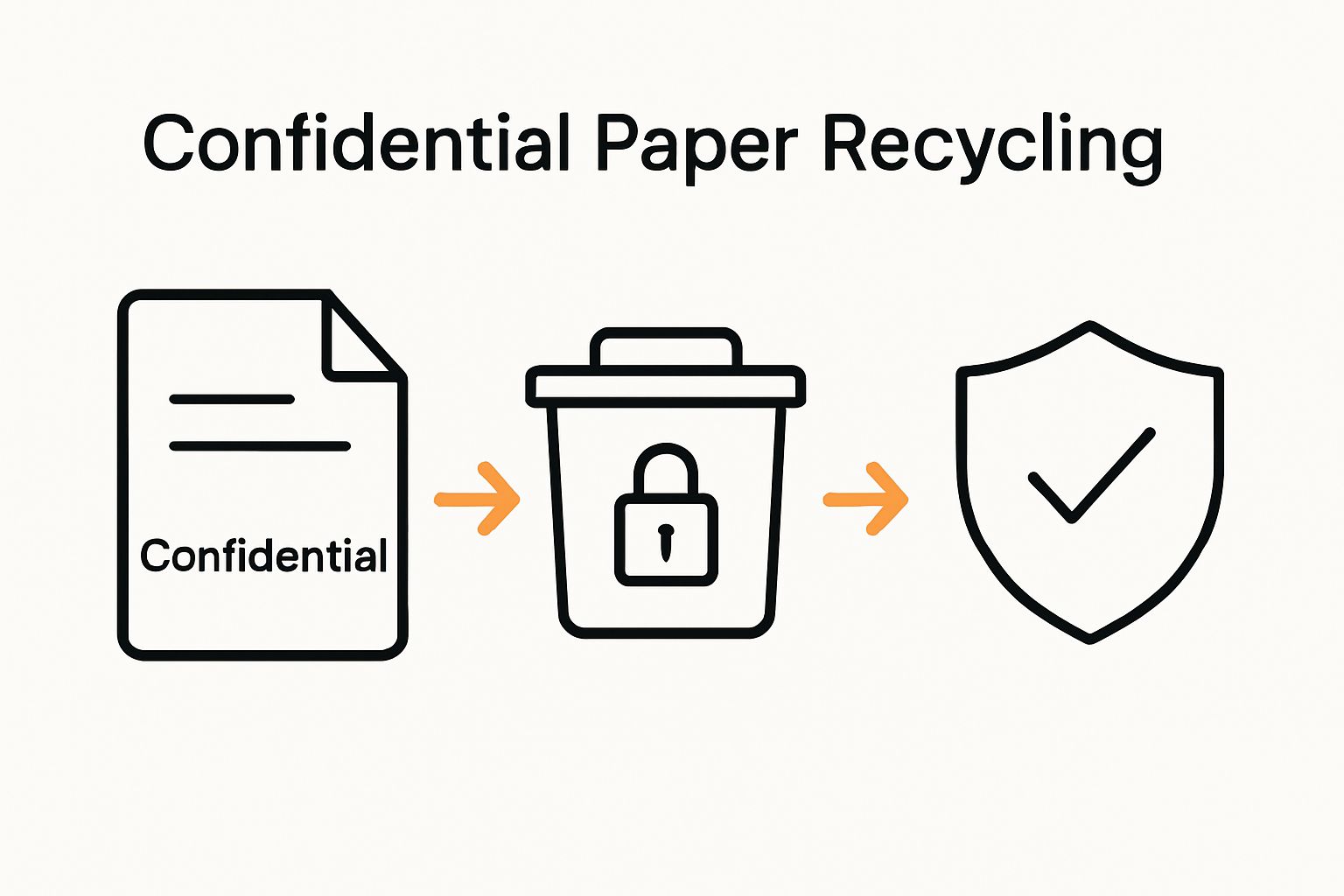
Learn more about hazardous waste regulations to understand the broader context of document disposal compliance. Professional recycling services should provide comprehensive documentation that demonstrates adherence to data protection regulations, including GDPR requirements and industry-specific confidentiality standards.
Digital and physical verification methods are equally important. Request video evidence of the destruction process for highly sensitive materials, and maintain digital records of all disposal certificates. Some advanced recycling services offer real-time tracking and documentation, allowing businesses to monitor their confidential document disposal process from collection through complete destruction.
Key verification steps include:
- Obtaining and storing destruction certificates
- Confirming compliance with data protection regulations
- Verifying the recycling process meets environmental standards
- Maintaining a comprehensive audit trail of document disposal
Successful verification transforms confidential paper recycling from a potential risk into a strategic business process. By implementing rigorous verification protocols, organisations protect sensitive information, demonstrate corporate responsibility, and contribute to sustainable waste management practices. The ultimate goal is creating a transparent, secure disposal workflow that provides peace of mind and meets the highest standards of information protection.
Step 6: Maintain Record of Disposal
Maintaining comprehensive records of confidential paper disposal is a critical final step in your recycling process, serving as both a legal requirement and a strategic business protection mechanism. For organisations across Newcastle and the North East, meticulous documentation ensures compliance, demonstrates corporate responsibility, and provides a robust audit trail for potential future review.
Digital and physical record-keeping strategies are essential for effective documentation. Create a systematic approach that captures all relevant details about each confidential paper disposal event. This includes recording the date of collection, volume of documents destroyed, certification numbers, and the specific destruction method employed. These records should be stored securely, with both digital and physical backups to prevent potential information loss.
Explore our guide on GDPR compliant waste disposal to understand the comprehensive requirements for maintaining disposal documentation. Implement a standardised template or digital tracking system that captures consistent information across all disposal events, ensuring uniformity and ease of future reference.
Retention periods are crucial in record maintenance. Most regulatory guidelines recommend maintaining disposal records for a minimum of two to three years, though some industries may require longer retention periods. Consider developing a structured filing system that categorises disposal records by date, department, and sensitivity level, enabling quick retrieval and comprehensive organisational oversight.
This checklist table organises the key requirements for successful record-keeping of confidential paper disposal, ensuring ongoing compliance and audit readiness.
| Requirement | Description | Importance |
|---|---|---|
| Store Destruction Certificates | Securely archive digital and physical copies | Legal compliance, audit trail |
| Centralised Document Management System | Maintain records in an organised, secure location | Easier retrieval, improved oversight |
| Consistent Documentation Protocols | Use a standardised template for each disposal event | Uniformity, reduces errors |
| Regular Review and Updates | Periodically audit and improve record-keeping processes | Ongoing compliance, process integrity |
| Adhere to Retention Periods | Keep records for minimum 2-3 years, or as required | Regulatory requirement |
Key record maintenance considerations include:
- Storing digital and physical copies of destruction certificates
- Creating a centralised, secure document management system
- Implementing consistent documentation protocols
- Regularly reviewing and updating record-keeping processes
Successful record maintenance transforms confidential paper recycling from a routine administrative task into a strategic governance mechanism. By developing a robust, systematic approach to documentation, businesses protect themselves legally, demonstrate environmental responsibility, and create a transparent waste management workflow that builds trust with stakeholders and regulatory bodies.
Ready to Transform Your Confidential Paper Recycling?
If securing sensitive business data while embracing environmental responsibility feels like an ongoing challenge, you are not alone. Many companies struggle with issues like proper document sorting, choosing a trustworthy recycling partner, and ensuring compliant disposal. At Venture Waste, we make confidential document destruction easy and worry-free. Discover how our confidential waste solutions address your exact concerns about chain of custody, legal compliance, and peace of mind during every step of the recycling process.

Act now to protect your business’s reputation and simplify your processes. Book our confidential recycling services today through Venture Waste Management and experience a seamless, secure, and fully compliant approach from initial assessment to final destruction. Find the right solution from North East leaders in confidential waste management and let your business focus on what matters most.
Frequently Asked Questions
What is the first step in confidential paper recycling for businesses?
The first step is to assess your current paper waste by conducting a thorough audit of all paper documents generated within your organisation, categorising them based on their sensitivity and need for secure destruction.
How do I choose a secure recycling service for confidential documents?
Select a recycling service that holds certifications such as BS7858 and ISO 9001, offers secure on-site shredding or locked consignment, and complies with data protection regulations like the Data Protection Act and GDPR.
What should I do to prepare paper documents for recycling?
Prepare paper for recycling by segregating documents according to their sensitivity, removing non-paper materials like staples and plastic covers, and placing them in secure, lockable collection containers.
How can I ensure the proper disposal of my confidential documents?
Verify proper disposal by requesting destruction certificates from your recycling provider, ensuring compliance with data protection regulations, and maintaining a comprehensive audit trail to confirm the secure destruction of sensitive materials.


Leave a Reply
Want to join the discussion?Feel free to contribute!