

Managing Hazardous Waste Safely in County Durham: A Guide for Businesses
Handling hazardous waste might seem straightforward but in County Durham the reality is anything but simple. Every year, hundreds of businesses in the North East generate over 50,000 tonnes of dangerous waste requiring specialist care. Most think sorting and binning is enough. Actually, missing just one regulatory step can land a company with hefty fines or worse harm the environment and put people at risk. So the routine bin round is riskier and more involved than most imagine.
Table of Contents
- Step 1: Identify And Categorise Hazardous Waste
- Step 2: Implement Safety Protocols And Procedures
- Step 3: Choose Approved Disposal Methods And Services
- Step 4: Train Staff On Hazardous Waste Handling
- Step 5: Monitor And Review Waste Management Practices
Quick Summary
| Key Point | Explanation |
|---|---|
| 1. Identify hazardous waste accurately | Thoroughly assess business operations to classify waste types, distinguishing hazardous from non-hazardous materials. |
| 2. Implement comprehensive safety protocols | Develop tailored procedures and risk assessments, ensuring worker protection and regulatory compliance for hazardous waste management. |
| 3. Engage licensed waste disposal services | Always use Environment Agency-registered carriers for safe and legal disposal, verifying their credentials and waste handling expertise. |
| 4. Train staff effectively on waste handling | Create hands-on training programmes to equip employees with skills for identifying and managing hazardous materials safely. |
| 5. Conduct regular monitoring and reviews | Establish a robust tracking system for waste management, utilizing audits and performance reports to identify improvement areas. |
Step 1: Identify and Categorise Hazardous Waste
Identifying and categorising hazardous waste is the foundational step for safe waste management across County Durham. Businesses must understand precisely what constitutes hazardous waste to prevent potential environmental and legal risks. Hazardous waste contains substances that could harm human health or the environment, requiring specialised handling and disposal protocols.
To begin this critical process, examine your business operations thoroughly. Look for materials containing chemicals, heavy metals, solvents, batteries, electronic equipment, medical waste, or potentially contaminated substances. Businesses in areas like Durham, Newcastle, and Sunderland often generate complex waste streams that demand careful assessment. Learn more about hazardous waste identification to ensure comprehensive understanding.
Classification involves carefully reviewing each waste stream’s composition and potential environmental impact.
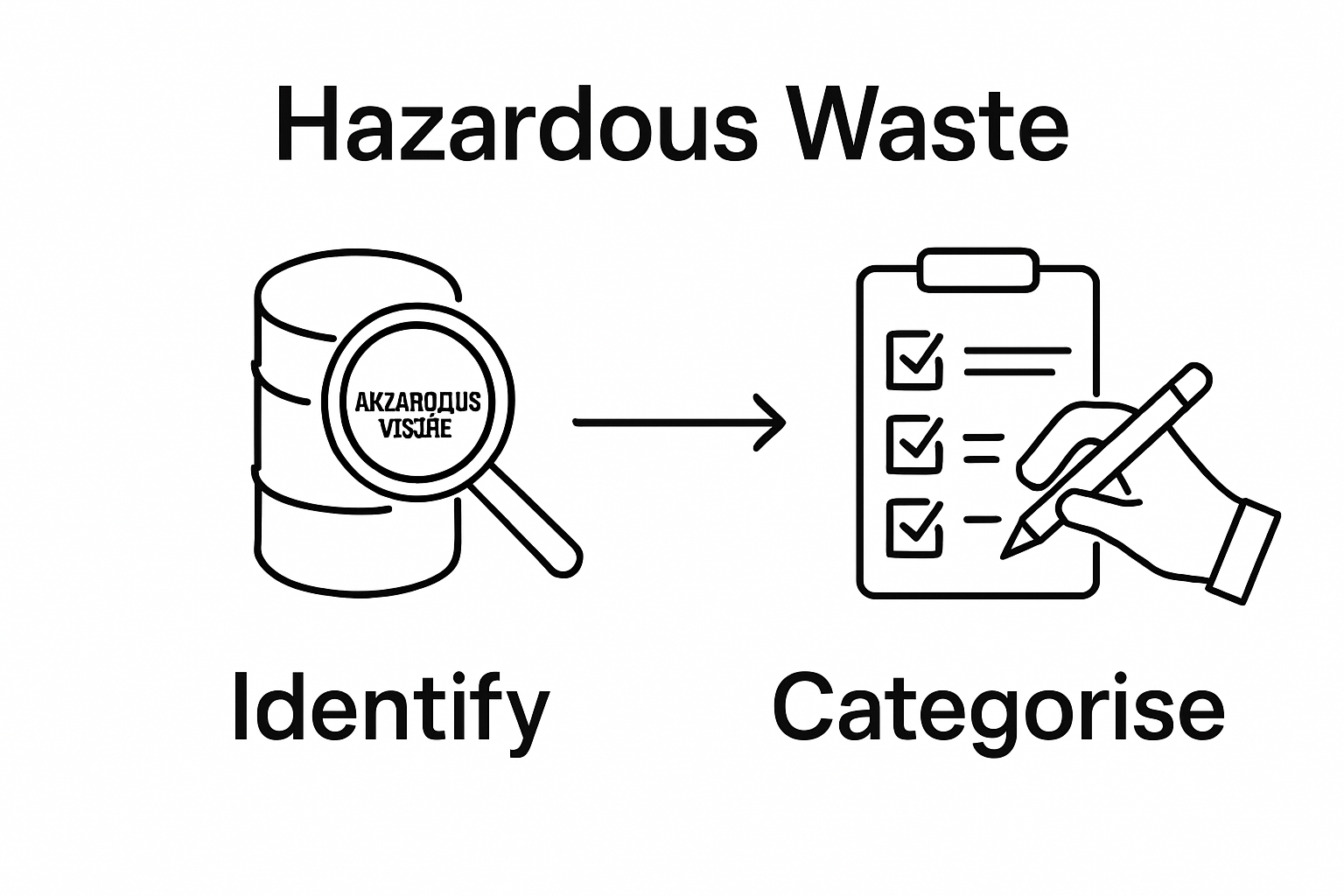 The UK government requires businesses to determine if waste is hazardous by checking its properties against specific criteria. Key characteristics include toxicity, flammability, corrosiveness, and potential for environmental contamination. For instance, waste containing substances like lead, mercury, asbestos, or industrial chemicals automatically qualifies as hazardous.
Documentation plays a crucial role in this identification process. Maintain detailed records of waste origins, chemical compositions, and potential risks. This documentation not only ensures regulatory compliance but also helps waste management professionals determine the most appropriate disposal methods. Professional waste audits can provide additional support in accurately categorising complex waste streams, particularly for businesses with multiple waste types.
Below is a summary table comparing the key types of hazardous waste mentioned in the guide, along with their identifying characteristics and required documentation focus.
| Waste Type | Common Substances | Identifying Characteristics | Documentation Focus |
|---|---|---|---|
| Chemical | Solvents, industrial chemicals | Toxicity, flammability | Chemical composition records |
| Electronic | Batteries, electronic equipment | Contains heavy metals, circuitry | Source and handling logs |
| Medical | Medical waste | Contamination risk, infection hazard | Waste origin and risk assessment |
| Heavy Metals | Lead, mercury | Toxicity, environmental threat | Hazardous waste codes and audits |
| Asbestos-Containing | Asbestos | Fibrous, carcinogenic | Specialist categorisation and tracking |
| Other Hazardous | Contaminated substances | Potential for chemical reaction | Cross-referenced with EA guidelines |
Verify your categorisation by cross-referencing waste types with the Environment Agency’s hazardous waste guidelines. Businesses should look for specific waste codes that precisely match their materials. If uncertainty remains, consulting with professional waste management experts can provide definitive guidance on proper waste classification and handling procedures.
Step 2: Implement Safety Protocols and Procedures
Implementing robust safety protocols is a critical next step in managing hazardous waste across County Durham. Businesses must develop comprehensive procedures that protect workers, the environment, and the wider community from potential risks associated with hazardous materials. Effective safety protocols are not just a legal requirement but a fundamental responsibility for any organisation handling dangerous waste streams.
Begin by conducting a thorough risk assessment specific to your business’s unique waste management challenges. This involves identifying potential hazards, evaluating the likelihood of incidents, and designing targeted prevention strategies. For businesses in industrial areas like Teesside or Durham’s manufacturing zones, this might include specialised containment methods for chemical waste, protective equipment requirements, and emergency response plans. Explore our comprehensive guide to hazardous waste regulations to ensure full compliance.
Personal protective equipment (PPE) forms a crucial component of safety protocols. Workers handling hazardous waste must be equipped with appropriate gear tailored to specific waste types. This typically includes chemical-resistant gloves, safety goggles, protective suits, and respiratory protection. Training becomes paramount – every employee involved in waste handling must understand how to use PPE correctly, recognise potential risks, and respond to potential contamination scenarios.
Establish clear segregation and storage procedures for different hazardous waste types. Different materials require specific containment strategies to prevent chemical reactions, leakage, or environmental contamination.
Implement a colour-coded storage system, use appropriate sealed containers, and create designated storage areas with proper ventilation and spill containment mechanisms. Businesses should maintain detailed logs tracking waste movements, quantities, and potential interactions between different waste streams.
Develop a comprehensive emergency response plan that outlines precise actions for potential incidents. This plan should include immediate containment procedures, evacuation protocols, communication strategies, and contact information for local environmental agencies and emergency services. Regular drills and training sessions will ensure that staff remain prepared and confident in managing unexpected hazardous waste scenarios. Verification of your safety protocols involves regular internal audits, comprehensive documentation, and staying updated with the latest health and safety guidelines from regulatory bodies.
This table provides an overview of suggested safety protocols, their purposes, and key verification steps to assist businesses in implementing effective hazardous waste handling procedures.
| Safety Protocol | Purpose | Key Verification Step |
|---|---|---|
| Risk Assessment | Identify hazards and prevention measures | Maintain assessment records and updates |
| Personal Protective Equipment | Protect workers from exposure | Regular checks and staff training logs |
| Segregation and Storage | Prevent chemical reactions, leaks | Detailed storage logs and inspections |
| Emergency Response Plan | Ensure preparedness for incidents | Documentation of drills and revisions |
| Internal Audits | Continuous improvement and compliance | Audit reports and action plans |
Step 3: Choose Approved Disposal Methods and Services
Selecting appropriate disposal methods and services represents a critical phase in responsible hazardous waste management across County Durham. Businesses must prioritise legally compliant, environmentally safe disposal strategies that protect both organisational interests and broader ecological systems. The right disposal approach minimises potential environmental risks while ensuring full regulatory adherence.
Navigating the complex landscape of hazardous waste disposal requires careful consideration of multiple factors. Businesses should exclusively engage with licensed waste carriers registered with the Environment Agency. These approved providers possess the necessary certifications and expertise to handle different waste streams safely and legally. Learn more about waste compliance steps to understand the intricate requirements for proper disposal.
Comprehensive due diligence becomes paramount when selecting disposal services. Request and verify waste carrier licenses, review environmental certifications, and examine the provider’s track record in handling similar waste types. Businesses operating in industrial zones around Durham, Newcastle, and Teesside should pay particular attention to specialised disposal requirements for chemical, electronic, and medical waste streams. Each waste type demands specific treatment protocols to prevent potential environmental contamination.
Documentation represents another crucial aspect of the disposal process. Maintain meticulous records of waste transfer, including detailed consignment notes that track the entire disposal journey. These documents not only ensure legal compliance but also provide a transparent audit trail demonstrating your business’s commitment to responsible waste management. Some disposal services offer comprehensive tracking systems that allow real-time monitoring of waste movements from collection through final processing.
Establish clear evaluation criteria for selecting disposal services. Key considerations should include the provider’s environmental credentials, disposal technologies, recycling capabilities, and commitment to sustainable practices. Businesses should prioritise providers offering transparent reporting, advanced treatment technologies, and demonstrable environmental stewardship. Regular performance reviews and ongoing communication with your chosen waste disposal partner will help maintain high standards of waste management and adapt to evolving regulatory requirements.
Step 4: Train Staff on Hazardous Waste Handling
Training staff on hazardous waste handling is a critical investment in workplace safety and regulatory compliance for businesses across County Durham. Effective training transforms theoretical knowledge into practical skills that protect workers, the environment, and the organisation’s reputation. This comprehensive approach goes beyond simple instruction, creating a culture of safety and environmental responsibility.
Developing a robust training programme requires a multifaceted approach tailored to your specific workplace environment. Begin by conducting a thorough assessment of the unique hazardous waste streams encountered in your business. Companies in industrial areas like Teesside and Durham will need specialised training that addresses the specific chemical, electronic, or medical waste types they manage. Explore our comprehensive hazardous waste disposal guide to understand the depth of training required.
Training should encompass several critical components. Employees must learn precise identification techniques for different hazardous waste types, understanding their potential risks and appropriate handling procedures. This includes recognising warning labels, understanding chemical properties, and knowing the correct personal protective equipment for each waste stream. Practical demonstrations and hands-on training sessions are far more effective than theoretical lectures, allowing staff to develop muscle memory and confidence in managing hazardous materials.
Establish a comprehensive documentation and verification process for your training programme. This involves creating detailed training records, conducting regular competency assessments, and implementing a system of periodic refresher courses. Businesses should develop written training materials, maintain signed acknowledgement forms, and conduct practical assessments that demonstrate staff understanding. Key verification methods include written examinations, practical handling tests, and scenario-based training that simulates real-world hazardous waste management challenges.
Continuous learning remains paramount in hazardous waste management. Implement a dynamic training approach that adapts to changing regulations, new waste management technologies, and emerging environmental guidelines. Regular external training, subscription to industry updates, and engagement with local environmental agencies will ensure your staff remain at the forefront of safe waste handling practices. By treating staff training as an ongoing process rather than a one-time event, businesses can create a proactive safety culture that minimises risks and demonstrates environmental responsibility.
Step 5: Monitor and Review Waste Management Practices
Monitoring and reviewing waste management practices represents the critical final stage in ensuring comprehensive hazardous waste safety across County Durham’s business landscape. Systematic evaluation transforms compliance from a static requirement into a dynamic, continuously improving process. This step allows businesses to identify potential inefficiencies, reduce environmental risks, and demonstrate ongoing commitment to responsible waste management.
Establishing a robust monitoring framework requires developing comprehensive tracking mechanisms for all hazardous waste streams. Businesses should create detailed logs documenting waste generation volumes, disposal methods, transportation records, and associated environmental impacts. Companies operating in industrial zones around Durham, Newcastle, and Teesside must pay particular attention to capturing granular data that provides insights into waste production patterns. Discover strategies for optimising waste management costs to understand how effective monitoring can drive financial efficiency.
Regular internal audits form the cornerstone of an effective monitoring programme. Schedule quarterly reviews that comprehensively examine waste management documentation, assess staff training effectiveness, and evaluate compliance with current environmental regulations. These audits should involve cross-departmental collaboration, ensuring that perspectives from operations, health and safety, and environmental management teams are integrated into the review process. Utilise standardised checklists and assessment tools to maintain consistency and objectivity during these evaluations.
Develop a proactive reporting mechanism that transforms monitoring data into actionable insights. Create visual dashboards and performance reports that track key metrics such as waste reduction percentages, disposal efficiency, and compliance status. These reports should not only document current performance but also highlight potential areas for improvement, emerging risks, and opportunities for more sustainable waste management practices. Engage external environmental consultants periodically to provide independent assessments and benchmark your practices against industry best standards.
Implement a continuous improvement cycle that treats waste management as an evolving discipline. Establish clear feedback loops where monitoring insights directly inform training programmes, safety protocols, and disposal strategies. Annual strategic reviews should reassess waste management objectives, incorporating technological advancements, regulatory changes, and lessons learned from the previous year’s monitoring activities. By treating waste management as a dynamic process of ongoing refinement, businesses can transform compliance from a mandatory requirement into a strategic competitive advantage.
The following table summarises important documentation and verification practices required at each main stage of hazardous waste management, supporting compliance and ongoing improvements.
| Stage | Main Documentation Required | Verification Method |
|---|---|---|
| Identification | Waste records, chemical compositions | Cross-check with EA code/guides |
| Safety Protocols | Training logs, PPE checklists | Internal audits |
| Disposal | Consignment notes, carrier licences | Audit trail, service reviews |
| Staff Training | Training registers, signed forms | Written exams, practical tests |
| Monitoring & Review | Waste logs, audit results | Reports, external consultancy |

Take the Risk Out of Hazardous Waste Management in County Durham
Struggling to keep up with complex hazardous waste regulations and safety requirements? Many businesses in County Durham face the real risk of legal penalties and environmental harm when waste streams are not handled the right way. Our article explained how vital it is to identify, categorise, and dispose of hazardous waste using strict procedures. But even with this knowledge, putting best practice into action often means managing documentation, staff training, compliance and disposal partners all at once.
If you feel overwhelmed by the rules and want true peace of mind, visit our regulation resource hub to stay updated on legal requirements and practical solutions.

With Venture Waste, you receive more than just guidance. We offer a proven three-step service to streamline hazardous waste collections and ensure your processes are up to standard from start to finish. Our licensed experts ensure your staff are protected, documentation is complete, and your business stays compliant. Let us handle the risks so you can focus on your core operations. Act now to protect your company—learn more or book your tailored waste solution at https://venturewaste.co.uk.
Frequently Asked Questions
What constitutes hazardous waste for businesses?
Hazardous waste includes substances that can harm human health or the environment, such as chemicals, heavy metals, solvents, electronic equipment, batteries, and medical waste. It requires specialised handling and disposal protocols.
How can businesses identify hazardous waste?
Businesses can identify hazardous waste by thoroughly examining their operations for materials containing harmful substances. Consulting the Environment Agency’s hazardous waste guidelines and waste codes is essential for accurate classification.
What safety protocols should be implemented for hazardous waste handling?
Robust safety protocols should include risk assessments, proper personal protective equipment (PPE), clear segregation and storage procedures, and a comprehensive emergency response plan to mitigate potential risks associated with hazardous materials.
How can businesses ensure compliance with hazardous waste disposal regulations?
To ensure compliance, businesses should engage with licensed waste carriers registered with the Environment Agency, maintain meticulous records of waste transfer, and regularly review disposal practices against current environmental regulations.


Leave a Reply
Want to join the discussion?Feel free to contribute!