

Complete Guide to Liquid Waste Management UK
Did you know the UK produces over 11 billion litres of liquid waste every year? With strict rules and growing environmental concerns, the right approach to handling liquid waste is more vital than ever for businesses. Failing to manage these waste streams can cause serious harm to public health and the planet. Discover straightforward ways businesses can cut risks, stay compliant, and protect their reputation by understanding liquid waste management essentials.
Table of Contents
- Defining Liquid Waste Management In The UK
- Common Types Of Liquid Waste Explained
- Collection, Treatment, And Disposal Methods
- Legal Obligations And Regulatory Compliance
- Risks, Costs, And Choosing Providers
Key Takeaways
| Point | Details |
|---|---|
| Legal Compliance | Businesses must accurately classify liquid waste and adhere to regulations outlined in the Environmental Protection Act 1990 to avoid legal repercussions. |
| Waste Stream Management | Proper identification and classification of liquid waste types are essential for effective treatment, disposal, and environmental compliance. |
| Provider Selection | Choosing a reliable waste management provider is critical; businesses should evaluate compliance credentials, service flexibility, and environmental impact. |
| Systematic Process | Liquid waste management involves structured stages: collection, containment, transportation, treatment, and disposal, all aimed at minimizing environmental risks. |
Defining Liquid Waste Management in the UK
Liquid waste management represents a critical environmental and regulatory process for businesses across the United Kingdom, involving the systematic collection, treatment, and disposal of fluid-based waste materials. According to the European Environment Agency, liquid waste comprises diverse fluid substances including sewage, domestic wastewater, processed water, and industrial liquids generated from sectors like pulp and paper production, food processing, and chemical manufacturing.
Businesses in the UK face stringent legal responsibilities when handling liquid waste. As government guidelines indicate, organisations must meticulously identify and classify their waste streams before recycling or disposal to prevent potential environmental harm and ensure compliance with national regulations. This process involves carefully assessing the waste’s composition, potential environmental impact, and appropriate treatment methods.
The liquid waste management landscape encompasses several key elements:
- Comprehensive waste characterisation
- Appropriate collection and transportation protocols
- Safe treatment and processing techniques
- Environmentally responsible disposal strategies
For businesses seeking detailed insights into managing their liquid waste effectively, our step by step waste management guide provides comprehensive strategies tailored to UK regulatory requirements. Understanding these processes helps organisations maintain legal compliance while minimising their environmental footprint.
Common Types of Liquid Waste Explained
Liquid waste represents a complex and diverse category of materials that businesses and industries must manage carefully. According to research from Geneco UK, liquid waste encompasses multiple critical categories, including landfill leachate, farm and dairy waste, domestic waste like septic tank effluent, and various industrial waste streams such as chemical and toxic materials.
The spectrum of liquid waste is remarkably broad. As identified by Divert UK, liquid waste streams include multiple distinct types:
To help clarify, here is a summary of common liquid waste types and typical examples in the UK:
| Waste Type | Typical Examples | Primary Sources |
|---|---|---|
| Waste Oil | Used engine oil Cooking oil |
Automotive Catering |
| Water Waste | Flood water Contaminated process water |
Construction Industry |
| Tank Wastes | Cesspit waste Effluent tank output |
Agriculture Domestic sites |
| Industrial Sludges | Pulp residues Processing slurry |
Manufacturing Paper mills |
| Sewage | Domestic sewage Commercial wastewater |
Municipal Business premises |
| Hazardous Liquids | Chemical solvents Industrial cleaning agents |
Chemical production Laboratories |
- Waste Oil: Covering both cooking and automotive sources
- Water Waste: Including flood water and contaminated water sources
- Tank Wastes: Such as cesspits and effluent tanks
- Industrial Sludges: Comprising pulp and processing residues
- Sewage: Municipal and commercial wastewater systems
- Hazardous Liquids: Chemical waste like solvents and industrial cleaning products
Understanding these waste categories is crucial for proper disposal and environmental compliance. For businesses seeking deeper insights into managing these complex waste streams, our guide on emerging waste streams provides comprehensive strategies for responsible liquid waste management. Proper identification and handling can significantly reduce environmental impact and ensure regulatory adherence.
Collection, Treatment, and Disposal Methods
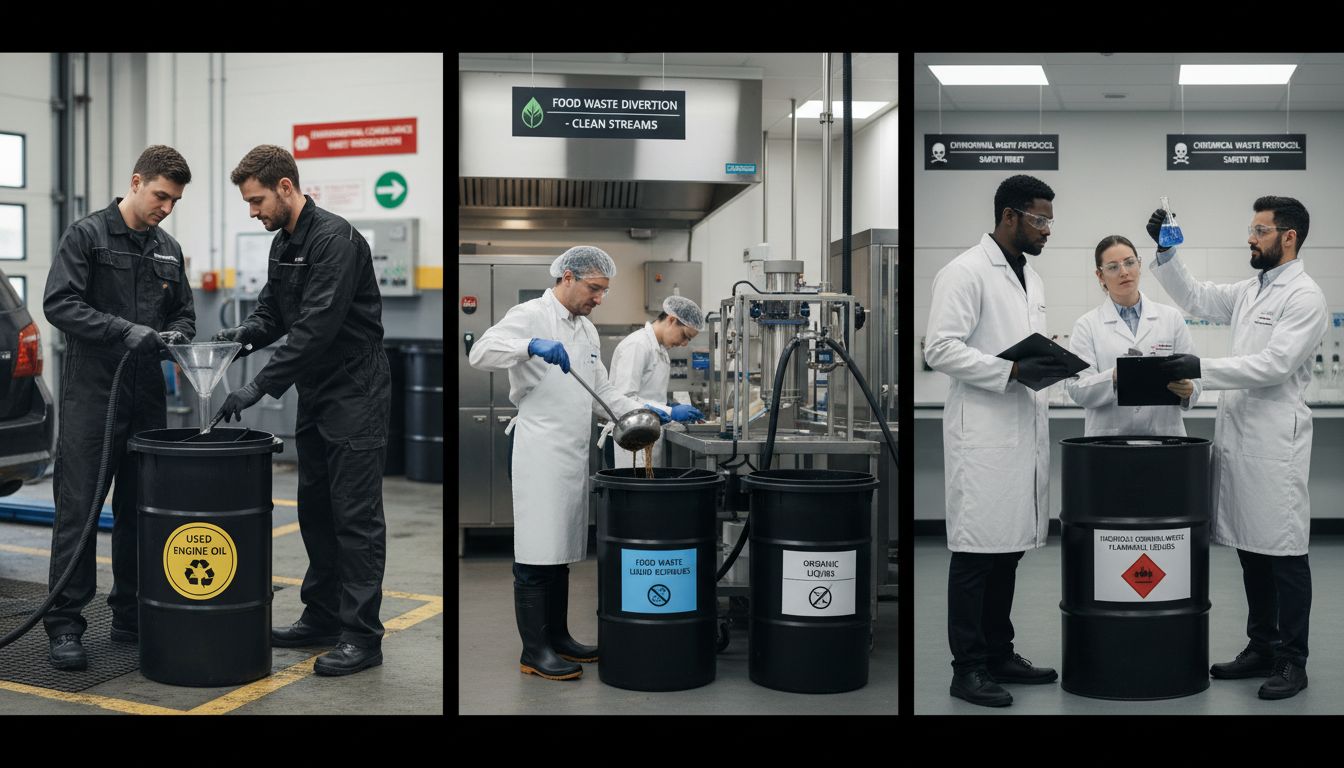
Liquid waste management is a complex process requiring specialised approaches for safe and environmentally responsible handling. According to research from Clean Streets Westminster, certain liquid waste types like food residues, fat, oil, grease interceptor waste, septic tank sludge, and liquid cleaning products demand expert collection and cannot be disposed of through standard rubbish or recycling channels.
The comprehensive liquid waste management process involves multiple critical stages:
- Collection: Systematic gathering of different liquid waste streams
- Containment: Secure storage in appropriate interceptor tanks and specialised containers
- Transportation: Safe movement using certified waste management vehicles
- Treatment: Processing to neutralise potential environmental and health hazards
- Disposal: Environmentally compliant elimination of waste materials
As identified by Drainline UK, effective management requires meticulous clearing of liquid waste from various infrastructure points, including interceptor tanks, grease traps, septic tanks, drains, pipes, culverts, and sewers. For businesses seeking comprehensive guidance on navigating these complex waste management protocols, our hazardous waste disposal guide provides essential insights into safe and legal liquid waste handling strategies.
Legal Obligations and Regulatory Compliance
Liquid waste management in the UK is governed by stringent legal frameworks that mandate businesses to take comprehensive responsibility for their waste disposal practices. According to the UK government guidelines, organisations are legally required to classify their waste meticulously, determining whether materials are hazardous and ensuring appropriate handling protocols are implemented.
The cornerstone of UK waste management legislation is the Environmental Protection Act 1990, which establishes the fundamental structure and authority for waste management and environmental emission control. This critical legislation outlines key legal obligations for waste producers, emphasising several crucial compliance requirements:
- Accurate waste classification
- Proper documentation of waste transfers
- Comprehensive waste tracking
- Adherence to safe disposal methods
- Minimising environmental impact
Businesses must maintain detailed waste transfer notes and consignment documentation, demonstrating their commitment to responsible waste management. Failure to comply can result in significant legal and financial consequences.
For organisations seeking detailed guidance on navigating these complex regulatory landscapes, our waste disposal legal requirements guide offers comprehensive insights into maintaining full legal compliance and avoiding potential penalties.
Risks, Costs, and Choosing Providers
Liquid waste management involves complex risks that can have significant environmental and financial implications for businesses. According to Drainline UK, improper disposal of hazardous liquid waste poses substantial threats to both human health and environmental sustainability, underscoring the critical importance of professional waste management services.
When evaluating potential waste management providers, businesses should consider several key factors:
- Compliance Credentials: Verified regulatory adherence
- Service Flexibility: Ability to meet varied operational needs
- Environmental Impact: Commitment to sustainable disposal methods
- Cost-effectiveness: Transparent pricing structures
- Technical Expertise: Specialized knowledge in liquid waste handling
As Universal Tankers highlights, choosing a reliable waste management provider ensures regulatory compliance, minimises environmental risks, and offers flexible solutions tailored to specific operational requirements. Businesses must conduct thorough due diligence to mitigate potential financial and legal risks. Our waste disposal legal requirements guide provides comprehensive insights into selecting the most appropriate waste management partner, helping organisations navigate the complex landscape of liquid waste disposal while protecting their operational and environmental interests.
Master Liquid Waste Management with Expert Support from Venture Waste
Navigating the complexities of liquid waste management can be daunting, especially with strict UK regulations and diverse waste types involved. From hazardous liquids to industrial sludges, the challenge to maintain compliance while protecting the environment is real. If you want to avoid costly penalties and reduce your environmental impact, understanding the full process—from collection to safe disposal—is essential.

Venture Waste is here to simplify this for your business. Our services cover everything from hazardous waste handling to reliable waste transport backed by a robust waste collection network in UK businesses trusts in 2025. We ensure your waste is managed responsibly with full legal compliance, guided by expert knowledge shared in our regulation archives. Ready to take control of your liquid waste management with ease? Discover how our streamlined booking process and comprehensive solutions make compliance straightforward and stress-free at venturewaste.co.uk. Act now to protect your business and the environment.
Frequently Asked Questions
What are the common types of liquid waste?
Liquid waste includes various types such as waste oil, water waste, tank wastes, industrial sludges, sewage, and hazardous liquids. Each type has different characteristics and sources, making it crucial for proper management and disposal.
What are the key steps in liquid waste management?
The main steps in liquid waste management include collection, containment, transportation, treatment, and disposal. Each stage is essential for ensuring safe and environmentally responsible handling of liquid waste.
What legal obligations must businesses adhere to in liquid waste management?
Businesses must classify their waste accurately, maintain proper documentation of waste transfers, track waste, adhere to safe disposal methods, and minimize environmental impacts according to the Environmental Protection Act 1990 and other regulations.
How can businesses choose a reliable liquid waste management provider?
When selecting a waste management provider, businesses should consider compliance credentials, service flexibility, environmental impact, cost-effectiveness, and the technical expertise of the provider in handling liquid waste.
Recommended
- Best Liquid Waste Disposal Options for UK Businesses in 2025 – Venture Waste
- Best Liquid Waste Disposal Options for UK Businesses in 2025 – Venture Waste
- Waste Management Step by Step: A Guide for UK Businesses 2025 – Venture Waste
- Gas Safe Engineer: Complete Guide for UK Homeowners – Skan Plumbing & Heating


Leave a Reply
Want to join the discussion?Feel free to contribute!