

Improving Waste Segregation: A Step-by-Step Guide
Sorting waste at work often feels like an afterthought for many organisations. Yet, studies show that up to 40 percent of office waste destined for landfill could actually be recycled with proper segregation. That sounds like a shocking waste of both resources and money, right? But what really flips the script is this – getting waste segregation right is not just about doing your bit for the planet. It can make day-to-day operations simpler, boost morale, and even reveal surprising cost savings you never expected.
Table of Contents
- Step 1: Assess Your Current Waste Management Practices
- Step 2: Educate Employees On Waste Segregation
- Step 3: Implement Clear Segregation Protocols
- Step 4: Set Up Clearly Marked Waste Bins
- Step 5: Monitor And Evaluate Waste Segregation Effectiveness
- Step 6: Review And Adjust Practices Regularly
Quick Summary
| Key Point | Explanation |
|---|---|
| 1. Assess current waste management practices | Conduct a thorough evaluation of existing waste streams to identify inefficiencies and improvement areas. |
| 2. Educate employees on waste segregation | Develop tailored training that engages staff with practical guidance on waste sorting techniques. |
| 3. Implement clear segregation protocols | Design intuitive waste management systems with distinct colour coding and visual aids for easy compliance. |
| 4. Set up clearly marked waste bins | Strategically place and label bins to facilitate easy identification of waste categories, enhancing segregation accuracy. |
| 5. Monitor and evaluate waste segregation effectiveness | Establish a tracking system to measure waste diversion and identify opportunities for continual improvement. |
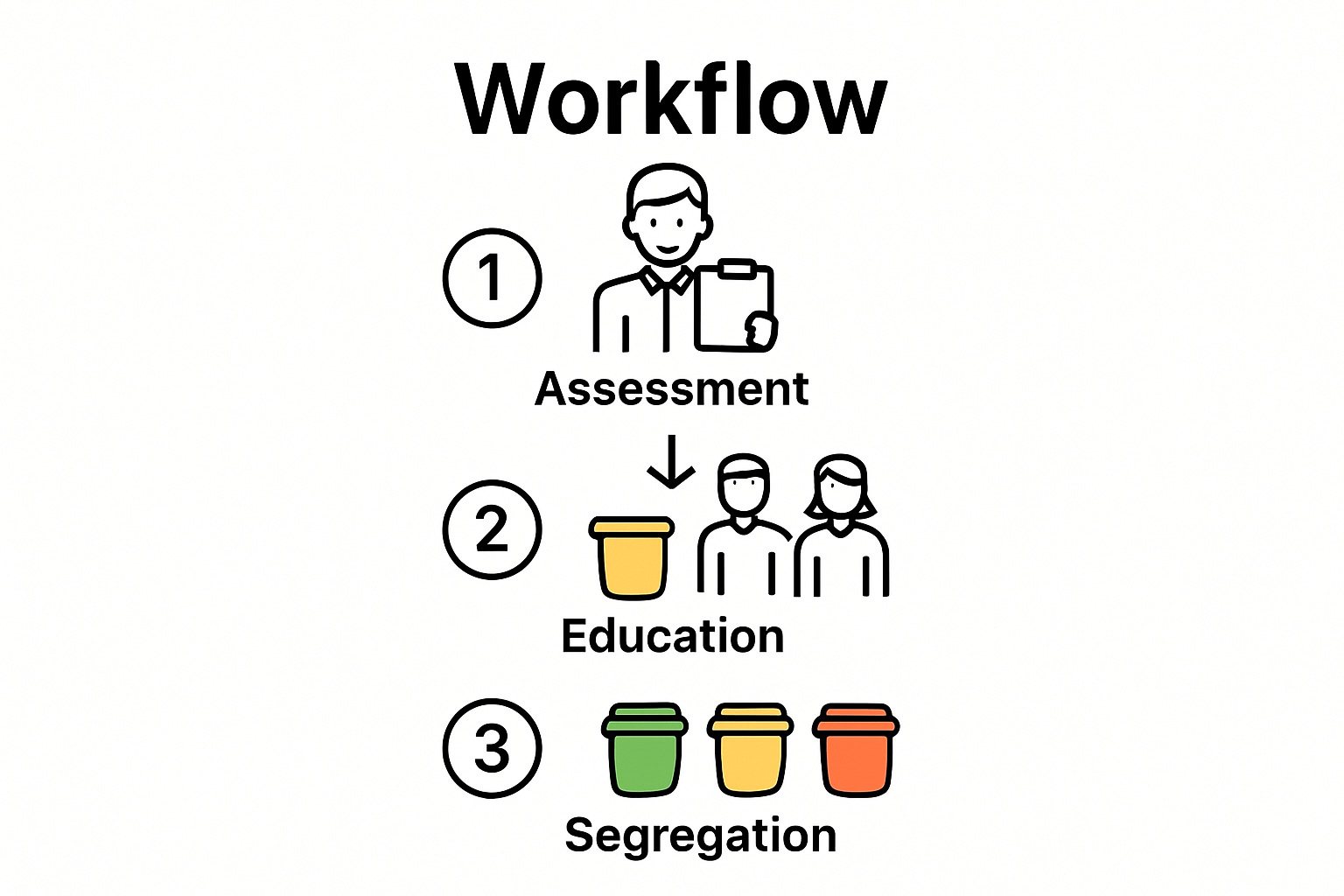
Step 1: Assess Your Current Waste Management Practices
Improving waste segregation begins with a comprehensive assessment of your current waste management practices. This critical first step helps organisations understand their existing waste streams, identify inefficiencies, and create a strategic roadmap for more sustainable waste disposal. By conducting a thorough evaluation, businesses can pinpoint areas for improvement and develop targeted strategies to reduce waste generation.
To start your assessment, gather all relevant documentation related to your waste management processes. This includes waste collection records, disposal invoices, existing waste stream logs, and any previous environmental audits. Review these documents carefully, looking for patterns in waste generation, disposal methods, and potential areas of waste reduction. Pay special attention to the types and volumes of waste your organisation produces across different departments or operational areas.
A practical approach involves conducting a physical waste audit. This means carefully tracking and categorising the waste your organisation generates over a specific period. You might need to temporarily assign team members to sort and weigh different waste types, creating a detailed snapshot of your current waste management practices. Look for opportunities to segregate waste more effectively, identifying recyclable materials that may currently be mixed with general waste. Learn more about efficient waste tracking methods to streamline this process.
Key areas to examine during your assessment include:
- Total waste volume generated
- Waste composition and types
- Current segregation practices
- Existing recycling efforts
- Disposal methods currently in use
Successful completion of this assessment means you have a clear, detailed understanding of your organisation’s waste management landscape. The data collected will serve as a baseline for developing more effective waste segregation strategies. By taking this methodical approach, you’re not just collecting information, but laying the groundwork for meaningful environmental improvements and potential cost savings in waste management.
To help you plan your waste segregation improvement process, the table below summarises each main step, the objective, and key actions for effective implementation.
| Step | Objective | Key Actions |
|---|---|---|
| Assess Current Practices | Identify inefficiencies and baseline data | Review waste records, conduct physical audits, examine waste streams |
| Educate Employees | Raise awareness and build skills | Deliver training, visual guides, hands-on workshops |
| Implement Protocols | Systematise sorting and make compliance easy | Design colour-coded system, use clear signage, strategic bin placement |
| Set Up Bins | Facilitate correct waste disposal | Place bins in key areas, label clearly, ensure accessibility |
| Monitor & Evaluate | Measure progress and identify improvements | Track data, conduct audits, analyse contamination rates |
| Review & Adjust | Sustain continuous improvement | Schedule quarterly reviews, update materials and processes |
Step 2: Educate Employees on Waste Segregation
Employee education is the cornerstone of successful waste segregation, transforming individual awareness into organisational environmental responsibility. This critical step involves developing a comprehensive training programme that empowers staff with the knowledge and skills necessary to implement effective waste management practices across your entire organisation.
Begin by creating a tailored training programme that goes beyond generic instructions. Develop visual guides and practical demonstrations that clearly illustrate the correct segregation process for different waste types. These materials should include colour-coded waste bin diagrams, infographics showing proper sorting techniques, and real-world examples specific to your workplace environment. Check out our comprehensive waste segregation guidelines to support your training efforts.
Your training should be interactive and engaging, moving beyond traditional lecture formats. Consider implementing hands-on workshops where employees can practice waste sorting in a simulated workplace setting. Include practical scenarios that reflect the actual waste streams encountered in your specific industry. Managers should lead by example, actively participating in training sessions and demonstrating commitment to proper waste segregation practices.
Key training components to include:
- Clear explanation of waste categories
- Consequences of improper waste disposal
- Step-by-step sorting instructions
- Organisation-specific waste management policies
- Environmental impact of correct waste segregation
Verify the effectiveness of your training by conducting periodic assessments and spot checks. Implement a feedback mechanism that allows employees to ask questions and seek clarification. Successful implementation means staff can confidently and consistently segregate waste without supervision, reducing contamination and improving overall waste management efficiency. Regular refresher training will help maintain high standards and keep environmental awareness at the forefront of your organisational culture.
Step 3: Implement Clear Segregation Protocols
Implementing clear segregation protocols transforms your waste management strategy from theoretical knowledge into practical action. This crucial step involves creating a systematic approach that makes waste sorting intuitive and straightforward for every employee across your organisation. The goal is to design a waste management system so clear that sorting becomes second nature.
Start by developing a comprehensive colour-coded waste management system that eliminates confusion. Each waste category should have a distinct colour, container type, and clearly visible labelling. For instance, blue containers might represent recyclable paper, green for organic waste, and red for general waste. Explore our detailed waste segregation guidelines to refine your approach. Position these colour-coded bins strategically throughout your workplace, ensuring they are easily accessible and placed near the points where specific waste types are most likely generated.
Design visual guidance materials that complement your physical waste segregation infrastructure. Create large, easy-to-understand infographics that demonstrate exactly what goes into each bin. These should include pictorial representations of acceptable and unacceptable items, making the sorting process transparent and idiot-proof. Consider laminating these guides and placing them directly above or beside waste stations. Supplement these visual guides with brief, clear instructions that explain the environmental impact of correct waste segregation.
Key protocol implementation elements:
- Consistent colour coding across all waste streams
- Clear, multilingual signage
- Strategic bin placement
- Regular maintenance of waste stations
- Periodic review and adjustment of protocols
Successful implementation means your waste segregation system operates smoothly without constant supervision. Employees should intuitively understand where to dispose of different waste types, and cross-contamination should be minimised. Conduct regular spot checks and gather feedback to continuously refine your protocols, ensuring they remain effective and user-friendly. By creating a systematic, intuitive approach to waste segregation, you transform environmental responsibility from a complex task into a simple, everyday practice.
Step 4: Set Up Clearly Marked Waste Bins
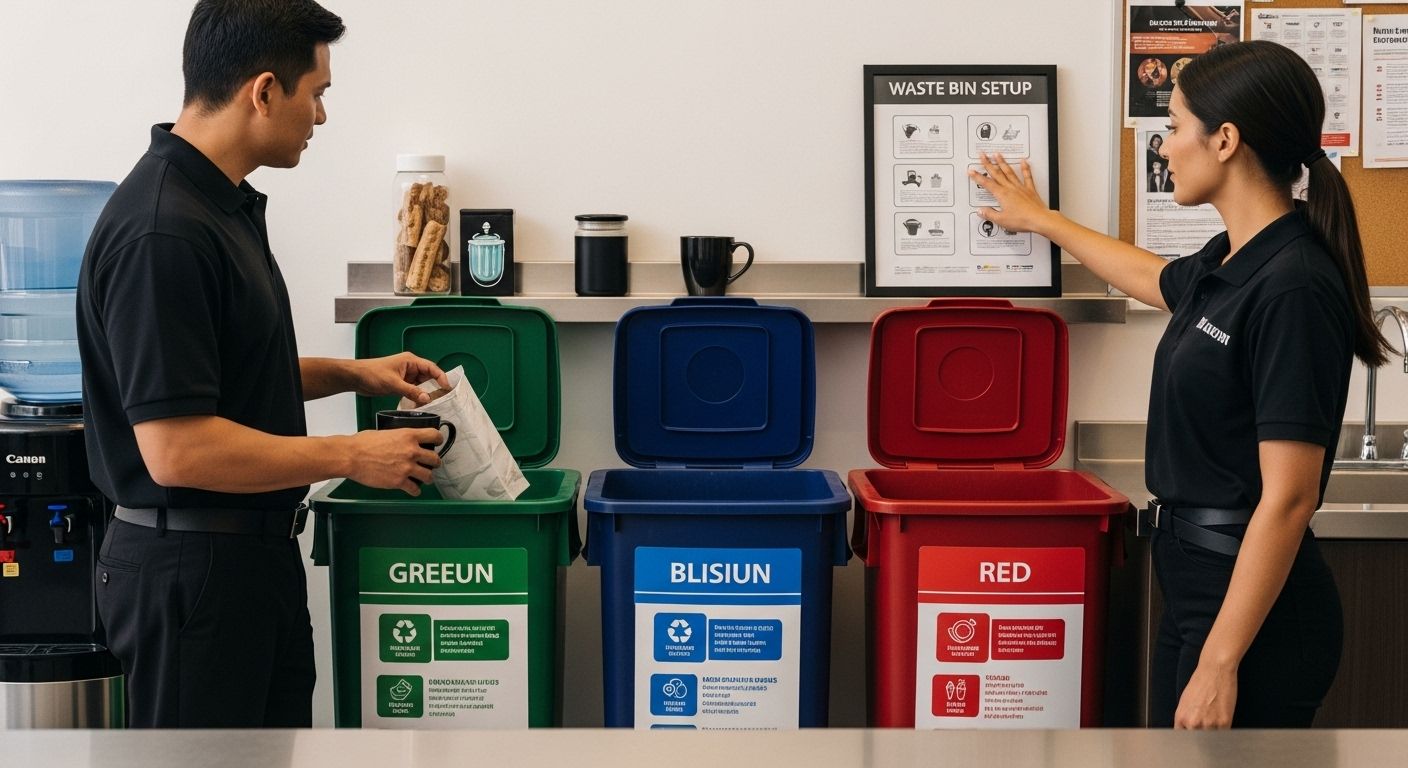
Establishing a robust waste bin system is fundamental to effective waste segregation, transforming your organisation’s approach to environmental responsibility. Waste bin placement and labelling are not just logistical decisions, but strategic interventions that directly impact waste management efficiency. Your goal is to create an intuitive waste disposal infrastructure that guides employees towards correct segregation with minimal effort.
Begin by conducting a comprehensive workplace assessment to determine optimal bin locations. Consider high-traffic areas like kitchens, corridors, workstations, and communal spaces where waste is most frequently generated. Explore our guide for efficient waste collection strategies to refine your bin placement approach. Each designated area should feature a complete set of colour-coded and clearly labeled waste bins representing different waste streams such as recyclables, general waste, organic materials, and specialised waste like electronic equipment or hazardous materials.
Labelling is crucial in ensuring proper waste segregation. Invest in durable, high-contrast signage that includes both text and visual icons representing acceptable and unacceptable items for each bin. Use simple, clear language that can be quickly understood by all employees, including those who might not be native English speakers. Consider using multilingual instructions in areas with diverse workforce demographics. The labels should be large, positioned at eye level, and include brief explanatory notes about the environmental impact of correct waste sorting.
Key considerations for waste bin setup:
- Sufficient number of bins in strategic locations
- Clear, consistent colour coding
- Detailed, multilingual instructions
- Bin sizes matched to waste generation volumes
- Easy accessibility for all employees
Successful implementation means your waste bins become self-explanatory tools that guide behaviour without constant supervision. Regular monitoring and periodic adjustments will help refine the system, ensuring it remains effective and user-friendly. By creating a thoughtfully designed waste bin infrastructure, you transform waste segregation from a complex task into an intuitive, everyday practice that supports your organisation’s environmental goals.
Step 5: Monitor and Evaluate Waste Segregation Effectiveness
Monitoring and evaluating your waste segregation programme is the critical final step that transforms good intentions into measurable environmental progress. This stage is about turning data into actionable insights, allowing your organisation to continuously improve its waste management strategies and identify areas for potential reduction and optimization.
Begin by establishing a systematic tracking mechanism that captures comprehensive waste data. This involves regularly weighing and documenting waste from different streams, recording contamination levels, and tracking the volume of materials successfully diverted from landfill. Discover advanced techniques for efficient waste collection to support your monitoring efforts. Implement digital tracking tools or spreadsheets that allow you to record detailed information about waste generation, including the types of waste, their sources within the organisation, and the effectiveness of your current segregation protocols.
Conduct periodic waste audits that go beyond simple measurement. These audits should involve physically sorting and examining waste streams to understand contamination patterns and identify specific areas where employee training or infrastructure improvements might be needed. Schedule these audits quarterly or bi-annually, ensuring you capture seasonal variations in waste generation. Use visual documentation like photographs and detailed reports to create a clear picture of your waste management performance over time. Compare current data against your initial baseline assessment to demonstrate tangible improvements and areas requiring additional attention.
The following table presents key metrics you should monitor to evaluate the effectiveness of your waste segregation system, along with their purpose and suggested frequency of review.
| Metric | Purpose | Suggested Review Frequency |
|---|---|---|
| Total Waste Volume Generated | Measure overall waste production | Monthly |
| Percentage of Waste Recycled | Assess recycling efficiency | Monthly |
| Contamination Rates | Identify improper sorting issues | Quarterly |
| Cost Savings | Track financial benefits from improved management | Quarterly |
| Reduction in Landfill Contributions | Evaluate environmental impact | Quarterly |
Key evaluation metrics to track:
- Total waste volume generated
- Percentage of waste successfully recycled
- Contamination rates in different waste streams
- Cost savings from improved waste management
- Reduction in landfill contributions
Successful monitoring means developing a dynamic, responsive waste management system that continually adapts and improves. The data collected should inform future training, infrastructure adjustments, and strategic decisions. By treating waste segregation as an ongoing process of learning and refinement, your organisation can significantly reduce its environmental footprint while potentially realizing substantial operational cost savings.
Step 6: Review and Adjust Practices Regularly
Regular review and adjustment are the lifeblood of a successful waste segregation strategy, transforming your initial efforts into a dynamic, continuously improving system. Sustainability is not a destination, but an ongoing journey of refinement and adaptation. This critical step ensures that your waste management practices remain responsive to changing organisational needs, technological advancements, and environmental regulations.
Establish a structured review process that goes beyond simple data collection. Schedule quarterly comprehensive assessments where you thoroughly examine your waste segregation performance, bringing together key stakeholders from different departments. Learn more about optimising your waste management approach to support these strategic reviews. During these sessions, analyse the data collected from your monitoring efforts, looking for patterns, challenges, and opportunities for improvement. Consider not just the quantitative metrics, but also qualitative feedback from employees who interact with the waste segregation system daily.
Be prepared to make meaningful adjustments based on your findings. This might involve redesigning bin locations, updating employee training materials, investing in new segregation technologies, or modifying your existing waste streams. Pay close attention to emerging best practices in waste management and be willing to experiment with innovative approaches. Technology and environmental standards are constantly evolving, and your waste segregation strategy should be flexible enough to incorporate new insights and methodologies. Involve employees in this process of continuous improvement, creating a culture of environmental responsibility that goes beyond mere compliance.
Key elements of effective review and adjustment:
- Quarterly comprehensive performance assessments
- Cross-departmental stakeholder involvement
- Analysis of quantitative and qualitative data
- Openness to technological and procedural innovations
- Continuous employee engagement and feedback
Successful implementation means creating an adaptive waste management system that learns and grows with your organisation. By treating waste segregation as a dynamic process rather than a static set of rules, you demonstrate a commitment to environmental stewardship that extends far beyond immediate operational concerns. Your willingness to regularly review and refine your approach becomes a powerful statement of your organisation’s dedication to sustainable practices.
Turn Waste Segregation Planning into Seamless Results
Taking the first steps in improving waste segregation can feel overwhelming. You want detailed audits, effective employee training, and the right infrastructure to keep your business compliant and eco-friendly. Yet, real progress comes from having a system that transforms these steps into efficient action, allowing your organisation to move from planning to measurable improvement. If your business is ready to overcome waste segregation challenges and get expert support, it is time to work with a waste partner that understands every stage of the process. Discover how our tailored Waste Collection Process in the UK for Businesses 2025 service delivers the clarity, strategy, and reliability your business needs for sustainable change.

Get immediate help with practical solutions that improve segregation, reduce risk, and save money. Visit Venture Waste Management today to book your service or learn from the latest waste industry news. Or explore our baler solutions to further streamline recycling at your site. Do not let outdated waste practices hold your business back. Start your smarter waste management journey with us now.
Frequently Asked Questions
What are the key steps to improving waste segregation in an organisation?
To improve waste segregation, follow these key steps: assess current waste management practices, educate employees on segregation, implement clear protocols, set up clearly marked waste bins, monitor and evaluate effectiveness, and regularly review and adjust practices.
How can I educate employees about proper waste segregation practices?
Creating a tailored training programme that includes visual guides, hands-on workshops, and interactive sessions can effectively educate employees. Include clear explanations of waste categories and the consequences of improper disposal.
What should be included in an effective waste segregation training programme?
An effective training programme should cover waste categories, sorting instructions, organisation-specific policies, and the environmental impact of correct waste segregation. Regular refresher training is also crucial to maintain awareness.
How can I set up a waste bin system that encourages proper waste segregation?
Establish a colour-coded waste bin system with clear labelling and visually appealing instructions. Place bins in strategic locations, ensure they are easily accessible, and provide detailed, multilingual instructions to facilitate proper waste disposal.
Recommended
- General Waste vs Recycling
- Waste Segregation Guidelines for UK Businesses and Facilities
- Waste Management Step by Step
- steps to waste compliance Archives
- Essential Business Energy Saving Tips for 2025 and Beyond
- Waste Management in Hotels


Leave a Reply
Want to join the discussion?Feel free to contribute!