

Responsible Disposal: Protecting Health, Legal Compliance
Most british institutions face rising pressures to dispose of waste safely while meeting strict legal requirements. Navigating the maze of environmental regulations and public health standards has become a central challenge for facilities managers in United Kingdom healthcare and educational sectors. With costly penalties for non-compliance affecting thousands each year, this guide gives you practical solutions and dispels common myths around responsible waste disposal, helping you protect your organisation and the environment.
Table of Contents
- Responsible Disposal Defined And Common Myths
- Main Types Of Waste In UK Facilities
- Legal Duties And Key Regulations Explained
- Risks Of Improper Waste Handling
- Best Practice Roles And Compliance Steps
Key Takeaways
| Point | Details |
|---|---|
| Responsible Disposal | Responsible waste disposal emphasises systematic management, prioritising environmental protection and resource efficiency. |
| Waste Types | Understanding the different types of waste, such as household, commercial, and hazardous, is essential for effective disposal strategies. |
| Legal Compliance | Organisations must adhere to waste management regulations to avoid legal repercussions and promote sustainability. |
| Improper Handling Risks | Improper waste management poses risks including environmental contamination, public health hazards, and financial penalties. |
Responsible Disposal Defined and Common Myths
Responsible waste disposal represents a strategic approach to managing discarded materials that prioritises environmental protection, public health, and legal compliance. At its core, this concept goes far beyond simply throwing items away, instead focusing on systematic management that minimises potential harm and maximises resource efficiency. Academic research on consumer waste practices reveals that responsible disposal involves comprehensive strategies for reducing, reusing, and recycling unwanted goods.
Numerous myths surround waste disposal that can impede effective environmental management. One prevalent misconception is that all waste management processes are equally sustainable or that recycling requires minimal effort. In reality, responsible disposal demands careful sorting, understanding complex recycling guidelines, and recognising the potential environmental consequences of improper waste handling. Professional resources highlighting recycling misconceptions demonstrate how consumer misunderstandings can significantly compromise waste management efficacy.
Key characteristics of responsible disposal include:
- Systematic waste categorisation
- Understanding material composition
- Adhering to local and national waste regulations
- Minimising environmental contamination
- Prioritising reduction and reuse strategies
Businesses and individuals must recognise that responsible disposal is not merely a regulatory requirement but a critical environmental and social responsibility. Proper waste management protects public health, conserves natural resources, and contributes to broader sustainability objectives.
Expert Tip: Always research your local waste management guidelines and invest time in properly sorting different waste categories to maximise recycling effectiveness.
Main Types of Waste in UK Facilities
Waste management in the United Kingdom involves handling numerous complex waste streams across different sectors. Comprehensive research on waste categorisation reveals multiple primary waste types that require distinctive disposal strategies. These categories include household, commercial, industrial, and specialised waste materials, each demanding unique handling protocols to ensure environmental protection and regulatory compliance.
The primary waste types encountered in UK facilities can be systematically divided into several key classifications:
- Household Waste: Comprising everyday materials like paper, plastics, glass, and organic substances
- Commercial Waste: Generated by businesses, including office materials and packaging
- Industrial Waste: Produced during manufacturing processes, often requiring specialised disposal
- Hazardous Waste: Materials containing potentially dangerous chemical or biological components
Detailed recycling guidelines highlight the complexity of waste sorting, particularly noting that local councils have varying regulations about acceptable recyclable materials. For instance, certain items like black plastic or broken glass might be excluded from standard recycling collections, emphasising the critical need for precise waste categorisation and disposal strategies.
Understanding these waste types is crucial for facilities managers, environmental professionals, and organisations seeking to minimise their environmental footprint. Proper waste segregation not only ensures legal compliance but also contributes significantly to resource conservation and sustainable waste management practices across the United Kingdom.
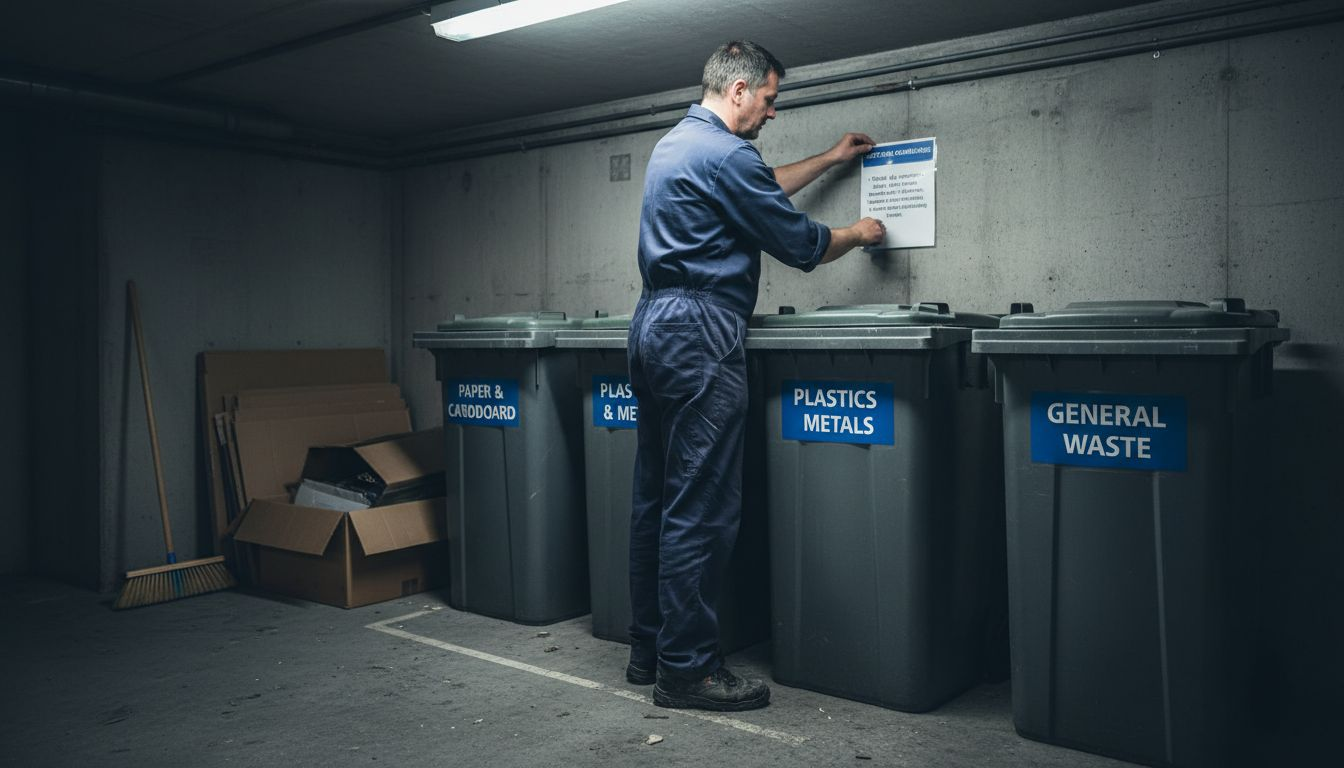
To clarify the differences between key UK waste types, see this summary:
| Waste Type | Main Sources | Typical Disposal Challenge | Example Materials |
|---|---|---|---|
| Household | Homes/residential areas | Mixed items with unclear recycling labels | Food waste, plastics |
| Commercial | Offices/retail sectors | High volume of packaging | Cardboard, old equipment |
| Industrial | Factories/workshops | Need for specialised treatment facilities | Scrap metal, chemicals |
| Hazardous | Hospitals/labs/industry | Legal compliance and risk of contamination | Solvents, batteries |
Pro Tip: Develop a comprehensive waste audit system that tracks and categorises different waste streams, enabling more effective and targeted disposal strategies.
Legal Duties and Key Regulations Explained
Waste management regulations in the United Kingdom represent a complex legal framework designed to protect environmental and public health interests. The comprehensive legal landscape governing waste disposal encompasses multiple critical legislative instruments, including the Environmental Protection Act 1990, the Waste Framework Directive, and the Landfill Directive. These regulations establish clear legal responsibilities for businesses, local authorities, and individual waste producers.
Key legal duties for organisations include:
- Duty of Care: Ensuring waste is handled, transported, and disposed of responsibly
- Licensing Requirements: Obtaining appropriate permits for waste collection and disposal
- Record Keeping: Maintaining detailed documentation of waste management processes
- Compliance Monitoring: Regular assessment of waste handling practices
- Environmental Impact Mitigation: Minimising potential ecological harm
National waste management strategies emphasise the importance of sustainable resource use and waste reduction. Organisations must navigate increasingly stringent regulations that prioritise recycling, waste prevention, and environmentally responsible disposal methods. Non-compliance can result in significant financial penalties, legal prosecution, and reputational damage.
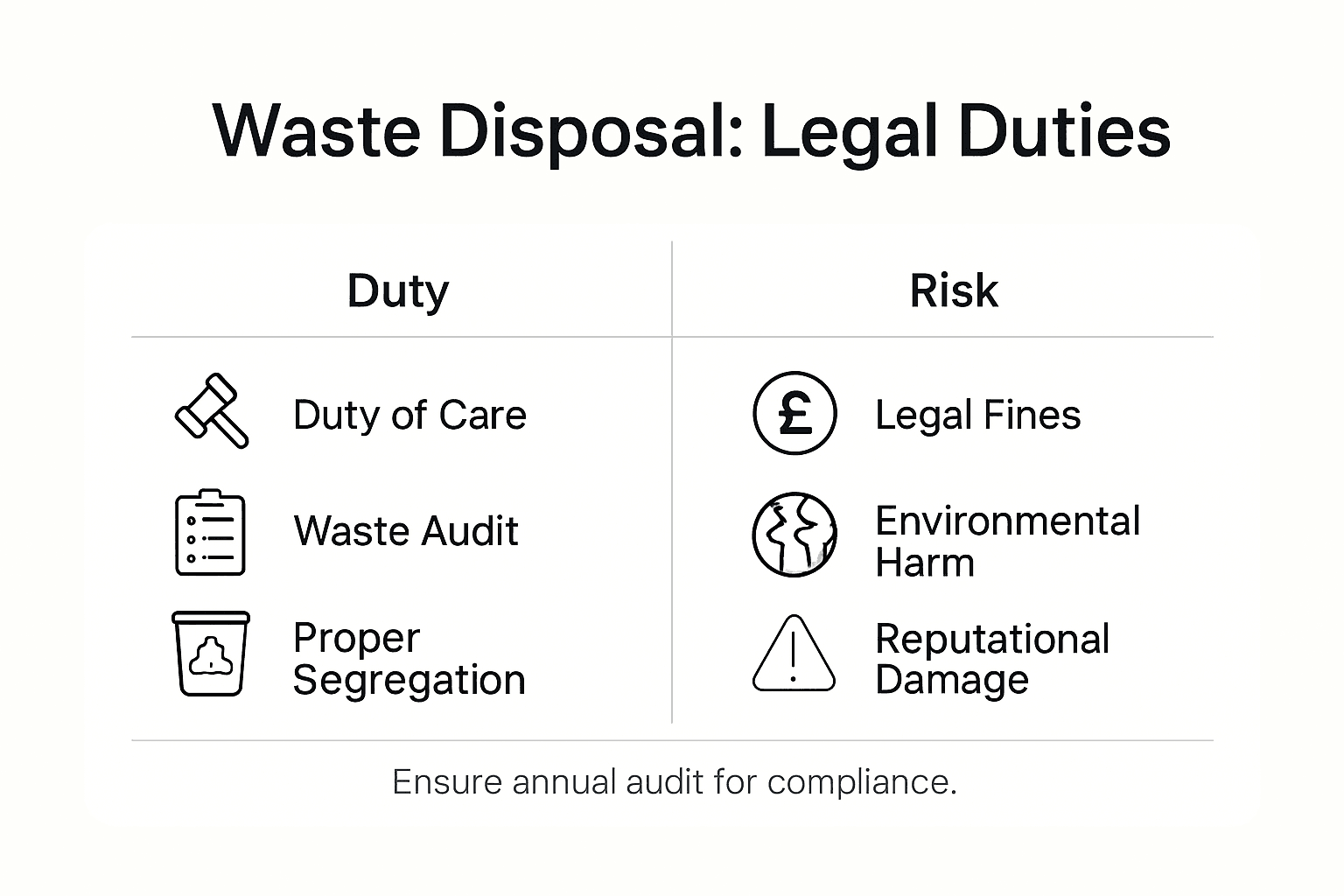
Understanding these legal obligations is crucial for facilities managers, environmental professionals, and business leaders. The regulatory landscape continues to evolve, with increasing emphasis on circular economy principles and sustainable waste management practices across all sectors of UK industry.
The following table highlights the business impact of legal waste management duties:
| Legal Duty | Business Outcome | Risk if Ignored |
|---|---|---|
| Duty of Care | Maintains compliance | Legal prosecution |
| Licensing | Authorised waste handling | Fines or suspension of services |
| Record Keeping | Traceable waste streams | Gaps in accountability |
| Compliance Monitoring | Early risk identification | Costly regulatory breaches |
| Impact Mitigation | Reduced environmental harm | Reputational damage |
Pro Tip: Conduct annual comprehensive legal audits of your waste management practices to ensure ongoing compliance and identify potential improvement areas.
Risks of Improper Waste Handling
Waste mismanagement poses significant threats to environmental and public health across the United Kingdom. The pervasive issue of illegal waste disposal highlights the serious consequences of neglecting proper waste handling protocols, particularly through practices like fly-tipping that create substantial environmental and societal challenges.
The primary risks associated with improper waste handling include:
- Environmental Contamination: Potential pollution of soil, water systems, and ecosystems
- Public Health Hazards: Direct exposure to harmful chemical and biological substances
- Legal Consequences: Substantial financial penalties and potential criminal prosecution
- Economic Impact: Increased local government expenditure and community cleanup costs
- Reputational Damage: Negative perception for businesses and organisations
Legal frameworks emphasise the critical nature of responsible waste management, highlighting potential risks such as environmental contamination and significant legal penalties. Organisations must understand that improper waste handling extends beyond immediate environmental concerns, potentially resulting in long-term health risks and substantial financial repercussions.
Facilities managers, environmental professionals, and business leaders must recognise that waste management is not merely a regulatory requirement but a fundamental responsibility to protect public health, preserve environmental integrity, and maintain organisational reputation.
Pro Tip: Implement a comprehensive waste tracking system that documents every stage of waste handling, ensuring transparent and accountable disposal practices.
Best Practice Roles and Compliance Steps
Effective waste management requires a strategic approach that engages multiple stakeholders and establishes clear organisational responsibilities. The UK government’s comprehensive waste prevention programme outlines specific roles and compliance steps designed to promote resource efficiency and sustainable waste practices across different sectors.
Key roles and responsibilities for waste compliance include:
- Senior Management: Establishing organisational waste management policies
- Environmental Managers: Developing and implementing waste reduction strategies
- Facilities Teams: Executing daily waste segregation and disposal protocols
- Employees: Participating in waste reduction and recycling initiatives
- External Waste Management Partners: Supporting technical compliance and specialised disposal
Compliance steps organisations must undertake involve a comprehensive, systematic approach:
- Conduct thorough waste audits
- Develop detailed waste management policies
- Train staff on proper waste handling procedures
- Implement robust tracking and documentation systems
- Regularly review and update waste management practices
Businesses must transition from viewing waste management as a regulatory obligation to recognising it as a critical component of corporate environmental responsibility. This shift requires continuous learning, adaptability, and a commitment to sustainable resource utilisation across all operational levels.
Pro Tip: Create a dedicated internal waste management committee that meets quarterly to review compliance, assess improvement areas, and drive organisational sustainability goals.
Take Control of Responsible Disposal with Venture Waste Management
Navigating the complex challenges of responsible waste disposal calls for expertise you can trust. If you want to ensure full legal compliance while protecting public health and the environment, Venture Waste Management offers tailored solutions designed for UK businesses and households. Our services cover everything from hazardous waste handling to confidential document destruction, supporting your efforts to meet strict regulatory duties and implement effective waste segregation strategies.

Choose a partner who understands the critical importance of waste categorisation and reduction as highlighted in the article. Explore our confidential waste services for secure disposal needs or learn more about the latest developments in the sector through How the Waste Collection Network in UK Serves Businesses in 2025. Start streamlining your waste compliance today by visiting our homepage at Venture Waste and book your tailored collection with ease.
Frequently Asked Questions
What is responsible waste disposal?
Responsible waste disposal involves a strategic approach to managing discarded materials that prioritises environmental protection, public health, and legal compliance. It encompasses systematic waste categorisation, reducing, reusing, and recycling unwanted goods.
Why is it important to understand local waste management guidelines?
Understanding local waste management guidelines is crucial because recycling regulations vary by locality. Proper sorting and disposal according to these guidelines maximises recycling effectiveness and minimises environmental contamination.
What are the main types of waste in facilities?
The main types of waste include household waste, commercial waste, industrial waste, and hazardous waste. Each type requires unique handling protocols to ensure proper disposal and compliance with regulations.
What legal responsibilities do businesses have regarding waste disposal?
Businesses must ensure responsible handling and disposal of waste, obtain necessary permits, maintain documentation of waste management practices, and regularly assess compliance with local and national waste regulations.
Recommended
- Clinical Waste Disposal Requirements for UK Businesses 2025 – Venture Waste
- Hazardous Waste Risks: What UK Businesses Must Know in 2025 – Venture Waste
- Types of Hazardous Waste: Business Waste Guide UK 2025 – Venture Waste
- Hazardous Waste Disposal Guide 2025 for UK Businesses – Venture Waste
- How Safe are Carpet Cleaning Chemicals? Understanding Risks – Yarra Valley Carpet Cleaning


Leave a Reply
Want to join the discussion?Feel free to contribute!