

How to Store Hazardous Waste Safely in Your Business
Running a business means tackling hazardous waste the moment those warning labels appear in your workplace. You expect lab coats, locked cabinets and long chemical names to be the most challenging parts. But one slip with your containers or a poorly labelled drum can bring not just safety risks but also fines that often reach thousands of pounds for non-compliance. With so much at stake, the real key is knowing exactly how to store hazardous waste correctly before problems start.
Table of Contents
- Understanding Hazardous Waste And Legal Duties
- Choosing Suitable Containers And Storage Areas
- Best Practices For Labelling, Segregation And Handling
- Ensuring Ongoing Safety And Preparing For Disposal
Quick Summary
| Takeaway | Explanation |
|---|---|
| Understand Hazardous Waste Categories | Recognise the types of hazardous waste your business produces to ensure proper management. |
| Select Appropriate Containers | Use containers that are chemically compatible and structurally sound to store hazardous materials safely. |
| Implement Comprehensive Labelling | Clearly label all containers with contents, hazards, and handling instructions to communicate risks effectively. |
| Conduct Regular Safety Assessments | Perform routine inspections of storage and handling practices to ensure compliance and safety at the workplace. |
| Develop Employee Training Programmes | Provide thorough training for staff on handling hazardous materials, including emergency procedures and PPE usage. |
Understanding Hazardous Waste and Legal Duties
Business owners must comprehend the complex landscape of hazardous waste management to protect their operations, employees, and the environment. Hazardous waste represents materials that pose substantial risks to human health and ecological systems due to their chemical, physical, or biological characteristics.
Defining Hazardous Waste Categories
Hazardous waste encompasses a broad range of materials that require specialised handling and disposal. These typically include chemical substances, toxic liquids, batteries, electronic equipment, medical waste, and industrial byproducts. According to the Environment Agency, businesses generating, storing, or transporting such materials must adhere to strict regulatory frameworks.
Key categories of hazardous waste include:
Here is a summary table outlining the main hazardous waste categories, their risks, and common examples. This helps clarify the distinctions discussed in the section.
| Hazardous Waste Category | Associated Risks | Common Examples |
|---|---|---|
| Corrosive Materials | Destroys tissue/metal via chemical action | Strong acids, alkalis |
| Toxic Substances | Severe health complications or death | Pesticides, lead batteries |
| Flammable Waste | Combustion/explosive reactions | Solvents, oil-based paints |
| Reactive Compounds | Violent reactions/toxic gas generation | Certain laboratory chemicals |
- Corrosive Materials: Substances that can destroy living tissue or metal through chemical action
- Toxic Substances: Chemicals that can cause severe health complications or death
- Flammable Waste: Materials with potential for combustion or explosive reactions
- Reactive Compounds: Substances that can generate toxic gases or cause violent chemical reactions
Legal Responsibilities and Compliance Requirements
Businesses have substantial legal obligations when managing hazardous waste. The Resource Conservation and Recovery Act (RCRA) establishes a comprehensive ‘cradle-to-grave’ management system that tracks hazardous materials from generation through final disposal. This framework requires businesses to implement rigorous documentation, tracking, and reporting protocols.
Companies must also comply with multiple regulatory standards, including:
- Proper waste classification and identification
- Secure storage and containment procedures
- Detailed record-keeping of waste generation and disposal
- Regular employee training on hazardous material handling
- Implementing emergency response protocols
Furthermore, businesses must understand their specific responsibilities based on waste volume and type. Small quantity generators have different requirements compared to large-scale industrial producers. For comprehensive guidance on managing these complex requirements, read our detailed hazardous waste disposal guide.
The Occupational Safety and Health Administration’s (OSHA) Process Safety Management standard mandates additional protective measures for businesses handling highly dangerous chemicals. These regulations aim to prevent accidental releases that could potentially harm employees and surrounding environments.
Non-compliance can result in significant financial penalties, legal consequences, and potential environmental damage. Businesses in regions like Newcastle, Durham, and other industrial centres in the North East must be particularly vigilant about maintaining stringent waste management standards to protect local ecosystems and community health.
By understanding these legal duties and implementing comprehensive hazardous waste management strategies, businesses can mitigate risks, protect their workforce, and contribute to environmental sustainability. Proactive management is not just a legal requirement but a critical component of responsible corporate citizenship.
Choosing Suitable Containers and Storage Areas
Selecting appropriate containers and storage areas is a critical aspect of hazardous waste management that directly impacts workplace safety, environmental protection, and regulatory compliance. Businesses must approach this task with meticulous attention to detail and comprehensive understanding of material compatibility and storage requirements.
Container Selection and Specifications
The choice of containers represents the first line of defence in hazardous waste management. According to OSHA regulations, containers must meet stringent criteria to ensure safe containment and prevent potential environmental contamination. Different hazardous materials require specific container characteristics based on their chemical properties and potential reactivity.
Key considerations for container selection include:
The following table organises key requirements for hazardous waste containers, making it easier to quickly reference the criteria mentioned.
| Container Requirement | Description |
|---|---|
| Material Compatibility | Must resist the chemical properties of stored waste |
| Structural Integrity | Free of corrosion, leaks, and physical damage |
| Proper Labelling | Clearly mark contents, hazards, and handling instructions |
| Size and Design | Appropriate volume and shape for specific waste type |
- Material Compatibility: Containers must be chemically resistant to the specific waste they will hold
- Structural Integrity: Containers should be free from corrosion, damage, or leaks
- Proper Labelling: Clear identification of contents, hazard classification, and handling instructions
- Size and Design: Appropriate volume and shape for the specific waste type
Secure Storage Area Requirements
Storage areas for hazardous waste demand carefully planned environmental controls and safety measures. The Environment Agency emphasises the importance of creating designated spaces that minimise risk and prevent potential environmental incidents. Businesses must implement comprehensive strategies that address containment, ventilation, access control, and emergency response capabilities.
Critical storage area considerations include:
- Robust secondary containment systems to capture potential spills
- Temperature and humidity controlled environments
- Restricted access with appropriate security measures
- Proximity to emergency response equipment
- Clear segregation of incompatible waste materials
For businesses in industrial regions like Newcastle and Durham, understanding local environmental regulations becomes crucial. Explore our comprehensive waste disposal guide to ensure full compliance with regional and national standards.
Emergency preparedness is another vital aspect of hazardous waste storage. Businesses must develop detailed contingency plans that outline specific protocols for potential spills, leaks, or accidental releases. This includes maintaining spill kits, providing staff training, and establishing clear communication channels for rapid response.
The Occupational Safety and Health Administration recommends regular inspections of storage containers and areas. These assessments should document container condition, check for potential degradation, verify proper sealing, and ensure ongoing compliance with safety standards.
Financial implications of improper hazardous waste storage can be substantial. Non-compliance can result in significant fines, legal penalties, and potential environmental remediation costs. By investing in high-quality containers and well-designed storage areas, businesses protect not only their financial interests but also their employees, local communities, and environmental ecosystems.
Ultimately, successful hazardous waste storage requires a holistic approach that combines technical knowledge, regulatory understanding, and proactive risk management. Businesses must view these requirements not as bureaucratic obstacles but as essential practices that safeguard human health and environmental sustainability.
Best Practices for Labelling, Segregation and Handling
Effective management of hazardous waste requires precise labelling, strategic segregation, and careful handling techniques that minimise potential risks to personnel and the environment. These practices form the cornerstone of responsible waste management in industrial and commercial settings.
Comprehensive Labelling Protocols
Labelling represents the primary communication mechanism for hazardous waste identification and safety. According to OSHA guidelines, every container must be clearly and accurately marked to provide immediate information about its contents and associated risks. Learn more about hazardous waste labelling standards to ensure full compliance.
Essential labelling elements include:

- Chemical Composition: Detailed description of waste contents
- Hazard Classification: Clear indication of potential risks
- Date of Generation: Tracking waste accumulation timeframes
- Source Department: Identifying the waste’s origin within the facility
- Handling Precautions: Specific safety instructions for personnel
Strategic Waste Segregation Techniques
Proper segregation prevents potentially catastrophic chemical interactions and reduces contamination risks. The Centers for Disease Control and Prevention emphasises the critical nature of separating incompatible waste materials to prevent unintended chemical reactions.
Segregation strategies should consider:
- Chemical Compatibility: Preventing interactions between reactive substances
- Physical State: Separating liquids, solids, and gases
- Toxicity Levels: Isolating highly dangerous materials
- Temperature Sensitivity: Managing materials with specific environmental requirements
Businesses in industrial regions like Newcastle and Durham must be particularly vigilant about maintaining strict segregation protocols. Inappropriate waste mixing can lead to dangerous chemical reactions, environmental contamination, and significant legal consequences.
Safe Handling and Personal Protective Equipment
Hazardous waste handling demands rigorous safety protocols and comprehensive personal protective equipment (PPE). Employees must receive thorough training on potential risks, emergency procedures, and proper interaction with different waste types.
Key handling considerations include:
- Mandatory use of appropriate PPE (gloves, goggles, protective clothing)
- Implementing controlled transfer procedures
- Maintaining clean and organised storage areas
- Regular equipment and containment inspections
- Developing clear emergency response protocols
The financial and legal implications of improper hazardous waste management can be substantial. Non-compliance may result in significant fines, potential legal action, and reputational damage. By investing in comprehensive training and adhering to best practices, businesses protect their workforce, financial interests, and environmental responsibility.
Ultimately, successful hazardous waste management requires a holistic approach that combines technical knowledge, regulatory understanding, and a proactive safety culture. Businesses must view these practices not as bureaucratic requirements but as essential strategies for protecting human health and environmental sustainability.
Ensuring Ongoing Safety and Preparing for Disposal
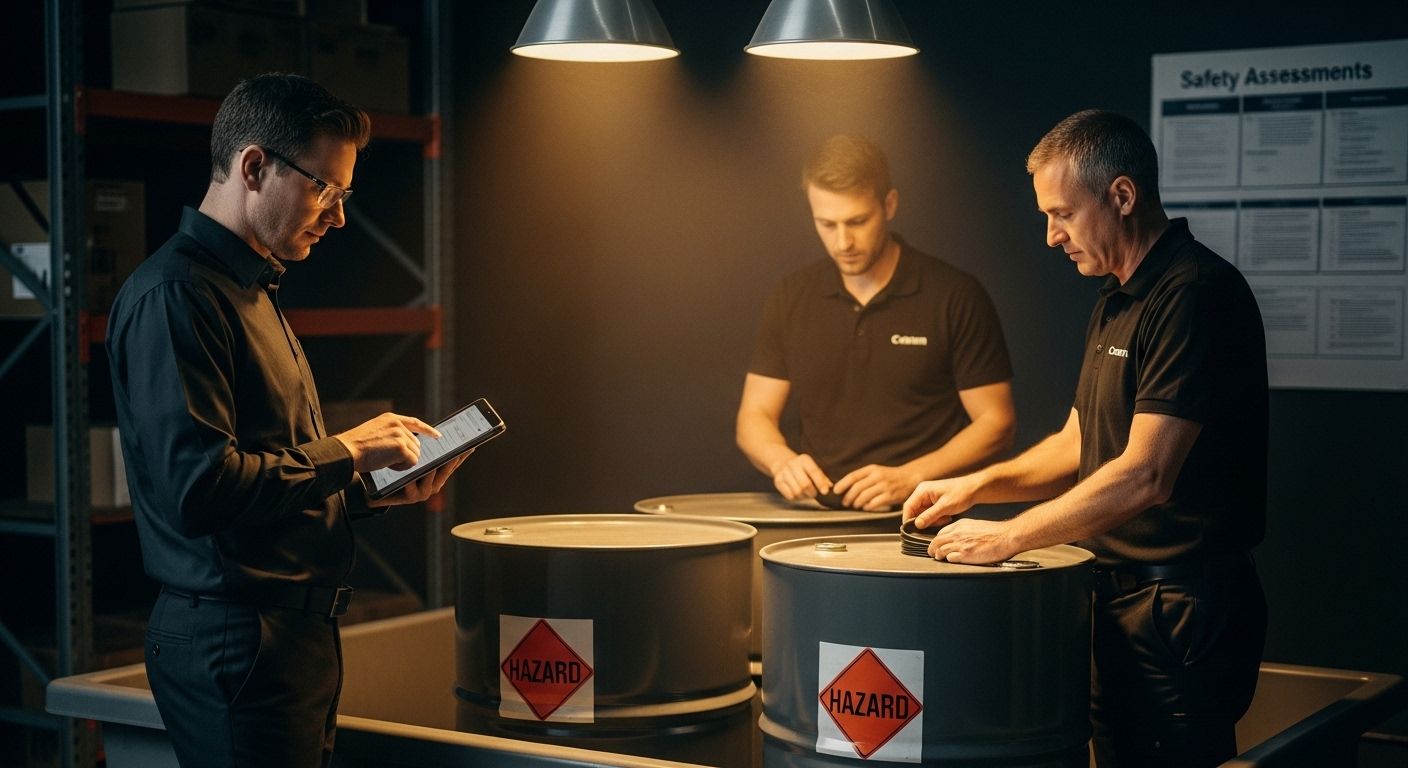
Maintaining safety and preparing for hazardous waste disposal represent critical responsibilities for businesses committed to environmental protection and regulatory compliance. A comprehensive approach involves continuous monitoring, regular training, and strategic disposal planning.
Regular Safety Assessments and Monitoring
Ongoing safety requires systematic and rigorous assessment of hazardous waste storage conditions. According to OSHA regulations, businesses must implement comprehensive monitoring protocols that encompass container integrity, storage area conditions, and potential environmental risks. Explore our safety management guide for detailed insights into maintaining workplace safety.
Key monitoring activities include:
- Weekly Container Inspections: Checking for corrosion, leaks, or damage
- Environmental Condition Tracking: Monitoring temperature, humidity, and ventilation
- Chemical Stability Assessment: Evaluating potential reactive changes
- Documentation of Inspection Findings: Maintaining detailed records
Employee Training and Emergency Preparedness
Comprehensive employee training forms the backbone of hazardous waste safety management. Businesses must develop structured training programmes that equip personnel with the knowledge and skills necessary to handle, store, and respond to potential hazardous waste incidents.
Training should cover:
- Proper personal protective equipment usage
- Chemical identification and risk assessment
- Spill response and containment procedures
- Emergency evacuation protocols
- Regulatory compliance requirements
Businesses in industrial regions like Newcastle and Durham must be particularly proactive in developing robust training programmes. The potential consequences of inadequate preparation can be catastrophic, involving environmental damage, health risks, and significant legal repercussions.
Disposal Planning and Certification
Strategic disposal planning is crucial for responsible hazardous waste management. Businesses must collaborate with certified waste management providers who can ensure safe, compliant, and environmentally responsible disposal of hazardous materials.
Disposal planning considerations include:
- Identifying certified waste disposal partners
- Understanding specific disposal requirements for different waste types
- Maintaining comprehensive waste transfer documentation
- Implementing tracking systems for waste from generation to final disposal
- Ensuring compliance with local and national environmental regulations
The financial implications of improper disposal can be substantial. Non-compliance may result in significant fines, potential legal action, and reputational damage. By investing in comprehensive disposal strategies and partnering with reputable waste management services, businesses protect their financial interests and demonstrate environmental responsibility.
Ultimately, ensuring ongoing safety and preparing for disposal requires a holistic approach that combines technical expertise, regulatory knowledge, and a proactive safety culture. Businesses must view these practices not as bureaucratic requirements but as essential strategies for protecting human health, workplace safety, and environmental sustainability.
Frequently Asked Questions
What are the main categories of hazardous waste?
Hazardous waste typically includes corrosive materials, toxic substances, flammable waste, and reactive compounds. Each category poses distinct risks and requires specific handling and storage practices.
How should I select containers for hazardous waste storage?
Containers must be chemically compatible with the waste, structurally sound without corrosion or leaks, clearly labelled with contents and hazards, and appropriately sized for the specific waste type to ensure safety and compliance.
What precautions should I take when handling hazardous waste?
When handling hazardous waste, use appropriate personal protective equipment (PPE) such as gloves and goggles, implement controlled transfer procedures, maintain organised storage areas, and ensure staff are trained in emergency response protocols.
How often should I conduct safety assessments for my hazardous waste storage?
Regular safety assessments should be conducted weekly to check container integrity, environmental conditions, and documentation of any inspection findings to ensure ongoing compliance with safety standards.
Ready to Make Hazardous Waste Storage Simple and Safe for Your Business?
Storing hazardous waste safely is a real challenge for businesses that want to stay compliant and avoid costly penalties. The risks of poor labelling, container mishaps, or neglected safety assessments can lead to legal trouble and endanger both your team and the environment. If you are feeling overwhelmed by strict regulations or just want peace of mind that your business is fully protected, Venture Waste is here to help. Learn how our broad waste collection network for UK businesses supports straightforward compliance and stress-free solutions for hazardous waste.

Take control of your hazardous waste storage today. With our knowledgeable team, fast three-step booking, and strong commitment to legal and environmental standards, you can focus on your business while we handle the complexities of waste management. Visit Venture Waste Management now and discover how easy it can be to protect your people, property, and reputation. Book your compliant collection and experience a safer approach to hazardous waste storage from start to finish.


Leave a Reply
Want to join the discussion?Feel free to contribute!