

How to Store Confidential Waste Safely in 2025
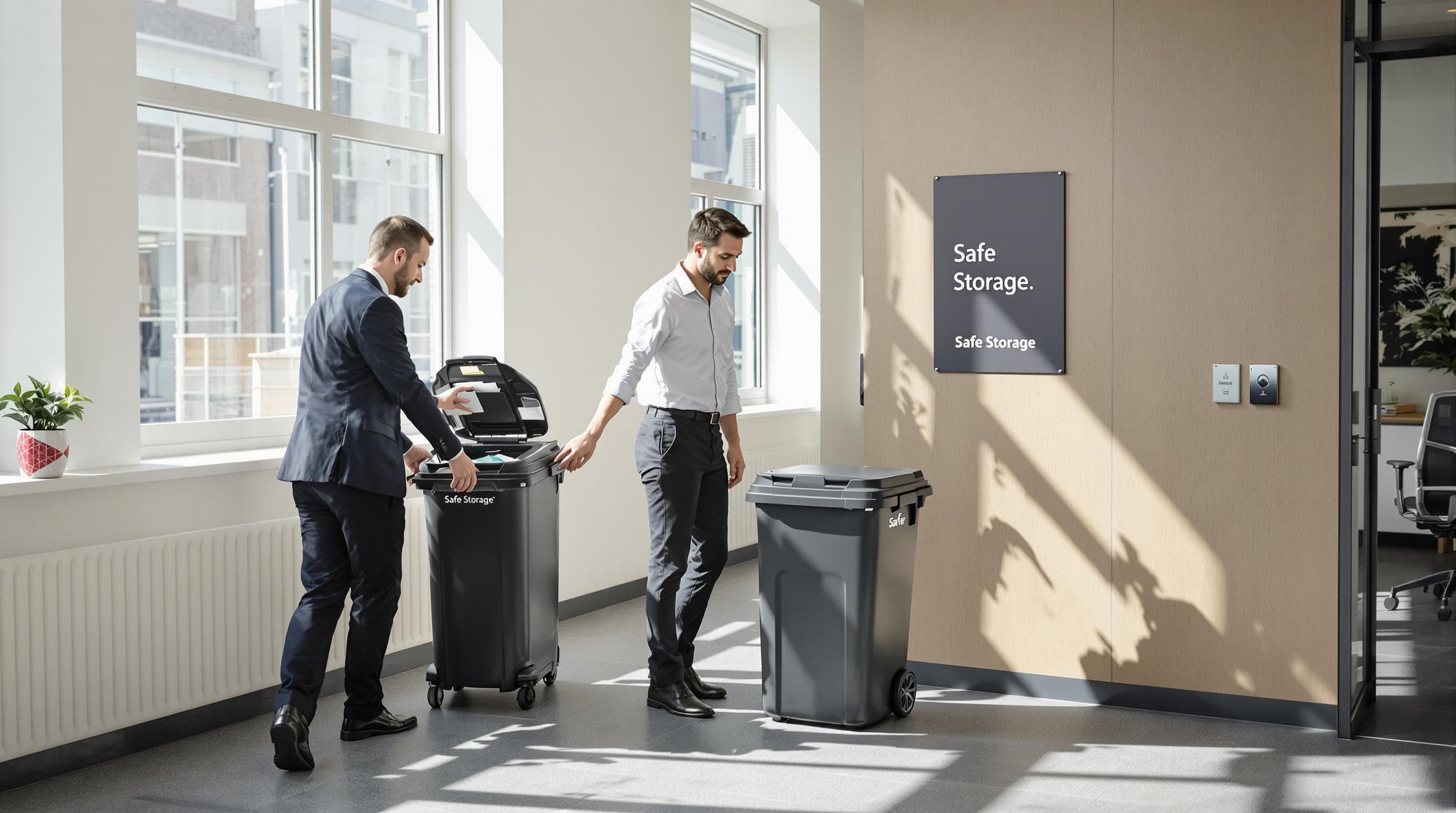
Securing confidential waste will be non-negotiable for British businesses in 2025. Data breaches cost UK companies an average of £3.4 million each and even a single slip in storage can unleash reputational damage. Yet, the real surprise lies in how simple oversights, like using ordinary bins instead of lockable, tamper-proof containers, are where most violations begin. The strongest line of defence is not expensive tech upgrades but surprisingly practical steps you can act on now.
Table of Contents
- Understanding Types Of Confidential Waste
- Best Practices For Secure Waste Storage
- Legal Requirements And Compliance In The UK
- Choosing The Right Storage Solutions For Your Business
Quick Summary
| Takeaway | Explanation |
|---|---|
| Implement robust destruction protocols | Businesses must establish stringent protocols for the secure destruction of both paper-based and electronic confidential waste to prevent data breaches. |
| Adopt secure physical storage solutions | Utilise locked and tamper-evident containers in controlled storage environments to protect confidential waste from unauthorized access. |
| Invest in access control and monitoring systems | Use advanced access controls, such as biometric systems and CCTV surveillance, to monitor and restrict access to sensitive waste storage locations. |
| Prioritise staff training and compliance | Regularly train employees on secure waste handling and the importance of compliance with data protection regulations to mitigate risks of breaches. |
| Select appropriate storage solutions | Choose high-quality storage containers suited to the specific needs of your sector to ensure secure management and integration with destruction processes. |

Understanding Types of Confidential Waste
Confidential waste represents a critical concern for businesses seeking to protect sensitive information and maintain regulatory compliance. Learn more about confidential waste management to understand the nuanced landscape of data protection and secure disposal.
Paper Based Confidential Materials
Paper documents remain one of the most common forms of confidential waste. These materials include financial records, employee files, medical documentation, legal contracts, and personal identification documents. According to research from the Information Commissioner’s Office, businesses must implement robust destruction protocols for paper-based confidential waste to prevent potential data breaches.
Typical paper-based confidential materials encompass:
- Bank statements and financial reports
- Medical patient records
- Employee personnel files
- Legal contracts and agreements
- Sensitive business correspondence
- Client proposal documents
- Academic transcripts and student records
Electronic and Digital Confidential Waste
In the digital age, electronic confidential waste presents increasingly complex challenges for secure management. This category includes hard drives, USB storage devices, computer servers, backup tapes, smartphones, tablets, and other digital storage media containing sensitive electronic information. Commercial waste experts note that electronic waste requires specialized destruction techniques to ensure complete data elimination.
Electronic confidential waste typically involves:
- Computer hard drives
- Solid-state drives
- Backup storage devices
- Cloud storage backups
- Smartphones with corporate data
- Tablets with sensitive information
- External hard drives and USB devices
- Digital cameras and memory cards
Specialized Confidential Waste Categories
Beyond traditional paper and electronic formats, specialized confidential waste includes unique materials requiring careful handling. These categories demand specific disposal protocols to maintain data integrity and legal compliance. Healthcare facilities, research institutions, and government organizations often manage these specialized waste streams with heightened security measures.
Specialized confidential waste categories include:
- Medical imaging films
- Prototype design documents
- Research and development materials
- Pharmaceutical research records
- Classified government documents
- Security access cards
- Biometric data storage devices
Understanding the diverse landscape of confidential waste is crucial for implementing comprehensive security strategies. Each waste type requires tailored destruction methods to prevent potential information leaks and maintain regulatory compliance. Businesses must develop nuanced approaches that address the specific characteristics of different confidential waste streams, ensuring complete and secure elimination of sensitive data across all platforms.
To help distinguish between the main types of confidential waste discussed above, the following summary table highlights typical examples from each category.
| Category | Typical Examples |
|---|---|
| Paper Based | Bank statements, employee files, legal contracts, medical records, proposals |
| Electronic & Digital | Hard drives, SSDs, backup devices, smartphones, tablets, USB drives |
| Specialized | Medical imaging, prototypes, R&D materials, classified documents, access cards |
Best Practices for Secure Waste Storage
Securing confidential waste storage is a critical responsibility for businesses aiming to protect sensitive information and maintain regulatory compliance. Learn more about confidential waste risk management to develop comprehensive protection strategies.
Secure Physical Storage Solutions
Physical security forms the foundation of effective confidential waste management. According to research from the UK’s Information Commissioner’s Office, businesses must implement robust physical storage measures to prevent unauthorized access and potential data breaches.
Key physical storage requirements include:
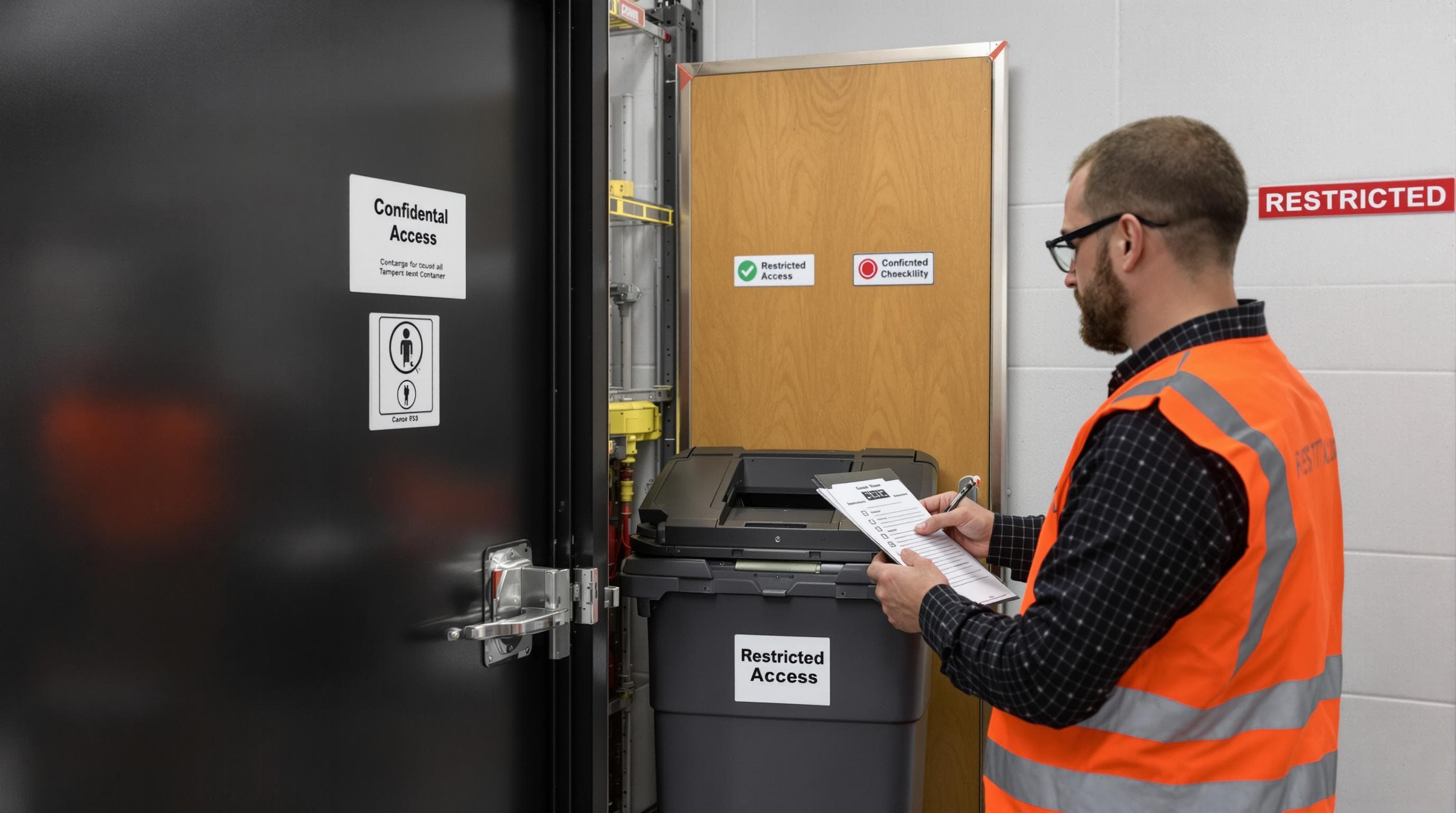
- Locked, tamper-evident containers with restricted access
- Secure storage rooms with controlled entry points
- Limited personnel authorization for waste storage areas
- Clearly marked storage zones with restricted access signage
- Climate-controlled environments to prevent document degradation
- Separate storage areas for different types of confidential waste
Access Control and Monitoring Systems
Implementing sophisticated access control mechanisms is crucial for protecting confidential waste. Commercial waste security experts recommend comprehensive monitoring systems that track and restrict access to sensitive waste storage locations.
Essential access control strategies include:
- Biometric access controls (fingerprint or retinal scanning)
- Electronic key card entry systems
- 24-hour CCTV surveillance
- Detailed access logs and visitor management protocols
- Regular security audits of storage facilities
- Multi-factor authentication for waste handling personnel
Staff Training and Compliance Protocols
Human factors play a significant role in maintaining secure confidential waste storage. Organizations must develop comprehensive training programs that educate employees about the critical importance of secure waste management.
Critical training components should address:
- Proper handling and storage procedures
- Recognition of sensitive document types
- Understanding legal and regulatory requirements
- Immediate reporting of potential security breaches
- Consistent adherence to organizational waste management policies
- Regular refresher courses on data protection protocols
To quickly compare the essential best practices for secure confidential waste storage, see the table below.
| Best Practice Area | Key Measures/Features |
|---|---|
| Physical Storage | Locked containers, secure rooms, access restriction, climate control, separation by waste type |
| Access Control & Monitoring | Biometric access, key cards, CCTV, access logs, audits, multi-factor authentication |
| Staff Training & Compliance | Proper handling, legal awareness, incident reporting, policy adherence, refresher training |
Effective confidential waste storage requires a multifaceted approach that combines physical security, technological solutions, and human awareness. Businesses must continuously evaluate and update their storage strategies to address evolving security challenges and regulatory requirements. By implementing comprehensive protection measures, organizations can mitigate risks associated with sensitive information exposure and demonstrate a commitment to robust data protection practices.
Legal Requirements and Compliance in the UK
Confidential waste management in the United Kingdom involves complex legal frameworks that businesses must navigate carefully. Explore essential waste disposal legal requirements to ensure comprehensive regulatory compliance and mitigate potential legal risks.
Data Protection Regulatory Framework
The legal landscape for confidential waste management is primarily governed by the UK General Data Protection Regulation (UK GDPR) and the Data Protection Act 2018. According to the Information Commissioner’s Office, organizations have a legal obligation to implement robust mechanisms that prevent unauthorized access or disclosure of sensitive information during storage and disposal processes.
Key regulatory compliance requirements include:
- Implementing secure waste destruction protocols
- Maintaining detailed documentation of waste management procedures
- Ensuring comprehensive staff training on data protection
- Conducting regular internal audits of confidential waste handling
- Developing clear retention and destruction policies
- Creating accountability mechanisms for data protection
Environmental and Waste Management Regulations
Beyond data protection, businesses must adhere to environmental regulations that govern waste management. Research from the Environment Agency highlights the critical importance of responsible waste handling across various sectors.
Environmental compliance considerations encompass:
- Adhering to the Environmental Protection Act 1990
- Implementing proper waste segregation techniques
- Maintaining accurate waste transfer documentation
- Ensuring environmentally responsible disposal methods
- Minimizing potential environmental contamination risks
- Demonstrating a commitment to sustainable waste management practices
Sector-Specific Legal Obligations
Different industry sectors face unique legal requirements for confidential waste management. Healthcare, financial services, legal practices, and government organizations must develop specialized compliance strategies that address their specific regulatory environments.
Sector-specific legal obligations typically involve:
- Healthcare sector: Strict patient confidentiality regulations
- Financial services: Comprehensive financial record protection
- Legal practices: Attorney-client privilege preservation
- Government agencies: National security information protection
- Research institutions: Intellectual property safeguarding
- Educational establishments: Student record confidentiality
Successful legal compliance in confidential waste management requires a proactive, multifaceted approach. Businesses must stay informed about evolving regulatory landscapes, invest in comprehensive staff training, and develop robust internal processes that consistently meet or exceed legal standards. By prioritizing legal compliance, organizations can protect sensitive information, mitigate potential risks, and demonstrate their commitment to responsible data management practices.
Choosing the Right Storage Solutions for Your Business
Selecting appropriate confidential waste storage solutions is crucial for businesses seeking to protect sensitive information and maintain regulatory compliance. Check out our comprehensive confidential waste solutions guide to understand the most effective storage strategies for your organization.
Container Selection and Specifications
Choosing the right storage containers is fundamental to secure confidential waste management. According to the Information Commissioner’s Office, businesses must invest in high-quality storage solutions that prevent unauthorized access and potential data breaches.
Key container selection criteria include:
- Lockable containers with tamper-evident seals
- Robust construction using durable materials
- Size appropriate to your business volume
- Color-coded systems for different waste types
- Compatibility with secure destruction processes
- Resistance to environmental degradation
- Easy integration with existing waste management systems
Specialized Storage Solutions by Sector
Research from the UK Health and Safety Executive highlights the importance of sector-specific storage solutions that address unique confidential waste management challenges. Different industries require tailored approaches to ensure comprehensive protection of sensitive information.
Sector-specific storage considerations:
- Healthcare: Secure medical record containers with infection control features
- Financial Services: High-security lockboxes for financial documents
- Legal Firms: Specialized cabinets with advanced security mechanisms
- Educational Institutions: Confidential waste stations with restricted access
- Government Agencies: Multi-layered security storage systems
- Research Facilities: Controlled-environment storage for sensitive research materials
Digital and Physical Storage Integration
Modern confidential waste management requires a holistic approach that seamlessly integrates digital tracking with physical storage solutions. Government guidance recommends implementing comprehensive tracking and monitoring systems to enhance security and compliance.
Integrated storage solution features:
- Digital inventory management systems
- RFID tracking for physical containers
- Real-time access logging
- Automated destruction scheduling
- Comprehensive audit trail capabilities
- Secure chain of custody documentation
- Integration with compliance management software
Effective confidential waste storage is not a one-size-fits-all solution. Businesses must carefully assess their specific needs, regulatory requirements, and operational constraints when selecting storage solutions. By investing in high-quality, sector-appropriate storage systems and implementing robust tracking mechanisms, organizations can significantly mitigate risks associated with sensitive information exposure and demonstrate a commitment to comprehensive data protection practices.
Frequently Asked Questions
What is confidential waste?
Confidential waste refers to any materials containing sensitive information, such as paper documents or electronic data that require secure disposal to prevent unauthorised access and breaches.
How can businesses securely store confidential waste?
Businesses can securely store confidential waste by using locked and tamper-evident containers, implementing access control mechanisms, and ensuring restricted access to storage areas.
What are the legal requirements for confidential waste management in the UK?
In the UK, businesses must comply with the UK GDPR and the Data Protection Act 2018, which require implementing secure destruction protocols and maintaining detailed documentation for waste management practices.
Why is staff training important for managing confidential waste?
Staff training is crucial for ensuring that employees understand proper waste handling procedures, recognise sensitive document types, and adhere to legal and compliance requirements, thereby reducing the risk of accidental breaches.
Protect Your Confidential Waste with Secure Solutions from Venture Waste
Are you worried about the risk of data breaches or struggling to make sense of the latest secure storage requirements that the article has highlighted? As discussed above, simple oversights in storing confidential waste can lead to costly mistakes and serious compliance issues. If you want peace of mind and practical support, our dedicated confidential waste services deliver the secure containers, scheduled collections, and professional document shredding your business needs—no matter the industry or waste type.

Take action now and avoid sleepless nights over compliance. Visit Venture Waste for tailored solutions that guarantee legal and environmental protection for your sensitive materials. Book your confidential waste collection today or explore our waste collection network for UK businesses to see how effortless compliance can be.


Leave a Reply
Want to join the discussion?Feel free to contribute!