

How to Sort Waste Effectively for Legal Compliance
Across British healthcare and educational facilities, nearly 30 percent of waste ends up incorrectly sorted, risking fines and losing chances for recycling. With tighter regulations and rising sustainability goals, accurate waste management is no longer optional for facilities managers. This guide reveals practical waste sorting solutions that help British organisations stay compliant, optimise operations, and support greener communities.
Table of Contents
- Step 1: Assess Waste Streams On-Site
- Step 2: Set Up Marked Sorting Stations
- Step 3: Educate Staff On Correct Separation
- Step 4: Monitor Sorting Practices Regularly
- Step 5: Verify Recycling And Disposal Compliance
Quick Summary
| Key Insight | Explanation |
|---|---|
| 1. Assess waste streams thoroughly | Conduct a detailed evaluation of all waste types within your facility to understand waste composition and segregate effectively. |
| 2. Implement clearly marked sorting stations | Establish intuitive and well-signposted sorting stations in strategic locations to enhance waste separation at the point of generation. |
| 3. Educate staff on waste separation practices | Provide ongoing training and resources to ensure staff understand waste types and correct disposal methods to maintain compliance. |
| 4. Monitor waste sorting practices regularly | Conduct systematic reviews and use tracking tools to ensure compliance and identify any contamination or sorting issues. |
| 5. Verify recycling and disposal compliance | Maintain detailed records of waste management processes and conduct audits to ensure alignment with legal regulations and best practices. |
Step 1: Assess waste streams on-site
Assessing waste streams represents a critical first step in ensuring legal compliance for waste management across healthcare and educational institutions. By conducting a thorough on-site evaluation, you can systematically identify and categorise different types of waste generated within your facility.
Begin your waste assessment by mapping out all waste generation points across your organisation. This involves walking through each department and documenting the specific waste types produced. For instance, a hospital might generate medical waste, paper documents, food waste from cafeterias, and packaging materials. A university could have similar diversity with laboratory chemical waste, paper recyclables, electronic equipment, and organic waste from catering facilities. Waste stream evaluation techniques help organisations understand their precise waste composition and develop targeted segregation strategies.
Once you have documented your waste streams, create a detailed inventory that categorises waste by type plastic, paper, organic, hazardous and non-hazardous materials. This inventory will become your roadmap for implementing proper sorting protocols. Use colour coded bins, clear signage, and staff training to ensure each waste type is correctly identified and separated at the point of generation.
Expert Advice: Conduct your initial waste assessment during a typical working week to capture the most accurate representation of your facility’s waste generation patterns.
Here is a summary of common waste stream types and their examples for healthcare and educational settings:
| Waste Stream Type | Typical Examples in Healthcare | Typical Examples in Education |
|---|---|---|
| Medical/Hazardous | Needles, bandages, chemicals | Laboratory reagents, sharp objects |
| Paper/Cardboard | Patient records, cartons | Exam scripts, packaging |
| Organic | Food scraps from cafeterias | Catering waste, garden clippings |
| Electronic (WEEE) | Discarded monitors, devices | Broken computers, lab equipment |
| General/Residual | Non-recyclable materials | Mixed waste, contaminated wrappers |
| Plastic | Disposable gloves, wrappers | Bottles, containers |
Step 2: Set up marked sorting stations
Establishing clearly marked sorting stations is essential for effective waste management and legal compliance in healthcare and educational facilities. Your goal is to create an intuitive waste disposal system that helps staff and visitors easily segregate different types of waste at the point of generation.
Start by implementing waste station design guidelines that align with UK regulations. This means creating distinct stations with colour coded bins for each waste stream such as glass, metal, plastic, paper, cardboard, food waste, and general residual waste. Position these stations strategically in high traffic areas like corridors, cafeterias, laboratories, and administrative spaces. Each station should feature clear visual signage explaining exactly what can be disposed of in each bin type and include pictorial guides to help reduce contamination.
Ensure your sorting stations are consistent across the entire facility. Use standardised bin colours matching national waste management guidelines red for hazardous waste, blue for paper and cardboard, green for organic materials, and black for general waste. Train your staff thoroughly on these colour codes and waste segregation protocols to maintain system integrity and legal compliance.
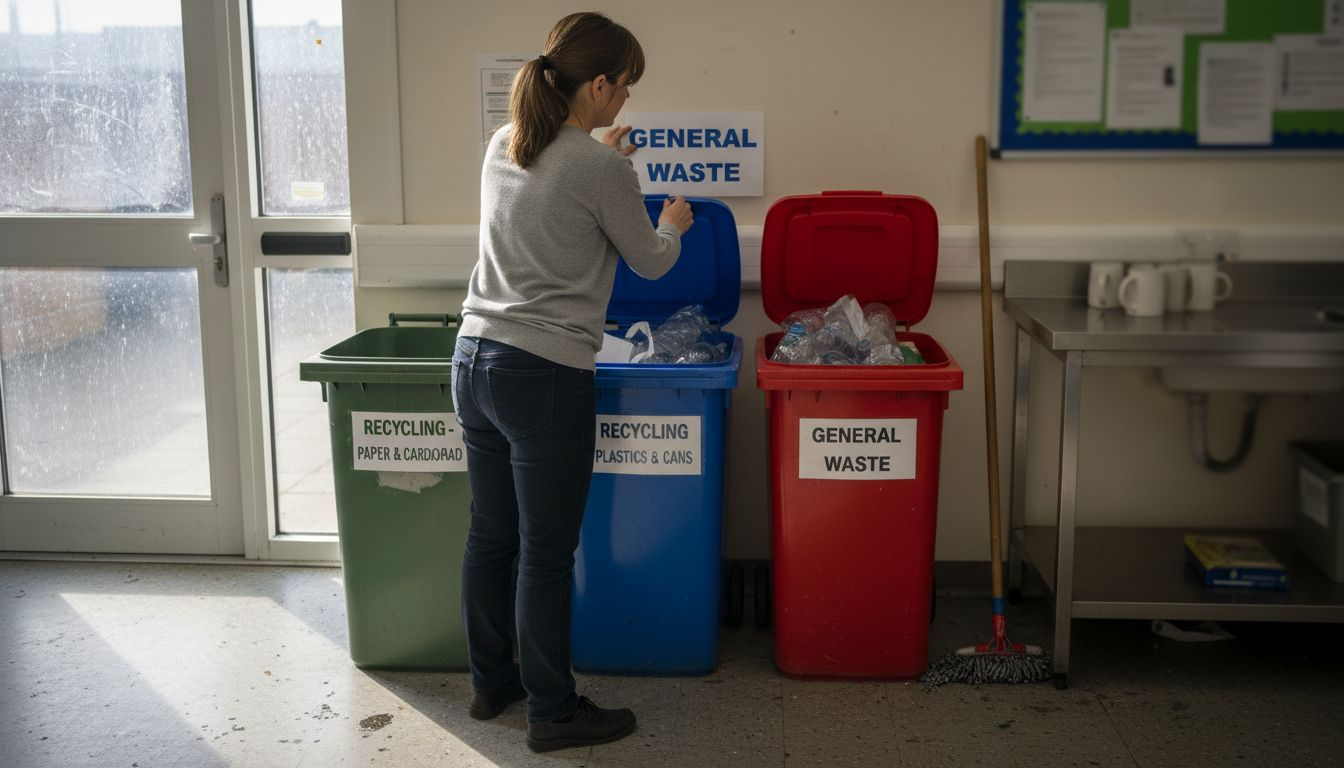
Expert Advice: Install waste sorting guidance posters near each station to provide quick reference for correct disposal methods.
The following table compares waste bin colour codes in UK regulations and their intended contents:
| Bin Colour | Associated Waste Type | Key Locations for Use |
|---|---|---|
| Red | Hazardous/clinical waste | Treatment rooms, laboratories |
| Blue | Paper and cardboard | Offices, lecture halls |
| Green | Organic/food waste | Kitchens, cafeterias |
| Black | General/residual waste | Corridors, public areas |
Step 3: Educate staff on correct separation
Educating your staff about waste separation is crucial for maintaining legal compliance and ensuring effective waste management across your organisation. Your primary objective is to transform waste disposal from a mundane task into a systematic and environmentally responsible practice.
Staff training requirements mandate comprehensive education on waste segregation procedures. Develop a structured training programme that includes interactive workshops, visual demonstrations, and practical guidance on identifying and disposing of different waste types. Focus on explaining the purpose behind waste separation beyond mere compliance highlighting environmental benefits and the organisation’s commitment to sustainable practices. Create engaging training materials that illustrate the correct bin usage colour codes and provide real world examples of potential contamination scenarios.
Implement ongoing education strategies to maintain staff awareness. Schedule regular refresher sessions every six months and use digital platforms like internal newsletters, posters, and quick reference guides to reinforce proper waste separation protocols. Consider establishing waste champions within different departments who can provide peer support and help monitor waste disposal practices. These internal advocates can play a crucial role in maintaining high standards of waste management and ensuring consistent compliance across your facility.
Expert Advice: Conduct periodic waste sorting quizzes or challenges to keep staff engaged and reinforce learning in a fun interactive manner.
Step 4: Monitor sorting practices regularly
Regular monitoring of waste sorting practices is essential to ensure ongoing legal compliance and maintain the effectiveness of your waste management system. By implementing systematic review processes, you can identify potential issues quickly and prevent waste stream contamination.
Compliance monitoring strategies recommended by the Environment Agency involve multiple assessment approaches. Develop a comprehensive monitoring programme that includes unannounced spot checks, quarterly detailed audits, and digital tracking of waste disposal practices. Create a standardised checklist that evaluates waste sorting accuracy, bin contamination levels, staff adherence to colour coding protocols, and overall waste stream segregation quality. Assign responsible team members to conduct these reviews consistently and document their findings.
Utilise digital technologies to enhance your monitoring efforts. Implement waste tracking software that allows real time recording of sorting practices, generates visual reports, and highlights areas requiring immediate attention. Consider establishing a feedback mechanism where staff can report potential sorting issues or suggest improvements. This collaborative approach not only improves waste management practices but also increases staff engagement and creates a culture of environmental responsibility.
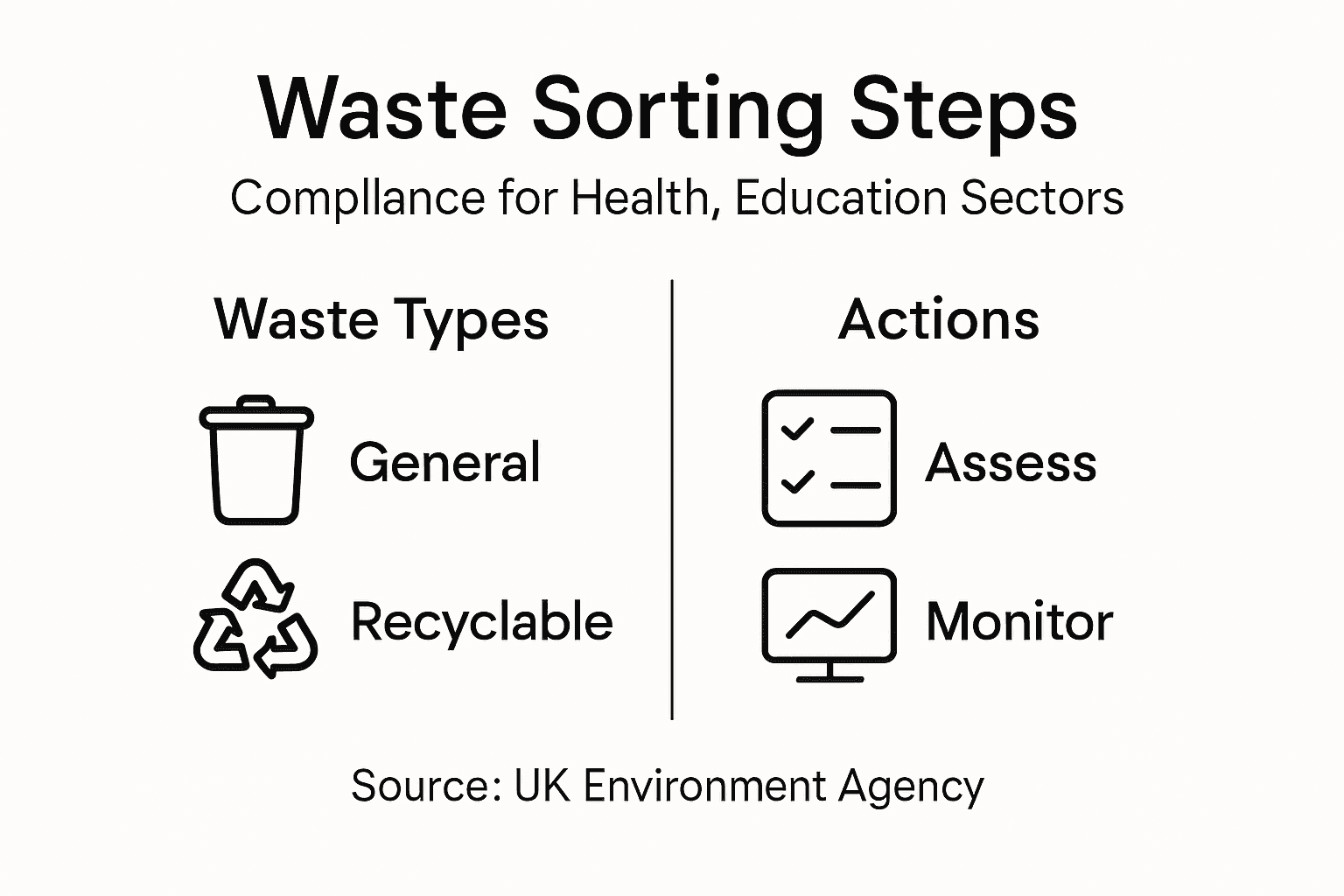
Expert Advice: Use random sampling techniques during monitoring to get an unbiased representation of your organisation’s waste sorting performance.
Step 5: Verify recycling and disposal compliance
Verifying recycling and disposal compliance is the final critical step in ensuring your waste management practices meet legal standards and environmental regulations. Your goal is to systematically document and validate that all waste streams are processed according to UK environmental guidelines.
Waste disposal verification protocols require businesses to maintain comprehensive documentation of their waste management processes. Develop a robust record keeping system that tracks each waste stream from collection to final disposal. This should include detailed logs documenting the type and quantity of waste, the recycling or disposal method used, and certificates from accredited waste processors. Collect and retain recycling notes, transfer documentation, and disposal receipts that demonstrate your organisation’s commitment to proper waste management.
Conduct periodic internal audits to cross reference your waste documentation with actual disposal practices. Engage independent environmental compliance auditors who can provide an objective assessment of your waste management systems. These external reviews not only help identify potential compliance gaps but also demonstrate your proactive approach to environmental responsibility. Pay special attention to hazardous waste streams, ensuring they receive appropriate specialised treatment and are tracked with extra scrutiny.
Expert Advice: Create a digital archive of all waste management documentation to ensure easy retrieval and long term preservation of compliance records.
Master Waste Sorting with Venture Waste’s Expert Solutions
Sorting waste effectively is essential for legal compliance and protecting the environment. The article highlights common challenges such as understanding diverse waste streams, setting up marked sorting stations, and educating staff to prevent contamination. If you find managing multiple waste types like hazardous materials, food scraps, or recycling confusing, you are not alone. Achieving consistent waste separation requires clear guidance paired with reliable waste collection services.
Let Venture Waste simplify your waste management today. Take advantage of our comprehensive expertise covering everything from food waste handling to navigating the waste collection process in the UK for businesses 2025. Our streamlined approach guarantees legal compliance without the complexity.

Start transforming your waste management system now by visiting Venture Waste. Benefit from easy bookings, professional advice, and a trusted network dedicated to environmentally responsible practices. Don’t let regulatory demands overwhelm you. Act today to secure peace of mind and a cleaner workplace.
Frequently Asked Questions
How do I assess waste streams in my organisation for legal compliance?
Begin by conducting an on-site evaluation to identify and categorise different types of waste generated. Walk through each department, documenting waste generation points and creating an inventory of waste types such as medical, organic, and electronic waste.
What are the best practices for setting up waste sorting stations?
Establish clearly marked sorting stations with colour-coded bins for each waste stream. Position these stations in high-traffic areas and use visual signage to guide proper disposal, ensuring consistency across the facility.
How can I effectively educate my staff on waste separation?
Implement a structured training programme that includes interactive workshops and real-world examples of waste disposal scenarios. Schedule regular refresher sessions every six months to reinforce proper waste separation practices among all staff members.
What monitoring techniques should I use to ensure compliance in waste sorting?
Develop a comprehensive monitoring programme that includes unannounced spot checks and detailed quarterly audits of waste sorting practices. Use a standard checklist to assess sorting accuracy and track contamination levels consistently.
How do I verify recycling and disposal compliance in my waste management system?
Create a robust record-keeping system that tracks each waste stream from collection to final disposal. Conduct periodic internal audits and engage independent auditors to ensure all documentation aligns with actual disposal practices and meets legal standards.
Recommended
- Waste Management Step by Step: A Guide for UK Businesses 2025 – Venture Waste
- Waste Handling Best Practices for UK Businesses in 2025 – Venture Waste
- 7 Steps to Waste Compliance for UK Businesses in 2025 – Venture Waste
- General Waste vs Recycling: Business Guide for 2025 – Venture Waste
- Garbage Disposal Installation Service Project in Greater Carrollwood FL 33618 – Home Therapist Cooling, Heating, and Plumbing


Leave a Reply
Want to join the discussion?Feel free to contribute!