

How to Label Hazardous Waste in UK Workplaces (2025)
Every UK business that handles hazardous waste knows the rules around labels can make the difference between safety and disaster. Yet most people assume a simple sticker with a warning symbol will do the job. The regulations for 2025 demand far more detail, and failing to meet them could mean fines of up to £5,000 for each offence. Once you see what actually goes on a label now, you will never look at hazardous waste the same way again.
Table of Contents
- Understanding Hazardous Waste Label Requirements
- Step-By-Step Guide To Labelling Hazardous Waste
- Common Mistakes When Labelling Hazardous Waste
- UK Legal Rules And Best Practices For 2025
Quick Summary
| Takeaway | Explanation |
|---|---|
| Identify Waste Accurately | Conduct precise chemical analysis to determine waste characteristics and ensure compliance. |
| Include Key Label Components | Labels must have comprehensive details like hazard symbols, descriptions, and emergency contacts. |
| Avoid Common Labelling Mistakes | Prevent vague descriptions and outdated classifications to ensure safety and compliance. |
| Stay Updated on Regulations | Follow evolving UK laws and best practices for hazardous waste management to avoid penalties. |
| Implement Robust Documentation | Maintain detailed tracking and reporting systems for waste handling and disposal to demonstrate compliance. |
Understanding Hazardous Waste Label Requirements
Hazardous waste labelling is a critical compliance requirement for UK businesses that generate, transport, or dispose of potentially dangerous materials. Proper labelling ensures worker safety, environmental protection, and legal adherence to UK waste management regulations.
Key Components of Hazardous Waste Labels
Effective hazardous waste labelling involves several essential elements that communicate the specific risks and handling requirements. According to the Health and Safety Executive, labels must comprehensively describe the waste’s potential dangers and necessary precautions.
The primary components of a hazardous waste label include:
- Waste Identification: Detailed description of the waste material, including its chemical composition and origin
- Hazard Symbols: Standardised international symbols indicating specific types of risks
- Chemical Classification: Precise categorisation of the waste’s potential dangerous properties
- Emergency Contact Information: Contact details for specialised handling and emergency response

Regulatory Framework for Labelling
UK businesses must comply with multiple regulatory standards when labelling hazardous waste. The Environment Agency mandates strict guidelines for waste classification and labelling to ensure public and environmental safety.
The Hazardous Waste Regulations 2005 (as amended) establish comprehensive requirements for identifying, categorising, and labelling potentially dangerous materials. These regulations apply to all businesses producing, storing, transporting, or disposing of hazardous waste.
Key regulatory requirements include:
- Accurate waste classification using standardised coding systems
- Clear and legible labelling on all containers
- Comprehensive documentation tracking waste movement
- Specific colour coding and symbol usage for different hazard types
Businesses must ensure their labelling processes are meticulous and compliant, as incorrect or inadequate labelling can result in significant legal penalties and potential environmental risks. Read our comprehensive guide on hazardous waste disposal to understand the full scope of your legal obligations.
Properly executed hazardous waste labelling is more than a regulatory requirement—it is a fundamental aspect of workplace safety and environmental responsibility. By understanding and implementing these detailed labelling standards, UK businesses can protect their workers, communities, and the environment from potential hazards associated with dangerous materials.
To provide a clear overview, the following table summarises the key components required on hazardous waste labels and their purposes.
| Label Component | Description / Purpose |
|---|---|
| Waste Identification | Describes material, chemical composition, and origin |
| Hazard Symbols | Indicates specific types of risks |
| Chemical Classification | Categorises dangerous properties of the waste |
| Emergency Contact Information | Provides contacts for specialised handling and emergency response |
| Producer Name and Contact Info | Identifies the waste producer for traceability |
| UN Identification Number | Uniquely identifies hazardous substances for transport |
| Waste Classification Code (EWC) | Assigns European Waste Catalogue code for accurate classification |
| Date of Waste Generation | States when waste was produced; important for tracking |
| Relevant Risk and Safety Phrases | Summarises handling precautions and potential hazards |
Step-by-Step Guide to Labelling Hazardous Waste
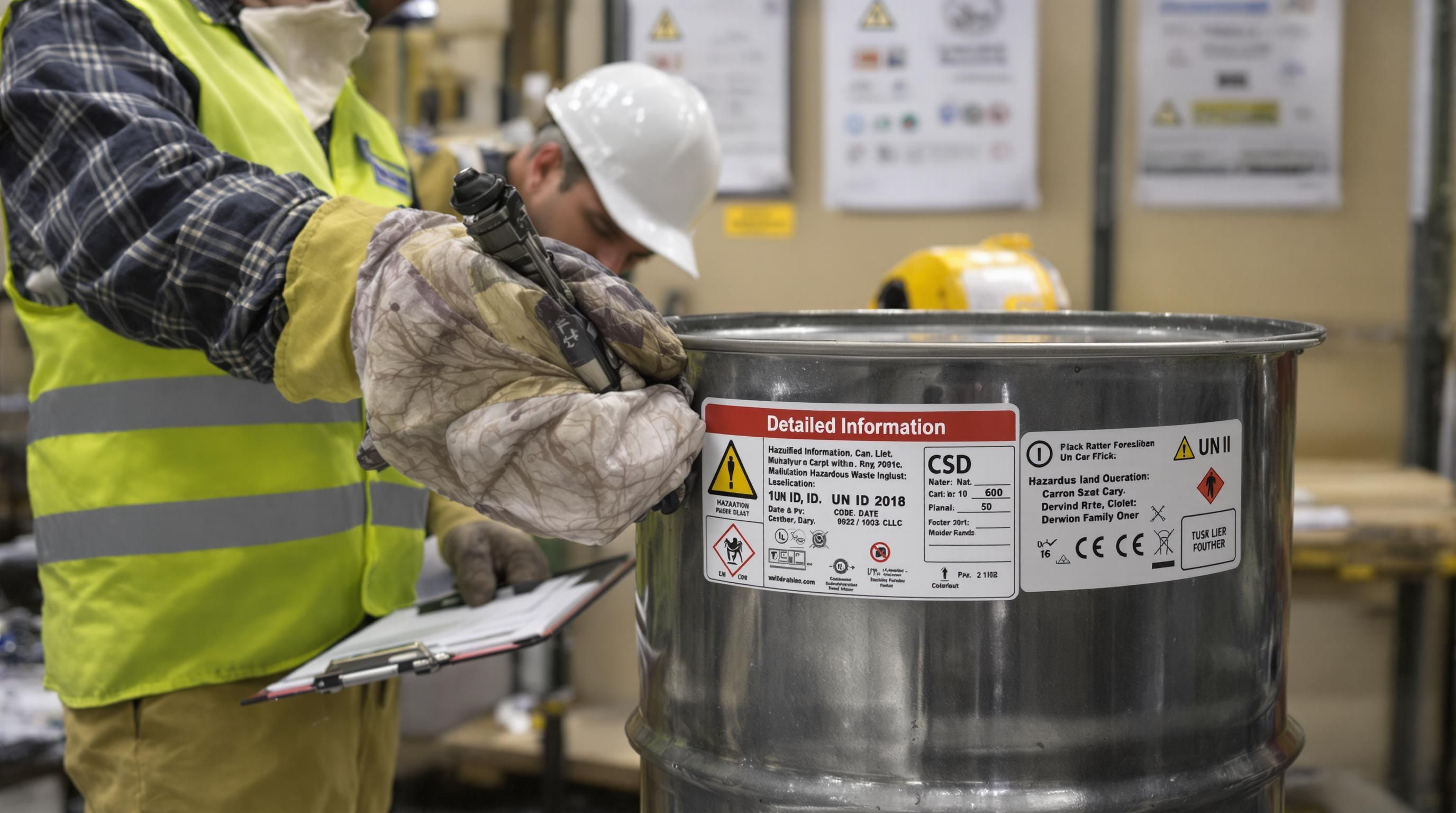
Labelling hazardous waste requires precision and adherence to strict UK regulatory standards. This comprehensive guide will walk businesses through the essential steps to ensure complete compliance and safety when managing potentially dangerous materials.
Identifying and Classifying Waste Materials
The first critical step in hazardous waste labelling involves accurate waste identification and classification. According to the UK Environment Agency, businesses must carefully assess the specific characteristics of their waste materials before initiating the labelling process.
Key actions in this initial phase include:
- Chemical Composition Analysis: Conduct thorough testing to determine the precise chemical makeup of the waste
- Hazard Assessment: Evaluate potential risks associated with the material
- Waste Code Determination: Assign the correct European Waste Catalogue (EWC) code that accurately represents the waste type
Creating Comprehensive Hazardous Waste Labels
Once the waste is identified, businesses must create labels that provide complete and clear information. UK government guidelines mandate specific requirements for hazardous waste labelling to ensure worker safety and environmental protection.
Essential label components include:
- Producer name and contact information
- Precise waste description
- Specific hazard symbols
- UN identification number
- Relevant risk and safety phrases
- Waste classification code
- Date of waste generation
- Quantity of waste
Implementing Proper Labelling Procedures
Effective implementation requires careful attention to detail and consistent processes. Businesses must train staff in proper labelling techniques and maintain rigorous documentation standards. Learn more about our comprehensive waste disposal guide to ensure complete regulatory compliance.
Practical labelling procedures include:
- Using weather-resistant and durable label materials
- Ensuring labels are clearly visible and legible
- Placing labels directly on waste containers
- Updating labels immediately if waste characteristics change
- Maintaining a comprehensive tracking system for all labelled waste
Compliance with hazardous waste labelling regulations is not optional—it is a legal requirement that protects workers, communities, and the environment. By following these systematic steps, UK businesses can confidently manage their hazardous waste while meeting all regulatory standards and minimising potential risks.
The table below outlines the main steps to properly label hazardous waste in UK workplaces, highlighting key actions required at each stage.
| Step | Key Action | Purpose |
|---|---|---|
| 1. Waste Identification | Analyse chemical composition and origin | Ensure accurate classification and labelling |
| 2. Hazard Assessment | Evaluate potential risks | Identify correct hazard symbols and safety measures |
| 3. Waste Code Determination | Assign EWC code | Standardise classification for legal compliance |
| 4. Label Creation | Include required information and symbols | Provide essential details and hazard communication |
| 5. Label Application | Affix weather-resistant label clearly to containers | Maintain clear and legible hazard identification |
| 6. Ongoing Updates | Revise labels if waste characteristics change | Reflect correct status and compliance |
| 7. Documentation & Tracking | Maintain detailed movement and tracking records | Ensure regulatory compliance and traceability |
Common Mistakes When Labelling Hazardous Waste
Hazardous waste labelling requires meticulous attention to detail. Even minor errors can lead to significant legal, safety, and environmental consequences for UK businesses. Understanding and avoiding common labelling mistakes is crucial for maintaining compliance and protecting workers.
Incorrect or Incomplete Waste Identification
One of the most critical errors businesses make involves inadequate waste identification. According to the Health and Safety Executive, inaccurate waste descriptions can compromise safety protocols and legal compliance.
Common identification mistakes include:
- Vague Chemical Descriptions: Using generic or imprecise terminology instead of specific chemical compositions
- Outdated Classification: Failing to update waste classifications when material properties change
- Missing Hazard Details: Omitting crucial information about potential risks and handling requirements
Misuse of Hazard Symbols and Terminology
The UK Environment Agency warns against misleading labelling practices. Research from the Health and Safety Executive Northern Ireland specifically cautions against using deceptive terms that might underestimate potential hazards.
Terminology mistakes to avoid:
- Using misleading phrases like ‘safe’ or ‘non-toxic’
- Incorrectly applying hazard symbols
- Failing to update labels when waste characteristics change
- Neglecting to include emergency contact information
Documentation and Compliance Errors
Poor documentation can create significant legal risks for businesses handling hazardous waste. The Waste Duty of Care Code of Practice emphasizes the importance of accurate and comprehensive waste documentation.
Documentation pitfalls include:
- Incomplete waste tracking records
- Inconsistent labelling across different containers
- Failing to maintain up-to-date waste movement logs
- Not training staff on proper labelling procedures
Explore our comprehensive guide to avoiding waste management errors to ensure your business remains compliant and safe.
Addressing these common mistakes requires a proactive approach. UK businesses must invest in continuous staff training, implement robust quality control processes, and stay informed about evolving regulatory requirements. By recognising and addressing potential labelling errors, companies can protect their workers, the environment, and their organisational reputation.
UK Legal Rules and Best Practices for 2025
As the regulatory landscape for hazardous waste management continues to evolve, UK businesses must stay abreast of the latest legal requirements and best practices for 2025. Compliance is no longer just about avoiding penalties but demonstrating a commitment to environmental responsibility and workplace safety.
Regulatory Frameworks and Compliance Standards
The UK’s hazardous waste management regulations are governed by a complex network of legal instruments. According to the Environment Agency, businesses must adhere to multiple regulatory frameworks that define precise labelling, handling, and disposal standards.
Key regulatory components include:
- Hazardous Waste Regulations 2005: Fundamental legislation governing waste classification
- Control of Substances Hazardous to Health (COSHH) Regulations: Workplace safety requirements
- Chemical (Hazard Information and Packaging for Supply) Regulations: Labelling and packaging standards
- Waste (England and Wales) Regulations 2011: Comprehensive waste management guidelines
Updated Labelling and Documentation Requirements
The UK government’s official guidance emphasises increasingly stringent documentation and labelling protocols for 2025. Businesses must implement more comprehensive tracking and reporting mechanisms to ensure transparent waste management practices.
Critical updates for 2025 include:
- Enhanced digital tracking systems for waste movement
- More detailed chemical composition reporting
- Stricter requirements for emergency contact information
- Mandatory electronic waste transfer notes
- Increased transparency in waste classification processes
Environmental Responsibility and Risk Management
Beyond legal compliance, the 2025 regulatory environment places greater emphasis on environmental stewardship and proactive risk management. Explore our comprehensive guide on waste disposal legal requirements to understand the full scope of these evolving obligations.
Best practices for environmental responsibility include:
- Implementing robust waste reduction strategies
- Investing in staff training on hazardous waste management
- Developing comprehensive internal audit processes
- Maintaining detailed and accurate waste records
- Prioritising environmentally friendly disposal methods
Businesses that view these regulatory requirements as opportunities for improvement rather than mere compliance challenges will be best positioned to succeed. By integrating advanced tracking technologies, investing in staff training, and maintaining meticulous documentation, UK organisations can transform hazardous waste management from a legal obligation into a strategic advantage.
The landscape of hazardous waste management is dynamic and complex. Staying informed, adaptable, and proactive is not just a recommended approach—it is a fundamental requirement for responsible business operations in 2025 and beyond.
Frequently Asked Questions
What are the key components required on hazardous waste labels in the UK?
Labels must include waste identification, hazard symbols, chemical classification, and emergency contact information to ensure safety and compliance.
How can UK businesses ensure compliance with hazardous waste labelling regulations for 2025?
Businesses should regularly update their labelling practices according to the Hazardous Waste Regulations and maintain detailed tracking systems to demonstrate compliance and adhere to the latest legal requirements.
What are common mistakes to avoid when labelling hazardous waste?
Common mistakes include vague waste identification, misuse of hazard symbols, and poor documentation practices which can compromise legal compliance and safety.
Why is accurate waste classification important in hazardous waste labelling?
Accurate waste classification is vital as it determines the correct hazard symbols and safety measures, ensuring proper handling and minimizing risks to workers and the environment.
Take the Stress Out of Hazardous Waste Labelling with Venture Waste
Getting hazardous waste labels right is not just a detail. As the article explains, even small mistakes with identification or missing labels could lead to severe fines, safety risks, or legal trouble for your business. With so many steps involved—like finding the correct EWC codes, keeping documentation up to date, and learning new regulations—many workplaces feel uncertain or overwhelmed by the entire process. If you are worried about compliance, or unsure what the new 2025 standards mean for your workplace, you are not alone. See how our Waste Collection Network simplifies business compliance

Let Venture Waste Management remove the uncertainty from hazardous waste handling. Our nationwide network of experts helps businesses like yours navigate labelling laws, from initial collection through safe disposal. We deliver straightforward service, full compliance, and responsible management—so you avoid fines and protect your staff. Visit Venture Waste Management to book your compliant hazardous waste collection today. Stay safe, stay compliant, and save time. Act now before the 2025 changes catch you out.


Leave a Reply
Want to join the discussion?Feel free to contribute!