

How to Dispose Waste Legally in the UK: Step-by-Step Guide
British businesses generate millions of tonnes of waste every year, and strict regulations mean that even minor mistakes can result in heavy fines. Understanding how to manage your waste safely and legally is more than just a box to tick. With so many categories, rules, and disposal options, setting up a compliant system can feel daunting. This guide breaks down the crucial steps that help every organisation stay on the right side of the law while protecting the environment.
Table of Contents
- Step 1: Assess Your Waste Types And Volumes
- Step 2: Classify And Segregate All Waste Streams
- Step 3: Choose Licensed Waste Carriers Or Disposal Services
- Step 4: Keep Accurate Waste Transfer And Disposal Records
- Step 5: Verify Legal Compliance And Finalise Documentation
Quick Summary
| Important Insight | Explanation |
|---|---|
| 1. Conduct a comprehensive waste audit | A waste audit helps identify and categorise waste types, ensuring compliance and effective disposal strategies. |
| 2. Implement a waste segregation system | Use coloured bins for different waste types to avoid contamination and simplify disposal processes. |
| 3. Select licensed waste carriers | Partner with authorised waste carriers to ensure legal compliance and proper waste handling tailored to your needs. |
| 4. Maintain accurate waste records | Document all waste transfers and disposal processes thoroughly to demonstrate compliance and responsibility. |
| 5. Verify compliance regularly | Regularly audit your waste management practices to ensure adherence to regulations and environmental standards. |
Step 1: Assess your waste types and volumes
Identifying and categorising your waste types is a fundamental first step in legal waste disposal for UK businesses. By understanding the specific characteristics of your waste, you can ensure proper handling, prevent environmental harm, and comply with regulatory requirements.
Begin by conducting a comprehensive waste audit that systematically documents all waste streams generated by your organisation. The UK government guidance emphasises the critical importance of determining whether your waste is classified as hazardous or non-hazardous. This involves carefully examining each waste type’s physical properties, chemical composition, and potential environmental impact. For instance, electronic equipment, batteries, chemical residues, and medical waste often require specialised disposal methods.
To effectively measure waste volumes, use precise weighing techniques and recording systems. While industrial facilities might employ advanced measurement tools, smaller businesses can use standard scales and maintain detailed logs. The UK Radioactive Waste & Materials Inventory highlights the significance of accurately reporting waste volumes across different stages – including reported, conditioned, and packaged volumes. These measurements are crucial not just for disposal planning, but also for tracking your organisation’s waste reduction progress.
Pro Tip: Always segregate different waste types immediately to prevent cross-contamination and simplify your disposal process.
Once you have completed your waste assessment, you will be prepared to move forward with selecting appropriate waste disposal methods that align with legal requirements and environmental best practices.
Step 2: Classify and segregate all waste streams
Classifying and segregating waste streams is a critical process for businesses to ensure legal compliance and minimise environmental impact. This step involves carefully identifying and separating different types of waste to facilitate proper disposal and potential recycling.
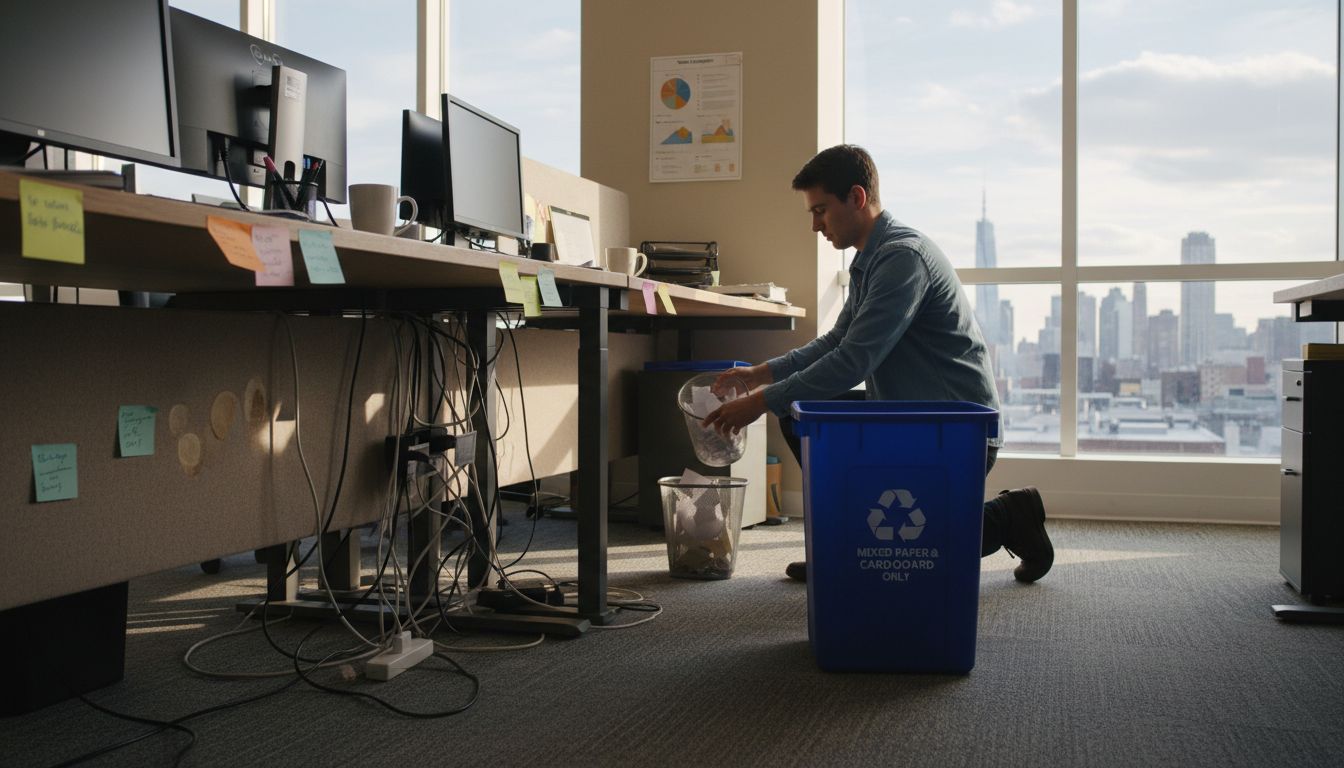
The UK government guidance on hazardous waste regulations emphasises the strict prohibition of mixing hazardous waste with non hazardous materials. Your waste classification should comprehensively cover different categories including general waste, recyclable materials, organic waste, hazardous chemicals, electronic equipment, and construction debris. For each waste stream, consider its physical properties, potential environmental risks, and specific disposal requirements.
Implement a colour coded segregation system in your workplace to simplify waste management. Use clearly labelled containers for different waste types – blue for recyclables, green for organic waste, red for hazardous materials, and grey for general waste. This visual system helps employees quickly and accurately sort waste at the point of disposal. Government waste classification resources provide detailed guidance on identifying and categorising specific waste types across various industries.
Pro Tip: Train all staff members on your waste segregation protocols to ensure consistent and correct waste handling.
Once you have effectively classified and segregated your waste streams, you will be well prepared to move to the next stage of legal waste disposal planning.
Step 3: Choose licensed waste carriers or disposal services
Selecting the right waste carrier is crucial for ensuring legal and responsible waste management in your business. This step involves identifying and partnering with authorised professionals who can handle your specific waste disposal requirements.
Begin by using the official government registry to find registered waste carriers who are legally permitted to transport and dispose of your waste streams. Each potential waste carrier should have a valid waste carrier licence which demonstrates their compliance with UK environmental regulations. When evaluating potential services, request documentation that proves their licensing status, insurance coverage, and experience handling waste similar to your organisation’s specific needs.
Carefully review each waste carrier’s credentials and specialisation. Some providers might excel in handling specific waste types like electronic equipment, hazardous chemicals, or construction debris. Request detailed quotes that transparently outline collection frequencies, disposal methods, and total costs. Waste collection licensing guidelines can help you understand the key factors to consider during your selection process.
Pro Tip: Always maintain copies of waste transfer notes and carrier licences for your records to demonstrate regulatory compliance.
Once you have selected a licensed waste carrier that meets your specific requirements, you will be ready to establish a formal waste disposal arrangement.
Step 4: Keep accurate waste transfer and disposal records
Maintaining comprehensive and precise documentation is an essential requirement for legal waste disposal in the UK. Your record keeping serves as a critical audit trail demonstrating your business’s commitment to responsible waste management and environmental compliance.
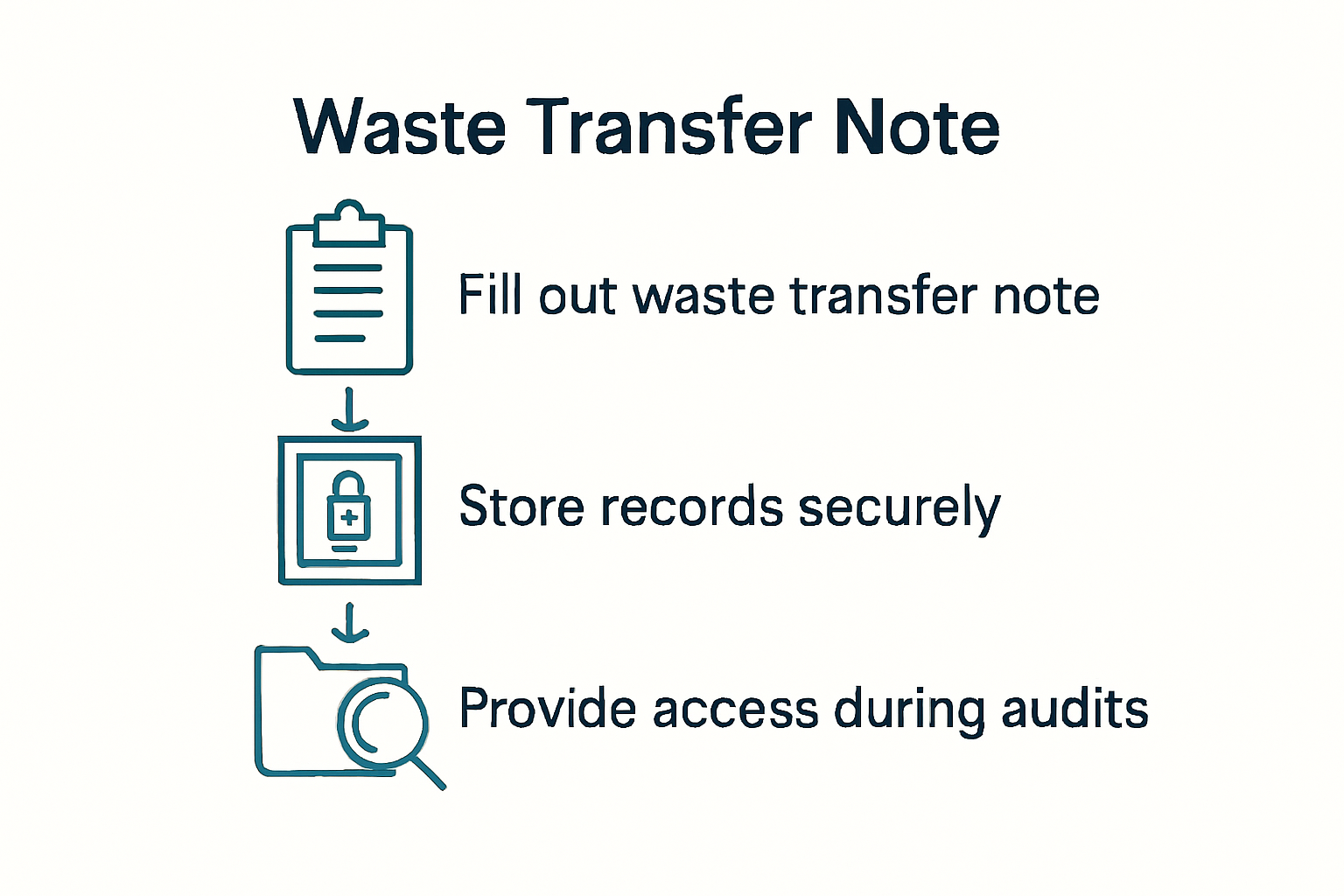
Create a systematic digital filing system that captures all critical waste management documentation. This should include detailed waste transfer notes for every waste stream, which must specify the type and quantity of waste transferred, the carrier details, collection and disposal dates, and the final waste destination. Waste management compliance guidelines recommend maintaining these records for a minimum of two years, ensuring they are easily accessible for potential regulatory inspections.
Ensure your waste transfer documentation includes specific details such as waste description codes, carrier licence numbers, your business registration information, and signatures from both the waste producer and carrier. Implement a robust digital storage system that allows quick retrieval and backup of these crucial documents. Consider using cloud storage solutions with secure access and multiple backup protocols to protect against potential data loss.
Pro Tip: Regularly audit your waste records quarterly to ensure completeness and identify any potential compliance gaps.
By establishing a meticulous record keeping process, you will create a transparent documentation trail that demonstrates your organisation’s commitment to legal and environmental responsibility.
Step 5: Verify legal compliance and finalise documentation
The final stage of legal waste disposal involves a comprehensive review of all documentation and processes to ensure complete regulatory compliance. This critical step acts as a safeguard against potential legal and environmental risks for your business.
Conduct a thorough internal audit of your waste management documentation, cross referencing all waste transfer notes, carrier licences, and disposal records. Waste disposal legal requirements specify that businesses must demonstrate a clear chain of custody for all waste streams from generation to final disposal. Pay special attention to verifying the authenticity of carrier licences, ensuring all documentation contains accurate waste description codes, and confirming that disposal methods align with current environmental regulations.
Establish a final compliance checklist that includes verification of digital and physical records, confirmation of waste carrier credentials, and alignment with current UK environmental legislation. Your documentation should provide a transparent and traceable account of your waste management practices, including waste volumes, types, collection dates, and final disposal locations. This comprehensive approach not only ensures legal compliance but also demonstrates your organisation’s commitment to responsible environmental stewardship.
Pro Tip: Consider engaging an external environmental compliance consultant to conduct an independent review of your waste management documentation.
By meticulously verifying and finalising your waste disposal documentation, you create a robust system that protects your business from potential regulatory penalties and environmental risks.
Simplify Legal Waste Disposal with Expert Support from Venture Waste
Navigating the complexities of legal waste disposal can be overwhelming, especially when you must classify, segregate, and document various waste types accurately. Businesses often struggle to maintain compliance while ensuring environmental responsibility and efficient waste management. This is where Venture Waste steps in to ease your burden with proven solutions tailored to UK businesses.

Discover how our comprehensive waste services connect seamlessly with your legal obligations. Whether you need support understanding the Waste Collection Process in the UK for Businesses 2025 or require specialised handling of hazardous materials detailed in our hazardous waste archives, Venture Waste offers reliable, licensed carriers and transparent documentation to keep your records impeccable. Visit Venture Waste Management now to secure compliant, efficient waste disposal designed for your peace of mind and legal confidence. Take control of your waste management today and protect your business from regulatory risks.
Frequently Asked Questions
How do I assess my waste types and volumes for legal disposal?
To assess your waste types and volumes, conduct a comprehensive waste audit that documents all waste streams generated by your business. Use precise measurements to weigh each type of waste and maintain detailed logs for tracking purposes.
What steps are involved in classifying and segregating waste streams?
Classifying and segregating waste streams involves identifying different types of waste and separating them at the point of disposal. Implement a colour-coded system to help employees easily sort waste into designated containers for recyclables, organic waste, hazardous materials, and general waste.
How can I choose the right licensed waste carrier or disposal service?
To select the right licensed waste carrier, check the official registry for registered waste carriers and ensure they hold a valid waste carrier licence. Evaluate their expertise in handling your specific waste types and request detailed quotes outlining their services and costs.
What records do I need to keep for waste transfer and disposal?
You need to maintain detailed waste transfer notes for each waste stream, including the type and quantity of waste, carrier details, and disposal dates. Create a systematic digital filing system to store these records, ensuring you keep them for a minimum of two years.
How do I verify legal compliance in my waste disposal processes?
To verify legal compliance, conduct a thorough internal audit of all your waste management documents. Cross-reference your waste transfer notes with carrier licences and disposal records to ensure everything is accurate and complies with current regulations.
Why is it important to keep accurate waste disposal records?
Accurate waste disposal records are crucial for demonstrating your business’s commitment to responsible waste management and legal compliance. By maintaining these records, you create a transparent documentation trail that can protect your business from regulatory penalties.
Recommended
- Complete Guide to Responsible Waste Disposal UK – Venture Waste
- Waste Management Step by Step: A Guide for UK Businesses 2025 – Venture Waste
- Waste Collection Best Practices: Step-by-Step UK Guide – Venture Waste
- Why Segregate Waste: Complete Guide for UK Businesses – Venture Waste
- The Essential Guide to Hot Tub Safety UK – ClearSpa™
- 2025 Key Challenges in Packaging Compliance Issues


Leave a Reply
Want to join the discussion?Feel free to contribute!