

How to Create an Office Electrical Recycling Policy That Staff Actually Follow
UK businesses produce a staggering 1.45 million tonnes of electrical waste every year, yet many offices remain unsure how to handle this growing challenge. Outdated devices and broken electronics often pile up in storerooms or end up in landfill, putting sensitive data and the environment at risk. Taking simple, structured steps can help every organisation build a sustainable, compliant system that makes electrical recycling effortless for staff and safeguards valuable resources.
Table of Contents
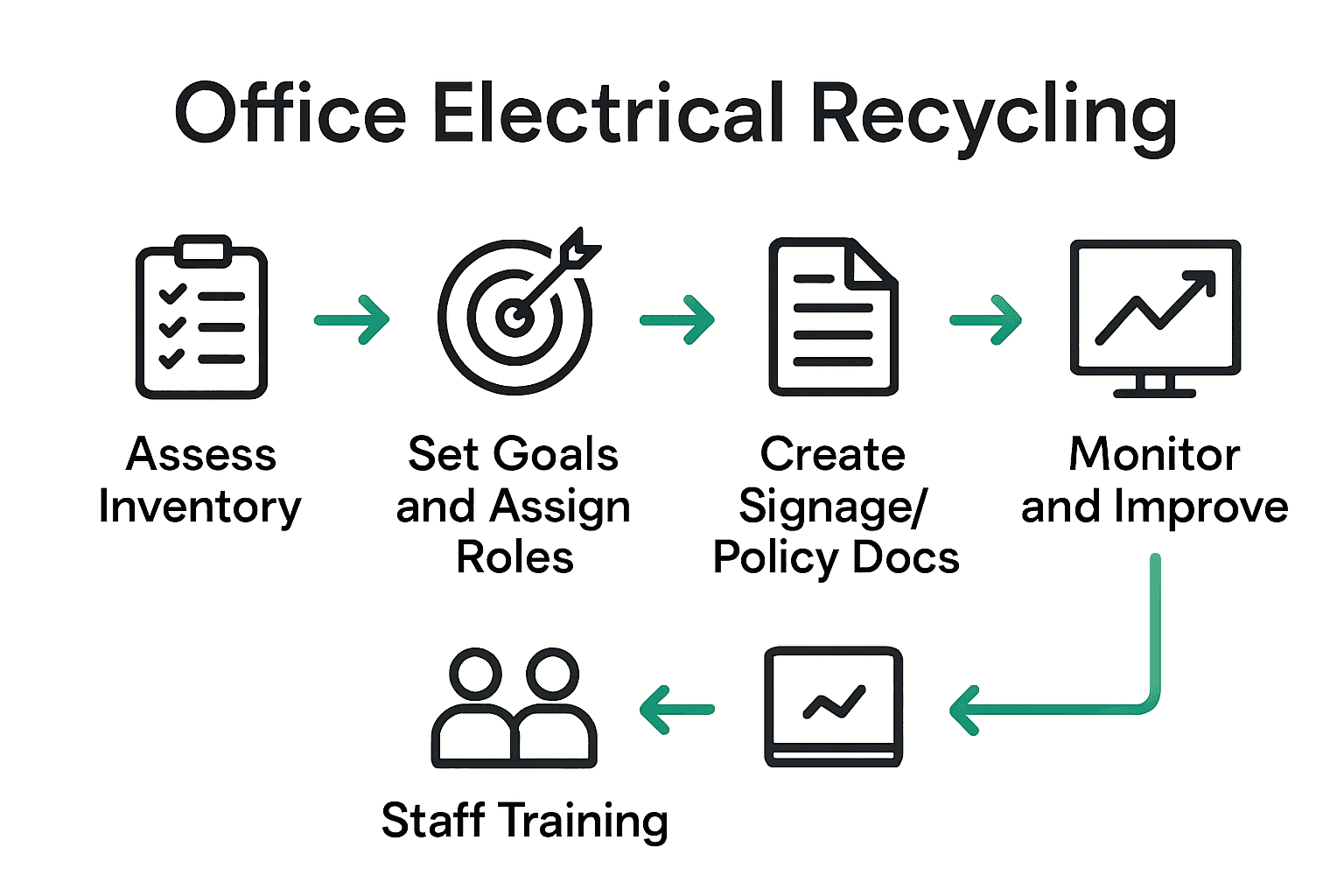
- Step 1: Assess Existing Electrical Waste Practices
- Step 2: Define Clear Recycling Goals and Responsibilities
- Step 3: Develop Accessible Policy Documents and Signage
- Step 4: Deliver Staff Training and Engagement Activities
- Step 5: Monitor Compliance and Adjust Procedures
Quick Summary
| Key Point | Explanation |
|---|---|
| 1. Assess current electrical waste practices | Conduct a thorough audit of your current electrical inventory to understand waste generation and identify recycling opportunities. |
| 2. Set clear recycling goals | Establish specific, measurable recycling targets and assign responsibilities to ensure accountability within your organization. |
| 3. Create accessible policy documents | Develop clear, concise recycling policies and signage that are easy to understand and follow for all employees. |
| 4. Engage staff through training | Implement interactive training programs to educate staff on proper recycling practices and encourage their active participation. |
| 5. Monitor compliance and adapt | Regularly track recycling progress and adjust procedures based on feedback and findings to continuously improve the recycling strategy. |
 |
Step 1: Assess existing electrical waste practices
Assessing your office electrical waste practices is the crucial first step towards creating an effective recycling policy that staff will actually follow. According to research from Lancaster University, UK businesses generate substantial volumes of electrical waste annually making comprehensive assessment vital.
Begin by conducting a comprehensive audit of your current electrical equipment inventory. This involves cataloguing all electronic devices across departments including computers, printers, servers, networking equipment, monitors, and peripheral devices. Document each item details such as age, condition, and replacement history. Create a standardised spreadsheet tracking device serial numbers, purchase dates, and current operational status. Pay special attention to identifying devices nearing end of life or those with high potential for responsible recycling.
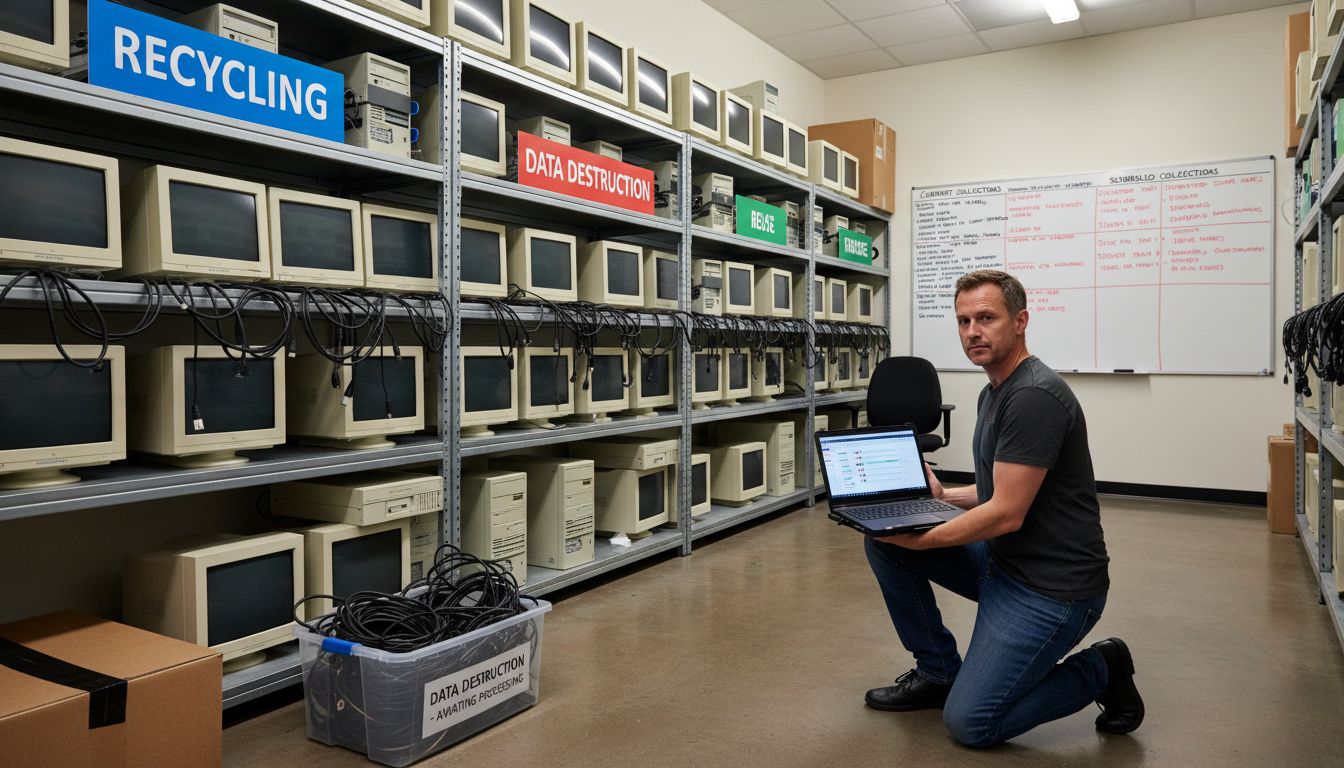
To enhance this assessment, schedule brief consultations with department heads to understand specific technological needs and challenges. During these discussions, explore current disposal practices and gather insights about equipment turnover. The goal is not just recording inventory but understanding workflow patterns that impact electrical waste generation. Irep Research highlights that understanding organisational barriers is key to developing effective electrical equipment reuse strategies.
A critical warning emerges from this assessment process protect sensitive data. Ensure any devices scheduled for recycling undergo thorough data destruction protocols. This prevents potential information security breaches and demonstrates your organisation’s commitment to comprehensive waste management.
Your next step will involve analysing the collected data to develop targeted recycling guidelines that align with your specific organisational needs.
Step 2: Define clear recycling goals and responsibilities
Defining clear recycling goals and responsibilities is pivotal for transforming your electrical waste management from a vague concept into a structured organisational strategy. Springer Research emphasises the critical importance of establishing precise objectives and accountability mechanisms in effective e-waste management.
Start by setting specific quantifiable recycling targets for your organisation. These goals should be realistic yet challenging measurable metrics such as reducing electrical waste volume by 25% within 12 months or ensuring 80% of end of life electronic equipment is responsibly recycled. Assign clear responsibilities to key personnel creating a dedicated waste management team or coordinator who will oversee implementation and track progress.
Create a comprehensive responsibility matrix that outlines specific roles for different departments. For instance the IT department might handle device inventory and assessment while facilities management oversees collection and storage. Finance could manage budgetary aspects of recycling initiatives and procurement teams could implement sustainable purchasing guidelines. Each role should have explicit expectations documented in writing to ensure accountability.
A strategic warning emerges organisations often fail when responsibilities are ambiguous. Ensure every team member understands their specific role in the electrical recycling process through clear communication training sessions and periodic review meetings.
With clear goals and responsibilities established your organisation is now prepared to develop detailed implementation strategies for your electrical waste recycling policy.
Step 3: Develop accessible policy documents and signage
Developing accessible policy documents and clear signage is crucial for ensuring your electrical recycling strategy becomes a practical reality within your workplace. According to Loughborough University, creating comprehensive yet understandable documentation is fundamental to successful sustainable equipment management.
Craft your policy document using clear concise language that avoids technical jargon. Structure the document with logical sections including purpose scope responsibilities and specific procedures for electrical waste handling. Use visual elements like infographics charts and colour coded diagrams to break down complex information. Ensure the document is formatted for easy reading with clear headings substantial white space and a readable font size that accommodates different visual abilities.
Design strategic signage that guides staff through the electrical recycling process. Place highly visible colour coded bins with explicit instructions near common areas like print stations server rooms and office workspaces. Include simple iconography that demonstrates correct disposal methods for different types of electrical equipment. Multilingual signage can be particularly helpful in diverse workplace environments ensuring inclusivity and comprehensive understanding.
A critical warning emerges documentation must be both comprehensive and digestible. Avoid overwhelming staff with excessive technical details or overly complex instructions. The goal is to create a policy that feels approachable and actionable rather than intimidating.
With accessible policy documents and clear signage in place your organisation is ready to move towards staff training and implementation of the electrical recycling strategy.
Step 4: Deliver staff training and engagement activities
Engaging staff effectively is the cornerstone of a successful electrical recycling policy. Irep Research highlights the critical importance of staff training in extending product lifetimes and supporting sustainable waste management initiatives.
Design a multi-faceted training programme that goes beyond traditional lecture formats. Implement interactive workshops where employees can physically practice electrical waste sorting and understand the environmental impact of their actions. Create engaging multimedia presentations that break down complex recycling processes into digestible segments. Consider developing short video tutorials gamified learning experiences and hands on demonstration sessions that make learning about electrical waste management both informative and enjoyable.
Establish ongoing engagement mechanisms to maintain momentum. This could include quarterly recycling challenges between departments quarterly sustainability newsletters recognising and rewarding teams or individuals who demonstrate exceptional commitment to electrical waste reduction. Introduce a system of environmental champions who receive additional training and can act as peer advocates within their respective teams spreading knowledge and motivating colleagues through direct interaction.
A strategic warning emerges training cannot be a one time event. Sustainability requires continuous learning and adaptation. Regular refresher sessions feedback mechanisms and updated training materials will ensure your electrical recycling policy remains dynamic and relevant.
With comprehensive staff training and engagement activities completed your organisation is now prepared to implement and monitor the electrical waste recycling strategy.
Step 5: Monitor compliance and adjust procedures
Effective electrical waste management requires continuous monitoring and strategic adaptation. Springer Research emphasises the critical importance of developing comprehensive monitoring mechanisms to achieve sustainable operational practices in electronic waste management.
Implement a robust tracking system that quantifies electrical waste generation disposal and recycling rates across different departments. Develop standardised monthly reporting templates that capture key metrics such as total waste volume recycled percentage equipment lifecycle data and departmental performance. Utilise digital dashboards and spreadsheet tools to visualise progress making compliance tracking transparent and accessible to all staff members.
Conduct quarterly compliance audits to assess the effectiveness of your electrical recycling policy. These audits should include random spot checks of waste sorting practices interviews with department representatives and comprehensive reviews of waste management documentation. Create feedback loops that allow staff to provide insights and suggestions for improving the recycling process. This approach transforms compliance monitoring from a top down enforcement mechanism into a collaborative continuous improvement initiative.
A critical warning emerges monitoring is not about punishment but progressive improvement. Approach compliance reviews as opportunities for organisational learning rather than disciplinary exercises. Provide constructive guidance support and additional training where gaps are identified.
With a comprehensive monitoring and adjustment framework in place your organisation can now focus on continuously refining and evolving its electrical waste management strategy.
Simplify Your Office Electrical Recycling with Venture Waste
Creating an office electrical recycling policy that staff actually follow takes clear strategy and ongoing commitment. The challenge lies in turning good intentions into practical actions that everyone can understand and engage with. If you are looking to overcome common obstacles like data security, departmental accountability, and consistent compliance, you are not alone. Effective solutions require more than just policy documents—they demand reliable waste collection and a partner who understands your evolving needs.
At Venture Waste Management, we specialise in delivering tailored recycling services for businesses across the UK. Whether you need secure disposal options to protect sensitive information or streamlined collection aligned with your recycling goals, we support you every step of the way. Discover how our expert teams operate within the Waste Collection Process in the UK for Businesses 2025 to ensure compliance and environmental responsibility. Our comprehensive network detailed in How the Waste Collection Network in UK Serves Businesses in 2025 guarantees efficient service wherever you are.

Start transforming your office’s electrical waste strategy into action today with Venture Waste Management. Visit https://venturewaste.co.uk to learn more and book your tailored waste management solution. Take the first step towards a greener, hassle-free office environment now.
Frequently Asked Questions
How can I assess our current electrical waste practices?
Begin by conducting a comprehensive audit of your office’s electronic devices. Catalogue all items by tracking their serial numbers, purchase dates, and operational statuses to identify units nearing the end of life.
What goals should we set for our electrical recycling policy?
Set specific and measurable recycling targets, such as aiming to reduce electrical waste volume by 25% within the next 12 months. These goals should challenge your team while remaining realistic and achievable.
How can I ensure that all staff understand the recycling policy?
Develop clear policy documents using concise language and logical sections. Include visual aids and strategic signage in key areas around the office to simplify guidelines and ensure accessibility for all employees.
What kind of training activities will engage staff in our recycling policy?
Implement interactive training sessions like workshops or hands-on demonstrations that allow staff to practice sorting electrical waste. Create engaging multimedia presentations or gamified experiences to reinforce the importance of responsible disposal.
How do we monitor compliance with our recycling policy?
Establish a tracking system that collects data on electrical waste generation and recycling rates by department. Conduct regular compliance audits and create feedback loops to identify areas for improvement and collaborative learning.
How can we keep our recycling policy relevant over time?
Continuously adapt your policy by scheduling regular refresher training sessions and updating documentation. Encourage staff feedback to identify gaps and adjust procedures to enhance participation and effectiveness.


Leave a Reply
Want to join the discussion?Feel free to contribute!