

How Local Authorities Can Reduce Landfill by Improving Electrical Waste Collection
Electrical waste is piling up faster than ever, with the UK discarding millions of old gadgets and appliances every year. For local authorities aiming to cut landfill use and meet growing environmental targets, understanding and improving electrical waste management is now urgent. With the right strategy, it is possible to capture and recycle over 85,000 tonnes of electrical waste annually, turning a complex challenge into an opportunity for cleaner, greener communities in the North East.
Table of Contents
- Step 1: Assess Current Electrical Waste Collection Capabilities
- Step 2: Upgrade Public Awareness and Collection Infrastructure
- Step 3: Implement Efficient Sorting and Transportation Methods
- Step 4: Partner with Certified Recycling Facilities
- Step 5: Monitor Results and Optimise Collection Strategies
Quick Summary
| Key Point | Explanation |
|---|---|
| 1. Assess current collection capabilities | Evaluate existing electrical waste collection sites to identify gaps and opportunities for improvement in your local area. |
| 2. Enhance public awareness and access | Launch targeted campaigns and establish convenient drop-off points to educate and facilitate proper electrical waste disposal among residents. |
| 3. Improve sorting and transportation processes | Implement systematic sorting and eco-friendly transportation methods to ensure efficient handling of various electrical waste types. |
| 4. Partner with certified recycling facilities | Select and collaborate with compliant recycling partners that adhere to environmental standards and can assure the sustainable processing of waste. |
| 5. Continuously monitor and adapt strategies | Develop a tracking system for performance metrics to refine collection strategies and improve sustainability outcomes over time. |
Step 1: Assess Current Electrical Waste Collection Capabilities
Local authorities looking to reduce landfill must start by thoroughly evaluating their existing electrical waste collection infrastructure. According to Material Focus, implementing strategic kerbside collections could potentially capture up to 85,600 tonnes of waste electricals annually. This statistic underscores the critical importance of a comprehensive assessment.
Begin your assessment by mapping out all current designated collection facilities (DCFs) within your local authority area. The UK Government provides a comprehensive resource listing official collection points and their affiliations with producer compliance schemes. Key aspects to examine include the number of collection points, their geographical distribution, accessibility, and current waste electrical equipment volumes.
Carry out a detailed audit that tracks several critical metrics: total electrical waste collected per year, types of electronic equipment received, seasonal variations in collection volumes, and current recycling rates. Pay special attention to areas with low participation and identify potential barriers preventing residents from properly disposing of electrical waste. Look for opportunities to improve collection points locations, introduce more convenient drop off options, or launch targeted community education programmes about electrical waste recycling. Your next step will involve analysing this data to develop a strategic improvement plan for electrical waste management.
Step 2: Upgrade Public Awareness and Collection Infrastructure
Improving electrical waste collection requires a strategic approach to enhancing public awareness and modernising collection infrastructure. The UK Government has proposed nationwide reforms that emphasise financing household collections and making electrical item recycling more accessible to residents.
Develop a comprehensive community engagement strategy that includes multiple communication channels. Design targeted public awareness campaigns using local media platforms newspapers like the Newcastle Chronicle, community notice boards, and social media to educate residents about electrical waste recycling. Local Government Association recommendations suggest creating services that accommodate different community needs particularly supporting small businesses with flexible collection schedules.
Implement practical solutions such as establishing convenient drop off points at community centres local supermarkets and council offices. Consider introducing regular collection events where residents can easily dispose of electrical items. Partner with local schools businesses and community groups to spread information and create incentive programmes that encourage responsible electrical waste disposal. By making the process straightforward and accessible you can significantly improve participation rates and reduce electrical waste ending up in landfills.
Your next step will involve designing a robust monitoring system to track the effectiveness of these new infrastructure and awareness initiatives.
Step 3: Implement Efficient Sorting and Transportation Methods
Efficient sorting and transportation are critical components in reducing electrical waste sent to landfills. Health and Safety Executive emphasises the complexity of treating Waste Electrical and Electronic Equipment (WEEE), highlighting the critical need for systematic approaches that manage hazardous materials while ensuring safe recycling processes.
Establish a comprehensive sorting infrastructure that categorises electrical waste into distinct streams based on equipment type safety requirements and potential for reuse or recycling. Invest in specialised storage facilities with dedicated zones for different electrical items such as large appliances computer equipment batteries and electronic peripherals. Wiser Recycling demonstrates how strategic facility locations can minimise carbon footprint while optimising transportation methods.
Develop a robust transportation protocol that prioritises safety efficiency and environmental sustainability. This includes using low emission vehicles scheduling optimised collection routes and training staff in proper handling techniques for various electrical waste categories. Consider partnering with specialist recycling centres in the North East region that can process different types of electrical equipment securely. By implementing these strategic sorting and transportation methods you will significantly reduce waste going to landfill while creating a more sustainable electrical waste management system.
 Your next step involves establishing rigorous tracking and reporting mechanisms to monitor the effectiveness of these new processes.
Step 4: Partner with Certified Recycling Facilities
Reducing electrical waste in local authority landfills requires strategic partnerships with certified recycling facilities that prioritise environmental responsibility and compliance. Choosing a Compliant WEEE Waste Partner involves carefully evaluating potential recycling partners based on their technical capabilities safety standards and commitment to sustainable waste management practices.
Conduct comprehensive due diligence when selecting recycling facilities. Verify their environmental certifications such as ISO 14001 and their specific licensing for handling different categories of electrical waste. Focus on facilities in the North East region that demonstrate expertise in processing complex electrical equipment including sensitive items like computer hardware batteries and large domestic appliances. Prioritise partners who can provide transparent reporting mechanisms detailing the exact volumes of waste processed recycled and diverted from landfill.
Develop robust contractual agreements that outline clear expectations for waste processing environmental standards and reporting requirements. Implement regular audit processes to ensure ongoing compliance and performance monitoring. Consider Recycling Hazardous Materials guidelines to understand the complex regulatory landscape surrounding electrical waste management. By establishing strong partnerships with certified recycling facilities you will create a sustainable system that significantly reduces landfill waste while supporting local circular economy initiatives. Your next step involves developing a comprehensive tracking and performance evaluation framework for these new recycling partnerships.
Step 5: Monitor Results and Optimise Collection Strategies
Effective electrical waste reduction requires continuous monitoring and strategic optimization of collection processes. Local Government Association emphasises the critical financial implications of waste reforms highlighting the necessity for local authorities to track performance and manage costs effectively.
Establish a comprehensive monitoring framework that captures key performance indicators such as total electrical waste collected recycling rates carbon emissions reduction and cost efficiency. Implement digital tracking systems that provide real time data on waste streams collection volumes and recycling outcomes. Leverage Local Government Association’s Sustainability Routemap principles to redesign waste systems applying circular economy approaches that continuously improve resource efficiency. Focus on granular data analysis that reveals insights into collection patterns seasonal variations and potential improvement areas across different community segments in the North East region.
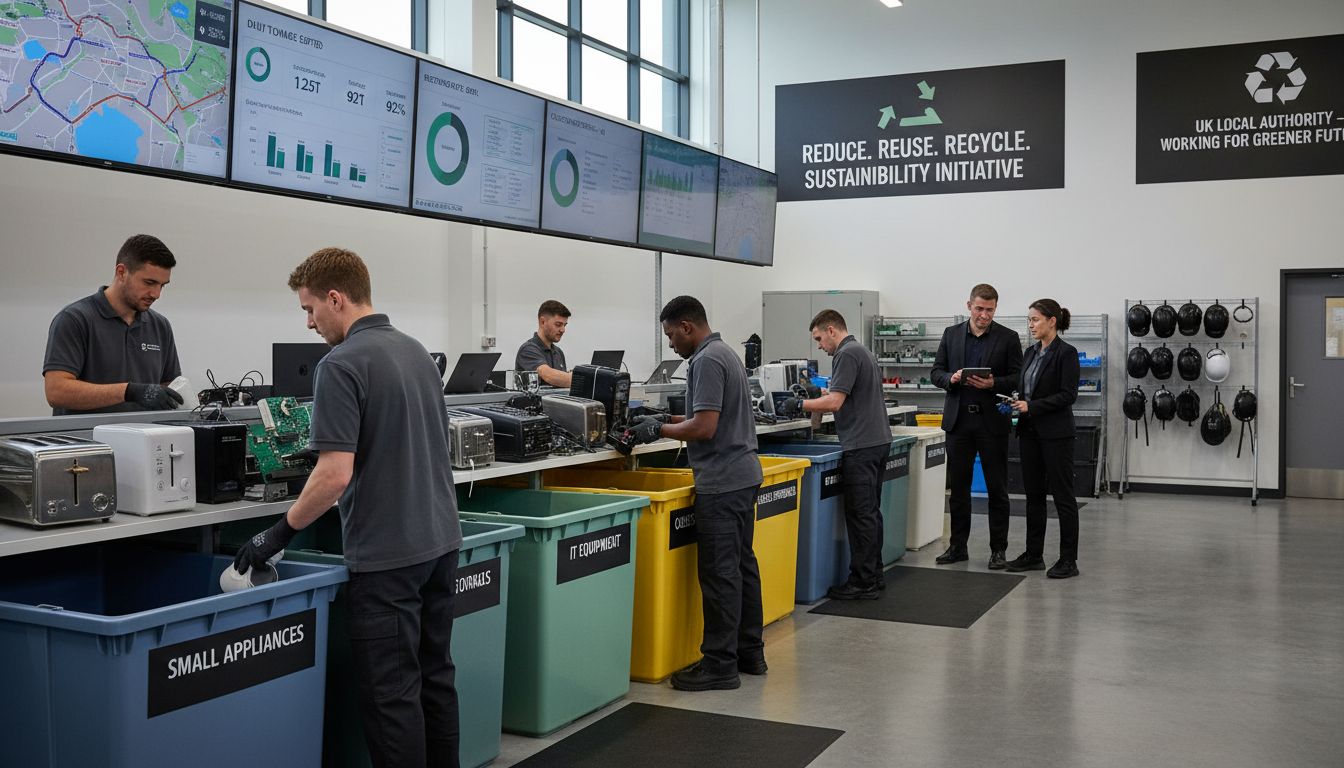
Conduct quarterly performance reviews with your recycling partners and internal teams to assess progress identify bottlenecks and develop targeted improvement strategies. Create visual dashboards that communicate key metrics transparently to stakeholders demonstrating the tangible environmental and economic benefits of your electrical waste reduction initiatives. By maintaining a dynamic and responsive monitoring approach you will ensure your electrical waste collection strategy remains adaptive innovative and aligned with emerging sustainability standards. Your final step involves developing a long term strategic plan that builds upon the insights gained from these monitoring and optimization efforts.
Transform Electrical Waste Challenges into Sustainable Solutions Today
Local authorities face the urgent challenge of reducing landfill by enhancing electrical waste collection systems. The article highlights key goals such as upgrading public awareness, optimising sorting and transportation, and partnering with certified recycling facilities. If inefficiencies or gaps in your waste management approach are causing mounting environmental and regulatory pressures, you are not alone. Addressing these concerns with reliable, compliant services is vital to protect communities and meet evolving sustainability standards.
Discover how Venture Waste Management can support your mission through tailored waste collection solutions designed for both commercial and domestic clients across the UK. Our expertise covers everything from hazardous waste handling to effective recycling processes. Learn more about innovative strategies by exploring our WEEE Waste Archives – Venture Waste and gain insights on the evolving How the Waste Collection Network in UK Serves Businesses in 2025 – Venture Waste.

Empower your waste management framework with Venture Waste’s proven, easy-to-use services. Visit https://venturewaste.co.uk now to start your journey towards greener operations. Act today and transform your electrical waste challenges into lasting environmental successes.
Frequently Asked Questions
How can local authorities assess their current electrical waste collection capabilities?
Begin by mapping all designated collection facilities within your area, noting their number, location, and accessibility. Conduct a detailed audit of total electrical waste collected and identify barriers preventing resident participation.
What public awareness strategies should local authorities implement for electrical waste recycling?
Develop targeted campaigns using various channels such as local media, social media, and community events. Engage community groups and local businesses to spread information, aiming to increase participation within 30–60 days.
How can local authorities improve infrastructure for electrical waste collection?
Establish convenient drop-off points at community centers, supermarkets, and schedule regular collection events. This will create easier access for residents and is likely to improve disposal rates by making the process straightforward.
What sorting and transportation methods should be adopted for electrical waste?
Implement a sorting system that categorizes waste based on equipment type and recycling potential. Use environmentally friendly transportation methods to mitigate carbon emissions, ensuring efficiency in collection routes.
How should local authorities choose certified recycling facilities?
Conduct thorough assessments of recycling facilities, verifying their environmental certifications and compliance. Develop contracts that set clear expectations for processing standards and reporting, ensuring ongoing accountability.
What metrics should local authorities monitor to optimize electrical waste collection strategies?
Establish a framework that tracks key performance indicators such as recycling rates, collection volumes, and cost efficiency. Regularly review these metrics with partners, making adjustments to collection strategies as needed to enhance performance.


Leave a Reply
Want to join the discussion?Feel free to contribute!