

How Confidential Shredding Works for Secure Disposal
Every day in facilities across Manchester, Leeds, and Newcastle, staff handle documents packed with personal and sensitive details that demand more than standard waste disposal. Without a clear system for confidential shredding, your organisation risks data breaches and failure to meet the strict requirements of GDPR and the Data Protection Act 2018. This guide walks you through secure organisation and oversight of confidential materials, helping facilities managers in UK healthcare and educational settings protect sensitive information while meeting all legal obligations.
Table of Contents
- Step 1: Organise Confidential Materials For Shredding
- Step 2: Arrange Secure Shredding Collection And Transport
- Step 3: Oversee Shredding Execution And Compliance Checks
- Step 4: Verify Destruction And Obtain Certification
Quick Summary
| Key Message | Explanation |
|---|---|
| 1. Organise confidential waste | Conduct an audit to locate and centralise all confidential materials for secure disposal. |
| 2. Use secure containers | Store confidential waste in locked bins to prevent unauthorised access before collection. |
| 3. Choose a certified provider | Research and select a shredding service that complies with GDPR and has proper certifications. |
| 4. Supervise the shredding process | Ensure designated personnel oversee collections to confirm secure handling of materials. |
| 5. Obtain a Certificate of Destruction | Request documentation that verifies the secure disposal of confidential materials for compliance. |
Step 1: Organise confidential materials for shredding
Getting your confidential materials ready for shredding requires a systematic approach to ensure nothing slips through the cracks. This step forms the foundation of a secure disposal process that protects sensitive information and keeps your organisation compliant with data protection requirements.
Start by identifying all confidential materials across your facility. Look for documents containing personal data, financial records, patient information (especially critical in healthcare settings), student records, or any materials marked as sensitive. Many facilities in Manchester, Leeds, and Newcastle find it helpful to conduct an audit first, walking through departments and noting where confidential paperwork accumulates.
Gather materials into a centralised collection point before shredding. You’ll want to use designated containers or locked bins specifically reserved for confidential waste. This prevents accidental mixing with general office waste and maintains security throughout the process.
Confidential materials should remain locked at all times to protect against unauthorised access before disposal. Here’s what to include in your organisation process:
- Medical records, X-rays, and CDs containing patient data
- Financial documents with account or transaction details
- Personnel files with employment or salary information
- Student records and educational assessments
- Contracts and legal agreements
- Any documentation marked “confidential” or “restricted”
Remove any items that shouldn’t be shredded, such as plastic folders, metal fasteners, or non-paper materials like hard drives, which require specialist handling. Sort materials by volume and type if your organisation is large. This makes the shredding process more efficient when your approved collection service arrives.
Keep confidential materials in a locked, designated area accessible only to authorised personnel until collection day.
Label your collection containers clearly with “Confidential Waste” to ensure staff understand the importance of proper handling. Brief your team on what goes into confidential bins and what doesn’t. A simple email or notice can prevent contamination and security breaches.
For healthcare and educational facilities in the North East, establishing clear protocols now saves headaches later. Document where materials are stored and who has access, maintaining an audit trail for compliance records.
Pro tip: Schedule regular collection rather than waiting for bins to overflow, reducing the risk of sensitive materials sitting around for extended periods and keeping your facility more secure and organised.
To help you determine which materials require special handling, here is a quick reference table highlighting common confidential waste types and their recommended preparation before shredding:
| Material Type | Preparation Needed | Special Handling Requirement |
|---|---|---|
| Medical records | Remove non-paper attachments | Store in locked containers |
| Financial documents | Check for staples/paper clips | Ensure only paper materials included |
| Student files | Remove folders or binders | Separate by volume for audit trail |
| Legal contracts | Review for restricted items | Clearly label as confidential waste |
| Personnel files | Remove CDs/hard drives | Maintain access log until collection |
Step 2: Arrange secure shredding collection and transport
With your confidential materials organised and ready, the next phase involves selecting a vetted service provider and arranging collection. This ensures your sensitive information moves securely from your facility to professional destruction without any risk of exposure.
Start by researching shredding service providers in your region. Look for companies that offer certified secure shredding services and can demonstrate compliance with GDPR and Data Protection Act requirements. Facilities across the North West, including those in Manchester and Liverpool, should verify that providers are pre-vetted and carry appropriate certifications.
When evaluating providers, ask about their collection options. Most offer both scheduled regular collections and one-off ad-hoc services depending on your facility’s volume and needs. Healthcare and educational institutions typically benefit from scheduled monthly or quarterly collections, whilst smaller organisations may prefer occasional pickups.
Confirm what the provider supplies for collection. They should provide lockable consoles or secure bins that remain in your facility until collection day. This prevents contamination and maintains confidentiality before materials leave your premises.
Book your collection appointment by providing these details:
- Estimated volume of confidential waste
- Your preferred collection schedule
- Access details for your facility
- Any special handling requirements for sensitive items
- Invoice and reporting preferences
Confidential waste collection must include secure transport to locked shredding facilities. Verify that your chosen provider offers secure vehicles with proper documentation and chain of custody procedures. Ask about tracking capabilities so you can monitor collection times.
Request a certificate of destruction after shredding completes, which confirms secure disposal and provides compliance evidence for your records.
Confirm the provider’s insurance and security credentials before signing any agreement. Request references from other healthcare or educational clients if possible. Discuss contingency arrangements for emergency collections or unexpected volume increases.
Pro tip: Arrange collections for early morning when staff are present to supervise handover, ensuring proper bin exchange and reducing the window when materials sit unattended in your facility.
Below is a comparison of scheduled versus ad-hoc shredding collections to guide institutions in choosing the most suitable service:
| Collection Mode | Best For | Main Advantage | Possible Limitation |
|---|---|---|---|
| Scheduled | Healthcare/education sites | Predictable, regular service | May incur ongoing charges |
| Ad-hoc | Small offices, low volume | Flexible timing and volume | Less audit consistency |
Step 3: Oversee shredding execution and compliance checks
Once your shredding service arrives, active oversight ensures your confidential materials are destroyed securely and all regulatory requirements are met. This final phase protects your organisation and provides documented evidence of proper disposal.
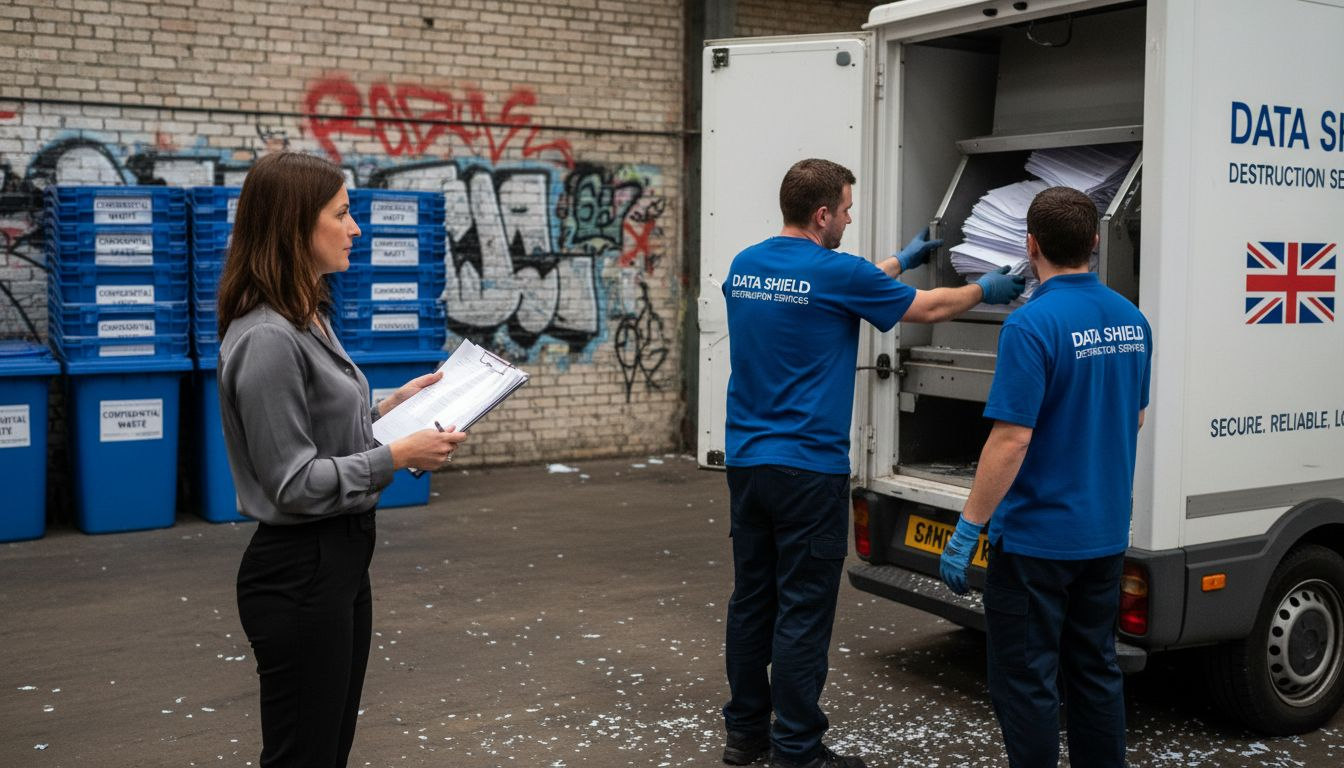
Be present when the shredding team arrives at your facility. Designate a staff member to supervise the collection and verify that the correct bins or consoles are being collected. Confirm that only authorised personnel handle your confidential waste and that materials remain secure throughout the handover process.
Watch for proper handling procedures during collection. Materials should be transferred directly into secure vehicles with locked compartments. Staff should maintain control of your bins at all times and document the collection with a receipt or pickup confirmation.
Request documentation of the collection, including the date, time, and weight or volume of materials destroyed. This creates an audit trail proving your organisation took appropriate steps to protect sensitive information.
When your shredding service completes destruction, they should provide cross-cut shredding producing particles no larger than 1mm x 5mm. Request detailed confirmation that your materials met this standard. Ask about the specific shredding method used and whether it complies with National Protective Security Authority standards.
Verify key compliance requirements before accepting completion:
- Certificate of destruction documenting materials destroyed
- Confirmation that shredding equipment meets security standards
- Evidence that GDPR and Data Protection Act requirements were satisfied
- Details of the shredding facility location and its credentials
- Any tracking or auditing reports provided by the contractor
Compliance monitoring means verifying contractor credentials and confirming all materials were securely handled. Check that your service provider maintained proper chain of custody documentation throughout the process.
Keep all destruction certificates and compliance documentation in your records for a minimum of three years as evidence of proper disposal for regulatory audits.
File the certificate of destruction securely alongside your data protection records. This proves to regulators and auditors that your organisation handled confidential materials responsibly and destroyed them according to legal requirements.
Pro tip: Request a witness statement or photographic evidence from the shredding facility showing the actual destruction process, adding an extra layer of verification that your sensitive materials were genuinely destroyed rather than simply transferred elsewhere.
Step 4: Verify destruction and obtain certification
After shredding completion, obtaining formal certification is crucial to prove your organisation handled confidential materials responsibly. This final verification step creates the documentary evidence needed for regulatory compliance and future audits.
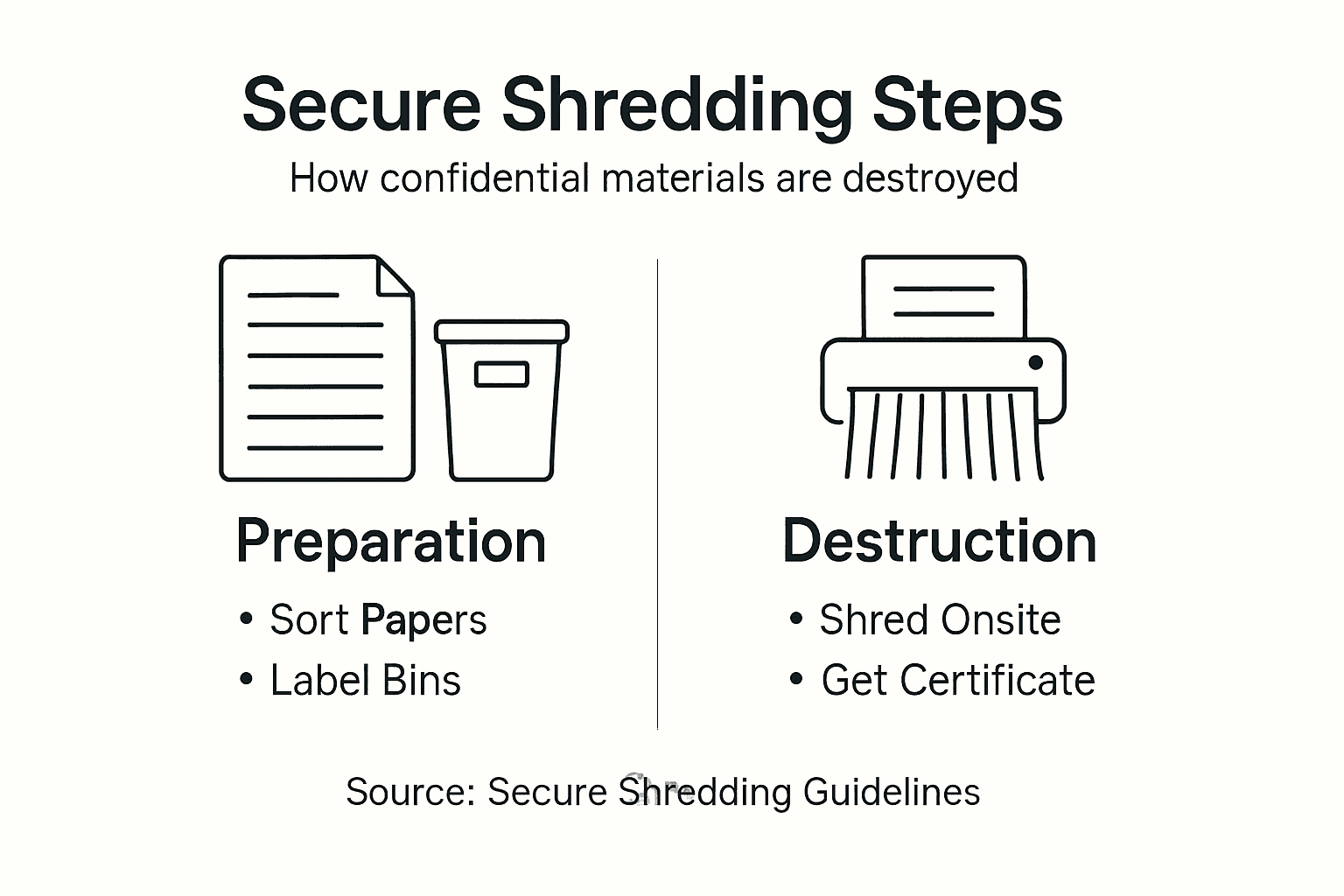
Contact your shredding service provider immediately after destruction to request your Certificate of Destruction. This formal document provides chain of custody verification and demonstrates adherence to UK data protection legislation.
Review the certificate carefully to ensure it includes all essential information. The document should detail exactly what materials were destroyed, when destruction occurred, and confirmation that the process met required security standards.
Your Certificate of Destruction should contain these key details:
- Specific description of materials shredded
- Date and time of destruction
- Volume or weight of confidential waste processed
- Shredding method used and security standards met
- Authorised signatory details from the shredding facility
- Reference number for your records
Verify that approved shredding service providers supply certificates confirming destruction as required by GDPR and NIST standards. Cross-reference the certificate details against your collection records to ensure everything matches.
Request any additional documentation that supports your compliance. Ask for evidence that materials were irreversibly destroyed, such as facility audits or quality assurance reports. Healthcare and educational facilities across Newcastle, Sheffield, and Bristol particularly need robust documentation for regulatory inspections.
Store your Certificate of Destruction securely alongside related documentation. Create both physical and digital copies, keeping originals in a secure, fireproof location. This protects your evidence in case of disputes or future regulatory audits.
Your Certificate of Destruction is essential evidence proving responsible handling of sensitive information and compliance with legal requirements.
File the certificate in your organisation’s data protection records. Reference it during compliance audits and include it in annual data protection reviews. Should regulators or data subjects ever question your disposal practices, this certificate demonstrates your commitment to secure destruction.
Pro tip: Create a spreadsheet tracking all certificates by date, materials destroyed, and certificate reference number, enabling quick retrieval during audits and making it simple to demonstrate consistent compliance across multiple shredding collections.
Secure Your Confidential Waste with Expert Shredding Services Today
Handling confidential documents demands precision and trust to prevent data breaches and ensure full compliance with legal standards like GDPR. If your organisation struggles with organising sensitive materials, arranging secure collection, or verifying destruction certificates, you are not alone. These challenges can create anxiety over data security and regulatory risks.
At Venture Waste, we understand these pressures and provide comprehensive solutions tailored to your needs. Explore our confidential waste Archives – Venture Waste for detailed guidance on secure disposal. With our certified shredding services, lockable secure bins, and official Certificates of Destruction, you gain peace of mind knowing every step meets strict compliance.

Make data security straightforward and hassle-free. Visit Venture Waste now to arrange your secure shredding collection. Alternatively, learn more about our specialist hard drive destruction Archives – Venture Waste for full-spectrum confidential waste handling. Protect your organisation, satisfy regulatory requirements, and secure your sensitive materials with a trusted partner today.
Frequently Asked Questions
What type of materials should be shredded for secure disposal?
Confidential materials include medical records, financial documents, and personnel files, all of which must be securely shredded. Begin by identifying all sensitive paperwork in your facility and gather it in a designated, locked area for shredding.
How do I choose a shredding service provider for my organisation?
Select a shredding service provider that offers certified secure shredding and complies with data protection regulations. Research your options and verify their credentials, ensuring they can provide lockable consoles and schedule regular collections based on your needs.
What steps should I take to oversee the shredding execution?
Be present when the shredding service arrives to supervise the collection and verify that only authorised personnel handle your confidential waste. Document the collection details, such as date and volume, to maintain an audit trail for compliance.
Why is a Certificate of Destruction important after shredding?
A Certificate of Destruction serves as formal proof that your confidential materials were securely destroyed according to legal requirements. Request this document from your shredding service immediately after destruction to ensure you have necessary compliance documentation.
How can I ensure my confidential materials are properly prepared before shredding?
Organise your materials by removing any non-paper attachments and placing them in designated secure containers. For large organisations, sort by volume and type, and label bins clearly to prevent contamination and enhance security protocols.
What should I do with my Certificate of Destruction after receiving it?
Store your Certificate of Destruction securely alongside your organisation’s data protection records. Maintain both physical and digital copies, as these documents are essential for proving your compliance during audits and regulatory inquiries.
Recommended
- Master Confidential Document Shredding for Secure Disposal – Venture Waste
- Confidential Paper Shredding UK: Secure Your Business – Venture Waste
- Confidential Shredding vs Pulping: Complete Guide UK – Venture Waste
- Confidential Document Shredding Process for UK Businesses 2025 – Venture Waste
- Master Secure Document Transportation for Effortless Relocation – Onyx Removals


Leave a Reply
Want to join the discussion?Feel free to contribute!